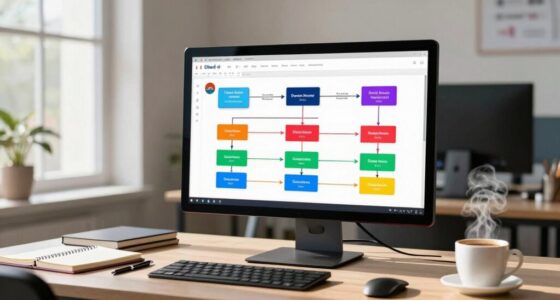

Landing zones provide the essential foundation for a successful cloud migration by establishing a secure, well‑organized environment with clear governance, network architecture, and operational controls. Many organizations skip this step, leading to uncontrolled account sprawl, security gaps, and inefficient deployments. Building a landing zone upfront guarantees faster, consistent, and compliant rollouts while reducing risks. If you continue exploring, you’ll discover how to set up and leverage landing zones for smoother, scalable cloud transitions.

Get business pricing on networking and server gear
- Business-only prices and quantity discounts
- Tax-exempt purchasing
- Multiple users, one account, clear invoices
Key Takeaways
- Landing zones are pre‑configured cloud environments that enforce security, governance, and networking standards, streamlining migrations.
- Many migrations skip setting up landing zones, leading to inconsistent controls, increased security risks, and account sprawl.
- They enable rapid, policy-driven deployment using Infrastructure as Code, reducing setup time from days to minutes.
- Proper landing zones centralize identity management, logging, and compliance, ensuring operational consistency.
- Neglecting landing zones can cause governance gaps, increased manual errors, and difficulties in scaling cloud environments.
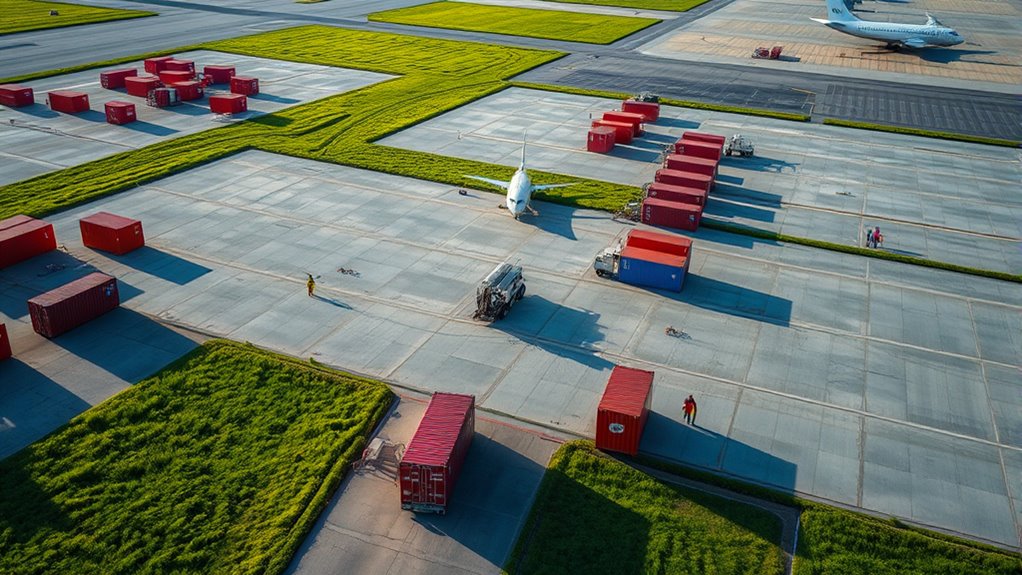
Landing zones serve as the foundational blueprint for deploying cloud environments quickly and securely. They’re well‑architected, repeatable setups that act as templates for new accounts, subscriptions, or tenants. Their primary goal is to enforce baseline security, governance, networking, and operational controls before workloads are migrated. This means establishing identity management, network topology, logging, monitoring, and multi-account structures upfront, so you guarantee reduction of manual configuration errors and ensure consistency across environments. By codifying these components through Infrastructure as Code (IaC), landing zones enable policy-driven deployments, making it easier to scale and manage cloud resources at enterprise level. Additionally, they help organizations meet compliance requirements more efficiently by embedding security standards from the outset, reducing the risk of violations during and after migration. The benefits are clear. You gain faster migrations and a quicker time-to-market by automating the creation of baseline environments—cutting down setup time from days to minutes. Security and compliance improve because guardrails and controls are preconfigured to meet standards like PCI, HIPAA, or ISO 27001. Consistent enforcement across teams becomes possible with shared tagging, policies, and access controls, preventing configuration drift and operational discrepancies. Cost governance also benefits through centralized account design and controls, which help avoid over-provisioning, enable chargeback, and optimize resource utilization. Overall, landing zones support scalability and agility, allowing organizations to rapidly provision new environments while maintaining governance and security.
Landing zones provide secure, scalable templates to standardize cloud deployment and governance from the start.
Key technical components include centralized identity and access management, which enforces roles and policies across accounts, and network design, featuring architectures like hub-spoke or transit, with subnets and firewalls for segmentation. Centralized logging, telemetry, and monitoring ensure visibility, auditability, and quick incident response, while security controls like encryption, key management, and policy enforcement keep data protected. The multi-account setup facilitates separation of duties and data isolation, supporting compliance and reducing breach risks. This proactive approach minimizes security gaps that could be exploited during migration phases. Implementing automated provisioning processes enhances efficiency and reduces manual errors, making the entire migration process more reliable. Implementation relies heavily on IaC tools like Terraform, ARM, or CloudFormation, which support repeatability, versioning, and portability across clouds like AWS, Azure, or GCP. Automated pipelines for provisioning, drift detection, and lifecycle management streamline operations, while policy-as-code enforces guardrails automatically. Cloud vendor blueprints expedite adoption by providing reference architectures that can be customized to fit your needs.
Many organizations underestimate the importance of investing early in a landing zone. Without it, they face ad hoc account sprawl, inconsistent controls, and increased security risks during migration. Treating landing zones as a one-time project rather than an ongoing operational product leads to governance gaps. Failing to integrate cost management, tagging policies, or organizational change management creates friction and inefficiencies. Overly rigid controls can hinder agility, so striking a balance is essential. Metrics such as provisioning speed, policy compliance, security drift detection, cost savings, and developer adoption help validate success, ensuring your cloud migration is efficient, secure, and scalable.
Frequently Asked Questions
How Do Landing Zones Evolve Post-Deployment?
After deployment, you should continuously monitor and manage your landing zone to guarantee it adapts to evolving needs. Update IaC templates for new security requirements, optimize costs, and enhance governance policies. Regularly review logs, audit compliance, and refine network configurations. Automate drift detection to maintain consistency. By treating your landing zone as an operational product, you ensure it remains scalable, secure, and aligned with your organization’s growth and compliance standards.
What Are Common Challenges During Landing Zone Implementation?
During landing zone implementation, you often face challenges like balancing security controls with agility, which can slow down provisioning. You might also struggle with integrating automation tools smoothly or aligning teams on governance policies. Additionally, ensuring consistent compliance across multiple accounts and managing organizational change can be tough. These issues can lead to delays, increased errors, or resistance, making it vital to plan carefully and involve stakeholders early.
How Do Landing Zones Integrate With Existing On-Premises Environments?
A stitch in time saves nine. You integrate landing zones with your on-premises environment by establishing secure, well-defined connectivity, like VPNs or dedicated links, to bridge both worlds. You then align identity management, security policies, and network architectures to guarantee consistency. Automate provisioning with IaC to maintain repeatability, monitor for drift, and enforce governance across both environments, facilitating a smooth, scalable shift without creating chaos or gaps in control.
What Tools Best Support Automated Landing Zone Management?
You should use tools like Terraform, CloudFormation, or ARM templates for automated landing zone management. These Infrastructure as Code (IaC) tools enable you to codify your environments, ensuring repeatability and version control. Pair them with CI/CD pipelines like Jenkins, GitLab, or Azure DevOps to automate provisioning, drift detection, and lifecycle management. Incorporate policy-as-code solutions such as AWS Config or Azure Policy for guardrails, ensuring compliance and security consistently across your cloud environments.
How Do Landing Zones Impact Long-Term Cloud Cost Control?
Think of your cloud environment like a well-tended garden. Landing zones act as the carefully planned beds, ensuring every plant (or workload) gets the right space and resources. They help control costs by enforcing budgets, tagging resources for chargeback, and preventing sprawl. Over time, this organization minimizes waste, avoids unnecessary expenditures, and keeps your cloud costs predictable—making your cloud garden flourish sustainably.
Conclusion
Now that you understand landing zones, don’t overlook their importance—think of them as the sturdy bedrock of your migration, ensuring everything lands smoothly. Without a proper setup, your project can crash like a Victorian steamer caught in a storm. Take the time to plan and establish these zones; they’re your secret weapon against chaos. Remember, even the Wright Brothers knew a solid runway was key to taking off successfully.
Columbus Day / Indigenous Peoples' Day Picks
long weekend sales
As an affiliate, we earn on qualifying purchases.