
TL;DR
The 2026 memory crunch is reaching cloud customers through higher hardware and infrastructure costs, according to Thorsten Meyer AI. The report says AWS has already raised GPU capacity pricing and OVHcloud has warned of further increases, while Azure and Google Cloud have not publicly detailed similar moves.
Cloud customers are beginning to face the 2026 memory crunch through higher infrastructure prices, according to a late-June report from Thorsten Meyer AI, which says rising server DRAM costs are being passed through the hardware supply chain and into cloud bills. The development matters because many companies that rent compute capacity may see higher instance and managed-service costs without a clear line item showing memory as the cause.
The report traces a four-step cost chain: Samsung, SK Hynix and Micron raise server DRAM prices, server makers such as Dell, Lenovo and HP absorb higher component costs, cloud providers buy that infrastructure, and customers eventually see higher bills. Thorsten Meyer AI says server DRAM prices rose by about 60-70% versus late 2025, while OEM server prices rose about 15-25%.
According to the report, the visible cloud impact can look smaller because memory is only one part of a server’s cost. It says memory accounts for roughly 20-30% of server materials, so a large DRAM shock can be diluted into a 5-10% cloud bill increase after hardware, infrastructure and margin effects. The report frames that smaller number as a pass-through of a much larger component price jump.
The clearest cited price move is at AWS. Thorsten Meyer AI says AWS raised prices on GPU capacity on January 4, 2026, with an eight-H200 instance rising from $34.61 to $39.80 an hour. The report also says OVHcloud forecast increases of 5-10% between April and September 2026, while AWS, Azure and Google Cloud have not publicly given the same broad explanation for general price changes.
Cloud’s hidden memory bill
Thought the cloud lets you dodge the squeeze — you rent the RAM, you don’t buy it? You’re still paying for every gigabyte. You’ve just stopped being able to see the bill.
No escape from the shortage anywhere — on-prem servers also cost +15–25%. But providers hedge scarce hardware better than you can, and you can’t buy half a cluster for two weeks.
8×H200 ≈ $15–20/hr owned (3-yr amortized) vs $39.80 rented — roughly half. 83% of CIOs plan to repatriate some workloads. Hybrid is the new default.
The cloud doesn’t make the memory tax disappear — it launders it, turning a violent fab shortage into a few innocuous percentage points scattered across a bill you can’t easily audit. “I’m in the cloud, I’m safe” is the most expensive misconception in this series. Refuse to pay for idle RAM, sort each workload to its cheapest venue, and lock pricing before the Q2–Q3 adjustment. The escape hatch was never cloud-vs-on-prem — it’s discipline-vs-drift. Next: the local-inference rig.
Cloud Savings Assumptions Weaken
The report challenges a common planning assumption: that moving workloads to cloud protects buyers from hardware market shocks. Cloud users do not buy DRAM directly, but providers do, and those costs can flow into instance prices, storage tiers, regional pricing and managed services. That makes the impact harder for finance and engineering teams to isolate.
The exposure is likely uneven. Thorsten Meyer AI identifies memory-optimized instances, including AWS r-series, Azure E-series and GCP highmem machines, as more exposed than compute-focused instances. It also points to Redis, ElastiCache and in-memory databases as services where DRAM is a larger share of cost, making price pressure more likely to matter for teams running data-heavy or low-latency systems.

NVIDIA Tesla A100 Ampere 40 GB Graphics Processor Accelerator – PCIe 4.0 x16 – Dual Slot
Standard Memory: 40 GB
As an affiliate, we earn on qualifying purchases.
As an affiliate, we earn on qualifying purchases.
From DRAM Shock to Instances
The memory squeeze has already affected buyers of physical servers, according to the source material. Thorsten Meyer AI says Dell added another 17% server price increase in March 2026, after broader OEM increases linked to memory and server component costs. That matters because the same server makers supply the major cloud platforms.
The report says cloud providers usually feel procurement changes with a three- to six-month lag, which places much of the pricing risk in Q2 and Q3 2026. It also argues that cloud remains useful for spiky, uncertain or temporary workloads, while owned hardware may be cheaper for steady, high-utilization workloads. For one cited comparison, an eight-H200 owned system is estimated at $15-20 an hour over three years, compared with $39.80 an hour rented, though those figures are point-in-time estimates.
“You are still paying for every gigabyte. You have just stopped being able to see the bill.”
— Thorsten Meyer AI

Crucial 32GB Kit (16GBx2) DDR4-2133 MT/S (PC4-2133) CL15 dual ranked x4based ECC Registered Server Memory CT2K16G4RFD4213
More speed. More bandwidth. More efficient
As an affiliate, we earn on qualifying purchases.
As an affiliate, we earn on qualifying purchases.
Provider Pricing Remains Opaque
Several details remain unresolved. The report cites a specific AWS GPU capacity increase and an OVHcloud forecast, but it does not provide comparable public confirmations from Azure or Google Cloud for broad memory-related price changes. It is also not clear how much of any future cloud increase would come from DRAM rather than GPUs, energy, data-center capacity, networking or regional demand.
Customer-level impact will vary by contract terms, regions, usage patterns and reserved-capacity agreements. The report’s ownership-versus-rental comparison is useful for planning, but the numbers depend on utilization, financing, power, staffing and depreciation, so they should not be read as a universal cost rule.
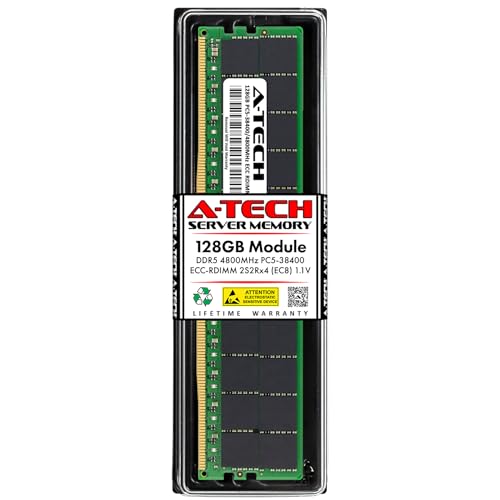
A-Tech 128GB DDR5 4800MHz PC5-38400 ECC RDIMM 4Rx4 2S2Rx4 (EC8 10×4) Quad Rank 1.1V ECC Registered DIMM 288-Pin Server RAM Memory Upgrade Module (A-Tech Enterprise Series)
A-Tech RAM Memory compatible for select DDR5 Server systems; (WILL NOT WORK with Desktop Computers/PCs or Laptop Computers)
As an affiliate, we earn on qualifying purchases.
As an affiliate, we earn on qualifying purchases.
Q3 Cloud Adjustments Ahead
The next test is whether major providers make broader price moves during Q3 2026 or change discounts, free-tier allowances and managed-service pricing in ways that are harder to compare. Customers will be watching instance-family pricing, especially memory-heavy machines and GPU systems.
For buyers, the near-term task is to separate steady workloads from elastic workloads, review idle memory allocation and renegotiate commitments before new pricing takes effect. The report’s practical message is that the choice is less about cloud versus on-premises and more about matching each workload to the cheapest reliable venue.

Cloud FinOps: Collaborative, Real-Time Cloud Value Decision Making
As an affiliate, we earn on qualifying purchases.
As an affiliate, we earn on qualifying purchases.
Key Questions
Does cloud usage protect companies from the memory shortage?
No, not fully. Cloud customers avoid direct hardware purchases, but providers still buy servers packed with DRAM, and those costs can be reflected in rented compute and managed-service prices.
Which cloud workloads are most exposed?
The report points to memory-optimized instances and in-memory services such as Redis, ElastiCache and in-memory databases. These services rely more heavily on DRAM, so they may feel memory pricing pressure sooner.
Is owned hardware now cheaper than cloud?
It can be cheaper for steady, high-utilization workloads, according to the report’s estimates. Cloud may still be the better fit for temporary, uncertain or highly variable demand.
What should cloud customers watch next?
Customers should watch Q3 2026 price lists, changes to reserved-capacity discounts, regional pricing and managed-service rates. The most useful signal will be whether increases spread beyond GPU capacity into general compute and memory-heavy services.
Source: Thorsten Meyer AI