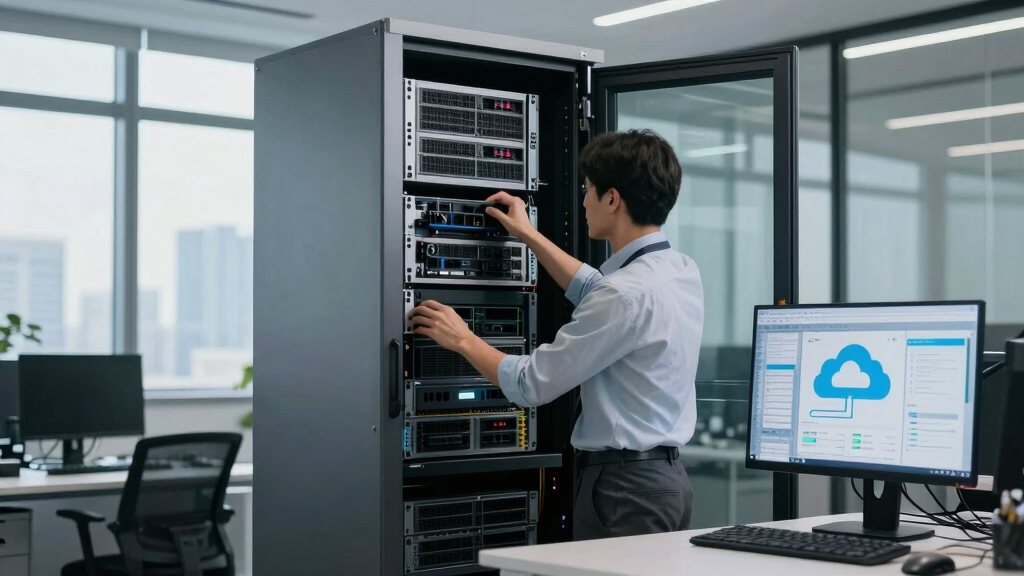

When searching for enterprise cloud server solutions, organizations face a balance between robust security, scalability, and cost-efficiency. The best overall pick offers comprehensive features suitable for large-scale deployments, while options like Google Cloud’s solutions stand out for ease of use and global reach. On the other hand, some solutions prioritize security or cost savings but may lack advanced automation or integration capabilities. The main tradeoffs involve choosing between depth of features and simplicity, or between performance and affordability. Continue reading for a detailed comparison that helps clarify these choices for different enterprise needs.

Get business pricing on networking and server gear
- Business-only prices and quantity discounts
- Tax-exempt purchasing
- Multiple users, one account, clear invoices
Key Takeaways
- The top-ranked solutions combine security, scalability, and ease of management, setting them apart from niche or less-integrated options.
- Pricing and operational costs vary widely, influencing long-term value especially for mid-sized enterprises.
- Solutions that support hybrid and multi-cloud environments are increasingly favored for flexibility and risk mitigation.
- Automation and DevSecOps integration are key differentiators for modern enterprise cloud solutions.
- Security-focused products often trade some usability or cost savings for advanced compliance and threat mitigation features.
| Cloud Security Handbook for Architects: Enterprise Cloud Security with SECaaS and DevSecOps |  | Best for Security Architects Focusing on Enterprise Cloud Security | Subject: Cloud Security | Topics: SECaaS, DevSecOps | Audience: Security Architects | VIEW LATEST PRICE | See Our Full Breakdown |
| Ultimate Google Professional Cloud Architect Certification Guide |  | Best for Aspiring Google Cloud Architects Preparing for Certification | Product Type: Certification Guide | Topic: Google Cloud Platform | Exam: Professional Cloud Architect | VIEW LATEST PRICE | See Our Full Breakdown |
| Google Cloud Cookbook: Practical Solutions for Building and Deploying Cloud Services |  | Best for Hands-On Practitioners Building on Google Cloud | Product Type: Book | Format: Cookbook | Platform: Google Cloud | VIEW LATEST PRICE | See Our Full Breakdown |
| Mastering Microsoft Azure: From Fundamentals to Enterprise Cloud Engineering (Modern DevOps Engineering Series, Book 5) |  | Best for Aspiring Azure DevOps Practitioners and Cloud Engineers | Series: Modern DevOps Engineering Series | Format: Book | Topic: Microsoft Azure, DevOps | VIEW LATEST PRICE | See Our Full Breakdown |
| Mastering AWS and Cloud Computing: From Fundamentals to Enterprise Cloud Architecture |  | Best for AWS-Focused Professionals Seeking a Broad Cloud Foundation | Series: Modern DevOps Engineering Series | Format: Book | Topics: AWS, cloud computing, enterprise architecture, DevOps | VIEW LATEST PRICE | See Our Full Breakdown |
| Enterprise AI Architecture & Cloud Strategy: Neutrality, Resilience, and Unit Economics Across AWS, Azure, GCP, and OCI |  | Best for Strategic Cloud Planning and Cross-Platform AI Integration | Format: Book | Series: The Grounded Enterprise | Cloud Platforms: AWS, Azure, GCP, OCI | VIEW LATEST PRICE | See Our Full Breakdown |
| Cloud Computing Solutions Architect: A Hands-On Approach |  | Best for Cloud Professionals Preparing for AWS Certification | Format: Textbook | Subject: Cloud Computing and Solutions Architecture | Certification Focus: AWS Cloud Certification | VIEW LATEST PRICE | See Our Full Breakdown |
| TrueNAS Guide for Beginners: Build Secure Storage Systems, Homelabs, and Private Cloud Solutions |  | Best for Beginners Building Private Cloud and Storage Solutions | Skill Level: Beginner | Platform: TrueNAS | Topics: Secure storage systems, homelabs, private cloud solutions | VIEW LATEST PRICE | See Our Full Breakdown |
| Serverless Development on AWS: Building Enterprise-Scale Serverless Solutions |  | Best for Developers and Architects Building on AWS Cloud | Format: Book | Topic: Serverless Development on AWS | Focus: Enterprise-scale architecture and practices | VIEW LATEST PRICE | See Our Full Breakdown |
| enterprise cloud server solution | Format | Audience | Focus | Level |
|---|---|---|---|---|
| Cloud Security Handbook for Ar | Book | Security Architects | Enterprise Cloud Security | Professional/Expert |
| Ultimate Google Professional C | — | — | Real-world Google Cloud solutions | Advanced |
| Google Cloud Cookbook: Practic | Cookbook | Engineers and developers | Practical deployment recipes | Intermediate |
| Mastering Microsoft Azure: Fro | Book | Azure practitioners | — | Advanced |
| Mastering AWS and Cloud Comput | Book | AWS practitioners and multi-cloud strategists | — | Intermediate to Advanced |
| Enterprise AI Architecture & C | Book | — | — | — |
| Cloud Computing Solutions Arch | Textbook | University Students and Cloud Professionals | — | — |
| TrueNAS Guide for Beginners: B | — | — | Practical setup and security | — |
| Serverless Development on AWS: | Book | — | Enterprise-scale architecture and practices | — |
More Details on Our Top Picks
Cloud Security Handbook for Architects: Enterprise Cloud Security with SECaaS and DevSecOps
This handbook stands out for its in-depth focus on security architecture within enterprise cloud environments, especially emphasizing SECaaS and DevSecOps practices. Compared to broader technical guides like Google Cloud Cookbook, this resource dives deep into strategic security frameworks, making it ideal for professionals designing secure cloud solutions. However, its specialized content means beginners or those seeking general cloud knowledge may find it too advanced or narrowly focused. It’s best for security architects aiming to elevate their enterprise cloud defense strategies, rather than general cloud practitioners.
Pros:- Deep focus on enterprise cloud security architecture
- Emphasizes SECaaS and DevSecOps integration
- Targeted at professional cybersecurity architects
Cons:- Highly specialized, not suited for beginners
- Assumes familiarity with enterprise cloud concepts
- Lacks detailed content preview for new learners
Best for: Security architects developing enterprise cloud security strategies
Not ideal for: Cloud engineers seeking broad deployment tutorials or beginners in cloud computing
- Subject:Cloud Security
- Topics:SECaaS, DevSecOps
- Audience:Security Architects
- Format:Book
- Focus:Enterprise Cloud Security
- Level:Professional/Expert
Our verdict“This book is a must-have for security architects refining enterprise cloud security strategies, but less useful for general cloud deployment needs.”
Ultimate Google Professional Cloud Architect Certification Guide
This guide makes a strong case for those targeting the Google Professional Cloud Architect exam, with practical insights into building enterprise solutions on Google Cloud Platform. Unlike Google Cloud Cookbook, which offers hands-on recipes, this certification-focused book helps prepare for real-world architecture challenges aligned with exam requirements. It’s better suited for those who already grasp cloud fundamentals and need to validate their skills, rather than complete beginners. For organizations adopting Google Cloud, this is a strategic resource for developing certified cloud architects.
Pros:- Specifically tailored for Google Cloud certification prep
- Emphasizes real-world enterprise solution building
- Covers core Google Cloud architecture concepts
Cons:- Limited to Google Cloud Platform, not multi-cloud
- May be too advanced for absolute beginners
- Focuses on certification rather than broad cloud skills
Best for: IT professionals aiming for Google Cloud certification and enterprise solution design
Not ideal for: Complete beginners with no prior cloud experience or those focused on multi-cloud strategies
- Product Type:Certification Guide
- Topic:Google Cloud Platform
- Exam:Professional Cloud Architect
- Language:English
- Focus:Real-world Google Cloud solutions
- Level:Advanced
Our verdict“Ideal for professionals seeking certification and enterprise Google Cloud expertise, less suitable for those exploring multi-cloud or foundational learning.”
Google Cloud Cookbook: Practical Solutions for Building and Deploying Cloud Services
This cookbook provides practical, step-by-step recipes for deploying cloud services on Google Cloud, making it ideal for engineers who prefer learning through direct application. Compared with the certification guide, it offers actionable solutions for common tasks, from setting up VMs to deploying containers. Its hands-on approach makes it less theoretical, but it might lack strategic context for those interested in overarching architecture design. This pick suits practitioners who want quick, reliable recipes rather than comprehensive theoretical coverage.
Pros:- Provides clear, practical deployment recipes
- Ideal for hands-on learning and quick implementation
- Covers a broad range of common cloud tasks
Cons:- Lacks in-depth architectural or strategic context
- Focused more on task execution than design principles
- Limited explanation of underlying concepts
Best for: Cloud engineers and developers needing practical deployment recipes on Google Cloud
Not ideal for: Cloud architects seeking strategic design guidance or beginners without prior Google Cloud experience
- Product Type:Book
- Format:Cookbook
- Platform:Google Cloud
- Focus:Practical deployment recipes
- Audience:Engineers and developers
- Level:Intermediate
Our verdict“Perfect for engineers wanting quick, effective solutions on Google Cloud, but less suitable for those needing strategic architecture insights.”
Mastering Microsoft Azure: From Fundamentals to Enterprise Cloud Engineering (Modern DevOps Engineering Series, Book 5)
This comprehensive guide covers Azure from the basics to enterprise cloud engineering, making it comparable to Mastering AWS and Cloud Computing but with a specific focus on Azure. Its coverage of DevOps practices within Azure makes it an excellent resource for those integrating cloud and DevOps workflows at scale. The lack of detailed content previews, however, can make it hard to assess depth upfront. It’s best for professionals seeking a structured, all-in-one Azure training resource, especially those interested in enterprise and DevOps integration.
Pros:- Comprehensive coverage from fundamentals to enterprise engineering
- Includes DevOps and modern cloud practices
- Part of an established professional series
Cons:- No detailed content summaries available
- Focused only on Azure, limiting multi-cloud applicability
- May be overwhelming for beginners without prior cloud knowledge
Best for: Azure-focused professionals aiming for enterprise-level cloud engineering and DevOps skills
Not ideal for: Those seeking a quick overview or focused solely on AWS or multi-cloud environments
- Series:Modern DevOps Engineering Series
- Format:Book
- Topic:Microsoft Azure, DevOps
- Coverage:Fundamentals to Enterprise
- Level:Advanced
- Audience:Azure practitioners
Our verdict“Ideal for Azure professionals seeking an all-in-one guide for enterprise and DevOps cloud engineering, less suited for multi-cloud or quick-start needs.”
Mastering AWS and Cloud Computing: From Fundamentals to Enterprise Cloud Architecture
This book provides a broad overview of cloud computing, with a focus on AWS, making it comparable to the Azure guide but tailored for Amazon cloud users. It combines foundational concepts with enterprise architecture and DevOps, offering a well-rounded training resource. Its scope, however, may be too broad for those seeking in-depth, AWS-specific architectural strategies. This pick suits professionals who want a comprehensive understanding across cloud platforms, especially those involved in multi-cloud projects or needing a strong AWS foundation.
Pros:- Covers fundamentals to enterprise architecture
- Integrates AWS with DevOps and cloud engineering topics
- Suitable for multi-cloud or broad cloud strategy learners
Cons:- Lacks detailed content summaries or reviews
- May be too broad for those seeking specific AWS design tactics
- Not optimized for absolute beginners
Best for: AWS-focused professionals looking for a broad, enterprise-level cloud training resource
Not ideal for: Readers seeking a narrowly focused AWS architecture guide or beginner-level cloud concepts
- Series:Modern DevOps Engineering Series
- Format:Book
- Topics:AWS, cloud computing, enterprise architecture, DevOps
- Coverage:Fundamentals to Enterprise
- Level:Intermediate to Advanced
- Audience:AWS practitioners and multi-cloud strategists
Our verdict“A solid choice for AWS practitioners seeking a comprehensive, multi-topic enterprise cloud guide, though less ideal for those wanting a focused AWS architecture manual.”
Enterprise AI Architecture & Cloud Strategy: Neutrality, Resilience, and Unit Economics Across AWS, Azure, GCP, and OCI
This book stands out for its comprehensive comparison of major cloud providers—AWS, Azure, GCP, and OCI—focusing on neutrality, resilience, and unit economics, which makes it invaluable for enterprise leaders planning multi-cloud AI deployments. Unlike technical guides that dive into implementation details like Serverless Development on AWS, this resource emphasizes strategic decision-making across platforms, making it more suited for architects and executives. A key tradeoff is its specialized focus; without detailed technical procedures, it may fall short for practitioners seeking hands-on guidance. But for those needing to understand how to balance vendor differences and optimize AI architecture financially, this book offers clear, high-level insights.
Pros:- Provides a broad comparison of top cloud platforms for AI strategies
- Focuses on vendor neutrality and resilience, key for enterprise stability
- Highlights economic considerations that influence cloud decision-making
- Relevant for shaping enterprise AI architecture at a strategic level
Cons:- Lacks detailed technical instructions or practical deployment steps
- May be too specialized for readers without a focus on AI or multi-cloud planning
Best for: Enterprise architects and senior cloud strategists determining multi-cloud AI frameworks
Not ideal for: Hands-on cloud engineers seeking technical step-by-step tutorials or implementation guides
- Format:Book
- Series:The Grounded Enterprise
- Cloud Platforms:AWS, Azure, GCP, OCI
- Topics:Enterprise AI Architecture, Cloud Strategy, Neutrality, Resilience, Unit Economics
Our verdict“This book is ideal for high-level decision-makers focused on multi-cloud AI strategies rather than hands-on implementation.”
Cloud Computing Solutions Architect: A Hands-On Approach
This textbook excels in guiding cloud engineers and aspiring solutions architects through practical cloud computing concepts, with a focus on AWS—making it a strong companion for those aiming for AWS certification or building real-world solutions. Compared to Serverless Development on AWS, which concentrates solely on serverless architecture, this book covers broader architecture principles and solutions design, providing a foundational understanding. However, its emphasis on AWS could limit its usefulness for professionals working across other cloud providers like GCP or Azure. For learners seeking a practical, certification-oriented resource, this book offers structured, hands-on lessons that build core competencies.
Pros:- Provides practical, hands-on guidance for cloud architecture
- Supports AWS certification exam preparation effectively
- Suitable for both academic and professional learning environments
- Covers core cloud concepts with real-world scenarios
Cons:- Focuses primarily on AWS, limiting relevance for multi-cloud users
- Lacks detailed content previews, making it hard to assess depth upfront
Best for: Cloud engineers and solutions architects preparing for AWS certifications or designing cloud solutions
Not ideal for: Professionals looking for multi-cloud strategies or in-depth serverless architecture details
- Format:Textbook
- Subject:Cloud Computing and Solutions Architecture
- Certification Focus:AWS Cloud Certification
- Audience:University Students and Cloud Professionals
Our verdict“This book is best suited for those seeking practical, AWS-centric cloud architecture training with certification in mind.”
TrueNAS Guide for Beginners: Build Secure Storage Systems, Homelabs, and Private Cloud Solutions
This guide is tailored for newcomers interested in setting up secure storage and private clouds with TrueNAS, making it a logical choice for those starting small before scaling to enterprise. Unlike Serverless Development on AWS, which targets advanced developers, this book simplifies complex storage concepts and practical setup procedures, ideal for hobbyists or small business owners. Its focus on homelabs and private cloud use cases means it’s less suited for large-scale enterprise deployments where more robust, scalable solutions are needed. For beginners seeking a clear, practical starting point in private cloud infrastructure, this book offers straightforward insights and step-by-step instructions.
Pros:- Designed specifically for beginners with no prior experience
- Covers essential topics like secure storage setup and homelab use
- Includes practical guidance for private cloud deployments
- Accessible language and straightforward instructions
Cons:- Limited scope; not suitable for large-scale enterprise environments
- Lacks detailed technical depth needed for complex storage architectures
Best for: Individuals or small teams building secure storage or private clouds with TrueNAS
Not ideal for: Large enterprises or professionals needing scalable, production-grade storage solutions
- Skill Level:Beginner
- Platform:TrueNAS
- Topics:Secure storage systems, homelabs, private cloud solutions
- Focus:Practical setup and security
Our verdict“This book makes the most sense for beginners or small-scale users starting with TrueNAS for private cloud storage.”
Serverless Development on AWS: Building Enterprise-Scale Serverless Solutions
This book is focused on designing and implementing enterprise-scale serverless solutions specifically on AWS, making it highly relevant for developers and architects working within that ecosystem. Compared to the strategic perspective of Enterprise AI Architecture & Cloud Strategy, this text dives deeply into architecture patterns, deployment practices, and scalable application design, making it a practical resource for technical teams. Its narrow focus on AWS could be a limitation for those operating across multiple clouds, but it’s unmatched for anyone committed to mastering AWS serverless technologies. For technical professionals aiming to craft scalable, serverless solutions within AWS, this guide offers detailed, actionable insights.
Pros:- Specialized focus on AWS serverless technologies
- Covers key architecture patterns for enterprise scalability
- Practical, implementation-oriented guidance
- Ideal for technical teams deploying large-scale serverless applications
Cons:- Limited to AWS, reducing applicability for multi-cloud environments
- No detailed content previews, so depth assessment is difficult
Best for: Developers and cloud architects working on enterprise-scale serverless projects on AWS
Not ideal for: Professionals seeking multi-cloud serverless strategies or a broad overview of cloud architecture
- Format:Book
- Topic:Serverless Development on AWS
- Focus:Enterprise-scale architecture and practices
Our verdict“This book is best for AWS-centric developers and architects aiming to implement scalable serverless solutions at enterprise level.”
How We Picked
These enterprise cloud server solutions were selected based on a combination of performance, scalability, security features, usability, and support for hybrid cloud architectures. We prioritized solutions that are widely adopted in large organizations and have proven track records of reliability. Cost structure and ease of integration into existing IT environments also played significant roles in our evaluation. The ranking reflects a balance between enterprise-grade capabilities and practical considerations like total cost of ownership, vendor support, and future-proofing features.| enterprise cloud server solution | Audience | Format | Focus | Level |
|---|---|---|---|---|
| Cloud Security Handbook for Ar | Security Architects | Book | Enterprise Cloud Security | Professional/Expert |
| Ultimate Google Professional C | — | — | Real-world Google Cloud solutions | Advanced |
| Google Cloud Cookbook: Practic | Engineers and developers | Cookbook | Practical deployment recipes | Intermediate |
| Mastering Microsoft Azure: Fro | Azure practitioners | Book | — | Advanced |
| Mastering AWS and Cloud Comput | AWS practitioners and multi-cloud strategists | Book | — | Intermediate to Advanced |
| Enterprise AI Architecture & C | — | Book | — | — |
| Cloud Computing Solutions Arch | University Students and Cloud Professionals | Textbook | — | — |
| TrueNAS Guide for Beginners: B | — | — | Practical setup and security | — |
| Serverless Development on AWS: | — | Book | Enterprise-scale architecture and practices | — |
Factors to Consider When Choosing Enterprise Cloud Server Solutions
Choosing the right enterprise cloud server solution requires evaluating multiple factors beyond just features. Organizations should consider scalability to handle growth, security protocols to protect sensitive data, and ease of management for operational efficiency. Cost is always a concern, but it must be balanced against expected performance and support capabilities. Compatibility with existing infrastructure and support for hybrid or multi-cloud deployments are also vital to future-proof your investment. This guide highlights key considerations to help you navigate these tradeoffs effectively.Scalability and Performance
Look for solutions that can grow with your organization, offering flexible scaling options and high performance. Cloud solutions with auto-scaling and load balancing features prevent bottlenecks during peak usage. It’s important to assess whether the platform can support your current workloads and future expansion without requiring complete rearchitecting. Inadequate scalability can lead to performance issues and higher long-term costs, so prioritize solutions that can adapt seamlessly as your needs evolve.
Security and Compliance
Security features like encryption, identity management, and compliance certifications are non-negotiable in enterprise environments. Consider solutions that offer integrated security tools, threat detection, and audit logs. The tradeoff often lies in usability versus security depth; highly secure platforms might have steeper learning curves or more complex management. Ensuring your cloud provider adheres to industry standards (e.g., GDPR, HIPAA, SOC 2) helps mitigate regulatory risks and protect sensitive data effectively.
Cost and Total Cost of Ownership
While initial costs matter, understanding the total cost of ownership over time is critical. Pay attention to pricing models—pay-as-you-go versus reserved instances—and hidden costs like data transfer fees or support plans. Cheaper solutions may save money upfront but could incur higher operational costs or limits that restrict growth. Conversely, premium options often include comprehensive support and advanced features that reduce management overhead and downtime, justifying higher prices for large-scale deployments.
Ease of Management and Automation
An intuitive management interface and automation capabilities are key for reducing operational complexity. Solutions that integrate with DevOps pipelines, support Infrastructure as Code, and offer robust APIs enable faster deployment and easier maintenance. Complex, manually managed platforms can lead to errors, security lapses, and higher staffing costs. Prioritize solutions that streamline routine tasks and provide clear, centralized control over your cloud environment.
Support for Hybrid and Multi-Cloud Architectures
Many enterprises require the flexibility to operate across different cloud providers or maintain on-premises systems. Choosing solutions that support hybrid and multi-cloud setups ensures greater resilience and avoids vendor lock-in. This capability often involves specialized tools for orchestration, data portability, and unified management dashboards. Overlooking this factor can limit your future options and increase complexity as your infrastructure expands or diversifies.
Frequently Asked Questions
How do I determine the right cloud provider for my enterprise?
Choosing the right cloud provider depends on your specific needs around scalability, security, compliance, and existing infrastructure. Evaluate each provider’s strengths in these areas, and consider their ability to support hybrid or multi-cloud strategies. Also, review their support levels, SLAs, and ecosystem integrations to ensure they align with your operational requirements. A provider that fits your current needs but also offers room for growth and flexibility will serve your enterprise best over the long term.
What are the biggest cost risks with enterprise cloud solutions?
One major risk is underestimating operational costs, such as data egress fees, support charges, and scaling expenses. These can add up quickly if not carefully managed. Additionally, choosing a solution without predictable pricing models can lead to unexpected bills during peak periods. To mitigate this, enterprises should perform thorough cost analysis, including long-term projections, and consider solutions that offer reserved instances or committed use discounts for predictable workloads.
Should I prioritize security features over ease of use?
Security should never be compromised, especially in enterprise settings, but it doesn’t have to come at the expense of usability. The best solutions strike a balance, offering robust security without overly complex management interfaces. Look for platforms that integrate security seamlessly into their workflows, provide automation for compliance, and have clear documentation. This way, your team can maintain strong security postures while still managing the environment efficiently.
Is multi-cloud support worth paying extra for?
For many large organizations, multi-cloud capabilities provide resilience, flexibility, and vendor independence, making the extra cost justified. Managing multiple providers can reduce dependency on a single vendor and allow deployment in regions or environments where a specific cloud’s features are advantageous. However, multi-cloud solutions can also increase complexity, requiring specialized tools and skills. Carefully assess whether the added flexibility aligns with your operational capacity and strategic goals.
What should I consider for future-proofing my cloud infrastructure?
Future-proofing involves selecting solutions that support automation, open standards, and hybrid architectures. Consider platforms that regularly update their features to incorporate emerging technologies like AI integration or containerization. Planning for scalability, flexibility, and evolving security standards ensures your infrastructure can adapt to changing demands without costly overhauls. Additionally, choosing providers with strong support ecosystems and clear upgrade paths helps maintain resilience as your enterprise grows.
Conclusion
For organizations seeking a dependable, scalable platform with comprehensive security and management features, the best overall choice is the solution that balances performance with ease of use. If budget constraints are tight, the best value options provide solid features without excessive costs. Enterprises requiring premium support and advanced capabilities should consider the best premium solutions, while newcomers or smaller teams will benefit from platforms designed for beginners. For those with complex hybrid or multi-cloud needs, solutions supporting these architectures will deliver the most flexibility and resilience.