The best cloud backup solutions in 2026 let you own your storage instead of renting it, and the Synology DS223 stands out as the strongest all-around choice thanks to its mature software, easy setup, and reliable backup tools. If raw value matters most, the Asustor Drivestor 2 Gen 2 delivers a 2.5GbE connection and quad-core CPU for less money than comparable Synology hardware. For anyone who finds even a two-bay NAS intimidating, the Synology BeeStation works like a plug-and-play personal cloud with almost no learning curve. The main tradeoff in this category is simplicity versus capability: entry-level units back up files fine, while pricier models add hardware transcoding, expansion bays, and business-grade protection. Read on for the full breakdown of all 11 options.

Get business pricing on networking and server gear
- Business-only prices and quantity discounts
- Tax-exempt purchasing
- Multiple users, one account, clear invoices
Key Takeaways
- Synology dominates this lineup with seven of eleven picks, and its DSM operating system is the single biggest reason — backup apps, snapshots, and mobile sync are simply more polished than the competition.
- The Asustor Drivestor 2 Gen 2 is the only budget option with a 2.5GbE port, making it the fastest file-transfer value pick if you have matching network gear.
- The Synology BeeStation (both variants) trades expandability and drive redundancy for simplicity — a genuine risk for irreplaceable data since a single drive failure means data loss.
- Buying diskless costs less upfront but requires purchasing drives separately; the Buffalo LinkStation 220 with included 12TB drives is the only turnkey option here that works out of the box.
- Stepping up to the DS725+, DS925+, or DS425+ only makes sense if you need drive expansion, heavier multi-user workloads, or hardware transcoding — otherwise the DS223 covers home backup needs for far less money.
| Synology DiskStation DS223j (Diskless) 2-Bay NAS |  | Best Overall Private Cloud | Model: DS223j | Drive Bays: 2 (diskless) | RAID Support: Yes, including RAID 1 mirroring | VIEW LATEST PRICE | See Our Full Breakdown |
| Asustor Drivestor 2 Gen 2 AS1202T 2-Bay NAS Storage |  | Best Value for Speed | Processor: Realtek RTD1619B quad-core 1.7GHz | Memory: 1GB DDR4 | Drive Bays: 2 (diskless) | VIEW LATEST PRICE | See Our Full Breakdown |
| BUFFALO LinkStation 220 12TB 2-Bay NAS with Hard Drives Included |  | Best Plug-and-Play Backup | Model: LS220D1202 | Storage Capacity: 12TB (drives included) | Drive Bays: 2 | VIEW LATEST PRICE | See Our Full Breakdown |
| Synology DS225+ Private Cloud Media Server 2-Bay NAS | 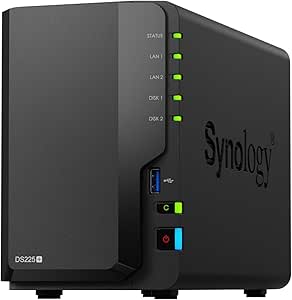 | Best Premium Pick | Model: DS225+ | Drive Bays: 2 (diskless) | Processor: Intel CPU with hardware transcoding | VIEW LATEST PRICE | See Our Full Breakdown |
| UGREEN NASync DH2300 2-Bay Personal Storage |  | Best for Beginners | Storage Capacity: Up to 64TB | Drive Bays: 2 | Hard Disk Interface: Serial ATA, 3.5-inch drives | VIEW LATEST PRICE | See Our Full Breakdown |
| Synology BeeStation 4TB Personal Cloud Storage Device (BST151-4T) |  | Best Plug-and-Play Personal Cloud | Storage Capacity: 4TB | Device Type: Personal Cloud Storage | Model: BST151-4T | VIEW LATEST PRICE | See Our Full Breakdown |
| Synology BeeStation 4TB Personal Cloud Storage Device |  | Best Value Personal Cloud | Storage Capacity: 4TB | Device Type: Personal Cloud Storage | Connectivity: Web, Desktop, Mobile | VIEW LATEST PRICE | See Our Full Breakdown |
| Synology DS223 Home & Office 2-Bay Diskless NAS | 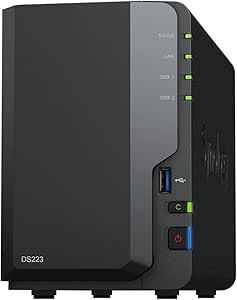 | Best Entry-Level NAS for Growing Needs | Brand: Synology | Model: DS223 | Number of Bays: 2 | VIEW LATEST PRICE | See Our Full Breakdown |
| Synology DS425+ Private Cloud Media Server – 4-Bay Diskless NAS |  | Best for Small Business and Power Users | Brand: Synology | Model: DS425+ | Number of Bays: 4 | VIEW LATEST PRICE | See Our Full Breakdown |
| Synology DS725+ Expandable NAS Storage – 2-Bay Diskless Private Cloud for Home and Small Business |  | Best Scalable Pick for Long-Term Growth | Number of Bays: 2 | Expandable Storage: Up to 140TB with DX525 expansion | Expansion Unit: DX525 (sold separately) | VIEW LATEST PRICE | See Our Full Breakdown |
| Synology 4-Bay DiskStation DS925+ (Diskless) |  | Best Premium Pick for Power Users | Drive Bays: 4 | Network Ports: 2 x 2.5GbE | Sequential Read/Write: 522/565 MB/s | VIEW LATEST PRICE | See Our Full Breakdown |
| cloud backup solution | Warranty | Model | Drive Bays |
|---|---|---|---|
| Synology DiskStation DS223j | 2 years | DS223j | 2 (diskless) |
| Asustor Drivestor 2 Gen 2 AS12 | — | — | 2 (diskless) |
| BUFFALO LinkStation 220 12TB 2 | 2 years | LS220D1202 | 2 |
| Synology DS225+ Private Cloud | 3 years | DS225+ | 2 (diskless) |
| UGREEN NASync DH2300 2-Bay Per | — | — | 2 |
| Synology BeeStation 4TB Person | — | BST151-4T | — |
| Synology BeeStation 4TB Person | — | — | — |
| Synology DS223 Home & Office 2 | 2 years | DS223 | — |
| Synology DS425+ Private Cloud | 3 years | DS425+ | — |
| Synology DS725+ Expandable NAS | 3 years | — | — |
| Synology 4-Bay DiskStation DS9 | 3 years | — | 4 |
More Details on Our Top Picks
Synology DiskStation DS223j (Diskless) 2-Bay NAS
This option stands out for buyers who want a self-hosted cloud backup system without paying subscription fees to a remote provider. Synology’s DSM operating system is the real draw here — its automated multi-device backup tools are more polished than anything else at this price, and the two-bay design allows RAID 1 mirroring, meaning one drive can fail without losing a single file. Compared with the BUFFALO LinkStation 220, the DS223j offers far richer software, including PC backup, mobile photo backup, and IP camera surveillance support. Compared with the UGREEN DH2300, its app ecosystem is far more mature. The tradeoff is upfront cost and effort: drives are sold separately, and the value depends entirely on pairing it with quality disks. This pick makes the most sense for someone who treats backup as infrastructure, not an afterthought.
Pros:- Mature DSM software with automated backup for PCs, phones, and tablets
- RAID 1 mirroring protects backups against a single drive failure
- Private cloud access replaces recurring subscription fees
- IP camera support adds surveillance value beyond backup
Cons:- Diskless — drives must be purchased separately, adding real cost
- Entry-level hardware struggles with heavy multitasking or transcoding
Best for: Home users and small offices who want subscription-free, multi-device automated backups with RAID redundancy
Not ideal for: Buyers who want storage working out of the box — it ships diskless, so budget for two drives before it backs up anything
- Model:DS223j
- Drive Bays:2 (diskless)
- RAID Support:Yes, including RAID 1 mirroring
- Backup Features:Automated multi-device backup, private cloud
- Extras:IP camera monitoring for home security
- Warranty:2 years
Our verdict“The most balanced starting point for a serious private cloud backup setup, provided you’re willing to buy and install your own drives.”
Asustor Drivestor 2 Gen 2 AS1202T 2-Bay NAS Storage
Where the Synology DS223j asks a premium for its software, the Asustor Drivestor 2 Gen 2 undercuts it while delivering something Synology’s budget model doesn’t: a 2.5GbE network port. For anyone backing up large photo libraries or video projects, that faster pipe translates directly into shorter overnight backup windows — a real outcome, not a spec-sheet nicety. The tool-free drive installation also means first-timers can slot disks in without a screwdriver, something the DS225+ doesn’t offer. The catch is the 1GB of RAM: compared with the DS225+ and its Intel CPU, this model is noticeably weaker for multitasking, media transcoding, or running extra apps alongside backups. This option stands out for budget-conscious buyers whose priority is fast, reliable backup of big files rather than an all-singing home server. Skip it if you see your NAS evolving into a Plex box or surveillance hub.
Pros:- 2.5GbE port moves backups noticeably faster than gigabit rivals
- Tool-free drive trays make first-time setup simple
- Compact footprint fits anywhere a router fits
- Undercuts comparable Synology hardware on price
Cons:- Only 1GB DDR4 RAM limits concurrent tasks and app installs
- Diskless — drives add to total cost of ownership
Best for: Budget-minded users with large media libraries who want fast wired backups without Synology pricing
Not ideal for: Power users who want transcoding, virtual machines, or heavy multitasking — 1GB of RAM caps ambitions quickly
- Processor:Realtek RTD1619B quad-core 1.7GHz
- Memory:1GB DDR4
- Drive Bays:2 (diskless)
- Network:2.5GbE Ethernet
- Extras:4K media server, tool-free drive installation
- Dimensions:3.94 x 3.94 x 3.94 inches
- Weight:1160 g
Our verdict“The smart choice when transfer speed per dollar matters more than software polish or expandability.”
BUFFALO LinkStation 220 12TB 2-Bay NAS with Hard Drives Included
This is the only option in the lineup that ships with drives included, and that changes the buying math entirely. Instead of researching compatible disks and assembling a system, a buyer unboxes, plugs in, and starts backing up within minutes — a genuine advantage over the diskless Synology DS223j and Asustor AS1202T for anyone who just wants the job done. The 12TB of pre-installed capacity and 24/7 US-based support make it a low-anxiety first NAS. The tradeoff is software: compared with the UGREEN DH2300’s modern AI photo tools or Synology’s app catalog, the LinkStation feels dated, with slower transfer speeds and fewer backup customization options. Running RAID 1 by default also halves usable capacity to 6TB mirrored — a safety-first choice some buyers will want to override. This pick makes the most sense for simplicity over capability.
Pros:- 12TB of storage included — no separate drive purchases or compatibility research
- Genuinely quick setup with all accessories in the box
- RAID 1 support provides mirrored data redundancy
- 24/7 US-based support for troubleshooting
Cons:- RAID 1 default halves usable capacity to roughly 6TB
- Basic, dated software compared with Synology DSM or UGREEN’s app
Best for: Non-technical households and small offices who want working backup storage out of the box with phone support
Not ideal for: Tinkerers and media enthusiasts — dated software and modest performance fall well short of the DS225+ or Asustor offerings
- Model:LS220D1202
- Storage Capacity:12TB (drives included)
- Drive Bays:2
- RAID Support:RAID 0 and RAID 1
- Connectivity:Ethernet
- Compatibility:Windows and macOS
- Warranty:2 years
Our verdict“The right call when ‘it just works today’ outranks features, speed, or future upgrades.”
Synology DS225+ Private Cloud Media Server 2-Bay NAS
Positioned a full tier above the DS223j, the DS225+ justifies its premium with an Intel CPU and hardware transcoding, which means 4K media streams to phones and TVs without stuttering — something neither the DS223j nor the Asustor AS1202T can manage gracefully. For backup-focused buyers, the advantage is multi-layered protection: RAID, snapshots, and 3-2-1 backup tools combine into a strategy that survives drive failures, ransomware, and accidental deletions, and the 282 MB/s transfer rate clears large backup jobs faster than anything else in this batch. Surveillance support for up to 30 cameras also outclasses the DS223j’s basic monitoring. The tradeoffs are real: it costs more, requires technically confident setup to unlock its potential, and still caps out at two bays — the DS425+ makes more sense if capacity headroom matters. This model is better suited to enthusiasts who want backup, media, and security in one box.
Pros:- Hardware transcoding enables smooth 4K streaming to multiple devices
- 282 MB/s transfer speeds finish large backup jobs quickly
- Snapshots plus RAID plus backup tools offer defense against ransomware and user error
- Supports up to 30 IP cameras for serious surveillance setups
Cons:- Highest price in this batch, and diskless on top of it
- Two bays limit capacity expansion versus four-bay rivals like the DS425+
- Demands technical confidence to configure properly
Best for: Enthusiasts and small businesses combining serious backup strategy with 4K media streaming and surveillance
Not ideal for: Casual users or tight budgets — the price and setup complexity buy capabilities many buyers will never touch
- Model:DS225+
- Drive Bays:2 (diskless)
- Processor:Intel CPU with hardware transcoding
- Transfer Speed:282 MB/s
- Data Protection:RAID, snapshots, multi-layered backup
- Camera Support:Up to 30 IP cameras
- Warranty:3 years
Our verdict“Worth the premium only if media streaming, snapshots, or surveillance sit alongside backup on your requirements list.”
UGREEN NASync DH2300 2-Bay Personal Storage
Compared with every other NAS here, the UGREEN DH2300 is built around one idea: make personal backup approachable. Setup is genuinely beginner-friendly, and the standout feature is AI photo organization with duplicate removal — nothing else in this lineup, including the BUFFALO LinkStation 220, offers automated photo cleanup, which matters enormously for people whose backups are mostly a decade of phone pictures. Support for up to 64TB of capacity gives it surprising headroom for a starter device, and the privacy-first local storage keeps sensitive files off third-party servers. The tradeoffs define its limits: there’s no Wi-Fi, so it must sit near the router, and it can’t run Docker, virtual machines, or SAN management — buyers who expect to grow into a power user will hit a wall that the Synology DS223j doesn’t have. This pick makes the most sense as a first step into personal cloud backup.
Pros:- Beginner-friendly setup with a gentle learning curve
- AI photo organization and duplicate removal saves manual cleanup
- Up to 64TB capacity support leaves room to grow
- Privacy-focused local storage with password protection
Cons:- No Wi-Fi — wired Ethernet placement near the router is mandatory
- No Docker, virtual machine, or SAN support caps advanced use
- Transfer speeds up to 125 MB/s trail the Asustor’s 2.5GbE and the DS225+
Best for: First-time NAS owners who mainly want to back up and organize personal photos, videos, and documents
Not ideal for: Hobbyists or small businesses needing Docker, VMs, or server-grade features — this is deliberately a starter device
- Storage Capacity:Up to 64TB
- Drive Bays:2
- Hard Disk Interface:Serial ATA, 3.5-inch drives
- Connectivity:Ethernet, HDMI, SATA, USB (no Wi-Fi)
- Transfer Speed:Up to 125 MB/s
- Extras:AI photo organization, duplicate removal, password protection
- Compatible Devices:Desktop, laptop, smartphone, tablet, TV
Our verdict“The friendliest on-ramp to owning your own cloud backup, as long as you accept it’s a personal device and not a server.”
Synology BeeStation 4TB Personal Cloud Storage Device (BST151-4T)
This option stands out for shoppers who want zero-configuration cloud backup — a QR code and a few minutes is all the setup it asks for. Compared with the Synology DS223, it trades expandability and RAID flexibility for simplicity, which is a reasonable trade if hands-on NAS management sounds unappealing. The AI photo identification and file-edit sync translate into real outcomes: scattered family photo libraries get organized automatically, and edits propagate across devices without manual copying. Snapshot-based restore points add a layer of ransomware protection that most simple personal clouds skip. The tradeoffs are real, though — 4TB is a hard ceiling, and the bundled 3 months of BeeProtect means ongoing subscription costs for extended cloud backup after the trial ends.
Pros:- Setup takes minutes with QR code pairing
- AI photo identification keeps large libraries organized automatically
- Snapshot restore points guard against ransomware and accidental deletion
- Remote access and file sharing work out of the box
Cons:- Fixed 4TB capacity with no drive upgrades
- BeeProtect cloud backup requires a subscription after the 3-month trial
- Remote features depend entirely on an internet connection
Best for: Non-technical households that want automatic photo and file backups without learning NAS software
Not ideal for: Media hoarders or anyone with more than 4TB of data — the fixed capacity can’t be expanded
- Storage Capacity:4TB
- Device Type:Personal Cloud Storage
- Model:BST151-4T
- Setup:QR code, minimal configuration
- Photo Features:AI photo identification
- Data Protection:Snapshot-based restore points
- Includes:3 months of BeeProtect
Our verdict“This pick makes the most sense for buyers who value effortless setup over raw capacity or expandability.”
Synology BeeStation 4TB Personal Cloud Storage Device
Compared with the BeeStation BST151-4T, this version covers the same core mission — multi-device file storage, sharing, and sync — while skipping some of the premium extras, which usually makes it the lower-cost entry point into Synology’s personal cloud lineup. Where the DS223 demands that you buy and install drives, the BeeStation arrives ready to work, and its ability to pull backups from major cloud services and external drives means it can consolidate scattered data into one place. That consolidation is the real buyer outcome: one destination for files currently spread across Google Drive, Dropbox, and USB sticks. The compromises mirror the pricier model — a 4TB ceiling and dependence on a network connection for access — and Synology publishes fewer technical details here, which makes comparison shopping harder than it should be.
Pros:- Generally cheaper than the feature-loaded BST151-4T variant
- Consolidates backups from major cloud services and external drives
- Accessible from web, desktop, and mobile apps
- QR code setup keeps onboarding painless
Cons:- Hard 4TB storage limit
- Sparse published technical specifications make comparisons difficult
- No advanced data protection features like snapshots on this configuration
Best for: Budget-conscious individuals consolidating files scattered across cloud accounts and external drives
Not ideal for: Small businesses or power users who need detailed specs, RAID, or growth headroom
- Storage Capacity:4TB
- Device Type:Personal Cloud Storage
- Connectivity:Web, Desktop, Mobile
- Features:File sharing, multi-device sync, cloud backups
- Backup Sources:Major cloud services and external drives
- Setup:QR code pairing
Our verdict“This model suits value-focused buyers who want simple, all-in-one personal cloud storage without paying for extras they won’t use.”
Synology DS223 Home & Office 2-Bay Diskless NAS
For buyers who’ve outgrown a fixed-capacity device like the BeeStation but aren’t ready for the complexity or price of the DS425+, the DS223 sits in a useful middle ground. Two bays mean you choose your own drive sizes and can configure mirrored storage for redundancy — something no BeeStation can offer — which matters when the device is your backup target rather than just extra storage. The surveillance support with IP camera integration is a genuine bonus at this price, effectively bundling a basic NVR. The tradeoff is upfront cost and effort: drives are not included, so the sticker price understates the real spend, and performance trails higher-end models when multiple users hit it at once. Compared with the Asustor AS1202T, Synology’s DSM software remains the stronger reason to choose this box.
Pros:- Drive redundancy possible with two bays for real data protection
- DSM software makes centralization and backup approachable
- Built-in IP camera surveillance support
- Reliable hardware backed by a 2-year warranty
Cons:- Diskless — drives add substantial hidden cost
- Only 2 bays limits maximum capacity and upgrade paths
- Weaker performance than pricier models under multi-user load
Best for: Home users and small offices wanting their first expandable NAS with drive redundancy and camera support
Not ideal for: Storage-heavy users or teams — 2 bays cap capacity, and stronger hardware exists further up the range
- Brand:Synology
- Model:DS223
- Number of Bays:2
- Item Type:NAS (diskless)
- Drive Redundancy:Supported (mirrored configuration)
- Surveillance:IP camera integration supported
- Warranty:2 years
- UPC:846504004775
Our verdict“The DS223 is the right first NAS for buyers who want flexibility and redundancy the BeeStations can’t provide, at a price below the 4-bay tier.”
Synology DS425+ Private Cloud Media Server – 4-Bay Diskless NAS
Where the DS223 is a capable starter, the DS425+ is the step-up for shared environments. 278 MB/s network throughput translates into backups that finish faster and media that streams without stuttering, while support for 10+ concurrent users means a small office can lean on it simultaneously without slowdowns. Four bays open the door to larger RAID configurations, and combined RAID plus snapshots give multi-layered protection that single-drive solutions like the BeeStation simply can’t match. Surveillance coverage scales to 30 IP cameras, dwarfing typical home setups. The costs aren’t trivial: it ships diskless, so budget for four drives, and the management depth that makes it powerful also makes it intimidating for casual users. Compared with the 2-bay DS725+, this is the better pick when raw bay count matters more than expansion units.
Pros:- 278 MB/s network speeds keep large backups and media streaming fast
- Handles 10+ simultaneous users comfortably
- Multi-layered protection via RAID and snapshots
- Surveillance support for up to 30 IP cameras
Cons:- Requires technical knowledge to configure and maintain
- Diskless design means a significant additional drive investment
- Overkill in both price and complexity for basic home backup
Best for: Small businesses and serious home users who need speed, multi-user access, and four bays of protected storage
Not ideal for: Casual users or first-time NAS buyers — setup and ongoing management demand real technical comfort
- Brand:Synology
- Model:DS425+
- Number of Bays:4
- Network Speed:278 MB/s
- Concurrent Users:10+
- Data Protection:RAID and snapshots
- Supported Cameras:30 IP cameras
- Warranty:3 years
Our verdict“The DS425+ fits teams and power users whose backup needs have outgrown 2-bay hardware — everyone else should save money lower in the range.”
Synology DS725+ Expandable NAS Storage – 2-Bay Diskless Private Cloud for Home and Small Business
The DS725+ answers a specific question: what if you want to start small today but grow to 140TB later? Unlike the fixed 4TB BeeStations or even the 4-bay DS425+, this 2-bay unit pairs with the DX525 expansion unit to add five more bays when your data outgrows the base configuration. That expansion path means buying storage only as you need it, spreading cost over years instead of paying for capacity upfront. Multi-layered data protection and 30-camera surveillance support keep it credible for small business duty, and the 3-year warranty signals hardware Synology expects to last. The catches are predictable: maximum capacity requires buying the expansion unit separately, a real added expense, and the setup complexity of a plus-series NAS will frustrate beginners who would be happier with a BeeStation.
Pros:- Expandable up to 140TB with the DX525 expansion unit
- Multi-layered data protection including snapshots
- Surveillance support for up to 30 IP cameras
- Backed by a longer 3-year warranty than entry models
Cons:- Reaching maximum capacity requires purchasing a separate expansion unit
- Setup and ongoing management are complex for novice users
- Diskless, so drives are an additional upfront cost
Best for: Home offices and small businesses that want to start with two drives and scale storage over time
Not ideal for: Beginners wanting simple backup — the plus-series setup and expansion planning add complexity they don’t need
- Number of Bays:2
- Expandable Storage:Up to 140TB with DX525 expansion
- Expansion Unit:DX525 (sold separately)
- Data Protection:Multi-layered
- Surveillance Support:30 IP cameras
- Intended Use:Home and small business private cloud
- Warranty:3 years
Our verdict“The DS725+ is the smart buy for planners — buyers who’d rather grow into 140TB gradually than pay for a big 4-bay system on day one.”
Synology 4-Bay DiskStation DS925+ (Diskless)
For buyers who have outgrown two-bay starter units like the Synology DS225+ or the Asustor AS1202T, this four-bay unit represents a genuine step up in capability rather than just capacity. The extra bays allow RAID 5 or RAID 10 configurations, meaning a drive can fail without losing your cloud backup pool — something a 2-bay device simply cannot match. Dual 2.5GbE ports with 522/565 MB/s sequential throughput also make it fast enough to serve as an active working repository, not just a passive archive. Compared with the BeeStation 4TB, this is a different category of product: it is infrastructure, not an appliance.
The tradeoff is real, though. It ships diskless, so the true cost includes four drives — often doubling the spend. Buyers who just want simple offsite-style backup will find it overbuilt and will pay for headroom they never use.
Pros:- Four bays enable RAID 5/10 redundancy so a single drive failure doesn’t take your backup pool down
- Dual 2.5GbE ports deliver 522/565 MB/s throughput for fast local and remote access
- Mature Synology ecosystem covers file management, snapshots, virtualization, and surveillance
- 3-year hardware warranty backs long-term deployment
Cons:- Diskless — expect to budget substantially more for four drives before it’s usable
- Overkill in cost and complexity for users who only need simple personal cloud backup
Best for: Small businesses and serious home users who want a self-hosted cloud backup platform with room to grow and multi-drive redundancy
Not ideal for: Budget-focused buyers or casual users who want plug-and-play backup — the diskless build and drive costs push total spend well past simpler options like the Buffalo LinkStation 220
- Drive Bays:4
- Network Ports:2 x 2.5GbE
- Sequential Read/Write:522/565 MB/s
- Storage Included:Diskless — drives purchased separately
- RAID Support:Multiple RAID options incl. RAID 5/10
- Software:Synology DSM with file management, data protection, virtualization, surveillance
- Warranty:3 years
Our verdict“This makes the most sense for power users who need a redundant, expandable private cloud platform and are willing to fund the drives to get there.”

How We Picked
My ranking logic starts with the thing that matters most for a cloud backup solution: data protection reliability. Every option here was judged on whether it supports RAID redundancy, what backup software ships with it, and how easy it is to configure automatic versioned backups from computers and phones. A fast NAS that makes backups complicated is a failed backup solution, so software quality weighed more heavily than raw hardware specs.
From there I scored each product on value per bay, ease of setup for non-technical buyers, performance for the price, and growth headroom. That last criterion is why the four-bay and expandable units cluster near the top despite higher cost — buyers who outgrow a two-bay unit face a full replacement, not an upgrade. Finally, I factored in whether drives are included, since the true cost of a diskless NAS is often 40–60% higher once you add storage.
Factors to Consider When Choosing Cloud Backup Solutions
Choosing a cloud backup solution built around a NAS involves more than comparing specs. These are the factors that actually determine whether you will be happy with your purchase two years from now.Drives Included vs. Diskless: Calculate the Real Price
The sticker price of a diskless NAS tells only part of the story. Once you add two matched drives, a $190 enclosure can easily become a $350 purchase, and skimping on drives is the most common mistake new buyers make. Consumer desktop drives save money upfront but are not rated for continuous NAS operation, which raises the risk of failure in the exact device you bought to protect your data. The Buffalo LinkStation 220 sidesteps this problem entirely by shipping with drives installed, and that convenience is worth a premium if you do not want to research drive compatibility lists. If you do buy diskless, budget for NAS-rated drives and check the manufacturer’s compatibility list before ordering — mismatched drives can cause dropped RAID arrays.
Redundancy Is Not the Same as Backup
Many buyers assume a two-bay NAS in RAID 1 counts as a full backup strategy. RAID protects against a single drive failing, but it does nothing against fire, theft, ransomware, or accidental deletion — the array faithfully mirrors every mistake. A genuine backup strategy follows the 3-2-1 rule: three copies of your data, on two different media types, with one copy offsite. That means pairing your NAS with either a cloud service like Backblaze or a second device at another location, which the Synology units support natively through Hyper Backup. Single-drive devices like the BeeStation offer zero redundancy at all, so they should never be the only copy of irreplaceable files. Decide on your offsite plan before choosing hardware, because some budget enclosures have limited sync options.
Network Speed Determines Your Real-World Experience
A gigabit connection tops out around 110 MB/s in practice, which means a full 1TB initial backup takes roughly three hours under ideal conditions — longer in reality. The Asustor Drivestor 2 Gen 2 stands out here with its 2.5GbE port, which more than doubles throughput, but only if your router or switch also supports 2.5GbE. Spending extra on a fast NAS while plugging it into old network gear wastes the money entirely, so audit your network before buying. For overnight incremental backups of documents and photos, gigabit is plenty. Where speed really matters is large media libraries and multi-user offices, where slow transfers compound across everyone sharing the device.
Software Ecosystem Matters More Than Hardware
The processor and RAM get the most attention in product listings, but the operating system determines how pleasant daily use is. Synology’s DSM is widely regarded as the most polished NAS software available, with mobile apps, versioned backups, and snapshot tools that work reliably without configuration headaches. Asustor’s ADM is capable but less refined in its backup workflow, and Buffalo’s interface feels dated by comparison. For buyers who will never tinker with settings, this difference is the difference between a device that gets used and one that gets abandoned. A powerful CPU paired with clunky software still results in skipped backups. Read about the software before committing, since you live in it every day.
When to Pay for Expansion and More Bays
Four-bay units like the DS925+ and DS425+ cost substantially more than their two-bay siblings, and that premium only pays off in specific situations. Extra bays let you start with two drives and add capacity later without replacing anything, which suits growing photo libraries and small businesses. They also enable RAID 5 or RAID 6, which survives one or two drive failures simultaneously — meaningful protection for irreplaceable business data. The DS725+ takes a different approach, using its expansion port to add a dedicated DX unit later. Home users backing up a few laptops almost never need this headroom. A useful rule: if you cannot articulate why you need a third bay, you probably do not need one yet.
Transcoding and Media Features: Do Not Pay for What You Will Not Use
Several picks here advertise hardware transcoding and 4K media server capabilities, and it is easy to pay for those features without ever using them. Transcoding only matters if you stream video to devices that cannot play the original file format, typically older smart TVs or remote streaming over slow connections. If your NAS is purely for backup, a basic CPU handles that workload fine, and the DS223 or even the BeeStation will feel just as fast as the premium models. Buyers who run Plex or Jellyfin with mixed client devices are the ones who genuinely benefit from Intel hardware transcoding on the DS225+ and up. Matching features to actual use is the single best way to avoid overspending in this category.
Frequently Asked Questions
Can a NAS really replace a subscription cloud service like Google Drive or Dropbox?
For most home users, yes, and the math favors the NAS within two to three years. A subscription costs $100–$200 annually forever, while a NAS like the DS223 or Drivestor 2 is a one-time purchase you keep for five or more years. The tradeoffs are real though: you are responsible for hardware failures, power costs, and keeping the device online. Subscription services also bundle convenience features like instant file sharing links and offline access that require more setup on a NAS. Many people land on a hybrid approach — NAS for bulk storage and backups, plus a small free cloud tier for active sharing.
Is the Synology BeeStation safe enough for important files?
It depends entirely on what else you pair it with. The BeeStation is a single-drive device, so a drive failure means losing everything on it unless you have copies elsewhere. For photos and documents that also live on your laptop, that risk is acceptable since the BeeStation itself acts as the second copy. For irreplaceable data that exists only in one place, I would not trust a single-drive device — a two-bay unit in RAID 1 like the DS223 is the safer minimum. The BeeStation also supports syncing a copy to Synology’s cloud service, which closes the gap if you enable it. Treat it as a convenient access point, not a standalone backup.
Do I need a four-bay NAS like the DS925+ or is two bays enough?
For typical home backup duty, two bays cover the vast majority of needs — one drive’s worth of storage plus a mirror for redundancy. A four-bay unit earns its price when you need more than roughly 12–16TB of protected storage, want RAID 5 protection against simultaneous drive failures, or plan to grow into the space over several years. Small offices with four or more simultaneous users also benefit from the extra spindles and stronger CPUs in the DS925+. The honest mistake I see is buyers choosing four bays ‘just in case’ and then running two drives in it for years, having paid a premium for empty trays. Buy the capacity you can name a use for, not the capacity you might imagine.
Why is the Asustor cheaper than Synology, and what am I giving up?
The hardware gap is smaller than the price suggests — the Drivestor 2 Gen 2 actually beats similarly priced Synology units on paper with its 2.5GbE port and quad-core CPU. What you give up is software polish: Synology’s DSM offers smoother mobile apps, more mature backup tools like Hyper Backup and Active Backup for Business, and years of consistent updates. For a tinkerer comfortable with slightly rougher edges, the Asustor is arguably the better hardware deal. For someone who wants everything to just work and never read a forum post, Synology’s premium buys real peace of mind. That software difference is exactly why Synology units dominate the top of my ranking despite the higher cost.
Should I buy a NAS with drives included, like the Buffalo LinkStation 220?
Included drives make the most sense when you want a working backup solution the same afternoon with zero research. The LinkStation 220 arrives ready to go, and the bundled cost is often competitive with buying the drives separately. The tradeoff is flexibility and performance — Buffalo’s software is the weakest in this lineup, and you cannot choose drive capacity, brand, or NAS-rated models yourself. Buyers who plan to expand later or care about software quality will be happier buying a diskless Synology or Asustor and selecting their own drives. My guidance: choose included drives for simplicity-first setups, and diskless enclosures for anything you expect to grow or heavily customize.
Conclusion
For best overall, the Synology DS223 is the pick I would point most buyers toward — it balances price, software quality, and RAID protection better than anything else here. The best value award goes to the Asustor Drivestor 2 Gen 2, whose 2.5GbE port and quad-core CPU undercut Synology on hardware price, with the Buffalo LinkStation 220 as the turnkey alternative if drives-included simplicity matters more. For beginners, the Synology BeeStation removes nearly every setup decision, provided you accept single-drive risk and keep a second copy elsewhere. On the premium end, the Synology DS925+ is the most capable machine in the lineup, with the DS725+ as the smarter buy if you want expansion without paying for four bays upfront. For specific needs, media streamers should target the DS225+ or DS425+ for hardware transcoding, and small businesses needing growth headroom get the most from the DS925+. Whatever you choose, pair it with an offsite copy — the enclosure is only half of a real backup strategy.
Fall Picks
fall essentials
As an affiliate, we earn on qualifying purchases.