Choosing a cloud server processor depends on whether you need a CPU for an existing server platform or a complete machine to host services. I rank the AMD EPYC 7282 first for parallel workloads, the HPE ProLiant ML30 Gen11 for a business-ready Xeon tower, and the HPE ProLiant MicroServer Gen11 for compact, lower-demand deployments. Their tradeoffs are substantial: EPYC supplies the most cores but requires an LGA 4094 system, while the HPE models include memory, storage, management, and chassis but have fewer CPU cores.

Get business pricing on networking and server gear
- Business-only prices and quantity discounts
- Tax-exempt purchasing
- Multiple users, one account, clear invoices
One distinction shapes this guide: the AMD product is a processor by itself, whereas both HPE products are complete servers. That makes their specifications useful in different ways. I compare compute capacity, memory and storage flexibility, remote management, and likely workload fit rather than treating the three as interchangeable CPUs. The right choice depends on whether your cloud environment needs high thread density, an expandable tower, or a compact host for basic services.
Key Takeaways
- The AMD EPYC 7282 is the only standalone CPU here and offers 16 cores and 32 threads for parallel server workloads, but it needs a compatible LGA 4094 platform.
- The HPE ProLiant ML30 Gen11 pairs a four-core Xeon 6315P with ECC DDR5 memory, two 1TB drives, four PCIe slots, and iLO 6 management.
- The HPE MicroServer Gen11 is the compact choice, with a Pentium Gold G7400, expandable DDR5 memory, four drive bays, and iLO 6.
- Do not compare the HPE systems’ included storage and management directly with the EPYC CPU alone; platform, chassis, and components are part of their value.
- Choose around workload shape: parallel compute favors EPYC, business services with ECC and expansion favor the ML30, and simpler small-office hosting favors the MicroServer.
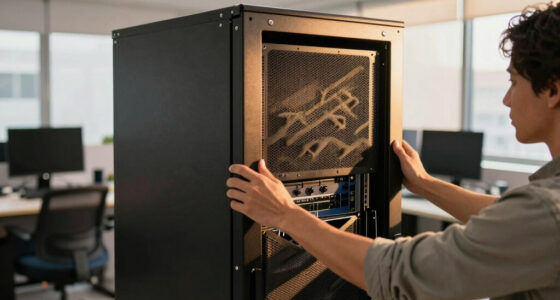
| AMD EPYC 7282 16-Core Server Processor, 2.8 GHz |  | Best Overall for Parallel Cloud Workloads | Cores / threads: 16 / 32 | Base clock: 2.8 GHz | L3 cache: 64 MB | VIEW LATEST PRICE | See Our Full Breakdown |
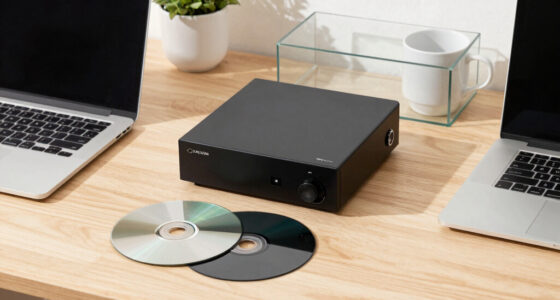
| HPE ProLiant ML30 Gen11 Tower Server, Intel Xeon 6315P, 16GB DDR5, 2 × 1TB HDD |  | Best Complete Tower for Business Cloud Services | Processor: Intel Xeon 6315P, 4 cores | Processor speed: 2.8 GHz | Memory: 16GB DDR5 ECC, 4800 MHz | VIEW LATEST PRICE | See Our Full Breakdown |
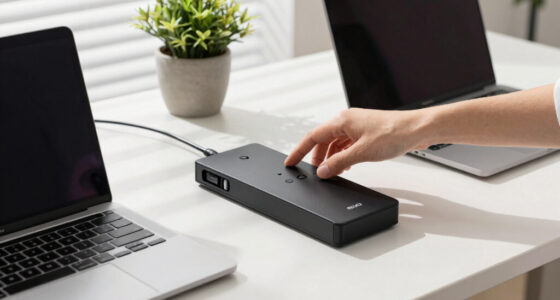
| HPE ProLiant MicroServer Gen11 Tower Server, Pentium Gold G7400, 16GB DDR5, 1TB HDD |  | Best Compact Option for Basic Hosting | Processor: Intel Pentium Gold G7400 | Processor speed: 3.7 GHz | Memory: 16GB DDR5 UDIMM, expandable to 128GB | VIEW LATEST PRICE | See Our Full Breakdown |
| cloud server processor | Processor | Processor speed | Memory | Storage |
|---|---|---|---|---|
| AMD EPYC 7282 16-Core Server P | — | — | — | — |
| HPE ProLiant ML30 Gen11 Tower | Intel Xeon 6315P, 4 cores | 2.8 GHz | 16GB DDR5 ECC, 4800 MHz | 2 × 1TB SATA HDD |
| HPE ProLiant MicroServer Gen11 | Intel Pentium Gold G7400 | 3.7 GHz | 16GB DDR5 UDIMM, expandable to 128GB | 1TB SATA 6G HDD |
More Details on Our Top Picks
AMD EPYC 7282 16-Core Server Processor, 2.8 GHz
The EPYC 7282 is my leading pick when the buying question is specifically about a cloud server processor. Its 16 cores and 32 threads give it a markedly different compute profile from the four-core Pentium and Xeon CPUs in the HPE towers. That extra parallel capacity can suit workloads that run multiple virtual machines, concurrent services, or analytics tasks, provided the rest of the system is built to match. The 2.8 GHz base clock and 64 MB L3 cache help describe its architecture, but buyers should size a system for their actual software rather than assume core count alone guarantees a result.
The tradeoff is that this is a CPU-only purchase, not a ready-to-run server. Its LGA 4094 socket calls for a compatible motherboard and platform, and the 120-watt specification needs to be considered alongside cooling and chassis design. The supplied listing identifies DDR4 memory and 85.3 GB/s bandwidth per socket, so it is not a direct route to the DDR5 platform included with either HPE system. Compared with the ML30, EPYC offers far more cores, but the ML30 arrives with ECC memory, storage, networking, and remote management. Compared with the MicroServer, EPYC favors compute density over compactness and installation simplicity.
I would choose this processor for a planned build where platform compatibility is already established and parallel compute is the priority. I would skip it if I need a complete cloud host, have no LGA 4094 system, or want a smaller machine for a handful of basic office services. The missing platform components are not minor details: they determine system cost, compatibility, administration, and deployment effort.
Pros:- 16 cores and 32 threads suit workloads that can run many tasks concurrently.
- 64 MB of L3 cache and 85.3 GB/s memory bandwidth per socket support a server-oriented design.
- A standalone processor lets experienced builders choose the remaining platform components.
- Designed for data-center workloads such as cloud computing, software-defined infrastructure, and analytics.
Cons:- Requires an LGA 4094-compatible motherboard and supporting platform components.
- The 120-watt power specification calls for suitable cooling and system planning.
- The processor listing does not include memory, storage, networking, or remote-management hardware.
Best for: Server builders with a compatible LGA 4094 platform who need more cores and threads for virtual machines or other parallel workloads.
Not ideal for: Buyers who need a complete server, prefer DDR5-based HPE tower hardware, or have basic workloads better served by a compact ready-to-configure system.
- Cores / threads:16 / 32
- Base clock:2.8 GHz
- L3 cache:64 MB
- Socket:LGA 4094
- Memory type:DDR4
- Memory bandwidth per socket:85.3 GB/s
- Power consumption:120 watts
Our verdict“I rank the EPYC 7282 first for buyers building a compatible platform around parallel compute, but not for anyone seeking a complete cloud server.”
HPE ProLiant ML30 Gen11 Tower Server, Intel Xeon 6315P, 16GB DDR5, 2 × 1TB HDD
The ML30 Gen11 is my pick for a small business that needs a complete tower server rather than a standalone processor. Its Intel Xeon 6315P has four cores at 2.8 GHz, which is a much smaller core count than the EPYC 7282. The difference matters if a deployment will host many concurrent virtual machines or CPU-heavy jobs: in that case, EPYC’s 16 cores and 32 threads are the more compelling starting point. But the ML30 is supplied with 16GB of DDR5 ECC memory, two 1TB SATA drives, four-port 1GbE networking, and a server chassis, reducing the number of components a buyer must source separately.
ECC memory is a useful distinction for business services where memory error handling belongs in the platform plan. The ML30 also has four drive bays, onboard M.2 NVMe support, and four PCIe slots, including a PCIe Gen5 x16 slot. These expansion options give it more room to adapt than the MicroServer, which has two PCIe slots. HPE iLO 6 and TPM 2.0 add remote management and security features that matter when a server is not treated like a desktop sitting beside its administrator.
Its two installed HDDs provide capacity, but they are not the same as an SSD or NVMe-first storage setup. Buyers sensitive to storage latency should plan their drive configuration, and those needing power redundancy should note that the listed 350W power supply is single, with redundancy optional. Compared with the MicroServer, the ML30 is the more business-oriented platform with ECC memory, more PCIe expansion, and four-port networking; compared with the EPYC, it is easier to procure as a system but has fewer CPU cores. I would choose it for office applications, file and application services, or a modest server role where managed hardware matters more than high thread density.
Pros:- Xeon 6315P system includes 16GB of DDR5 ECC memory.
- Two 1TB drives, four LFF bays, and M.2 NVMe support provide storage configuration options.
- Four PCIe slots, including PCIe Gen5 x16, offer more expansion than the MicroServer.
- HPE iLO 6, TPM 2.0, and four-port 1GbE networking support managed business deployments.
Cons:- The four-core processor has substantially fewer cores than the 16-core EPYC 7282.
- The included SATA hard drives are not an SSD or NVMe storage configuration.
- The listed 350W power supply is single; redundant power is optional.
Best for: Small businesses that want a managed tower server with ECC memory, multiple drive bays, and room for PCIe expansion.
Not ideal for: Buyers whose main requirement is high core count, redundant power included by default, or fast SSD storage already installed.
- Processor:Intel Xeon 6315P, 4 cores
- Processor speed:2.8 GHz
- Memory:16GB DDR5 ECC, 4800 MHz
- Storage:2 × 1TB SATA HDD
- Drive bays:Four LFF bays
- Networking:Four-port 1GbE Ethernet
- Expansion:Four PCIe slots, including PCIe Gen5 x16
- Management and security:HPE iLO 6, Silicon Root of Trust, TPM 2.0
Our verdict“I recommend the ML30 when a business needs a manageable, expandable server platform more than it needs the highest core count in this group.”
HPE ProLiant MicroServer Gen11 Tower Server, Pentium Gold G7400, 16GB DDR5, 1TB HDD
The MicroServer Gen11 takes a different path from the EPYC and ML30: it prioritizes a compact, complete system for basic business workloads. Its Pentium Gold G7400 runs at 3.7 GHz, but it has fewer cores than the four-core Xeon 6315P in the ML30 and far fewer than the EPYC’s 16. Clock speed alone does not make it the better cloud processor for parallel jobs. I would match it to lighter services—such as a small office application, limited file hosting, or a low-demand lab—where a compact tower and simple deployment matter more than running many CPU-intensive tasks at once.
The listed configuration includes 16GB of DDR5 memory, expandable to 128GB, plus one 1TB SATA hard drive. Four LFF drive bays leave room for storage changes, and two PCIe slots, including PCIe 5.0, offer some expansion. HPE iLO 6 and TPM 2.0 distinguish it from a generic small desktop: remote administration and security features are already part of the platform. Its chassis can be placed vertically, flat, or on a wall, which gives it an advantage over the larger ML30 when installation space is limited.
That compactness comes with limits. The external 180W power adapter and two PCIe slots make this less suited to substantial hardware expansion than the ML30, which has four slots and a 350W supply. Its single included HDD also leaves storage performance planning to the buyer. The EPYC is the stronger choice for parallel compute, while the ML30 offers ECC memory and a more capable expansion layout. I would pick the MicroServer when the workload is modest and the form factor is a genuine advantage; I would not select it as a substitute for a high-core-count virtualization host.
Pros:- Compact tower can be placed vertically, flat, or on a wall.
- 16GB DDR5 memory can be expanded up to 128GB.
- Four drive bays provide room to change or extend the storage setup.
- Includes HPE iLO 6, TPM 2.0, and two PCIe slots.
Cons:- Pentium Gold G7400 has fewer cores than the Xeon ML30 and EPYC 7282.
- Ships with one 1TB SATA hard drive rather than an SSD or multiple installed drives.
- The external 180W adapter and two-slot layout limit expansion compared with the ML30.
Best for: Small offices, home labs, or service hosts that need a compact managed server for modest workloads and value memory and storage expansion.
Not ideal for: Buyers running many concurrent virtual machines, CPU-heavy analytics, or workloads that require ECC memory or extensive PCIe expansion.
- Processor:Intel Pentium Gold G7400
- Processor speed:3.7 GHz
- Memory:16GB DDR5 UDIMM, expandable to 128GB
- Storage:1TB SATA 6G HDD
- Drive bays:Four LFF non-hot-plug bays
- Expansion:Two PCIe slots, including PCIe 5.0
- Remote management and security:HPE iLO 6 and TPM 2.0
- Power:External 180W adapter
Our verdict“I would choose the MicroServer for compact, lower-demand hosting, but move to the ML30 or a compatible EPYC build when compute demands grow.”
How We Picked
I ranked these options by how well their processor and surrounding platform fit real cloud-hosting decisions, not by treating clock speed as a complete measure of server ability. A cloud server may run virtual machines, databases, internal applications, storage services, or a mix of lighter workloads. Those jobs place different demands on core count, memory, storage, I/O, and remote administration.
The EPYC 7282 earns the leading processor-focused position because its 16 cores and 32 threads distinguish it from the four-core CPUs in the HPE towers. I also account for its 120-watt draw and LGA 4094 socket: buyers need a compatible motherboard, memory, cooling, chassis, and management plan, none of which are included in the processor listing. Its 85.3 GB/s memory bandwidth per socket and 64 MB L3 cache add useful context, but they do not remove the platform requirement.
For the complete systems, I weighed the CPU alongside the parts that affect deployment. The ML30 Gen11 combines Xeon processing with ECC DDR5, two installed hard drives, four drive bays, four PCIe slots, and iLO 6. The MicroServer Gen11 has a Pentium Gold CPU and a smaller, lower-demand profile, but offers four drive bays, memory expansion to 128GB, iLO 6, and TPM 2.0. I place the ML30 ahead of it for business workloads that benefit from ECC and broader expansion, while the MicroServer remains a better match when compact placement and basic services matter more than CPU headroom.
I did not assume that a processor or system will perform identically across every cloud workload. Actual results depend on software, virtualization overhead, memory configuration, storage, network requirements, and system tuning. I also treated the included HDDs as a tradeoff rather than a benefit for every use: they provide capacity, but buyers seeking low-latency storage may need to plan for NVMe or another SSD. The ranking is meant to show distinct use cases, not to imply that one hardware choice suits every deployment.
| cloud server processor | Processor | Drive bays | Expansion |
|---|---|---|---|
| AMD EPYC 7282 16-Core Server P | — | — | — |
| HPE ProLiant ML30 Gen11 Tower | Intel Xeon 6315P, 4 cores | Four LFF bays | Four PCIe slots, including PCIe Gen5 x16 |
| HPE ProLiant MicroServer Gen11 | Intel Pentium Gold G7400 | Four LFF non-hot-plug bays | Two PCIe slots, including PCIe 5.0 |
Factors to Consider When Choosing Cloud Server Processors
I would start by separating a processor purchase from a server purchase. The EPYC 7282 is only a CPU; the two ProLiant models are complete tower systems with memory, storage, and management features. Once that distinction is clear, the key choice is whether your workload needs CPU concurrency, included platform hardware, expansion room, or a smaller footprint.
Match core count to the workload
Core and thread count matters most when applications can divide work across multiple tasks. The EPYC 7282’s 16 cores and 32 threads create far more parallel capacity than the four-core Xeon in the ML30 or the Pentium Gold in the MicroServer. That makes EPYC the standout starting point for a multi-VM or compute-oriented build, assuming the software and system can use the available threads. For lighter services, the extra cores may not justify the platform planning needed to deploy a standalone processor. The Pentium’s 3.7 GHz listed speed should not be read as proof that it will outrun the Xeon or EPYC across workloads; clock speed and core count describe different parts of the processor picture.
Decide between a CPU and a ready system
The EPYC listing gives a builder freedom to select a motherboard, memory, storage, network interfaces, and chassis. That flexibility is useful when a compatible LGA 4094 platform is already part of the plan, but it also creates work and compatibility checks. The HPE towers bundle core system parts and iLO 6 remote management, making them more direct choices for buyers who want a server platform rather than a processor component. Between those systems, the ML30 is the more expandable business tower; the MicroServer emphasizes space-conscious placement and simpler workloads.
Treat memory type and capacity as platform decisions
The EPYC specification calls for DDR4, while both HPE systems include DDR5. These platforms are not drop-in alternatives; memory choice is tied to the motherboard and system design. The ML30 includes 16GB DDR5 ECC, which may suit workloads where error-correcting memory is part of the requirement. The MicroServer includes 16GB of DDR5 UDIMM memory and supports expansion to 128GB. Before choosing, check how much memory your virtual machines, database, or application stack will actually need, and confirm the system’s supported memory configuration rather than buying on capacity alone.
Plan storage for performance and redundancy
Both HPE towers arrive with SATA HDD storage, but the quantity differs: the MicroServer has one 1TB drive, while the ML30 has two 1TB drives. The ML30 also lists M.2 NVMe support, and both systems have four drive bays. Those details provide options, not a guarantee that the supplied storage will meet every application’s latency, capacity, or redundancy needs. A buyer who needs faster storage should plan for an SSD or NVMe setup; a buyer who needs protection against drive failure should check the supported storage configuration and backup plan. The EPYC listing includes no drives, leaving the whole storage design to the system builder.
Compare expansion and physical fit
The ML30’s four PCIe slots give it more room for network, storage, or other add-in cards than the MicroServer’s two slots. That can matter as a small deployment grows. By contrast, the MicroServer’s compact design and flexible placement can make it easier to locate in a small office, though its external 180W adapter and smaller expansion layout set practical boundaries. The EPYC processor’s physical fit depends on the selected LGA 4094 motherboard and chassis, so its dimensions and cooling requirements belong to the eventual build, not this CPU listing alone.
Account for power and administration
The EPYC’s 120-watt specification is one part of a broader system power and cooling plan; the listed number does not describe the total draw of a finished server. The MicroServer uses an external 180W adapter, while the ML30 lists a 350W supply and optional redundancy. For all three choices, confirm that the intended environment can support the system’s power, cooling, and uptime needs. The HPE models include iLO 6 for remote administration, while the EPYC processor itself includes no management capability. Builders using EPYC need to select a platform with the management tools their operations require.
Choose for growth, not just the first deployment
A server that starts with one service may later host more applications, storage, or virtual machines. The ML30’s four PCIe slots, four drive bays, ECC memory, and M.2 support give it the broadest included-system expansion package here. The MicroServer has useful room to grow through memory and drive changes, but fewer PCIe slots and a lower-power adapter make it a more bounded platform. EPYC offers a different kind of headroom: many CPU cores, in exchange for the need to plan and assemble the surrounding server. I would choose based on the upgrade path you can actually support, not on theoretical expansion alone.
Frequently Asked Questions
Which option is the strongest choice for a cloud server processor?
For a buyer focused on processor capacity for parallel work, I would start with the AMD EPYC 7282 because it has 16 cores and 32 threads, compared with the four-core CPUs in the HPE systems. It is not a complete server, though. If you need a ready-to-deploy tower with memory, drives, and remote management, the ML30 or MicroServer may be a better fit despite having fewer cores.
Are the HPE ProLiant products processors or complete servers?
The HPE ProLiant ML30 Gen11 and MicroServer Gen11 are complete tower server systems with processors, memory, storage, and management features. The AMD EPYC 7282 is a standalone processor. That difference affects what else you need to buy and configure, so I would not compare their listed specifications as if all three were CPUs offered on the same basis.
Is the MicroServer Gen11 suitable for virtualization?
It can suit a modest virtualization lab or a small number of lighter virtual machines, especially with memory expanded beyond the included 16GB if the workload calls for it. Its Pentium Gold processor has fewer cores than the ML30’s Xeon and far fewer than the EPYC 7282. I would avoid treating it as a high-density virtualization host for many demanding guests.
Does the ML30 Gen11 include fast SSD storage?
The listed ML30 configuration includes two 1TB SATA hard drives, not an SSD. The system supports M.2 NVMe, and its four drive bays give the owner room to configure storage differently, but buyers who need low-latency storage should plan for appropriate SSD or NVMe hardware. Storage support and installed storage are separate details.
What should I check before buying the EPYC 7282?
Confirm that you have or plan to acquire a compatible LGA 4094 motherboard, suitable DDR4 memory, cooling, chassis, power, and remote-management tools. The processor alone does not provide a ready server. I would also check workload software requirements and system compatibility before selecting components, since the EPYC’s 16 cores are most useful when the platform and applications can make use of them.
Conclusion
I would choose the AMD EPYC 7282 if my priority were parallel compute and I already had a compatible LGA 4094 platform or a clear plan to build one. For a small business that wants a complete tower, ECC memory, remote management, and broader expansion, the HPE ProLiant ML30 Gen11 is the stronger fit, with the caveat that its installed HDDs are not SSDs and redundant power is optional. For a compact office or lab host running modest services, I would choose the HPE ProLiant MicroServer Gen11 and accept its lower CPU headroom and smaller expansion layout. The best match depends on whether your bottleneck is compute concurrency, system readiness, or physical space.