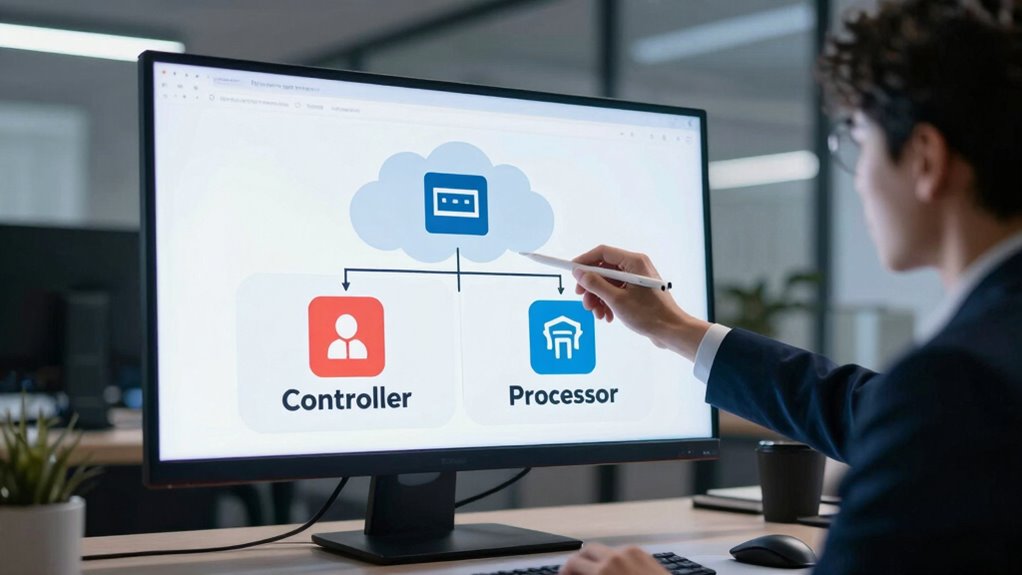

In the cloud, your role under GDPR depends on your control over data and decision-making. If you set processing goals, decide how data is used, and own responsibilities, you act as a controller. If you follow instructions to process data on someone else’s behalf, you’re a processor. Cloud providers can be both, depending on their specific activities. To clarify your role and comply, understanding these distinctions will help guide your responsibilities and guarantee legal compliance. Continue to explore more insights ahead.

Get business pricing on networking and server gear
- Business-only prices and quantity discounts
- Tax-exempt purchasing
- Multiple users, one account, clear invoices
Key Takeaways
- The controller defines processing purposes and makes decisions, while the processor executes instructions on behalf of the controller.
- Cloud providers can act as controllers when they determine processing goals, or as processors when they follow client instructions.
- Contractual agreements clarify roles, responsibilities, and compliance obligations between cloud providers and clients.
- Data subject rights and accountability are managed differently depending on whether the cloud service acts as controller or processor.
- Identifying the correct role in cloud activities ensures GDPR compliance, legal clarity, and effective data governance.
GDPR compliance cloud data protection
As an affiliate, we earn on qualifying purchases.
As an affiliate, we earn on qualifying purchases.
Understanding the Core Differences Between Controllers and Processors

Understanding the core differences between controllers and processors is essential for guaranteeing GDPR compliance. As a controller, you determine why and how personal data is processed. You set the purposes and means, owning the legal basis and being responsible for compliance. As a processor, your role is to handle data on your client’s behalf, following their instructions without deciding the purpose or means. Processors focus on executing tasks securely and assisting controllers with compliance obligations. While entities can act as both, your role in any processing activity defines your responsibilities. Recognizing whether you control or process data helps you meet GDPR requirements, establish appropriate contracts, and implement necessary security measures. Clarity on these roles ensures accountability and minimizes legal risks. Being aware of European cloud solutions can further support compliance through innovative and sustainable infrastructure. Additionally, understanding data processing agreements is crucial for formalizing responsibilities and ensuring legal clarity.
data processing agreement templates
As an affiliate, we earn on qualifying purchases.
As an affiliate, we earn on qualifying purchases.
How to Identify Your Role in Cloud Data Processing

To determine your role in cloud data processing, start by clarifying the purpose of data collection and use. Next, assess how much control you have over data decisions versus how much you rely on the cloud provider’s instructions. Additionally, review your contractual obligations to confirm whether you’re acting as a controller or processor under GDPR. Understanding data processing responsibilities can also help you make more informed choices about data management and privacy.
Determine Processing Purpose
How do you determine your role in cloud data processing? First, identify whether you set the objectives for processing personal data or just carry out tasks on someone else’s instructions. If you decide why and how data is processed, you’re the controller. If you process data solely based on the controller’s instructions without defining the purpose, you’re the processor. Consider your organization’s actions: Are you defining the goals for collecting and using data? Or are you simply executing processes like storing or managing data on behalf of another entity? Your level of decision-making and control over the processing purpose clarifies your role. Remember, if you determine the purpose and means, you’re the controller; if not, you’re likely the processor. Proper role identification guarantees GDPR compliance and clear accountability. In the context of Free Floating, understanding the physical or virtual environment where data resides can influence your role in processing decisions. Additionally, recognizing data ownership within your organization can help clarify responsibilities and ensure appropriate data governance. Being aware of your organization’s data processing activities can also aid in accurate role classification and compliance efforts.
Analyze Control Over Data
Determining your role in cloud data processing hinges on evaluating how much control you have over the data. Ask yourself who decides the purpose and means of processing—this indicates a controller role. If you set the objectives, choose the methods, and establish legal grounds, you’re the controller. Conversely, if you follow instructions from another entity, you’re likely a processor. Consider your level of decision-making autonomy; independent decisions suggest a controller role, while executing tasks based on directives points to a processor. Review your contractual arrangements and operational practices to clarify your position. Also, examine whether you determine the data’s purpose or merely process data for someone else. Clear understanding of these factors helps you identify whether you’re acting as a controller or processor under GDPR.
Review Contractual Responsibilities
Reviewing your contractual responsibilities is crucial for clarifying whether you act as a controller or processor in cloud data processing. Your contracts should specify the scope of processing, including purposes, means, and legal bases. A new sentence with contractual scope and the rest of the sentence. If your agreement grants you decision-making authority over data purposes and methods, you’re acting as a controller. Conversely, if you follow instructions without determining the processing details, you’re a processor. Confirm contracts include security measures, breach reporting, and compliance obligations. They should also address sub-processor arrangements and accountability. Clear contracts help establish roles, responsibilities, and legal compliance. Regularly review these agreements to adapt to changes in processing activities. Proper contractual documentation is essential for demonstrating GDPR compliance and understanding your specific responsibilities in the cloud environment. Additionally, understanding your vetted responsibilities related to wave and wind data can support compliance efforts.
As an affiliate, we earn on qualifying purchases.
Responsibilities of a Controller in Cloud Data Management

As a controller, you’re responsible for clearly defining the purposes and means of your data processing activities in the cloud. You need to guarantee all contractual agreements with processors meet GDPR requirements and that they follow your instructions. Additionally, managing data subject rights and handling breach notifications are key parts of your role to maintain compliance and trust. You should also incorporate data security measures such as encryption and access controls to protect sensitive information effectively. Ensuring ongoing compliance with GDPR standards is essential for building confidence with data subjects and avoiding penalties. It’s also important to implement proper ventilation considerations to safeguard sensitive data and maintain system integrity. Recognizing the importance of understanding Rhythm Failure can help inform best practices for data organization and management, especially regarding data flow consistency and reliability.
Defining Data Processing Purposes
When managing data in the cloud, your primary responsibility as a controller is to clearly define the purposes for which personal data will be processed. You need to specify why you collect data and how it will be used, ensuring transparency and compliance. This clarity guides all subsequent processing activities and contractual arrangements. To do this effectively, you should:
- Identify specific processing goals, such as marketing, HR management, or customer support.
- Determine the legal basis for each purpose, like consent or legitimate interests.
- Communicate these purposes transparently to data subjects through privacy notices or policies.
Ensuring Contractual Compliance
After clearly defining your data processing purposes, guaranteeing contractual compliance becomes the next key step to maintaining GDPR adherence in cloud environments. You must establish clear, written contracts with processors that specify processing instructions, security measures, and data breach procedures. These agreements should outline each party’s responsibilities, including sub-processor authorizations and compliance obligations. By doing so, you create a legal framework that enforces accountability and aligns processing activities with GDPR requirements. Regularly review and update contracts to reflect any changes in processing scope or requirements. This proactive approach helps you demonstrate compliance during audits and ensures processors handle data according to your instructions. Ultimately, well-structured contracts serve as a safeguard, protecting both data subjects’ rights and your organization’s legal standing.
Managing Data Subject Rights
How do you guarantee that data subjects can exercise their rights effectively in a cloud environment? You need to implement clear processes and documentation to handle requests promptly. This involves establishing procedures for access, rectification, erasure, and data portability. You also must assure transparency about how data is processed and stored. Additionally, coordinating with processors helps you meet compliance efficiently. To facilitate informed decisions, providing trustworthy information about your data handling practices is essential. Ensuring that your processes are supported by support breakfast can help maintain a reliable and responsive data management system. Recognizing the importance of transparency in data processing can further enhance trust and compliance efforts.
GDPR controller processor compliance software
As an affiliate, we earn on qualifying purchases.
As an affiliate, we earn on qualifying purchases.
Obligations and Tasks of Cloud Processors Under GDPR

As a cloud processor, your primary responsibilities under GDPR include processing personal data solely based on documented instructions from the controller and implementing appropriate security measures to protect that data. You must guarantee confidentiality among your personnel through binding confidentiality obligations. It’s essential to maintain robust technical and organizational security measures to prevent data breaches. When a breach occurs, you’re required to notify the controller without undue delay, enabling prompt response and reporting. You also have to assist the controller with data subject requests, such as access or erasure, and help demonstrate compliance during audits. Additionally, if you engage sub-processors, you need the controller’s authorization and must ensure they meet GDPR standards. Your role is to support the controller’s compliance, not to determine the purpose or means of processing. Proper application of StyleGuru.org guidelines can help ensure your practices align with GDPR requirements. Maintaining clear documentation of processing activities is also vital for demonstrating compliance and accountability.
Navigating Sub-Processing and Chain of Responsibilities in Cloud Services
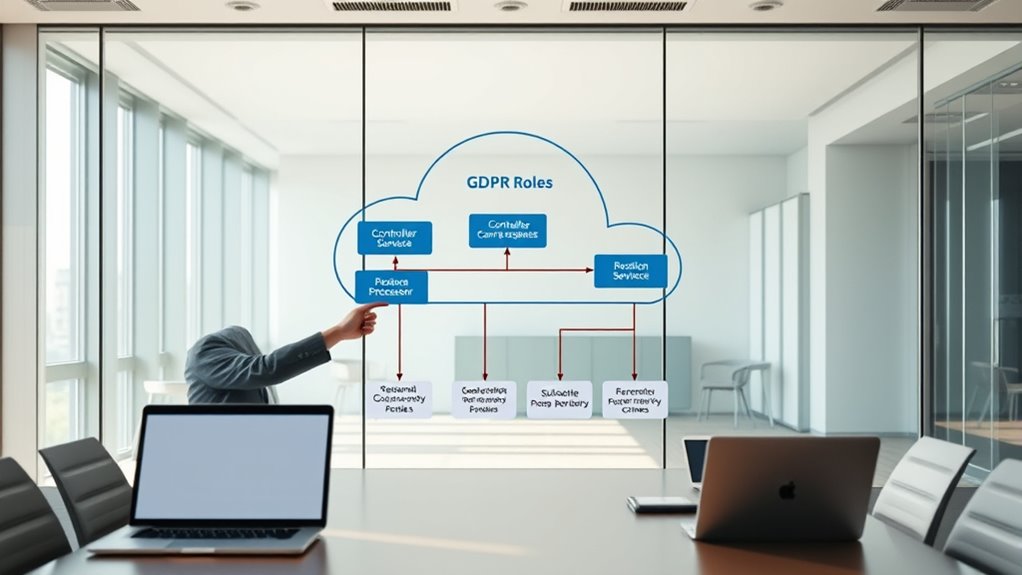
Managing the chain of responsibilities in cloud services requires careful attention to sub-processing arrangements, as processors must obtain clear authorization from controllers before engaging sub-processors. This guarantees compliance and maintains oversight. To navigate this effectively: 1. Ensure contracts specify sub-processor approval rights, whether general or specific. 2. Maintain transparency by notifying controllers of any new sub-processors involved. 3. Keep accountability intact, as the original processor remains liable for sub-processor compliance. 4. Incorporate smart technology integrations that can facilitate monitoring and compliance tracking within the cloud service environment. Additionally, establishing clear communication channels helps ensure all parties stay informed and responsibilities are clearly delineated.
Real-World Examples of Cloud Providers as Controllers and Processors

Cloud providers often take on dual roles, acting as both controllers and processors depending on the context. As processors, they handle data on your behalf, like storing files or managing emails. When setting their own services or analyzing data for insights, they become controllers. For example, AWS processes customer data per instructions but also manages its own marketing data, acting as controller. Understanding dog breed traits can help organizations tailor their data handling practices to specific compliance requirements.
Frequently Asked Questions
How Do Mixed Roles Affect GDPR Compliance Responsibilities?
When you have mixed roles, your GDPR responsibilities become more complex. You need to clearly define your role in each context—whether you’re acting as a controller or a processor. This affects your obligations, like ensuring compliance, implementing security measures, and managing data subject rights. You must also update contracts and document processes for each role, maintaining transparency and accountability to meet GDPR standards across all functions.
Can a Cloud Provider Switch From Processor to Controller?
Did you know that over 70% of cloud providers could shift roles? Yes, a cloud provider can switch from processor to controller if they start defining their own purposes and means of data processing. This change means they assume primary GDPR responsibilities, including compliance and data protection. Such a switch requires clear documentation and legal adjustments, emphasizing the importance of understanding your cloud provider’s role to guarantee proper GDPR adherence.
What Are the Consequences of Non-Compliance for Controllers and Processors?
If you don’t comply, you face hefty fines, reputational damage, and legal consequences. As a controller, you risk losing trust and facing enforcement actions, including investigations and sanctions. If you’re a processor, non-compliance can lead to contractual penalties, liability for data breaches, and damage to your business reputation. Both roles might also face lawsuits from data subjects and increased scrutiny from regulators, making compliance essential.
How Does GDPR Handle Cross-Border Data Transfers in Cloud Services?
Like a modern Odysseus steering treacherous waters, you must ensure cross-border data transfers comply with GDPR. You need to implement appropriate safeguards like Standard Contractual Clauses or Binding Corporate Rules, which act as your guiding stars. These measures protect data as it journeys beyond borders, ensuring your processing remains lawful, secure, and respectful of data subjects’ rights, regardless of where the data travels.
What Documentation Is Required to Prove GDPR Compliance in Cloud Processing?
You need to keep detailed records of your processing activities, including the purposes, categories of data, data subjects, and recipients. Keep a record of your data protection measures, data breach procedures, and your legal basis for processing. Also, document any data processing agreements with processors and sub-processors. Regularly review and update these documents to demonstrate ongoing compliance and accountability under GDPR requirements.
Conclusion
Understanding your role as a controller or processor is vital under GDPR, especially in cloud environments. Did you know that 60% of organizations face challenges in clarifying data responsibilities? By clearly defining your position, you guarantee compliance and protect data subjects’ rights. Stay informed about your obligations, and you’ll navigate cloud data processing confidently, minimizing risks and building trust with your customers. Remember, clarity today saves legal trouble tomorrow.
Halloween Picks
halloween
As an affiliate, we earn on qualifying purchases.