

To build an asset tagging process that survives staff turnover, you should standardize your procedures with clear documentation and accessible SOPs, making onboarding seamless for new team members. Use durable, tamper-proof tags linked to a centralized database and automate updates through software integration. Assign specific roles and conduct regular training to reinforce your system. This guarantees continuity and accuracy even when personnel change, and maintaining these strategies will help you master a resilient asset management approach.

Get business pricing on networking and server gear
- Business-only prices and quantity discounts
- Tax-exempt purchasing
- Multiple users, one account, clear invoices
Key Takeaways
- Develop detailed, easy-to-follow Standard Operating Procedures (SOPs) for all asset tagging tasks.
- Document all processes thoroughly and keep materials accessible for quick onboarding.
- Assign clear roles and responsibilities to ensure accountability regardless of staff changes.
- Regularly review and update procedures to incorporate new technologies and best practices.
- Incorporate training programs and ongoing education to maintain knowledge consistency across staff.
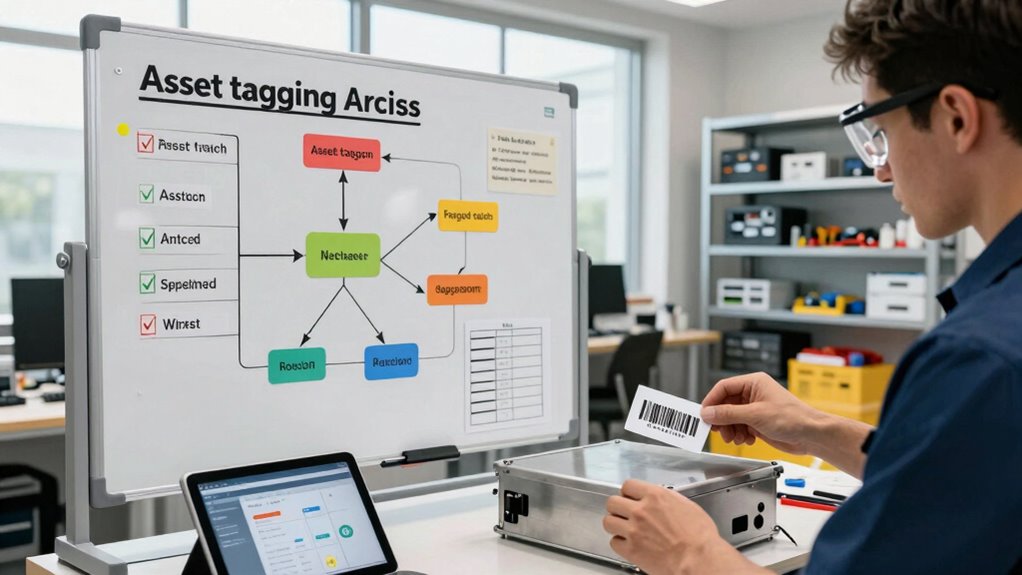
Have you ever wondered how organizations keep track of their assets efficiently? It all starts with a solid asset tagging process that can withstand staff turnover and adapt over time. To build such a system, you need to focus on creating a streamlined approach to inventory tracking and ensuring smooth software integration. When employees leave or shift roles, a well-defined process makes it easier to transfer responsibilities without losing vital information or creating gaps in your asset management.
Start by establishing a comprehensive inventory tracking system. Assign unique identifiers, like barcodes or QR codes, to every asset. These tags should be durable, tamper-proof, and easy to scan, so staff can quickly log and locate assets. Document critical details such as purchase date, location, condition, and responsible personnel. This documentation becomes the backbone of your asset management, making it easier to update records when staff change positions or depart. When new team members step in, they can quickly familiarize themselves with the existing system, reducing onboarding time and minimizing errors. Incorporating digital asset management techniques can further enhance your tracking accuracy and efficiency. Additionally, maintaining a centralized database helps prevent duplication and ensures consistent data across departments. Implementing a standardized process also supports audit trails and accountability, which are essential for effective asset control.
To further improve resilience, consider integrating automated data collection methods, such as RFID technology, to reduce manual entry errors and increase efficiency. Next, focus on software integration. Your asset tags should seamlessly connect with your asset management software. Choose a platform that offers real-time updates, user-friendly interfaces, and role-based access controls. When your inventory tracking system is integrated with your software, every scan or update automatically syncs across all relevant records. This ensures your asset data remains current and accurate, even when staff members leave or switch roles. Proper integration also simplifies reporting, audit trails, and maintenance schedules, all critical for operational continuity. Implementing asset management best practices can further enhance system resilience and efficiency.
To make the process resilient to staff turnover, document standard operating procedures (SOPs) for asset tagging, updating records, and handling transfers. Keep these SOPs accessible and easy to understand, so new employees can quickly get up to speed. Regularly review and update your processes to incorporate new technologies or address gaps identified during audits. Assign clear responsibilities for asset management tasks, so there’s always a designated person or team who understands the system inside out. Establishing a training program for new and existing staff ensures everyone remains knowledgeable and engaged with the asset management process.
Finally, train your staff consistently on the asset tagging process, emphasizing the importance of accurate inventory tracking and software usage. When everyone understands the workflow, it reduces reliance on individual knowledge and ensures continuity. By combining detailed inventory tracking, robust software integration, and clear documentation, you create a resilient asset tagging process that remains effective despite staff turnover. This approach not only safeguards your assets but also streamlines operations, saving you time and resources in the long run.
durable asset tags with QR codes
As an affiliate, we earn on qualifying purchases.
As an affiliate, we earn on qualifying purchases.
Frequently Asked Questions
How Often Should Asset Tags Be Updated or Replaced?
You should update or replace asset tags every 3 to 5 years to guarantee asset longevity and maintain tag durability. Regular checks help identify worn or damaged tags that might compromise tracking accuracy. If assets are frequently used or exposed to harsh environments, consider replacing tags sooner. Keeping up with these intervals ensures your asset management remains reliable, minimizes errors, and prolongs the effectiveness of your tagging system.
What Are the Best Tools for Asset Tagging?
You should choose tools that integrate barcode scanning and cloud inventory management for effective asset tagging. Mobile barcode scanners streamline data entry and retrieval, making asset tracking quick and accurate. Cloud-based inventory systems allow you to access asset information anytime, anywhere, and facilitate seamless updates, even with staff turnover. Look for solutions that are user-friendly, scalable, and compatible with your existing infrastructure to guarantee longevity and efficiency.
How Do You Handle Asset Tags in Remote or Distributed Locations?
Did you know 70% of remote teams struggle with inventory management? To handle asset tags in remote or distributed locations, you should implement a centralized system for remote inventory tracking. Use durable, tamper-evident tags and digital tools that enforce tag compliance. Regular audits and clear documentation guarantee your asset data stays accurate, no matter where your staff work. This approach keeps your asset management consistent and reliable across all locations.
What Training Is Needed for Staff on Asset Tagging Procedures?
You need thorough staff training on asset management and tagging procedures to guarantee consistency and accuracy. Focus on teaching proper tagging techniques, documentation protocols, and the importance of tracking assets. Use hands-on demonstrations, clear written instructions, and regular refresher sessions. This approach helps new staff quickly grasp procedures, reduces errors, and keeps your asset management system reliable despite staff turnover. Consistent training ensures everyone stays aligned with your asset tagging standards.
How Do You Track Asset Tags During Asset Disposal or Transfer?
To track asset tags during disposal or transfer, you should update your asset management system immediately, guaranteeing asset tag compliance and tagging accuracy. Record the new location or disposal details, and remove or deactivate the tags if necessary. Regular audits help verify that asset tags match the system records, preventing discrepancies. Keeping clear documentation and maintaining a consistent process ensures smooth tracking, even during staff changes.
asset management software with barcode scanning
As an affiliate, we earn on qualifying purchases.
As an affiliate, we earn on qualifying purchases.
Conclusion
By establishing a clear, standardized asset tagging process today, you’ll guarantee your system stays robust, even as staff come and go. Think of it like a trusty pocket watch—timeless, reliable, and ready to keep ticking no matter the era. Keep documentation thorough, train consistently, and automate where possible. With these steps, your asset management will be as resilient as the legendary ships of old, sailing smoothly through any staff changes that come your way.
As an affiliate, we earn on qualifying purchases.
asset tracking system with centralized database
As an affiliate, we earn on qualifying purchases.
As an affiliate, we earn on qualifying purchases.
Halloween Picks
halloween
As an affiliate, we earn on qualifying purchases.