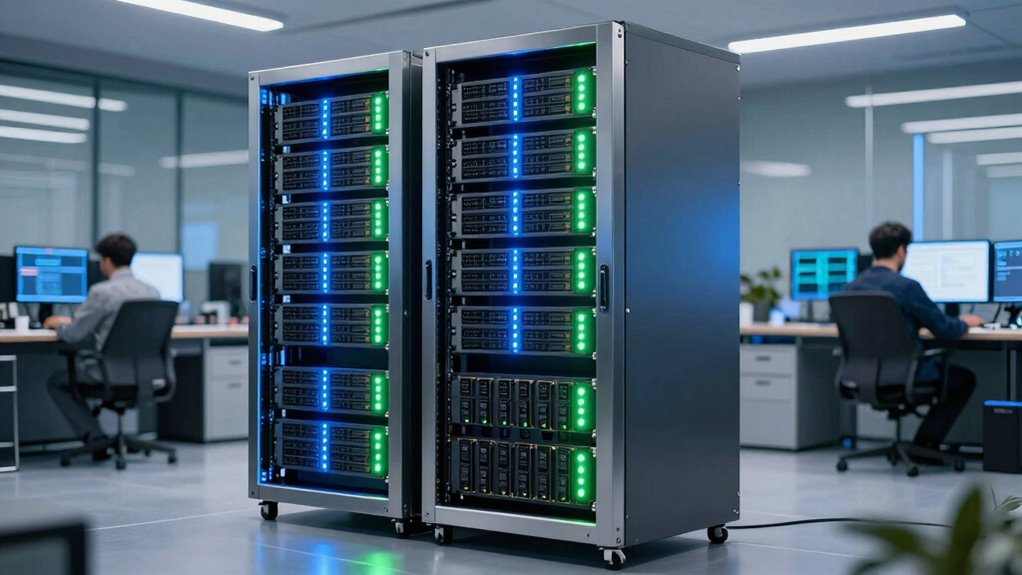

In a growing organization, storage tiering involves dynamically categorizing your data into different performance and cost levels. You start with simple tiers like SSDs for high-demand data and HDDs for archive storage. As the data expands, you incorporate cloud solutions or tape backups to manage costs and performance. Automated tools help analyze access patterns and move data seamlessly between tiers. Keep refining your strategies to stay scalable and efficient—there’s more to discover on how to optimize this process.
Key Takeaways
- Implements multi-tier storage systems, starting with SSDs for high-demand data and HDDs or cloud for archival.
- Regularly reviews and refines tiering policies to optimize costs and performance.
- Uses automation to analyze access patterns and migrate data seamlessly across tiers.
- Incorporates additional tiers like cloud or tape as data volume grows.
- Balances performance needs with cost efficiency to support organizational scalability.

Are you struggling to manage rapidly expanding data without escalating costs or sacrificing performance? Storage tiering offers a practical solution, but understanding what it really looks like in a growing organization is key. As your data volume increases, you need efficient ways to store, access, and manage information without draining resources. That’s where smart data migration strategies come into play, helping you move data between different storage tiers based on usage patterns. By implementing these strategies, you ensure frequently accessed data stays on high-performance storage, while older or less critical data shifts to more economical tiers. This approach not only improves access speed for critical data but also prevents your storage infrastructure from becoming overcrowded and costly.
Smart data migration ensures critical data stays high-performance while optimizing storage costs through dynamic tiering.
In a growing organization, storage tiering isn’t just about segregating data; it’s about dynamically adapting to your evolving needs. You might start with a simple two-tier system—using SSDs for high-demand data and HDDs for archival purposes. As your data grows, you might introduce additional tiers, such as cloud storage or tape backups, to optimize costs further. The goal is to align storage costs with data value, ensuring you’re not overspending on high-performance storage for data that doesn’t require it anymore. Cost optimization techniques become essential here, helping you identify what data truly needs premium storage and what can live on cheaper options. Regularly reviewing and refining your tiering policies ensures you’re making the most of your investment. Leveraging storage tiering in growing organizations allows for more flexible and scalable data management that can evolve with your business needs. Recognizing the importance of Cost optimization techniques can further enhance your strategy by ensuring efficient resource allocation. Additionally, understanding storage management tools can streamline how you implement and monitor your tiering system.
Implementing storage tiering in a growing organization also involves automation. Automated tiering solutions analyze access patterns in real-time, seamlessly moving data between tiers without manual intervention. This reduces management overhead and minimizes the risk of human error. It also means you can focus on strategic initiatives rather than constantly managing storage configurations. Additionally, understanding cloud storage options and how they integrate into your tiering strategy can further enhance flexibility. Integrating multiple storage options and data migration techniques can help streamline operations as your data landscape becomes more complex. As your organization scales, a well-designed tiering system can handle increasing data loads efficiently, making sure your performance remains high without skyrocketing costs. This balance is crucial for maintaining smooth operations and keeping your budget in check.
Ultimately, storage tiering in a growing organization hinges on a combination of effective data migration strategies, cost optimization techniques, and automation. By continuously evaluating your storage needs and adjusting your tiers accordingly, you ensure your data infrastructure remains agile, cost-effective, and capable of supporting your expansion. It’s about smartly balancing performance and cost, so your organization can grow without being hampered by storage limitations or spiraling expenses. With the right approach, storage tiering becomes a powerful tool to manage data growth efficiently, keeping your data accessible and your costs under control.
As an affiliate, we earn on qualifying purchases.
Frequently Asked Questions
How Does Storage Tiering Impact Overall Organizational Costs?
Storage tiering helps you reduce overall organizational costs by optimizing where data is stored, placing frequently accessed data on faster, more expensive tiers, and less-needed data on cheaper, slower ones. This strategy enhances performance and enables cost optimization, especially as your organization grows. By efficiently managing storage resources, you minimize waste and maximize value, ultimately supporting your expanding business needs without unnecessary expenditure.
What Are Common Challenges When Implementing Tiered Storage?
You might face challenges like data migration, which can disrupt workflows and risk data loss if not managed carefully. Performance optimization becomes tricky, as balancing speed with cost efficiency requires fine-tuning. Implementing tiered storage demands thorough planning to minimize downtime. Additionally, ensuring data security across tiers adds complexity. Addressing these issues proactively helps you achieve smoother deployment and better long-term benefits from your storage tiering strategy.
How Often Should Storage Tiers Be Reassessed or Updated?
Think of your storage tiers as a garden that needs regular tending. You should reassess and update them every 6 to 12 months, or when data patterns shift considerably. This helps optimize performance and guarantees data migration occurs smoothly, preventing bottlenecks. Frequent reviews keep your storage environment healthy, allowing you to adapt to growth and changing demands, ultimately maximizing efficiency and cost-effectiveness.
What Tools Assist in Managing Dynamic Storage Tiering?
You can manage dynamic storage tiering effectively using tools that feature automated classification and policy management. These tools automatically analyze your data to classify it based on access patterns, ensuring the right data resides on the most suitable tier. They also let you set and adjust policies seamlessly, so your storage adapts to your organization’s growth and changing needs, reducing manual effort and enhancing overall efficiency.
How Does Tiering Affect Data Security and Compliance?
You might find that tiering subtly influences data security and compliance, requiring careful attention. As data moves across tiers, implementing robust data encryption becomes essential to safeguard sensitive information. Meeting compliance standards demands consistent policies across all storage levels, ensuring legal and regulatory requirements are upheld. While tiering optimizes performance and costs, staying vigilant about security measures helps prevent vulnerabilities, maintaining trust and integrity in your organization’s data management practices.
high capacity HDDs for data archiving
As an affiliate, we earn on qualifying purchases.
As an affiliate, we earn on qualifying purchases.
Conclusion
As your organization grows, storage tiering becomes the steady lighthouse guiding your data safely through turbulent seas. It symbolizes a wise navigator, prioritizing what’s essential while gracefully sailing through less critical depths. Embrace this strategy to keep your data’s journey smooth and secure, understanding that each tier is a step toward clarity and efficiency. With thoughtful tiering, your organization’s data landscape transforms into a resilient voyage—bright, organized, and ready to navigate any storm.
automated storage tiering software
As an affiliate, we earn on qualifying purchases.
As an affiliate, we earn on qualifying purchases.
cloud storage solutions for businesses
As an affiliate, we earn on qualifying purchases.
As an affiliate, we earn on qualifying purchases.