

Redundant power supplies are essential because they guarantee your critical systems stay online during power failures, preventing data loss and operational downtime. While marketing specs might highlight efficiency ratings, they often overlook real-world reliability and compatibility challenges. The true value lies in dependability, seamless backup, and long-term performance. If you want to understand why reliability beats flashy specs and how to choose the right solution, keep exploring—there’s much more to discover.

Get business pricing on networking and server gear
- Business-only prices and quantity discounts
- Tax-exempt purchasing
- Multiple users, one account, clear invoices
Key Takeaways
- Actual system reliability depends on design and quality, not just marketing efficiency claims.
- Redundant power supplies prevent data loss and downtime during power failures.
- Compatibility and proper installation are critical for effective redundancy, beyond marketing features.
- Real-world performance and proven reliability are more important than advertised specs.
- Overall value lies in maintaining continuous operation under stress, not just efficiency ratings.
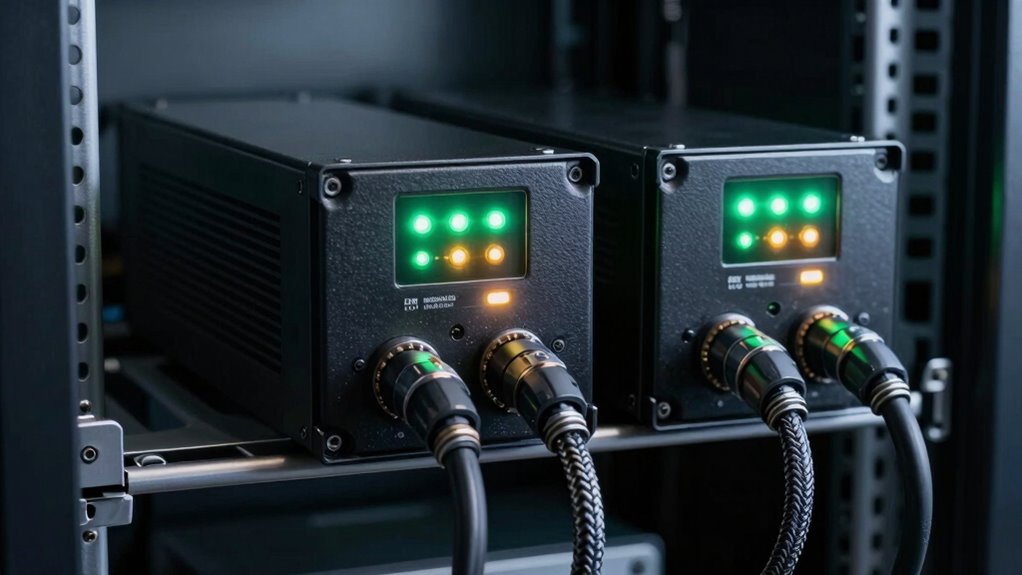
Have you ever experienced a sudden system shutdown that disrupts your work or causes data loss? It’s frustrating, especially when you’re relying on critical systems to operate smoothly. This is where redundant power supplies come into play, serving as a vital safeguard that ensures your equipment stays online even if one power source fails. While marketing specs often highlight impressive features like high energy efficiency or sleek designs, these numbers don’t tell the whole story. What truly matters is whether your power supply system can keep your operations running without interruption, especially during unexpected failures.
Redundant power supplies are designed to provide a backup that kicks in immediately when the primary source fails. This seamless transition prevents downtime and protects your data, productivity, and reputation. But beyond the benefits of uptime, it’s essential to consider the real-world implications of installing these systems. For example, installation challenges can arise if your setup isn’t compatible with the added hardware or if space constraints make it difficult to integrate multiple power supplies. You might find yourself facing complex wiring or needing additional cooling solutions, which can increase installation time and costs. Understanding these challenges beforehand helps you plan better and avoid surprises that could delay deployment. Additionally, choosing the right power redundancy solution involves assessing how well it integrates with your existing infrastructure to ensure smooth operation.
Energy efficiency is often touted as a key feature in modern power supplies, and it certainly matters. A more efficient power supply reduces electricity consumption, lowering your operational costs and supporting sustainability goals. However, energy efficiency ratings alone don’t guarantee reliable backup during power failures. You need a system that balances efficiency with robustness, ensuring that backup power is available instantly and reliably when needed. In some cases, manufacturers may emphasize high efficiency ratings to attract buyers, but if the system isn’t designed with redundancy in mind, those efficiency gains become irrelevant during a failure. The focus should be on how well the entire power management system can handle failover scenarios, not just raw efficiency numbers. Additionally, selecting a system with proven reliability and quality components is crucial to ensure dependable performance under stress. Furthermore, understanding the compatibility of the power supplies with your existing infrastructure can prevent costly upgrades or modifications down the line. It’s also helpful to review industry standards and certifications that validate the safety and performance of the equipment you choose.
Ultimately, the value of redundant power supplies isn’t just in marketing specs or energy ratings. It’s in their ability to provide peace of mind, ensuring your systems remain operational under all circumstances. When selecting a backup power solution, prioritize reliability, ease of installation, and real-world performance over flashy numbers. Doing so protects your data, minimizes downtime, and keeps your operations running smoothly. Remember, the true measure of a power supply’s worth isn’t just in its specifications but in its capacity to keep your business working when it counts the most.
redundant power supply for servers
As an affiliate, we earn on qualifying purchases.
As an affiliate, we earn on qualifying purchases.
Frequently Asked Questions
How Often Should Redundant Power Supplies Be Tested?
You should test redundant power supplies at least once every six months to guarantee backup testing effectiveness. Regular testing helps identify potential failure points before they cause issues, enabling failure prevention. By proactively verifying your power supplies, you maintain system reliability and minimize downtime. Consistent testing ensures your redundant setup works seamlessly when needed, protecting your infrastructure and data from unexpected outages.
Can Redundant Power Supplies Improve Energy Efficiency?
Ever wondered if redundant power supplies can boost energy efficiency? They can, by providing backup power only when needed, reducing unnecessary energy consumption and improving energy savings. While they might seem to increase upfront costs, the long-term benefits include lower energy bills and enhanced system reliability. The cost implications are balanced by the potential for decreased downtime and maintenance, making them a smart choice for energy-conscious businesses seeking efficiency.
What Are the Common Failure Modes of Redundant Power Supplies?
Redundant power supplies can fail due to common failure modes such as capacitor degradation, fan failure, and thermal stress. You should regularly perform maintenance procedures like inspecting for signs of wear, testing power outputs, and replacing aging components. These steps help prevent sudden failures, ensuring continuous operation. Understanding these failure modes allows you to implement proactive maintenance, reducing downtime and extending the lifespan of your redundant power supplies.
Are Redundant Power Supplies Necessary for Small-Scale Setups?
Sure, redundant power supplies are necessary even in small setups, unless you enjoy unexpected downtime and data chaos. While they might seem like overkill, consider the cost considerations—skimp now, pay later with potential hardware failures. Compatibility issues can crop up, too, turning a simple upgrade into a tech headache. So, if uptime matters even a little, investing in redundancy keeps your small system running smoothly and stress-free.
How Do Redundant Power Supplies Impact Overall System Maintenance?
Redundant power supplies improve system maintenance by reducing downtime and extending power supply longevity. When one power supply fails, the backup kicks in seamlessly, preventing system crashes and costly repairs. This setup allows you to perform maintenance or upgrades without shutting down your system, ensuring continuous operation. As a result, you experience fewer disruptions, less stress, and longer-lasting components, making your overall system more reliable and easier to maintain.
uninterruptible power supply (UPS) for data centers
As an affiliate, we earn on qualifying purchases.
As an affiliate, we earn on qualifying purchases.
Conclusion
Think of redundant power supplies as your safety nets beneath a tightrope walk—they may not always be visible, but their presence keeps you steady when the unexpected happens. Just like a sturdy foundation supports a towering building, reliable backups safeguard your critical systems. Don’t be swayed by flashy specs; instead, trust in the quiet assurance of redundancy. When the lights go out, it’s the unseen backup that keeps everything shining bright.
As an affiliate, we earn on qualifying purchases.
enterprise redundant power supplies
As an affiliate, we earn on qualifying purchases.
As an affiliate, we earn on qualifying purchases.
Fall Picks
fall essentials
As an affiliate, we earn on qualifying purchases.