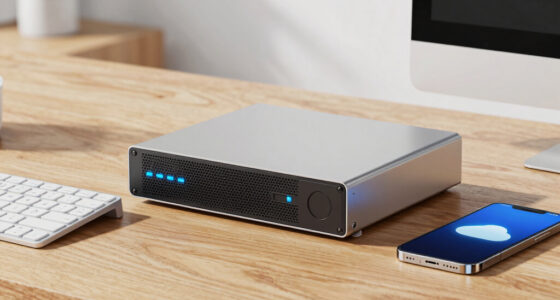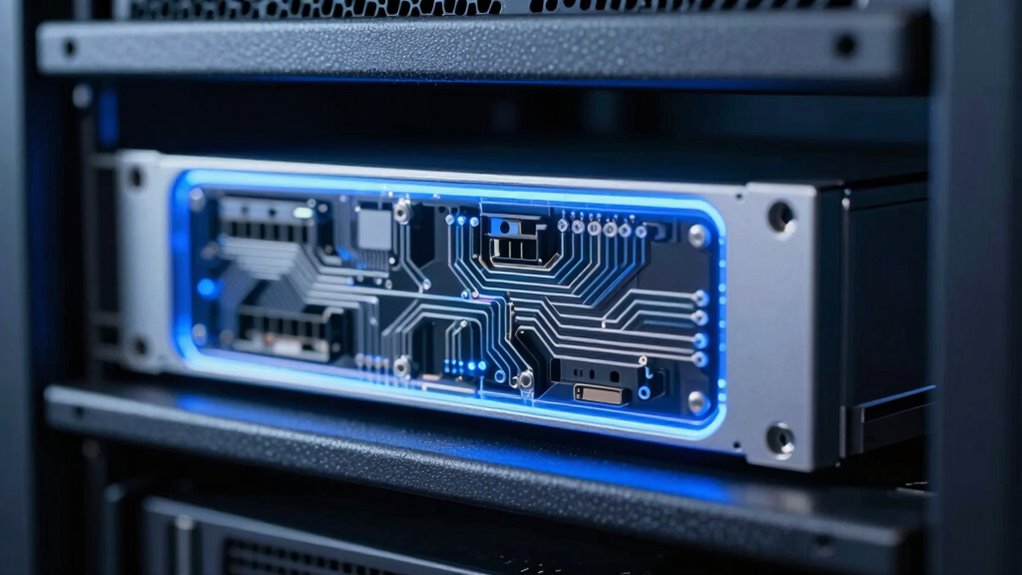

WORM storage is ideal when you need to protect data from tampering, accidental deletion, or ransomware attacks, especially for compliance and legal reasons. Retention locks ensure data remains unaltered during specified periods, making them perfect for industries like finance, healthcare, and government. If maintaining long-term, tamper-proof records matters to you, retention locks in WORM storage could be the solution. Explore further to understand how these systems safeguard your critical data over time.
Key Takeaways
- Retention locks in WORM storage prevent data modification or deletion during legally mandated retention periods.
- They make sense when data integrity, compliance, and tamper-evidence are critical, such as in finance or healthcare.
- WORM retention locks are ideal for long-term preservation of records for audits, legal holds, or regulatory requirements.
- They reduce risks of accidental or malicious data tampering, ensuring trustworthiness over time.
- Implementing retention locks is suited for environments needing immutable archives where data must remain unchanged.

Have you ever wondered how organizations ensure their critical data remains unaltered and tamper-proof over long periods? WORM storage offers a solution by providing a write-once, read-many environment that guarantees data immutability. Once data is written to a WORM medium, it cannot be modified, erased, or overwritten, ensuring the integrity and trustworthiness of stored records. This feature is essential for industries where compliance, legal, or regulatory standards demand that records remain intact and unaltered for extended periods.
WORM storage ensures data remains unaltered and tamper-proof over time for compliance and long-term integrity.
The core concept behind WORM is straightforward: data, once written, is locked in a read-only state. It allows multiple reads without risking any changes, making it ideal for long-term preservation, audits, and forensic investigations. Different types of WORM storage exist, including disk-based solutions that use software flags, optical media like DVD-R or Blu-ray, tape-based systems with dedicated media pools, and cloud implementations that enforce object locking. Physical or software layers enforce these locks to prevent any post-write modifications, supporting a variety of regulatory and operational needs.
WORM storage works through various mechanisms. Optical disks are permanently marked with lasers, making any alteration impossible. Software-enforced WORM employs immutability flags on disks or cloud objects, blocking overwrites or deletions for a specified retention period. Cloud providers like AWS S3 offer object locking features, which trigger errors if an attempt is made to modify or delete data during the lock period. For physical media, dedicated hardware or specialized file systems enforce immutability, ensuring data remains unchanged during the retention window. These mechanisms are designed to meet strict compliance requirements and prevent unauthorized data tampering. Additionally, the implementation of retention policies ensures data remains protected for the required duration without manual intervention.
The benefits of WORM storage are extensive. It protects against tampering, ransomware, and accidental deletion, promoting data integrity and long-term preservation. It also supports audit requirements by providing transparent, tamper-evident records, essential for regulatory compliance and legal investigations. Additionally, WORM solutions can scale to accommodate increasing data volumes, making them suitable for growing archives.
Organizations turn to WORM storage when regulatory standards explicitly require non-rewritable records, such as in finance, healthcare, and government sectors. It’s also indispensable for legal or investigative scenarios where indefinite data preservation is necessary. When operational flexibility is less critical than data security and compliance, WORM storage becomes the strategic choice. Whether through hardware devices, cloud services, or optical media, WORM storage ensures that once data is written, it remains unaltered — providing peace of mind for organizations managing sensitive, long-term records.

Sony LTX400WWW LTO 3 Worm 400GB Storage Media
- Condition: Brand new in box
As an affiliate, we earn on qualifying purchases.
As an affiliate, we earn on qualifying purchases.
Frequently Asked Questions
Can WORM Storage Be Used for All Data Types?
You can’t use WORM storage for all data types, especially those needing frequent updates or deletions. WORM enforces immutability, making it ideal for regulated, legal, or archival data that must stay unchanged for long periods. However, dynamic data like active databases, logs, or files requiring regular modifications aren’t suitable because WORM prevents any alteration once locked. Use WORM selectively for static, compliant, or long-term retention data.
What Are the Risks of Accidental Retention Lock Activation?
Imagine accidentally activating a retention lock like hitting “send” on a vital email—it’s a costly mistake. When you enable a retention lock, you risk locking data permanently if you’re not careful. This can prevent future data deletion or modification, causing compliance issues or storage overload. To avoid this, always double-check policies before locking, and make certain your team understands the implications of activation. A small misstep can lead to big headaches down the road.
How Do Retention Locks Impact Data Recovery Processes?
Retention locks can complicate data recovery because they make data immutable during the locked period, preventing deletions or modifications. You might face delays or additional steps when restoring data, especially if the data is locked in Compliance mode or hardware WORM. To avoid disruptions, plan your recovery workflows carefully, guarantee proper permissions, and consider using non-locked copies or exceptions for legitimate data restoration needs.
Is It Possible to Upgrade From Governance to Compliance Mode Later?
Nearly 85% of organizations face tight regulatory deadlines, making retention lock choices critical. You can’t upgrade from governance to compliance mode later; once you set governance, it’s reversible, but compliance mode is permanent and locks down data protection. This means, if you need stricter, tamper-proof retention, you must plan upfront. Choosing compliance mode initially guarantees the highest level of data integrity, especially for legal and regulatory obligations.
What Are the Cost Differences Between Hardware and Software WORM Solutions?
Hardware WORM solutions typically cost more upfront due to specialized storage devices and infrastructure investments. They also often have higher operational costs for maintenance and scaling. Software WORM, on the other hand, usually incurs lower initial costs, leveraging existing storage with added licensing fees or features. However, over time, hardware options may offer better durability and security, making them more cost-effective for long-term, high-assurance retention needs.

Immutable Backups Explained: How to Protect Data from Ransomware | industrial data privacy | ISO 27001 disaster readiness | secure storage compliance | cyber-proofing backup expert | Backup Security
As an affiliate, we earn on qualifying purchases.
As an affiliate, we earn on qualifying purchases.
Conclusion
Think of WORM storage like a safe deposit box—you lock away your valuables, knowing they’re secure. I once stored critical backups in WORM, and when a ransomware attack hit, I was grateful I had that lock in place. Just like a vault protects treasures, retention locks safeguard your data from accidental deletion or tampering. When data integrity matters most, WORM makes sense—it’s your digital vault, keeping your most valuable information safe and sound.

Swono Watercolor Rainbow Extra Large Huge Heavy Duty Oxford Cloth Laundry Storage Bag with Drawstring Closure, Clouds Beautiful Dye Gradient Art Laundry Bag, Machine Washable, Colorful
- Large Capacity: Holds 3-4 loads of laundry
- Heavy Duty Material: Rip-stop Oxford cloth for durability
- Secure Drawstring Closure: Locks to prevent spillage
As an affiliate, we earn on qualifying purchases.
As an affiliate, we earn on qualifying purchases.

Verbatim 5.25 8X Cc Worm Optical 4.1GB 512B/S 1-Pack
As an affiliate, we earn on qualifying purchases.
As an affiliate, we earn on qualifying purchases.