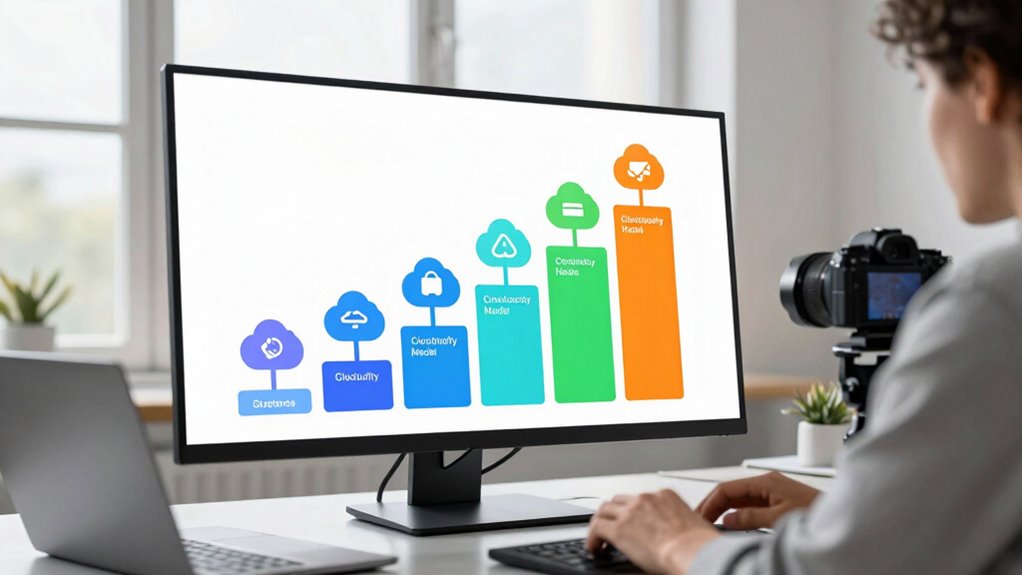

A well-designed cloud maturity model helps your team prioritize initiatives by clearly evaluating current capabilities and identifying gaps. It guides resource allocation and guarantees your efforts align with strategic business goals. As you progress through different maturity stages, it encourages a structured, stage-by-stage approach that prevents missteps and boosts sustainability. Recognizing where you are now and what’s next makes decision-making easier. Stick around to discover how this model can transform your cloud strategy and drive continuous growth.
Key Takeaways
- Provides a structured framework to assess current cloud capabilities and identify priority areas for improvement.
- Aligns governance, security, and operational practices with organizational maturity levels to guide focused investments.
- Helps teams avoid overextending resources by emphasizing staged, deliberate progress.
- Ensures cloud initiatives support strategic business goals through prioritized, value-driven actions.
- Facilitates continuous improvement by highlighting gaps and guiding incremental, sustainable growth steps.
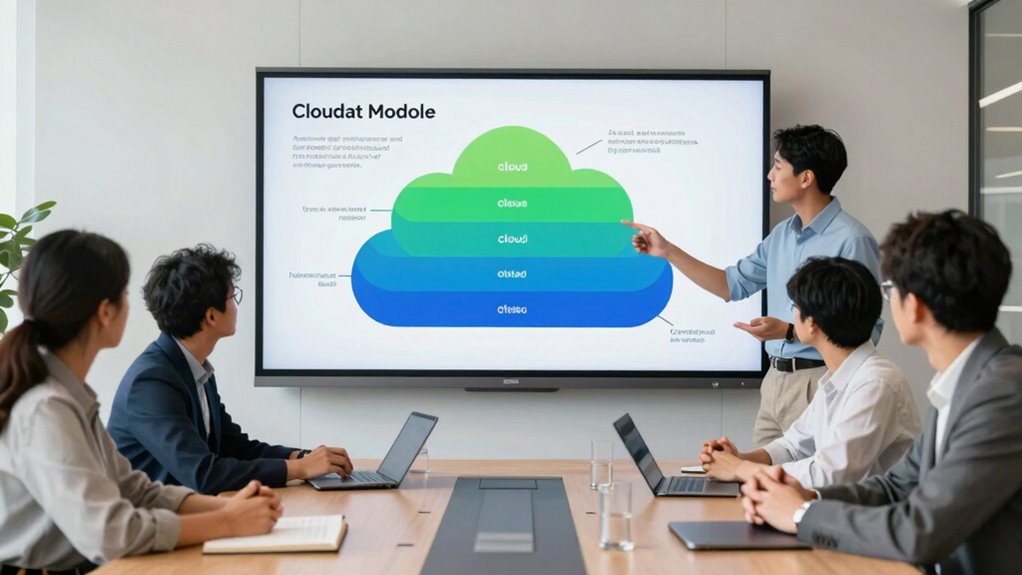
Understanding where your organization stands in its cloud journey is essential for strategic growth, and that’s where the Cloud Maturity Model comes in. It provides a clear framework to assess your current capabilities, identify gaps, and prioritize actions that will advance your cloud adoption effectively. By evaluating your organization’s maturity level, you can make informed decisions about where to focus resources, whether that’s refining cloud governance, enhancing security frameworks, or optimizing operational processes. The model acts as a roadmap, helping you allocate efforts where they’ll make the biggest impact and avoid spreading your team too thin.
As you move through different levels of cloud maturity, the importance of establishing robust cloud governance becomes evident. Early in your journey, governance might be informal or decentralized, which can lead to inconsistent policies and increased risks. As you progress, formalized cloud governance structures should be implemented, ensuring policies are standardized, roles are clearly defined, and compliance is maintained. This not only streamlines decision-making but also aligns cloud activities with business objectives. The Cloud Maturity Model helps you recognize when to formalize these governance practices, guiding you to implement controls that support security, cost management, and operational efficiency. Additionally, integrating cloud governance early can prevent costly rework as maturity advances. Recognizing the stages of cloud maturity allows organizations to adopt best practices at each step, ensuring a smooth transition and continuous improvement.
Security frameworks are another critical focus area that the model emphasizes. Initially, security might be reactive, with ad hoc measures in place. As your maturity advances, security frameworks should evolve into proactive, integrated systems that embed security into every cloud process. This includes implementing identity and access management, data encryption, and continuous monitoring. The model encourages you to prioritize security enhancements based on your current maturity level, ensuring that security investments are targeted and effective. By doing so, you reduce vulnerabilities, protect sensitive data, and build trust with stakeholders. Recognizing your current security posture is essential to avoid gaps that could be exploited. A comprehensive security strategy aligned with your maturity level will help sustain long-term trust and resilience.
The Cloud Maturity Model also helps you avoid common pitfalls like overextending your team or investing in technologies that don’t align with your strategic goals. It promotes a disciplined approach, where each stage of maturity builds upon the last, creating a sustainable path to cloud excellence. Recognizing the importance of cloud sustainability and incorporating sustainable practices into your cloud strategy is increasingly vital as organizations strive to reduce their environmental impact. As you advance, you’ll find that your cloud governance frameworks become more mature, security measures more resilient, and operational efficiencies more pronounced. This clarity enables your team to focus on high-value initiatives, such as automating compliance checks or optimizing cost management, rather than getting bogged down in firefighting.
Ultimately, the Cloud Maturity Model isn’t just about technology; it’s about transforming your organization’s capabilities in a structured way. It helps you prioritize actions that strengthen governance, fortify security frameworks, and align cloud initiatives with your broader business goals. With this approach, your team can confidently navigate the complexities of cloud adoption, ensuring growth is deliberate, sustainable, and aligned with your strategic vision.

Data Governance: The Definitive Guide: People, Processes, and Tools to Operationalize Data Trustworthiness
As an affiliate, we earn on qualifying purchases.
As an affiliate, we earn on qualifying purchases.
Frequently Asked Questions
How Long Does Each Cloud Maturity Stage Typically Take?
The time it takes to move through each cloud maturity stage varies based on your organization’s size, goals, and resources. Typically, cloud adoption can span from a few months for small teams to over a year for larger enterprises. Maturity benchmarks help you track progress, but expect initial stages like planning and migration to be quicker, while optimizing and innovating may take more time to fully embed into your operations.
Can Teams Skip Stages in the Maturity Model?
Think of the maturity model as a staircase—you can’t skip steps without risking a stumble. While it’s tempting to leap ahead, doing so can hinder resource allocation and skill development, key to success. Skipping stages may seem efficient, but it often leads to gaps in understanding and capabilities. To build a solid foundation, follow each stage, ensuring your team develops the necessary expertise at every level.
What Tools Assist in Assessing Cloud Maturity Levels?
You can use various tools for cloud assessment that help determine your maturity benchmarks. These tools analyze your current cloud infrastructure, security, and operational practices to identify strengths and gaps. Platforms like AWS Well-Architected Tool, Azure Maturity Assessment, and CloudHealth provide insights into your cloud maturity level. They enable you to prioritize next steps, optimize resources, and guarantee you’re progressing effectively along your cloud journey.
How Does the Model Adapt to Emerging Cloud Technologies?
You’re right to ask how the model adapts to emerging cloud technologies. It’s designed to stay ahead of the curve by continuously integrating emerging trends and technology advancements. As new tools and practices develop, the model evolves, helping you assess how well your team adopts these innovations. This way, you can prioritize upgrades and guarantee your cloud strategy remains agile, aligned, and competitive in a rapidly changing tech landscape.
Is There a Cost Impact Associated With Progressing Through Stages?
Yes, progressing through stages can impact your costs. As you advance, a thorough cost analysis becomes essential to understand potential expenses. You’ll need to update your budget planning to account for increased cloud resource usage, new tools, and training. While some stages might require upfront investment, careful cost management guarantees you maximize ROI, avoiding unexpected expenses and aligning your cloud adoption with your financial goals.
Certificate of Cloud Security Knowledge (CCSK v5) Study Guide: In-Depth Guidance and Practice
As an affiliate, we earn on qualifying purchases.
As an affiliate, we earn on qualifying purchases.
Conclusion
Just as the hero’s journey guides you through challenges to reach your destination, embracing this cloud maturity model steers your team toward clarity and success. It’s not just about climbing levels but about transforming how you work, making smarter decisions, and becoming resilient like the mythic phoenix rising from ashes. Keep this model close, and let it be the compass that turns your cloud ambitions into reality—because in the end, every great story begins with a well-charted path.
Cloud BI Complete Self-Assessment Guide
As an affiliate, we earn on qualifying purchases.
As an affiliate, we earn on qualifying purchases.
![DeskFX Free Audio Effects & Audio Enhancer Software [PC Download]](https://m.media-amazon.com/images/I/41fXbDohyuS._SL500_.jpg)
DeskFX Free Audio Effects & Audio Enhancer Software [PC Download]
- Audio Transformation: Enhance audio via speakers and headphones
- Sound Quality Improvement: Adjust sound with various effects
- Audio Control: Manage sound through hardware settings
As an affiliate, we earn on qualifying purchases.
As an affiliate, we earn on qualifying purchases.