
Many teams believe lift-and-shift migrations save money quickly, but they often keep outdated, inefficient systems that don’t reduce costs. Misunderstandings about cloud security lead to overlooked vulnerabilities and breaches, while viewing migration as a one-time project ignores the ongoing effort needed to optimize and modernize. Relying solely on a single provider or underestimating data transfer and compliance complexities can inflate expenses. Staying aware of these common myths helps avoid costly surprises—if you keep exploring, you’ll gain deeper insights.

Get business pricing on networking and server gear
- Business-only prices and quantity discounts
- Tax-exempt purchasing
- Multiple users, one account, clear invoices
Key Takeaways
- Believing cloud migration is a one-time event leads to neglecting ongoing optimization, increasing costs over time.
- Assuming default cloud security settings suffice results in costly breaches due to misconfigurations.
- Relying on a single cloud provider fosters vendor lock-in, limiting agility and raising long-term operational expenses.
- Underestimating post-migration costs like rightsizing, reserved instances, and transfer fees causes budget overruns.
- Viewing cloud migration as a quick fix ignores the need for continuous skills development and modern architecture, costing organizations millions.
As an affiliate, we earn on qualifying purchases.
The Overhyped Cost Savings of Lift-and-Shift Migrations
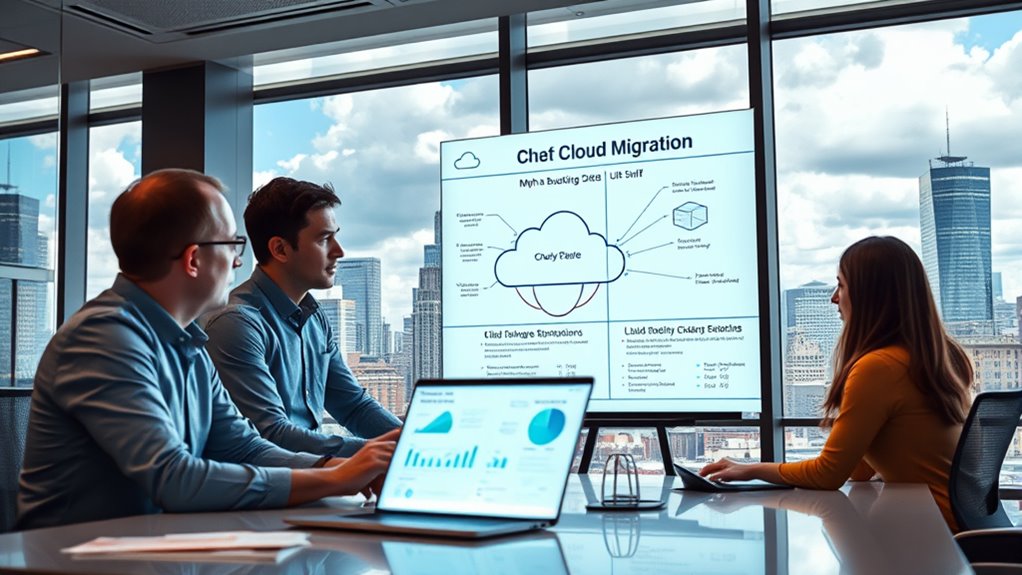
Many organizations assume that simply moving their workloads to the cloud through a lift-and-shift approach will automatically reduce costs. But in reality, this method often preserves inefficient on-premises architectures, leading to little or no immediate savings. Many teams are surprised by rising cloud bills after migration because workloads aren’t optimized for the cloud environment. To truly cut costs, you need post-migration efforts like rightsizing resources, using reserved instances, and implementing autoscaling. Also, don’t forget to account for hidden legacy costs—such as data center power, cooling, and staff salaries—that still impact your total ROI. Without continuous cost management and optimization, your cloud expenses can quickly spiral out of control, negating any supposed benefits of lift-and-shift. Proper cost optimization strategies are essential to realize the full financial benefits of cloud migration. Investing in cloud-native tools can further enhance efficiency and cost savings by leveraging automation and intelligent resource allocation.
Additionally, many teams overlook the importance of ongoing resource monitoring in maintaining cost-efficiency over time.
cloud security configuration software
As an affiliate, we earn on qualifying purchases.
As an affiliate, we earn on qualifying purchases.
Misconceptions About Cloud Security and Customer Responsibility

While cloud providers invest heavily in infrastructure security, assuming that your data is automatically protected is a dangerous misconception. Most breaches occur due to misconfigurations, poor access controls, or weak passwords—issues entirely within your control. Gartner predicts that by 2025, 99% of cloud security failures will be caused by customer errors. Relying solely on default security settings leaves you vulnerable. Effective cloud security demands deliberate planning: implementing strong identity management, encryption, continuous monitoring, and regular compliance checks. Without these measures, you risk exposing sensitive data and incurring costly remediation. Remember, shared responsibility means you’re responsible for securing your applications, configurations, and access controls—trusting the provider alone isn’t enough to protect your cloud environment. Paying attention to cloud security best practices can significantly reduce your risk of costly breaches. Additionally, understanding your shared responsibility model helps clarify which security measures are your obligation versus the provider’s. Recognizing the potential for customer misconfigurations emphasizes the importance of ongoing staff training and audits to prevent vulnerabilities. Incorporating proper security configurations is essential for closing gaps that could be exploited by attackers. Moreover, regular staff training on security concepts can further help in reducing human error that leads to breaches.
As an affiliate, we earn on qualifying purchases.
Viewing Cloud Migration as a One-Time Project Instead of an Ongoing Program
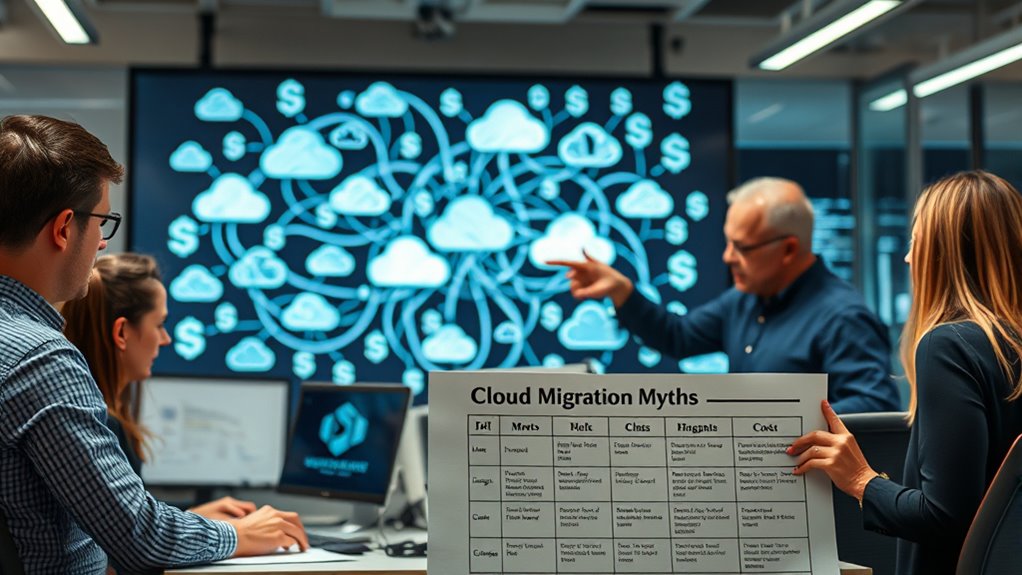
Viewing cloud migration as a one-time project is a misconception that can lead to significant long-term issues. Many teams see migration as a finish line, but cloud success requires continuous effort. Without ongoing optimization, you risk accumulating technical debt, inefficient architectures, and slower innovation. Regularly tuning resources, updating security measures, and modernizing applications are essential for realizing cloud benefits. Here’s a key point:
| Focus Area | Action Needed |
|---|---|
| Cost | Rightsize and optimize post-migration |
| Security | Continuous monitoring and updates |
| Innovation | Regular modernization and testing |
Treating migration as a single event ignores the ongoing responsibilities necessary for long-term success—and higher costs.
cloud migration optimization software
As an affiliate, we earn on qualifying purchases.
As an affiliate, we earn on qualifying purchases.
The False Belief That Cloud Eliminates the Need for Skilled Personnel

Many believe that moving to the cloud means you can cut back on skilled staff, but that’s a misconception. Cloud platforms still require expertise in architecture, security, and cost management to operate effectively. Investing in training and skills development helps reduce operational risks and maximizes your cloud investment. Proper understanding of cloud migration strategies ensures a smoother transition and ongoing success. Additionally, many organizations underestimate the importance of cloud governance to maintain control and compliance over their cloud environments.
Cloud Skills Still Essential
The misconception that cloud migration eliminates the need for skilled personnel is widespread but unfounded. Cloud platforms shift your skill requirements, but don’t remove them. You still need experts in cloud architecture, security, and cost management to guarantee a successful transition. Without proper training, teams often misconfigure resources, create security vulnerabilities, or waste money on inefficient workloads. Cloud-native patterns like microservices, infrastructure as code, and observability demand new tools and skills. Hiring or upskilling staff in DevOps, SRE, and FinOps is a recurring necessity and investment. Relying solely on vendor-managed services might reduce some operational burdens, but internal governance, compliance, and optimization still depend on your team’s expertise. Without skilled personnel, cloud benefits turn into costly failures.
Training Reduces Operational Risks
Although cloud providers offer managed services that simplify operations, relying solely on these tools doesn’t guarantee the elimination of the need for skilled personnel. You still need experts in cloud architecture, security, and cost management to prevent misconfigurations, security breaches, and inefficient resource use. Proper training ensures your team understands cloud-native patterns like microservices, automation, and observability, reducing operational risks. Without ongoing education, teams may struggle with complex platform features, leading to costly errors and downtime. Investing in training helps your staff adapt to evolving cloud technologies, implement best practices, and maintain control over security and costs. Additionally, understanding cloud-native patterns enables teams to optimize deployments and leverage automation effectively. Recognizing the importance of continuous education ensures your team stays current with emerging tools and practices, preventing costly oversights. Moreover, fostering a culture of ongoing learning encourages proactive problem-solving and innovation within your cloud operations. Continuous skill development also helps teams stay ahead of security threats, which are constantly evolving and require vigilant monitoring and response.
Risks of Relying on Single-Cloud or Vendor Lock-In Strategies

Relying exclusively on a single cloud provider or vendor lock-in can expose your organization to significant risks, including increased costs, reduced flexibility, and operational challenges. When you depend on one vendor, negotiating leverage diminishes, and future migration or switching costs skyrocket due to proprietary tools and infrastructure. Workload portability often turns out to be more complex and expensive than anticipated, as refactoring for another provider can require extensive effort. Vendor-specific managed services may accelerate deployment but create dependency, making it difficult and costly to switch or diversify later. Additionally, strategic lock-in limits your ability to respond swiftly to market changes or regulatory requirements, increasing long-term operational risks. Interoperability and open standards are crucial to maintaining agility and reducing potential vendor lock-in effects. Incorporating cross-platform integration can help mitigate some of these risks by enhancing flexibility and interoperability across different systems. Furthermore, a lack of multi-cloud strategies can leave organizations vulnerable to provider outages or changes in service terms, emphasizing the importance of diversification. Developing a cloud vendor assessment process can assist organizations in choosing providers that align with their strategic goals. Implementing cloud management tools can further assist in overseeing multiple vendors effectively and avoiding over-reliance on a single provider.
Underestimating Data Transfer, Compliance, and Operational Complexities

Overlooking the complexities of data transfer, compliance, and operational management can lead to unexpected costs and project delays during cloud migration. You must consider that:
- Data egress and transfer times can markedly inflate costs, especially with large datasets or hybrid setups.
- Regulatory requirements—like data residency and audit trails—often introduce architectural constraints that increase complexity and expense.
- Application interdependencies, if discovered late, cause rework, downtime, and higher project costs.
- Failing to account for cloud architecture intricacies can further escalate operational challenges and expenses.
Failing to plan for these factors results in scope creep and unanticipated expenses. Investing upfront in proper discovery, dependency mapping, and migration tools helps mitigate operational risks. Without this, you’ll face costly fixes and extended timelines, undermining the overall ROI of your cloud migration.
Frequently Asked Questions
How Can Teams Accurately Measure True Cloud Migration ROI?
To accurately measure your cloud migration ROI, track both direct and hidden costs, including legacy infrastructure and post-migration expenses like optimization and tooling. Monitor ongoing operational savings, improved agility, and security posture. Implement FinOps practices to prevent waste, and compare performance metrics before and after migration. Regularly review your cloud environment’s efficiency and adjust strategies accordingly, ensuring you account for all costs and benefits over the long term.
What Are the Best Practices for Ongoing Cloud Security Management?
Think of cloud security like tending a garden—you must constantly prune and monitor. You should implement identity and access management, encrypt data, and set up continuous compliance checks. Regularly audit configurations, update policies, and train staff to stay ahead of threats. Use automated tools for monitoring and alerts, and adopt a shared responsibility model. This ongoing vigilance guarantees your cloud environment remains secure, resilient, and compliant over time.
How Do You Develop a Continuous Cloud Migration and Modernization Strategy?
You develop a continuous cloud migration and modernization strategy by adopting an iterative approach, regularly testing and tuning your workloads. Focus on ongoing optimization, security, and platform evolution rather than a one-time effort. Invest in training your team, implement automation, and monitor performance constantly. Align your roadmap with business goals, prioritize modernization initiatives, and stay adaptable to technology changes. This guarantees sustained value and minimizes long-term costs.
What Skills Are Essential for Effective Cloud Platform Management?
You need cloud architecture skills, security expertise, and cost governance capabilities to manage your platform effectively. You must design resilient systems, monitor security risks, and optimize expenses continuously. You should develop proficiency in automation, infrastructure as code, and platform engineering to stay agile. You need to foster collaboration, embrace ongoing learning, and stay adaptable. These skills empower you to prevent misconfigurations, control costs, and guarantee your cloud environment is secure, efficient, and future-proof.
How Can Organizations Plan for Multi-Cloud or Hybrid Cloud Migration Costs?
You should develop a detailed cost analysis that includes all hidden expenses like data transfer, compliance, and operational complexities. Create a flexible budget for migration and ongoing management, accounting for potential refactoring and platform differences. Prioritize phased approaches with continuous monitoring to avoid unexpected costs. Regularly review your cloud spending, optimize workloads, and plan for vendor negotiations to keep expenses predictable and manageable across multiple or hybrid clouds.
Conclusion
Don’t fall for the hype—cloud migration isn’t a magic bullet. Believing it’s a one-and-done fix or that security is hands-off can cost you dearly. Think of it like building a house; it requires ongoing maintenance and skilled experts to keep everything running smoothly. Avoid putting all your eggs in one basket by relying solely on a single cloud provider. Stay informed and proactive, or you’ll find yourself swimming against the tide when issues arise.
Halloween Picks
halloween
As an affiliate, we earn on qualifying purchases.