

Focusing only on latency can make you miss vital signs of system health, such as errors, resource exhaustion, or backend issues that slow down performance in the background. Your team might see fast responses but overlook reliability problems, scalability worries, or user experience flaws that develop under load. By ignoring these wider metrics, you risk blind spots that could lead to unexpected failures. Keep exploring to uncover how a more all-encompassing approach can boost your system’s stability.
Open a free Amazon Business account
Business pricing, bulk buying and tax-exempt orders.
As an affiliate, we earn on qualifying purchases.
Key Takeaways
- They overlook overall system health and potential underlying issues causing latency spikes or failures.
- User experience problems like errors, inconsistency, and reliability are ignored despite fast response times.
- Scalability challenges remain hidden until latency spikes impact users during traffic surges.
- Backend system performance and infrastructure health are missed, risking silent degradations.
- A narrow focus on latency neglects broader metrics like error rates and resource utilization crucial for stability.
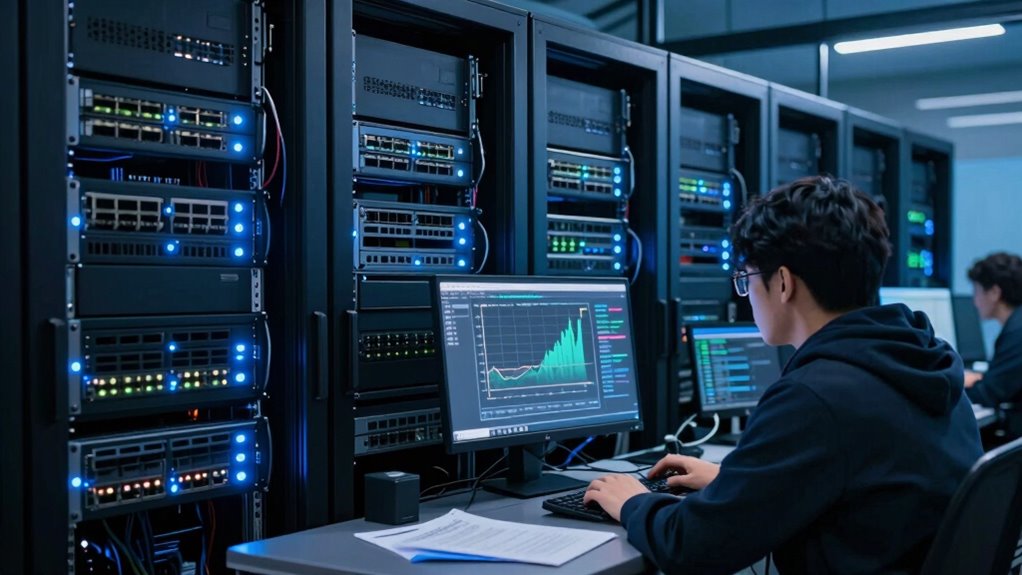
While measuring latency is essential for understanding system responsiveness, focusing solely on it can lead performance teams to overlook other critical aspects of system health. Latency provides valuable insights into how quickly your application responds to user requests, but it doesn’t paint the full picture. If you only track latency, you might miss underlying issues that impact the overall user experience and the system’s ability to scale effectively. For example, monitoring error rates can help identify recurring problems that cause delays or failures, which latency metrics alone might not reveal.
Focusing solely on latency risks missing critical insights into overall system health and user experience.
User experience isn’t just about how fast pages load or responses arrive; it also involves reliability, consistency, and smooth interactions. A system that maintains low latency under normal conditions but crashes during peak traffic isn’t truly delivering a good user experience. By concentrating only on latency, you risk ignoring factors like error rates, session stability, and overall usability, which are equally important for user satisfaction. You might see quick responses in your metrics, but if users encounter frequent errors or inconsistent performance, their experience suffers—something latency alone won’t reveal.
Scalability challenges are another critical aspect. While latency might stay within acceptable ranges during low to moderate traffic, as your system scales, it can become increasingly difficult to maintain that performance level. If you only monitor latency, you may not detect the early signs of scalability issues, such as growing server loads, resource exhaustion, or bottlenecks in your infrastructure. These challenges can cause latency spikes down the line, but if you’re not tracking other metrics like throughput, server utilization, or database performance, you might only discover the problem after users have experienced degraded service. Incorporating system health metrics can help you detect and address these issues proactively. Additionally, monitoring system capacity can provide early warnings before performance deteriorates significantly.
Additionally, focusing exclusively on latency means missing out on understanding the health of your backend systems and infrastructure. You may think your frontend response times are fine, but the backend could be sluggish or unstable, silently affecting overall performance. Metrics like error rates, resource utilization, and system logs give you a clearer picture of the root causes behind latency issues and help you prepare for future scalability hurdles. Including infrastructure monitoring into your strategy ensures a more comprehensive view of system performance and stability. This holistic approach can help you identify and resolve issues before they impact end users.
As an affiliate, we earn on qualifying purchases.
Frequently Asked Questions
How Does Throughput Impact Overall System Performance?
Throughput directly impacts your system’s overall performance by showing how much data it can process over time. When you focus on load balancing and scalability planning, you guarantee your system handles increased demand without bottlenecks. Higher throughput means better user experience and efficiency. By tracking throughput alongside latency, you gain a complete performance picture, helping you make informed decisions to optimize resources and prevent system overloads.
What Role Does Error Rate Play in Performance Evaluation?
Error rate plays a vital role in performance evaluation because it highlights error detection issues that latency measurements might miss. A higher error rate indicates underlying problems, prompting failure analysis to identify root causes. By monitoring error rates, you can proactively address system flaws, reduce failures, and improve overall reliability. Ignoring error rates risks overlooking essential performance degradations that could lead to user dissatisfaction and system outages.
How Can User Experience Be Affected Beyond Latency?
Imagine your app’s user experience like a delicate dance—latency is just one step. Beyond it, factors like error rates, stability, and responsiveness directly influence user satisfaction. If these aren’t monitored, users might feel frustrated or confused, harming your brand reputation. Even with low latency, poor error handling or inconsistent performance can drive users away, so you need a holistic view to guarantee a smooth, satisfying experience.
Why Is Resource Utilization Important for Performance Teams?
Resource utilization is crucial because it directly impacts resource efficiency and capacity planning. When you monitor how resources are used, you can identify bottlenecks and optimize performance, preventing over-provisioning or under-utilization. This guarantees your system runs smoothly, scales effectively, and maintains high user experience. By focusing on resource utilization, you make smarter decisions, improve reliability, and keep costs in check, ultimately supporting your performance goals.
What Metrics Are Essential for Understanding System Reliability?
You need to track error rates, uptime, and recovery times to truly grasp system reliability. Scalability challenges can cause unpredictable failures, while security concerns threaten availability. Monitoring these metrics helps you identify weaknesses early, ensuring your system remains resilient under load. Don’t rely solely on latency; a thorough view of error patterns and recovery efficiency is essential for maintaining trust and performance amidst evolving demands.
As an affiliate, we earn on qualifying purchases.
Conclusion
By focusing solely on latency, you risk overlooking other critical performance metrics that influence user experience and system health. Are you truly capturing the full story behind your application’s performance? Remember, a holistic approach guarantees you’re not just chasing quick fixes but understanding the deeper factors that impact reliability and satisfaction. Don’t let narrow measurement blind you to the bigger picture—expand your perspective and optimize effectively.
server resource utilization monitor
As an affiliate, we earn on qualifying purchases.
As an affiliate, we earn on qualifying purchases.
As an affiliate, we earn on qualifying purchases.
Fall Picks
fall essentials
As an affiliate, we earn on qualifying purchases.