In a crisis, an effective org chart clearly defines key roles like Incident Commander guiding the overall response, Incident Managers handling incident lifecycle, and Technical Support restoring services quickly. Communication Managers keep everyone informed, while documentation teams record actions and decisions. Support teams such as Customer Service, Problem Managers, and Specialized Analysts provide targeted assistance. If you want to learn more about structuring these roles for rapid, coordinated responses, keep exploring how each position fits into the bigger picture.
Key Takeaways
- The incident hierarchy starts with the Incident Commander overseeing the entire response.
- Incident Managers handle incident lifecycle management, escalation, and resource allocation.
- Communication Managers coordinate internal and external messaging, translating technical info for stakeholders.
- Support teams like Service Desk and Forensics provide technical troubleshooting and incident documentation.
- Specialized teams (HR, Legal) address safety, legal, and resource needs to support the incident response.
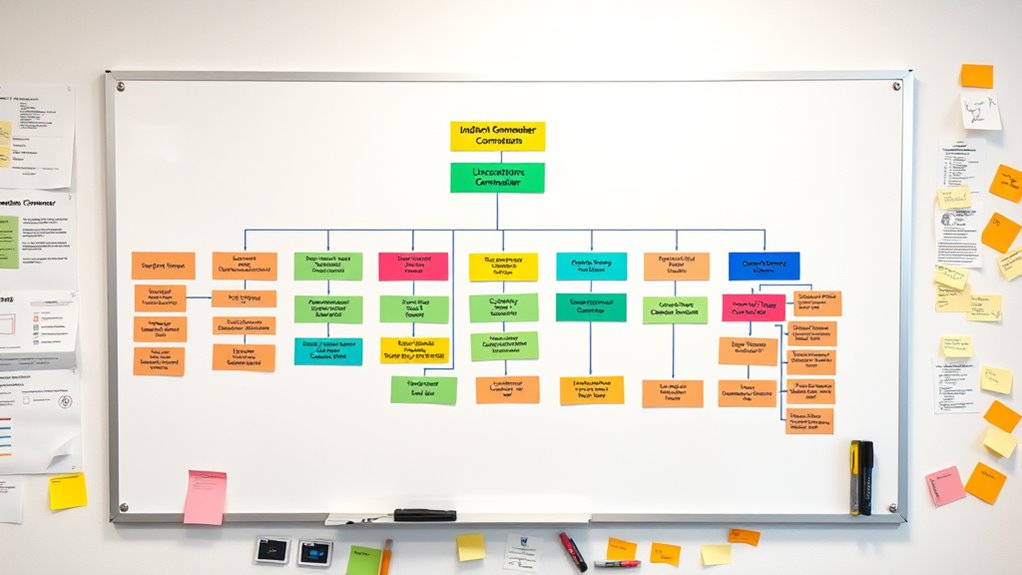
Have you ever wondered who’s responsible when an incident occurs in your organization? When chaos strikes, clear roles and responsibilities become essential. The incident response structure is designed to guarantee swift, coordinated action, with each role playing a specific part in managing the crisis efficiently. At the top of this hierarchy is the Incident Commander or Lead. You’ll find this person overseeing the entire incident response, driving coordination, setting objectives, and making key decisions. They guarantee everyone’s efforts align with the overall strategy and delegate roles to maintain control. The Incident Manager, meanwhile, manages the incident’s lifecycle, especially during critical moments. They identify needed resources, escalate issues as necessary, and coordinate technical teams, vendors, and communication channels. Their job is to keep the process on track and provide stakeholders with timely, business-friendly updates, ensuring everyone stays informed without unnecessary confusion. Effective incident management relies heavily on clearly defined roles and efficient communication channels.
Incident response roles ensure swift, coordinated action during crises with clear leadership and communication.
Supporting these leaders is the Technical Support or Lead. They’re your first responders—handling initial incident reports, performing basic troubleshooting, and restoring services quickly. They diagnose problems, propose fixes, and document every step for accuracy. Their role is indispensable in minimizing downtime and providing the first line of defense before more complex issues escalate. The Communications Manager is responsible for managing all messaging. They craft internal and external updates, ensuring communications are accurate, consistent, and clear. They control what’s shared on status pages, translate technical details into business terms, and manage front-end messages to prevent confusion or panic. During a crisis, their role is to keep stakeholders, employees, and customers well-informed, reducing misinformation and call volume.
Documentation or the Scribe is essential for creating a detailed record of the incident. They track timelines, decisions, actions taken, and key events, which supports post-incident analysis. They document everything in the ITSM system, creating an extensive timeline for review. Customer Support or Service Desk teams handle user inquiries, relay feedback to technical teams, and communicate updates to users. They verify resolutions with users before closing incidents and ensure everyone affected stays updated. The Problem or Crisis Manager digs into root causes after the incident is resolved, aiming to prevent recurrence. They monitor ongoing applications and services, facilitate crisis bridges when needed, and analyze problem sources to improve processes.
Supporting all these roles are various specialized teams. The IR Core Team manages incident tracking and directs overall incident management. The Communication Team handles messaging to employees and external audiences. The Technical Assessment & Forensics Team collects operational data and prepares incident reports. The Technical Support Team provides tactical operational support, while Secondary or Support Teams, including HR, Legal, and Logistics, manage resources, safety, and training. Together, these roles form a cohesive structure, enabling your organization to respond swiftly and effectively when chaos strikes.
Frequently Asked Questions
How Are Incident Roles Assigned During an Emergency?
During an emergency, you quickly identify the incident’s scope and severity to assign roles effectively. You activate the Incident Management Team, appointing an Incident Commander to oversee operations. You delegate responsibilities to specialized teams like Communications, Technical Assessment, and Support, ensuring clear communication and coordination. You also establish an Incident Command Post, set priorities, and approve action plans, so everyone knows their duties and responds swiftly and efficiently.
What Qualifications Are Required for Each Incident Role?
You need specific qualifications for each incident role to guarantee effective response. Usually, IR Management requires leadership experience and crisis management skills. The IR Core Team members should have incident handling expertise and decision-making abilities. Communication Team members need strong communication skills and media experience. Technical Teams require technical knowledge relevant to the incident, like cybersecurity or safety. Support roles often need specialized training or certifications. These qualifications assure everyone responds efficiently and safely.
How Is Communication Coordinated Across Different Teams?
You coordinate communication across teams by establishing clear channels and protocols. The Communication Team works closely with the IR Core Team to guarantee messaging is consistent and timely. They monitor media, approve releases, and update incident displays. Regular briefings and status reports keep everyone informed. Using designated points of contact and structured communication plans, you ensure information flows smoothly, reducing confusion and enabling effective collaboration during incident response.
What Tools Are Used to Manage Incident Information?
Over 80% of incident responders rely on integrated incident management tools to coordinate information effectively. You use specialized software like incident tracking systems, communication platforms, and real-time dashboards to manage incident data. These tools help you track progress, share updates, and maintain situational awareness. They streamline collaboration across teams, ensuring everyone stays informed and actions are coordinated efficiently during critical incident response efforts.
How Are Incident Roles Adapted for Different Types of Crises?
You adapt incident roles based on the crisis type by assigning specific responsibilities to relevant teams. For example, during a cyberattack, the Technical Assessment & Forensics Team takes the lead, while a natural disaster shifts focus to logistics and safety teams. You also modify communication strategies and incident priorities, guaranteeing the response is tailored, efficient, and focused on mitigating the specific threat. Flexibility ensures your team responds effectively to any crisis scenario.
Conclusion
Managing an incident is like steering through chaos with a clear org chart as your map. While roles define order, the real challenge lies in your ability to adapt and lead amidst uncertainty. The structure provides stability, but your quick decisions and teamwork turn chaos into clarity. Remember, in the midst of disorder, your responsibilities become the guiding light—transforming confusion into control, and chaos into coordinated action.