

When review ownership isn’t clearly defined, your audit logs become ambiguous, making it hard to track actions back to responsible individuals. Without specified owners, logs lack clarity, reducing their usefulness for security, accountability, and compliance. This can lead to missed security threats, delayed responses, and difficulty in enforcing policies. Overall, unmanaged logs weaken your ability to maintain oversight. If you want to understand how assigning ownership improves your audit effectiveness, keep exploring these points.

Get business pricing on networking and server gear
- Business-only prices and quantity discounts
- Tax-exempt purchasing
- Multiple users, one account, clear invoices
Key Takeaways
- Without review ownership, audit logs lack clear responsibility, reducing their effectiveness in tracking actions accurately.
- Ambiguous ownership hampers the ability to identify who performed specific activities, weakening accountability.
- Lack of defined review points delays detection and response to security incidents or policy violations.
- Automated alerts become less useful without assigned owners, decreasing overall security monitoring efficiency.
- Vague audit entries hinder compliance audits and make it difficult to enforce accountability policies effectively.
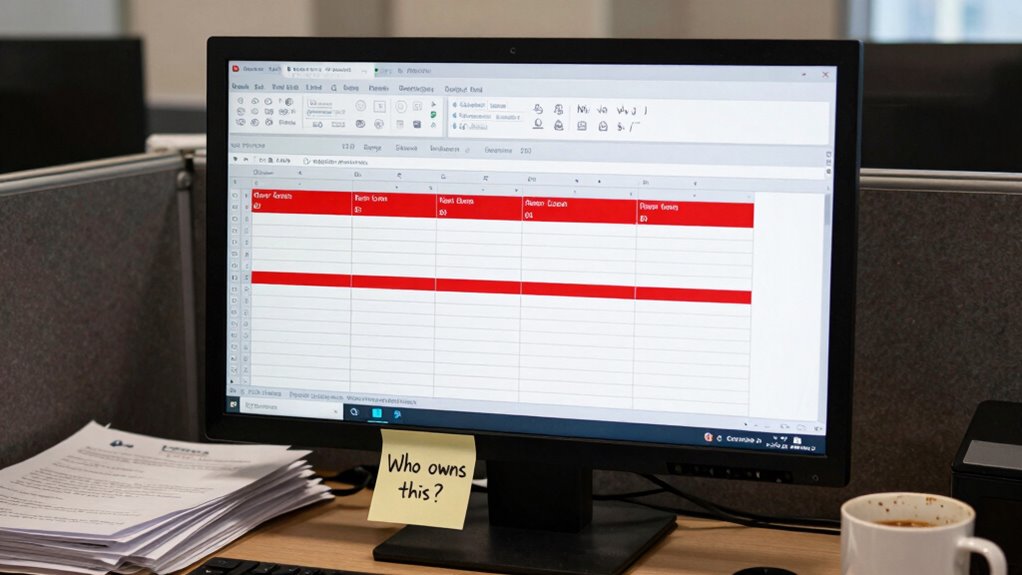
When review ownership isn’t clearly defined, audit logging systems often fail to capture critical activity details, leading it to be difficult to ensure comprehensive oversight. Without clear ownership, logs can become ambiguous, making it difficult to determine who performed specific actions. This lack of clarity hampers your ability to hold individuals responsible for their activities, which is essential for maintaining security and compliance. When logs don’t specify who is responsible for particular actions, it becomes challenging to identify malicious behavior or accidental mistakes, reducing the overall effectiveness of your audit process.
User accountability relies heavily on precise and thorough audit logs. If no one is designated as responsible for a certain set of activities, logs may record the activity but not who initiated it. This ambiguity diminishes the value of audit trails, as you can’t easily trace actions back to the responsible user. As a result, investigations become more time-consuming and less effective. Automated alerts, designed to flag suspicious or unauthorized activities, lose their relevance if they can’t be linked to specific users. Without review ownership, automated systems might generate alerts that lack context, making it harder to take prompt, targeted action.
Furthermore, when review ownership isn’t defined, your organization risks overlooking critical security incidents. Automated alerts depend on clear parameters and responsible parties to trigger appropriate responses. If the ownership isn’t assigned, alerts may either go unnoticed or be dismissed because they lack the necessary context. This can lead to delays in addressing security breaches or policy violations, increasing potential damages. It also makes compliance audits more complicated because auditors expect clear documentation of who reviewed, approved, or acted on specific activities. Proper documentation practices are crucial to establishing accountability standards and ensuring that reviews are traceable and verifiable, especially in regulated environments. Establishing clear review ownership helps ensure that each action is assigned to a responsible individual, reducing ambiguity and enhancing overall security posture. Additionally, integrating automated monitoring systems can further improve accountability by continuously tracking activity and alerting responsible parties in real time, though only when ownership is properly assigned.
Another problem is that, without designated review ownership, your team might struggle to enforce accountability policies consistently. When nobody is held responsible for specific areas or actions, accountability becomes vague. People may assume others are managing certain activities, which leads to gaps and overlaps. This confusion hampers your ability to enforce security protocols and can create situations where issues slip through the cracks. Clear review ownership ensures everyone understands their responsibilities, making audit logs more meaningful and actionable. Additionally, implementing proper documentation practices can help mitigate these issues and establish accountability standards across your organization.
Products Worth Considering

Bose QuietComfort True Wireless Earbuds with Active Noise Cancellation, Black

LG 34GX90SA-W 34-inch Ultragear WQHD OLED Curved Gaming Monitor

Samsung 27 Odyssey OLED G5 (G50SF) QHD QD-OLED Gaming Monitor
As an affiliate, we earn on qualifying purchases.
Frequently Asked Questions
How Can Organizations Establish Clear Review Ownership Roles Effectively?
You can establish clear review ownership roles effectively by implementing review delegation processes and guaranteeing ownership clarity. Assign specific responsibilities to individuals or teams, clearly define their roles, and communicate expectations upfront. Use documentation tools to track who owns each review task, and regularly review and update ownership assignments. This approach minimizes confusion, enhances accountability, and ensures audit logs accurately reflect review activities, preventing failures caused by undefined ownership.
What Tools Assist in Automating Audit Review Assignments?
You can use tools with automated alerts and ownership tracking features to streamline audit review assignments. These tools automatically notify responsible individuals when reviews are due, guaranteeing accountability. Ownership tracking helps assign clear responsibilities, preventing reviews from falling through the cracks. Implementing platforms like ServiceNow, Jira, or custom solutions that support automation ensures reviews are assigned promptly and tracked effectively, reducing the risk of audit logging failures.
How Does Lack of Ownership Impact Compliance Requirements?
Without clear ownership, compliance becomes a fragile house of cards, easily toppled by ownership ambiguity. When nobody’s responsible, audit logs lose their guiding compass, creating compliance gaps that can invite regulatory trouble. You risk missing critical review deadlines or overlooking violations, turning your audit trail into an untrustworthy map. To maintain your compliance fortress, define ownership clearly—without it, your efforts may crumble under scrutiny.
What Are the Best Practices for Monitoring Review Accountability?
You should establish clear ownership for each review to guarantee accountability. Implement review escalation procedures so issues are promptly addressed when ownership is unclear. Regularly monitor review logs for activity and follow up on overdue reviews. Clear documentation of responsibilities and escalation paths helps maintain ownership clarity, reducing the risk of audit logging failures. By actively tracking and enforcing review accountability, you enhance compliance and guarantee timely, accurate audit records.
How Can Teams Recover From Audit Logging Failures Due to Unclear Ownership?
You can recover from audit logging failures by first clarifying review ownership to restore data integrity. Assign clear responsibilities and update documentation to prevent recurring issues. Implement automated alerts for logging gaps, enabling swift incident response. Regularly review logs and ownership roles to guarantee accountability. These steps help maintain data integrity and bolster your incident response plan, ensuring your team can quickly address and resolve audit logging failures caused by unclear ownership.
Conclusion
Without clear review ownership, audit logs can quietly miss essential details, leaving gaps in your oversight. It’s like trying to follow a trail without knowing where it begins — you might still find your way, but the path becomes much trickier. To keep your processes smooth and trustworthy, define ownership upfront. Doing so gently guides your team, ensuring logs are complete and your reviews stay on track without unnecessary detours.