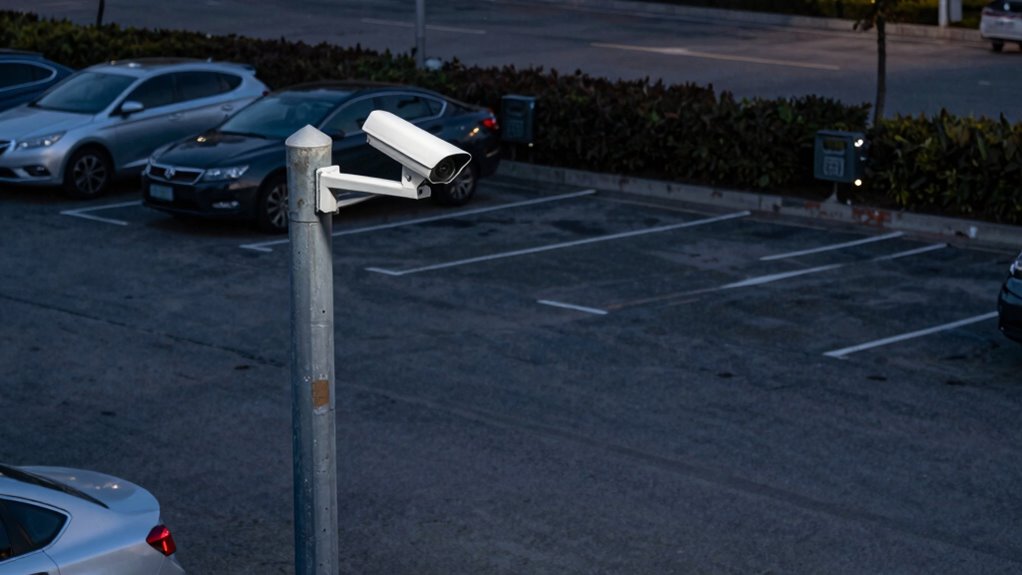

Poor camera placement can lead to blind spots and increase security risks. Facing direct sunlight or harsh glare causes footage to wash out, while poorly lit areas reduce nighttime visibility. Incorrect angles, such as aiming too high or too low, can miss important details. Obstructions like trees or fences can block views. Regularly checking and adjusting camera angles guarantees better coverage. Keep these mistakes in mind, and you’ll discover how to optimize your security setup for better protection.
Listen free for 30 days with Audible
Thousands of audiobooks and originals — cancel anytime.
As an affiliate, we earn on qualifying purchases.
Key Takeaways
- Placing cameras behind objects or obstructions limits visibility, creating blind spots.
- Using incorrect angles, such as too high or low, misses critical details like faces or license plates.
- Neglecting to consider natural lighting can cause glare or poorly lit footage, reducing effectiveness.
- Failing to cover high-traffic or vulnerable areas leaves key entry points unmonitored.
- Not routinely inspecting and adjusting camera positions leads to unnoticed blind spots over time.

Have you ever wondered why your security cameras don’t seem to catch everything you need? Often, the answer lies in placement mistakes that create blind spots and leave your property vulnerable. One of the most common errors involves overlooking lighting issues. If your cameras are installed where they face direct sunlight or harsh glare, their footage can become washed out, making it difficult to identify individuals or details. Conversely, placing cameras in poorly lit areas means they can’t record clear images at night or in low-light conditions. You need to consider natural lighting patterns and add supplemental lighting if necessary. Proper lighting not only improves footage quality but also deters potential intruders who prefer dark, unmonitored areas. Additionally, understanding camera placement best practices is crucial for maximizing coverage and minimizing blind spots. Regularly testing your camera views and adjusting angles can help prevent overlooked vulnerabilities. Ensuring your cameras are positioned to avoid lighting issues can make a significant difference in the clarity and usefulness of your footage.
Another critical mistake revolves around camera angles. When you position cameras too high, too low, or at awkward angles, you risk missing vital details. For example, pointing a camera directly at a window or reflective surface can cause glare or reflections that obscure the view. Similarly, if your cameras are angled downward too sharply, you might only capture the ground or the tops of heads, missing faces or license plates. To avoid this, you should aim for a balanced, eye-level perspective that covers the most important entry points and walkways. Adjusting camera angles to maximize coverage while minimizing blind spots is essential for effective surveillance. It’s also wise to test different positions and view the footage from multiple angles to identify potential blind spots before finalizing your setup.
Along with lighting issues and camera angles, overlooking the importance of strategic placement can leave gaps in your security coverage. For instance, placing cameras behind obstructions like trees, fences, or architectural features can block critical views. It’s crucial to clear these obstructions and choose vantage points that offer a wide field of view. Think carefully about high-traffic areas, entrances, and secluded spots that might serve as hiding places for intruders. Regularly reviewing your footage can help you spot blind spots and adjust your camera positions accordingly. Being mindful of natural lighting patterns and the surrounding environment can greatly enhance your security setup. Proper planning and awareness of environmental factors can prevent costly repositioning and ensure comprehensive coverage.
outdoor security camera with adjustable angles
As an affiliate, we earn on qualifying purchases.
As an affiliate, we earn on qualifying purchases.
Frequently Asked Questions
How Can I Prevent Glare From Affecting Camera Visibility?
To prevent glare from affecting your camera visibility, position the camera away from direct light sources and avoid areas with strong lighting interference. Use cameras with anti-glare or anti-reflective lenses to minimize lens distortion. Adjust the camera angle so that bright lights don’t hit the lens directly, reducing glare. Regularly clean the lens to remove smudges that can worsen lighting interference and guarantee clear, unobstructed footage.
What Are the Best Angles for Outdoor Security Cameras?
Imagine mounting cameras like a spy on a mission—precision is everything. For outdoor security, you want to optimize your camera angles by mounting them high and angling them downward, covering doorways or driveways. Tilt slightly to avoid glare and blind spots, ensuring your camera captures every suspicious move. Proper angle optimization maximizes coverage, reduces blind spots, and keeps your property safe—because no one likes a security system that’s more blind than vigilant.
How Often Should Security Camera Lenses Be Cleaned?
You should clean your security camera lenses at least once a month to maintain clear footage. Regular lens maintenance helps prevent dirt, dust, and smudges from obstructing the view. However, if you notice dirt or debris accumulating more quickly, increase your cleaning schedule accordingly. Use a soft, lint-free cloth and gentle cleaning solutions to avoid scratching the lens. Consistent cleaning guarantees your cameras function effectively and captures high-quality images.
Can Weather Conditions Impact Camera Performance?
Weather conditions act like a silent sentinel, influencing your camera’s vigil. They can cause weather-related malfunctions, like fogged lenses or water damage, compromising your security. Harsh elements test the camera’s durability, risking cracks or internal failures if not built tough enough. To maintain a clear watch, choose weatherproof cameras and regularly check for damage, ensuring your surveillance remains resilient against nature’s unpredictable moods.
How Do I Discreetly Hide Security Cameras?
To discreetly hide security cameras, consider using hidden placements like inside outdoor fixtures, birdhouses, or behind decorative elements. DIY concealment techniques, such as camouflaging cameras with paint or foliage, work well for blending them into your surroundings. You can also mount cameras high up or inside weatherproof containers. The key is to place them where they’re unobtrusive yet still effective, avoiding obvious spots that invite tampering or theft.
low-light security camera for night surveillance
As an affiliate, we earn on qualifying purchases.
As an affiliate, we earn on qualifying purchases.
Conclusion
By avoiding common security camera placement mistakes, you substantially reduce blind spots and enhance your property’s safety. Remember, studies show that improper camera coverage accounts for over 60% of security breaches. So, take the time to plan your camera setup carefully. Proper placement not only deters potential intruders but also guarantees you catch essential details when it matters most. Don’t let simple mistakes leave your property vulnerable—strategic positioning makes all the difference.
security camera with glare reduction
As an affiliate, we earn on qualifying purchases.
As an affiliate, we earn on qualifying purchases.
wireless camera with wide field of view
As an affiliate, we earn on qualifying purchases.
As an affiliate, we earn on qualifying purchases.
Fall Picks
fall essentials
As an affiliate, we earn on qualifying purchases.