
Data escrow and key escrow are often confused, but they serve different purposes. Data escrow involves securely storing operational datasets, such as source data or system configurations, to ensure business continuity if a vendor fails. Key escrow, on the other hand, safeguards cryptographic keys, allowing authorized access to encrypted data when needed. Understanding these differences helps you select the right approach for security and recovery—keep going to explore how each works in detail.

Get business pricing on networking and server gear
- Business-only prices and quantity discounts
- Tax-exempt purchasing
- Multiple users, one account, clear invoices
Key Takeaways
- Data escrow involves storing operational datasets for recovery, while key escrow stores cryptographic keys for encrypted data access.
- Data escrow ensures data availability during vendor failure; key escrow allows cryptographic key recovery or lawful access.
- Trust in data escrow is contractual; trust in key escrow is cryptographic and procedural, involving split-key safeguards.
- Data escrow protects operational data from misuse; key escrow mitigates risks of mass plaintext exposure if keys are compromised.
- They serve different purposes: data escrow maintains business continuity; key escrow secures cryptographic control and compliance.
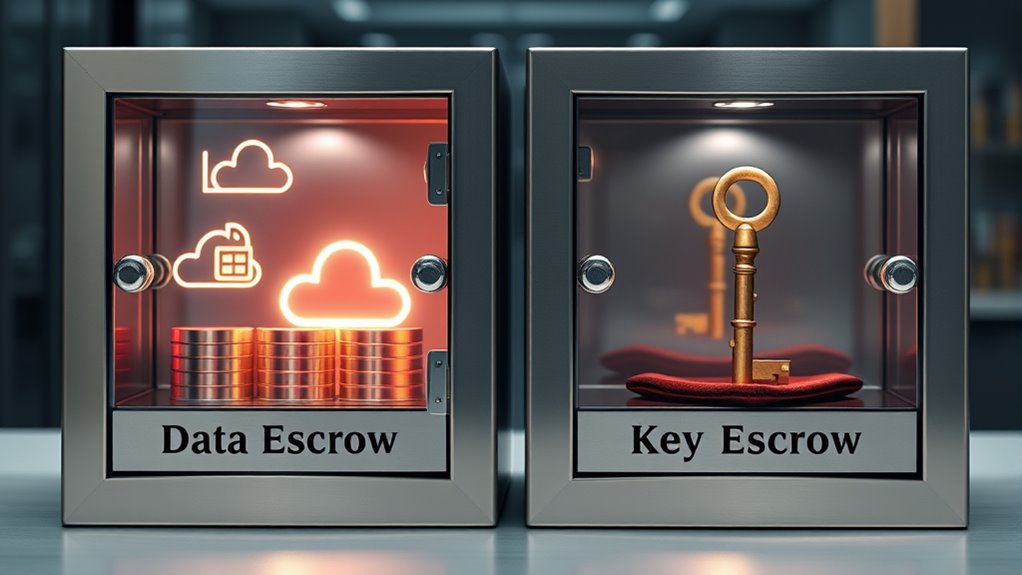
When it comes to safeguarding digital assets and ensuring business continuity, understanding the differences between data escrow and key escrow is essential. These two concepts serve distinct purposes, each playing a critical role in different scenarios. Data escrow involves a contractual deposit of operational datasets—such as source data, configuration files, or system schemas—kept with a trusted third party. Its primary goal is to ensure that, if a vendor or service provider fails to meet contractual obligations, you can rely on the escrowed data to restore or maintain your systems. This process is typically triggered by events like vendor bankruptcy or breach of service level agreements, safeguarding your operational continuity. Connects your data from any source or environment, ensuring the data is protected, up-to-date, and accessible when needed.
In contrast, key escrow focuses on the technical and legal storage of cryptographic keys—either as full keys or key shares—held by an escrow agent. Its main purpose is to enable the recovery or lawful access to encrypted data. For example, if cryptographic keys are lost or if law enforcement requires access to encrypted information under legal authority, key escrow allows authorized parties to retrieve those keys. The process involves splitting keys into halves stored separately, so that both parts are needed to regenerate the original key, adding an extra layer of security. The trigger for key escrow release could be key loss, a legal request, or an authorized recovery process, emphasizing its role in cryptographic security.
Understanding the core difference between these two types of escrow helps clarify their use cases. Data escrow aims to preserve the recoverability of operational data to ensure business continuity, especially when a vendor becomes unavailable or noncompliant. Key escrow, on the other hand, safeguards the ability to decrypt encrypted data, whether for recovery, compliance, or law enforcement purposes. Their trust models also differ; data escrow relies on contractual agreements and data integrity, while key escrow emphasizes cryptographic custody and split-key safeguards.
While both often involve third-party escrow agents, they address different security risks. Data escrow’s main concern is protecting operational datasets from misuse or improper access, with measures like encryption-at-rest and strict access controls. Key escrow’s risk lies in the potential for mass plaintext exposure if escrowed keys are compromised, which is mitigated through split-key cryptography and multi-agent escrow. Recognizing these differences ensures you choose the right escrow solution aligned with your security, compliance, and operational needs.
As an affiliate, we earn on qualifying purchases.
Frequently Asked Questions
Can Data Escrow Include Sensitive Customer Information?
Yes, data escrow can include sensitive customer information. When you set up a data escrow agreement, you might deposit operational data, including personal or confidential customer details, to ensure business continuity. To protect privacy, it’s essential that the escrow process encrypts this data and enforces strict access controls. This way, you balance the need for data recovery with safeguarding your customers’ sensitive information.
How Often Are Data Escrow Deposits Updated?
You typically update data escrow deposits regularly, often according to a schedule set in your agreement—monthly, quarterly, or after significant changes. The frequency depends on your operational needs and the criticality of the data. You should guarantee updates are timely and complete, following the specified procedures, to maintain data integrity and readiness for recovery when needed. Consistent updates help keep your escrow current and reliable.
Is Key Escrow Mandatory for All Encryption Systems?
Key escrow isn’t mandatory for all encryption systems. You only need it if legal requirements or organizational policies demand that encrypted data can be recovered if access is lost. Many systems use other recovery methods or rely on user-managed keys. Consider your security needs, privacy concerns, and compliance obligations before opting for key escrow. It’s a proactive choice, not a universal requirement across all encryption implementations.
What Are Common Legal Issues With Data Escrow?
You face legal issues with data escrow like compliance challenges, confidentiality concerns, and potential liability. You must guarantee strict adherence to data protection laws, prevent unauthorized access, and manage sensitive information carefully. You also need clear agreements on release conditions and responsibilities. Failing to meet legal requirements can lead to disputes, penalties, or loss of trust. Staying proactive with legal compliance helps you protect your interests and maintain data integrity.
How Do Escrow Agents Ensure Data Confidentiality?
Escrow agents guarantee data confidentiality by encrypting your data before storage and implementing strict access controls. They use secure servers, multi-factor authentication, and regular security audits to protect your information. Additionally, they limit access to authorized personnel only and follow legal agreements governing data release. This proactive approach guarantees your data stays private, secure, and accessible only under the conditions you’ve agreed upon.
As an affiliate, we earn on qualifying purchases.
Conclusion
So, now you see why mixing up data escrow and key escrow is like confusing night and day. Each has its own purpose and importance in safeguarding your digital world. Don’t let the details slip through your fingers like grains of sand—understanding the difference can save your data from catastrophic chaos. Remember, knowing the right escrow type is your shield against disaster, turning the chaos into calm and control in your cyber universe.
As an affiliate, we earn on qualifying purchases.
As an affiliate, we earn on qualifying purchases.
Columbus Day / Indigenous Peoples' Day Picks
long weekend sales
As an affiliate, we earn on qualifying purchases.