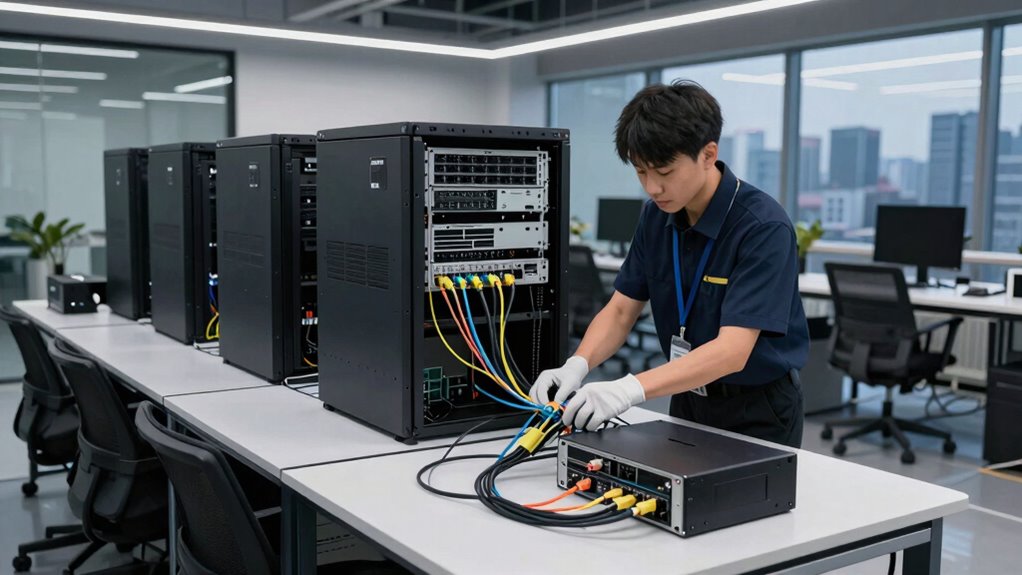

Good decommissioning of high-ticket office IT means you plan thoroughly, guaranteeing all sensitive data is securely erased with certified methods, and assets are properly sanitized to prevent breaches. You should evaluate residual value, refurbish or resell equipment, and document every step to maximize recovery. Following industry standards and partnering with certified providers helps ensure compliance, environmental responsibility, and minimizes risks. Keep these practices in mind, and you’ll discover how to manage the process efficiently from start to finish.

Get business pricing on networking and server gear
- Business-only prices and quantity discounts
- Tax-exempt purchasing
- Multiple users, one account, clear invoices
Key Takeaways
- Develop a detailed inventory and schedule decommissioning during off-peak hours to minimize disruption.
- Use certified data sanitization methods to ensure complete removal of sensitive information.
- Partner with certified IT asset disposition providers for compliant and environmentally responsible disposal.
- Evaluate residual value of assets for refurbishment, resale, or repurposing to recover investment.
- Maintain thorough documentation, including data destruction certificates and asset transfer records, for compliance and audits.
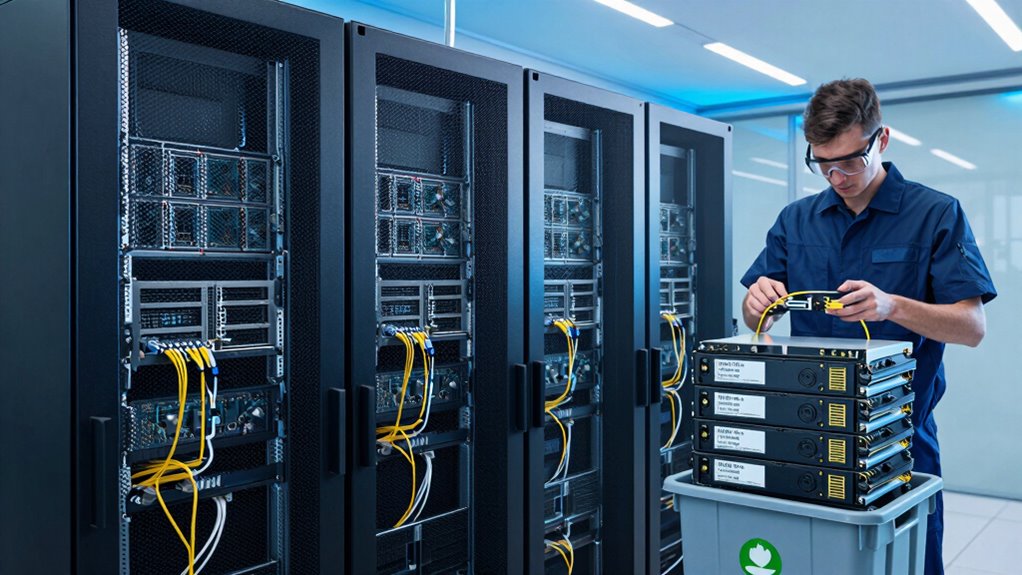
Decommissioning high-ticket office IT equipment can be a complex process, but it’s indispensable for maintaining security, reducing costs, and optimizing your technology infrastructure. When you handle this process properly, you protect sensitive data, recover value from outdated assets, and guarantee your organization stays compliant with industry regulations. Data security is the top priority during decommissioning. You need to assure all confidential information stored on servers, storage devices, or network hardware is thoroughly erased or securely destroyed. Simply deleting files isn’t enough; you must use certified data destruction methods to prevent any possibility of data breaches. This not only keeps your company safe but also shields you from potential legal or financial liabilities if sensitive data falls into the wrong hands. Implementing industry best practices for hardware removal and data sanitization is essential to ensure all security measures are properly followed. Asset recovery is another essential aspect of a well-executed decommissioning process. Instead of discarding old equipment, you should evaluate whether it still has residual value. Many high-ticket IT assets, such as servers, routers, or switches, can be refurbished, resold, or repurposed. Asset recovery helps you recover a portion of your initial investment and can fund future upgrades or new technology purchases. Proper documentation is imperative here; tracking serial numbers, asset tags, and condition reports ensures you maximize asset recovery efforts and maintain accountability. Additionally, understanding data sanitization methods is crucial to ensure all sensitive information is completely erased from decommissioned assets. A good decommissioning process also involves careful planning and coordination. You want to minimize downtime and avoid disrupting daily operations. This means scheduling decommissioning activities during off-peak hours and communicating clearly with your teams. You should also develop a detailed inventory of all equipment, including its configuration and location, to guide the decommissioning steps. When executing the process, follow industry best practices for hardware removal, data sanitization, and asset disposition. Partnering with certified IT asset disposition (ITAD) providers can give you peace of mind, knowing that all data security protocols and environmental standards are met. Proper planning and documentation also ensure that compliance and audit requirements are consistently met, reducing legal risks. Staying informed about environmental standards and regulations can help ensure responsible disposal practices and demonstrate your organization’s commitment to sustainability. Proper planning and documentation also ensure that compliance and audit requirements are consistently met, reducing legal risks. Including comprehensive records of data destruction certificates, asset transfers, and disposal methods can be invaluable during audits or legal inquiries. A strategic approach to decommissioning, which includes risk management, can further protect your organization from unforeseen issues during the process. When you approach decommissioning with a strategic mindset—focusing on data security, asset recovery, and compliance—you not only protect your organization but also turn a potentially costly process into an opportunity for value and efficiency.
certified data destruction software
As an affiliate, we earn on qualifying purchases.
As an affiliate, we earn on qualifying purchases.
Frequently Asked Questions
How Do You Ensure Data Security During Decommissioning?
To guarantee data security during decommissioning, you should first implement data encryption, making the data unreadable to unauthorized users. Next, follow secure disposal practices by physically destroying drives or using certified data wiping tools. Regularly verify that all sensitive data has been properly erased or encrypted, and document every step. This approach minimizes risks, protects your organization’s information, and ensures compliance with data privacy regulations.
What Are the Costs Associated With High-Ticket IT Decommissioning?
Unexpectedly, the costs of high-ticket IT decommissioning often align with your legacy systems and budget planning. You’ll face expenses for data migration, secure disposal, hardware removal, and potential downtime. Plus, there might be costs for updating or replacing infrastructure. Planning ahead helps you manage these expenses effectively, ensuring a smooth shift. Being prepared for these variable costs allows you to allocate resources wisely and avoid surprises during the decommissioning process.
How Long Does a Typical Decommissioning Process Take?
A typical decommissioning process takes anywhere from a few weeks to several months, depending on the asset lifecycle and complexity. You’ll need time for planning, data migration, and guaranteeing compliance standards are met. Rushing can lead to security risks or data loss, so it’s essential to allocate sufficient time for each phase. Proper planning ensures a smooth handover and minimizes disruptions to your operations.
Who Are the Key Stakeholders Involved in Decommissioning?
You involve key stakeholders like IT teams, finance, and management to guarantee smooth decommissioning. Stakeholder collaboration is essential, so you establish clear communication strategies to keep everyone informed and aligned. You coordinate tasks, share updates regularly, and address concerns promptly. By actively engaging all parties, you minimize disruptions, ensure compliance, and successfully decommission high-ticket office IT assets while maintaining transparency and accountability throughout the process.
What Are Common Pitfalls to Avoid During Decommissioning?
You might think rushing through decommissioning speeds up asset disposal, but it often disrupts the asset lifecycle and creates security risks. To avoid pitfalls, guarantee thorough vendor coordination to prevent overlooked tasks or data breaches. Failing to plan for proper data sanitization or neglecting to document each step can lead to costly mistakes. Staying organized, communicating clearly, and adhering to a strategic plan keeps decommissioning smooth and secure.
As an affiliate, we earn on qualifying purchases.
Conclusion
When decommissioning high-ticket office IT, you want to leave no stone unturned. Follow best practices, stay organized, and prioritize security to guarantee a smooth process. It’s all about crossing your T’s and dotting your I’s so you don’t end up with a mess on your hands later. With careful planning, you can turn a potentially overwhelming task into a walk in the park—just remember, a stitch in time saves nine.
high-security data sanitization tools
As an affiliate, we earn on qualifying purchases.
As an affiliate, we earn on qualifying purchases.
IT asset recovery and resale equipment
As an affiliate, we earn on qualifying purchases.
As an affiliate, we earn on qualifying purchases.
Halloween Picks
halloween
As an affiliate, we earn on qualifying purchases.