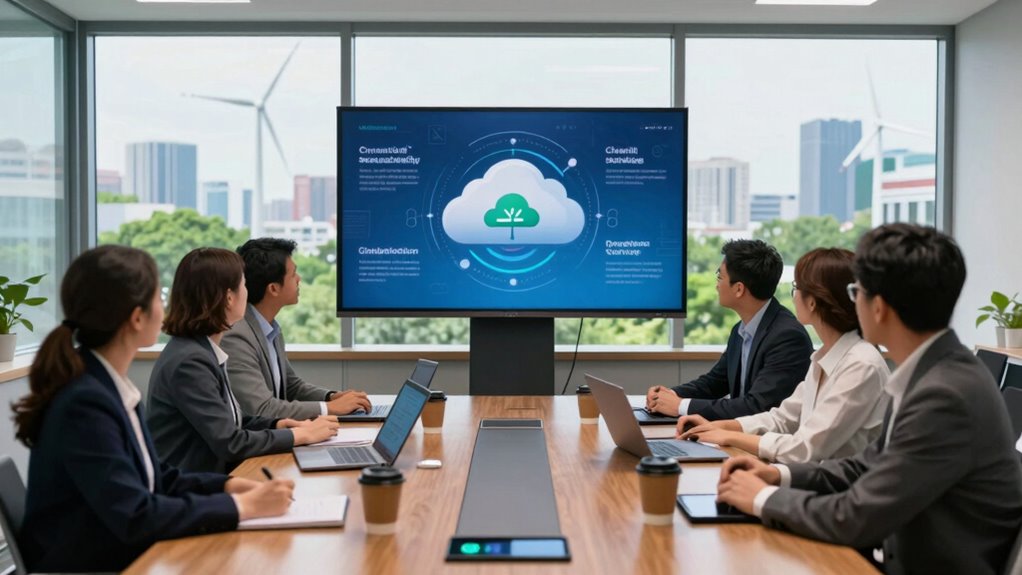

In cloud governance forums, you should focus on sustainability questions like how providers are increasing renewable energy use, managing their hardware lifecycle responsibly, and minimizing environmental impacts. It’s important to ask about commitments to renewable energy, energy efficiency, and responsible disposal or recycling of hardware. These discussions help guarantee that your cloud strategy aligns with global sustainability goals. To uncover detailed insights on these critical issues, keep exploring what makes cloud governance truly sustainable.

Get business pricing on networking and server gear
- Business-only prices and quantity discounts
- Tax-exempt purchasing
- Multiple users, one account, clear invoices
Key Takeaways
- How does the cloud provider plan to increase and transparently report renewable energy capacity for data centers?
- What policies are in place to optimize resource utilization and minimize energy waste?
- How are hardware end-of-life and recycling managed to reduce electronic waste and environmental impact?
- What sustainable hardware practices are implemented to enhance environmental responsibility?
- How does the organization incorporate lifecycle management and circular economy principles into sustainability strategies?
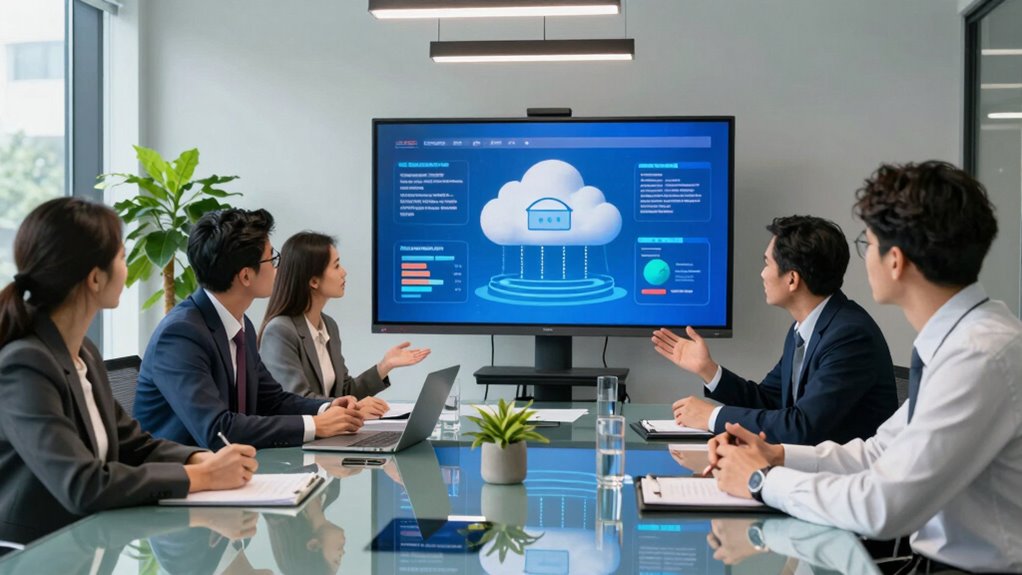
Have you ever considered how cloud governance impacts sustainability? When organizations adopt cloud solutions, the decisions made at governance forums directly influence environmental outcomes. One key aspect is how the cloud infrastructure sources its energy. Cloud providers increasingly leverage renewable energy, like wind and solar, to power their data centers. By prioritizing renewable energy, you can considerably reduce the carbon footprint associated with cloud operations. This shift not only supports global efforts to combat climate change but also aligns your organization’s sustainability goals with operational efficiency.
Prioritizing renewable energy in cloud infrastructure reduces carbon footprints and supports global sustainability efforts.
In cloud governance forums, questions about energy sourcing are critical. You should ask whether your cloud provider is committed to increasing their renewable energy capacity and how transparent they are about their energy consumption. These discussions help guarantee that your organization’s cloud usage contributes to a greener future rather than exacerbating environmental harm. As more providers invest in renewable energy, you’re better positioned to lower your organization’s overall carbon footprint, making your cloud strategy more sustainable.
Furthermore, governance forums should explore the efficiency of cloud resource utilization. Over-provisioning or inefficient usage can lead to unnecessary energy consumption, increasing your organization’s carbon footprint unnecessarily. Encouraging policies that optimize resource use—like autoscaling, rightsizing, and workload management—can mitigate this. These practices not only reduce energy waste but also lower costs, creating a win-win scenario. When you actively participate in these discussions, you help develop standards that promote responsible cloud usage, aligning operational practices with sustainability commitments. Additionally, implementing sustainable hardware practices can further enhance your organization’s environmental responsibility. Incorporating renewable energy sourcing into infrastructure planning is essential for a truly sustainable cloud environment. Regularly reviewing and updating your policies to reflect the latest advancements in energy efficiency can also significantly improve your sustainability profile. Staying informed about technological innovations in energy management can give your organization a competitive edge in reducing environmental impact.
Another essential question involves the lifecycle management of cloud infrastructure. Proper disposal or repurposing of hardware reduces electronic waste and minimizes environmental impact. Cloud governance forums should promote policies that ensure responsible end-of-life treatment for hardware and support recycling initiatives. By addressing this, you help your organization contribute to a circular economy, further decreasing its ecological footprint. Incorporating circular economy principles into hardware lifecycle policies can significantly enhance your organization’s environmental responsibility.
Products Worth Considering

LG UltraGear 27-Inch QHD OLED Gaming Monitor, 240Hz, 0.03ms, G-SYNC Compatible, FreeSync Premium Pro, HDMI 2.1

Samsung 27 Odyssey OLED G5 (G50SF) QHD QD-OLED Gaming Monitor

Samsung 27-inch Odyssey OLED G6 QD-OLED QHD Gaming Monitor
As an affiliate, we earn on qualifying purchases.
Frequently Asked Questions
How Can Cloud Governance Improve Long-Term Environmental Impacts?
Cloud governance can improve long-term environmental impacts by prioritizing renewable energy sources for data centers and cloud infrastructure. You can implement policies that promote waste reduction through efficient resource management and hardware lifecycle planning. By actively monitoring energy consumption and waste, you guarantee sustainable practices are in place, reducing carbon footprints. This approach not only benefits the environment but also enhances your organization’s reputation and operational resilience over time.
What Sustainability Metrics Are Most Effective in Cloud Management?
You should focus on sustainability metrics like renewable energy usage and green data practices to effectively manage your cloud environment. Tracking the percentage of renewable energy powering your data centers helps you reduce carbon footprints, while monitoring green data initiatives guarantees efficient resource use. These metrics give you clear insights into your environmental impact, guiding decisions that promote sustainability and aligning your cloud management with broader green data goals.
How Do Cloud Providers Ensure Sustainable Energy Sourcing?
You might think cloud providers can’t guarantee sustainable energy sourcing, but many actively invest in renewable energy projects to power their data centers. They guarantee energy efficiency by optimizing infrastructure and leveraging green power purchase agreements. This commitment reduces carbon footprints and promotes a cleaner environment. So, by choosing providers that prioritize renewable energy, you support sustainable practices and help combat climate change, making your cloud use environmentally responsible.
What Are the Costs Associated With Implementing Sustainability Measures?
Implementing sustainability measures involves costs like obtaining green certifications and participating in renewable incentives programs. You might need to invest in eco-friendly infrastructure, upgrade existing systems, or offset emissions, which can initially be expensive. However, these costs often lead to savings over time through energy efficiency and tax incentives. By pursuing green certifications and renewable incentives, you demonstrate your commitment to sustainability while potentially reducing long-term operational expenses.
How Can Organizations Measure Their Carbon Footprint in the Cloud?
You can measure your cloud carbon footprint by tracking energy consumption and leveraging tools that analyze your cloud provider’s renewable energy usage. Incorporate renewable energy data to understand your green energy impact, and consider carbon offsetting for unavoidable emissions. Regularly review these metrics to identify opportunities for efficiency improvements, ensuring your organization advances toward sustainability goals while maintaining transparency and accountability in your cloud operations.
Conclusion
By addressing these sustainability questions in cloud governance forums, you become the gardener tending a vast digital forest. Every decision is a seed planted for future growth, ensuring the canopy remains resilient and vibrant. Your mindful stewardship shapes a landscape where innovation and responsibility grow side by side, like intertwined vines. Embrace this role, for within your hands lies the power to cultivate a greener, more sustainable cloud—one that endures beyond the seasons of technology.