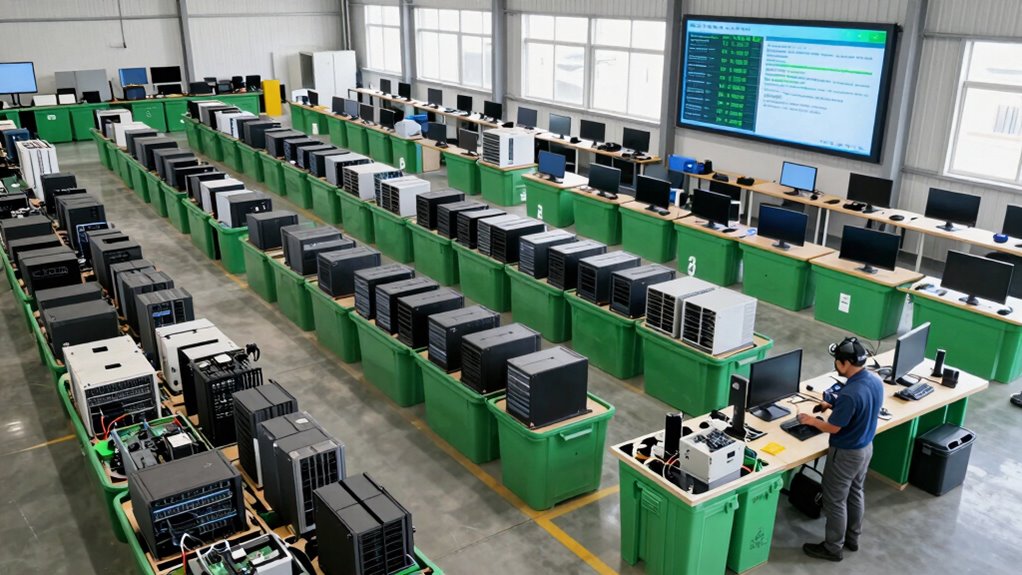
Sustainable decommissioning of retired IT assets means securely wiping or physically destroying data to prevent security risks, then recycling or refurbishing devices responsibly through certified partners. It also involves environmentally friendly disposal practices that recover valuable materials and extend device lifespans. Maintaining thorough records of all actions guarantees compliance and supports your organization’s transparency and reputation. If you keep exploring, you’ll discover how these practices benefit both the environment and your organization’s sustainability goals.

Get business pricing on networking and server gear
- Business-only prices and quantity discounts
- Tax-exempt purchasing
- Multiple users, one account, clear invoices
Key Takeaways
- Implement certified data wiping or physical destruction to ensure secure, compliant data removal from retired devices.
- Partner with certified e-waste recyclers to responsibly recycle and recover valuable materials, minimizing environmental impact.
- Document all data destruction, recycling, and disposal activities for transparency, compliance, and audit readiness.
- Prioritize refurbishing and donating functional devices to extend lifecycle and promote sustainability.
- Demonstrate commitment to environmental and data security standards to enhance organizational reputation and compliance.

Sustainable decommissioning begins with a thorough data sanitization process. You can’t afford to overlook this step, as residual data on retired devices can become a security vulnerability. Use certified data wiping tools or physical destruction techniques to guarantee complete data removal. This not only protects your organization from potential breaches but also aligns with industry standards and regulatory compliance such as GDPR or HIPAA. Once data security is assured, you can focus on environmentally responsible disposal. Incorporating environmentally friendly practices into your decommissioning process ensures that your organization is actively reducing its environmental footprint. Additionally, selecting methods that prioritize responsible recycling helps maximize resource recovery and minimize waste. Recycling and refurbishing are core components of sustainable decommissioning. Instead of sending old equipment straight to landfills, partner with certified e-waste recyclers who follow environmentally friendly practices. They can extract valuable materials like precious metals, plastics, and glass in a way that minimizes environmental impact. If some devices are still functional, consider refurbishing and donating them to organizations or communities in need, extending their lifecycle and reducing waste. This approach demonstrates your organization’s commitment to sustainability while also possibly providing tax benefits and positive public perception.
Throughout the decommissioning process, transparency and documentation matter. Keep records of data destruction certificates, recycling receipts, and compliance reports. These documents serve as proof that your organization has adhered to proper procedures, which is essential for audits and regulatory reporting. Additionally, implementing sustainable practices can enhance your organization’s reputation as a responsible corporate citizen, attracting customers and partners who value environmental stewardship. Incorporating sustainability into your IT asset retirement process isn’t just a trend; it’s a strategic move. It demonstrates that you’re committed to protecting sensitive data and reducing your environmental footprint. By choosing secure, environmentally friendly disposal methods, you not only safeguard your organization’s data security but also contribute positively to the planet. This responsible approach to decommissioning helps you meet legal requirements, build trust, and position your organization as a leader in sustainability.
Products Worth Considering

Sonos Era 100 SL Compact Microphone-Free Speaker, Black

Sony WH-1000XM5 Premium Noise Cancelling Wireless Headphones, Midnight Blue

Jackery Explorer 300 Portable Power Station, 292Wh
As an affiliate, we earn on qualifying purchases.
Frequently Asked Questions
How Does Sustainable Decommissioning Impact Data Security?
Sustainable decommissioning enhances data security by ensuring confidential information is properly erased, reducing the risk of data breaches. You actively follow secure data destruction protocols, which prevent unauthorized access to sensitive information. This method also demonstrates your commitment to responsible practices, protecting both your organization and the environment. By thoroughly wiping or recycling IT assets, you minimize security threats while promoting sustainability.
What Are the Cost Benefits of Eco-Friendly IT Asset Disposal?
Eco-friendly recycling of retired IT assets offers significant cost reduction benefits by minimizing disposal fees and maximizing asset recovery. You save money by refurbishing and reselling usable equipment, reducing the need for new purchases. Additionally, sustainable disposal methods often qualify for tax incentives or credits. By prioritizing eco-friendly practices, you not only cut costs but also enhance your company’s environmental reputation, making your IT asset disposal both economical and responsible.
Which Certifications Ensure Responsible Decommissioning Practices?
You should look for certification standards like R2, e-Stewards, and WEEE to guarantee responsible disposal. These certifications guarantee that decommissioning practices meet strict environmental and ethical guidelines. By choosing certified services, you ensure that your retired IT assets are responsibly disposed of, minimizing environmental impact and safeguarding data. These standards provide confidence that your decommissioning process aligns with sustainable and responsible practices.
How Is Leftover Electronic Waste Safely Managed?
You should follow strict recycling standards to safely manage leftover electronic waste, ensuring hazardous materials are properly handled and disposed of. Implement reuse strategies by refurbishing and donating functional components whenever possible. Partner with certified e-waste recyclers who adhere to responsible disposal practices, reducing environmental impact. By combining these approaches, you can effectively manage leftover electronic waste, promote sustainability, and support responsible decommissioning of your retired IT assets.
What Are the Environmental Risks of Improper Decommissioning?
If you mishandle decommissioning, you risk environmental contamination from hazardous materials like lead or mercury, and contribute to e-waste pollution. Improper disposal can violate environmental regulations, leading to fines or legal issues. Recycling innovations are key to safer decommissioning, reducing harmful waste and recovering valuable materials. Ensuring proper procedures minimizes environmental risks, keeps you compliant, and promotes sustainability by responsibly managing retired IT assets.
Conclusion
As you consider the future of your IT assets, remember that sustainable decommissioning isn’t just about disposal—it’s about making a lasting impact. What if the choices you make today could shape a greener, more responsible tomorrow? The path you take now leaves a trail—one that could either lead to waste or to renewal. The question is, are you ready to choose the option that truly matters? The next step could define your legacy.