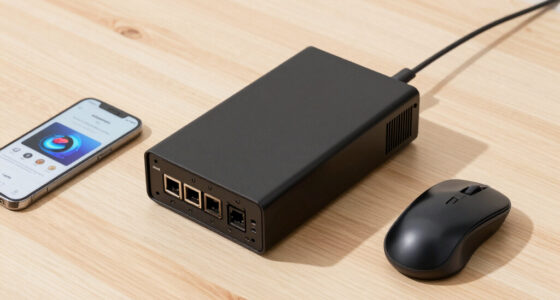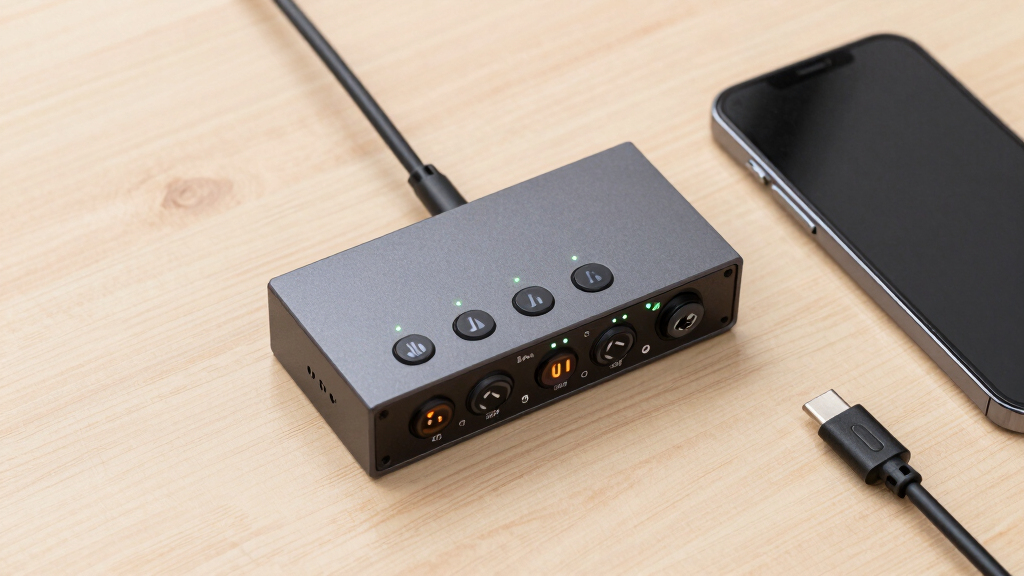

Finding the best switched PDU for remote reboot control depends on your specific needs—whether you require simple management, extensive outlet control, or advanced automation features. The MSNSwitch2 stands out as the overall top pick thanks to its versatile control via smartphone, cloud, or API, making it ideal for most users. For those prioritizing affordability, the ezOutlet5-2R offers reliable IP and WiFi control at a lower price point. Meanwhile, the TRENDnet 14-Outlet Managed PDU caters to larger setups needing extensive outlet management and cloud access. Each option presents tradeoffs in complexity, price, and feature set, so continue reading for the full breakdown to find your best fit.
Key Takeaways
- The most versatile options combine cloud accessibility with multiple outlets for scalable control.
- Most top picks support both Ethernet and WiFi, catering to different network setups and preferences.
- Higher-priced models tend to offer advanced automation, auto-reboot, and metering features, justifying the investment for professional environments.
- Budget-friendly options often focus on core reboot functions but may lack automation or remote monitoring capabilities.
- TAA and NDAA compliance are important considerations for government or military applications, narrowing the field for specialized buyers.



More Details on Our Top Picks
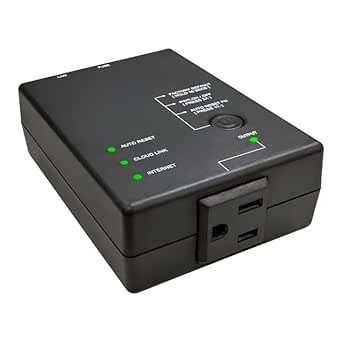
MSNSwitch2 Internet Enabled IP Remote Power Switch with Reboot – Control via Smartphone App, Cloud Service, Web Browser or API – 2 Independent AC Power Outlets (Model UIS-722b)
This model stands out for its ability to monitor internet connectivity and perform automatic reboots, making it ideal for critical network devices. Unlike the Monoprice Blackbird Pro, which offers more advanced security features, the MSNSwitch2 excels in fault tolerance with its ping-based connectivity checks and auto-reset functions. However, it relies heavily on internet-based control, which can be a downside if network issues occur. The straightforward app and web controls make it accessible for users needing reliable remote management, especially for routers and modems. The built-in monitoring and scheduled power cycling deliver peace of mind for maintaining uptime without complex configuration. Compared to simpler IP switches, its automatic fault detection and recovery set it apart, though this complexity adds to the initial setup effort. Best for IT professionals and network managers needing proactive device management.
Pros:- Automatic internet connectivity monitoring and fault detection
- Supports remote control via multiple interfaces including app, web, and API
- User-definable scheduled power cycling for maintenance
Cons:- Relies on continuous internet connection; no local control option
- Limited hardware interfaces, no SNMP or advanced security features
Best for: IT professionals managing critical network infrastructure and requiring automatic fault recovery.
Not ideal for: Home users with minimal technical experience or those needing only basic remote control without monitoring.
- Number of Outlets:2
- Voltage:120 Volts
- Control Method:Smartphone App, Web, API
- Connectivity:Ethernet
- Auto Reset:Yes
- Monitoring:Internet Connectivity
Bottom line: This switch is perfect for network environments where proactive fault management and automated rebooting are priorities.
Monoprice Blackbird Pro 4-Outlet Smart PDU, IP-Based Remote Power Management Solution, Power Up, Power Down or Reboot Your Remote Equipment from Anywhere Over TCP/IP
Compared with the MSNSwitch2, the Blackbird Pro offers a more comprehensive web interface and supports a wider range of network protocols, including SNMP and SSL, making it suitable for more complex environments. Its four outlets enable managing multiple devices simultaneously, which is ideal for server racks or digital signage arrays. However, it lacks the automatic connectivity monitoring seen in the MSNSwitch2, requiring manual reboot commands. The setup is straightforward via browser-based software, and its security features are robust for enterprise environments. Its versatile control options make it well-suited for data centers and IT infrastructure, though home users might find its configuration options excessive. The tradeoff involves more detailed network management at a slightly higher cost versus simpler switches without monitoring features. Best for small to medium enterprise deployments needing flexible and secure remote power control.
Pros:- Four independently controlled outlets with power sequencing
- Supports SNMP, SSL, and extensive network protocols
- Web-based setup with security features like TLS encryption
Cons:- No automatic internet connectivity monitoring or auto-reboot
- Slightly more complex initial setup compared to simpler IP switches
Best for: Small to medium businesses or data centers requiring secure, IP-based remote control with multiple outlets.
Not ideal for: Home users or those seeking automated fault detection without manual intervention.
- Number of Outlets:4
- Voltage:120V
- Protocols Supported:SNMP, SSL, HTTP, HTTPS
- Control Method:Web Browser
- Power Sequencing:Yes
- Network Interface:Ethernet
Bottom line: This PDU is ideal for environments demanding secure, multi-device control and detailed network management features.
MSNSwitch2 Internet Enabled IP Remote Power Switch with Reboot – Control via Smartphone App, Cloud Service, Web Browser or API – 2 Independent AC Power Outlets (Model UIS-722T) (TAA Compliant)
This TAA-compliant version of the MSNSwitch2 maintains the core auto-reboot and monitoring functions, making it suitable for government or regulated environments. Compared to the non-TAA model, it offers the same remote control capabilities via app, web, and API, but may lack some advanced features like scheduled power cycling or detailed monitoring. Its simplicity makes it accessible for users who need reliable reboot control without extensive security or automation. It automates recovery when internet connectivity is lost, ideal for routers or modems in sensitive environments. The limited protocol support and absence of local control options are tradeoffs for compliance and straightforward operation. This pick makes the most sense for organizations needing TAA compliance without added complexity. Best for government or regulated sectors needing reliable remote reboot with compliance.
Pros:- TAA compliant for government procurement
- Automatic reboot on internet connection loss
- Control via multiple interfaces including app, browser, and API
Cons:- Limited to two outlets, fewer control options
- Lacks scheduled power cycling and detailed monitoring
Best for: Organizations requiring TAA compliance and simple remote reboot functionality.
Not ideal for: Home users or businesses seeking advanced security or detailed network monitoring.
- Number of Outlets:2
- Voltage:120V
- Control Methods:Smartphone App, Web, API
- Protocol Support:Cloud, Web Browser
- Compliance:TAA
- Auto Reset:Yes
Bottom line: This switch offers essential remote reboot functions with compliance for environments where regulatory standards matter most.
Smart PDU – IP Remote Reboot Power, 4 Switched NEMA 5-15R Outlets
Compared with the MSNSwitch2 and Blackbird Pro, this Smart PDU emphasizes enterprise security through Active Directory, LDAP, and RADIUS support, making it ideal for organization-wide control. Its four outlets support complex server setups, with local current monitoring and alerting functionalities. However, it leans more toward security and detailed management than automatic fault detection, lacking internet connectivity monitoring. The extensive security features and SNMP support make it a strong choice for large-scale IT environments but potentially overwhelming for casual users. The inclusion of local power monitoring and role-based access provides control in sensitive or regulated environments, though setup and management can be more involved. Best for large organizations needing secure, role-based remote control with comprehensive local monitoring.
Pros:- Enterprise-grade IP security with LDAP, RADIUS, Active Directory
- Local current monitoring and alerting
- Supports multiple management protocols including SNMP
Cons:- No automatic internet connectivity monitoring or auto-reboot
- Complex setup for non-technical users
Best for: Enterprises managing sensitive equipment requiring secure, role-based access and local power monitoring.
Not ideal for: Home users or small setups without advanced security or local management needs.
- Number of Outlets:4
- Voltage:120V
- Security Features:Active Directory, RADIUS, LDAP
- Monitoring:Local current, alerts
- Protocols Supported:SNMP, SSH, Telnet
- Control Method:Web, SNMP
Bottom line: This PDU is suitable for large-scale deployments where security and local control are priorities over automated fault recovery.
ezOutlet5-2R – Dual Outlet Internet Enabled IP & WiFi Remote Power Switch with Automatic Reboot – iOS | Android | Cloud | 2 Web Controllable AC Power Outlets – Model EZ-73a
This compact switch makes remote reboot simple with app control over WiFi or LAN, ideal for users who want easy setup and scheduling. Compared to the more feature-rich MSNSwitch2, the ezOutlet5-2R emphasizes user-friendliness and affordability, with straightforward scheduling and remote control functions accessible via smartphone apps. Its two outlets are sufficient for basic network devices like modems and routers, making it perfect for home or small office use. The key tradeoff is limited monitoring and automation—there’s no automatic fault detection or detailed network management. Its simple interface and schedule support provide peace of mind for non-technical users needing reliable device resets. Best for home users or small offices seeking quick, easy remote control with scheduled rebooting.
Pros:- Easy control via iOS, Android, and cloud apps
- Supports scheduling multiple power cycles
- Simple setup with dual outlets for common devices
Cons:- Limited to two outlets, no local monitoring or advanced security
- No automatic fault detection or network health checks
Best for: Home users and small office environments requiring simple remote reboot and scheduling via mobile devices.
Not ideal for: Managed data centers or environments needing detailed monitoring or automatic fault detection.
- Number of Ports:2
- Voltage:125V
- Maximum Power:275W
- Control Interface:iOS, Android, Cloud
- WiFi Compatibility:Yes
- Scheduling:Yes
Bottom line: This switch is ideal for users who want straightforward remote reboot capabilities without complex configuration or monitoring.
IP-Based PDU Remote Power Switch with Auto Ping Support
This IP-based PDU stands out for its extensive remote control capabilities, including independent outlet control, power cycling with delays, and advanced scheduling, making it ideal for managing complex data center setups. Its Auto-Ping feature provides automatic detection of network failures, triggering reboots or alerts, which surpasses the simpler control offered by products like the Tripp Lite PDU15NETLX. Unlike basic PDUs, this model supports API functions and multi-user access management, giving administrators detailed control and security. The tradeoff is its potentially steep learning curve and reliance on network stability for full functionality. This pick is best suited for network admins who need granular control and automation but can handle setup complexity. It’s less ideal for small office environments or users seeking plug-and-play simplicity, as its advanced features require configuration.
Pros: Supports auto-ping/network monitoring, independent outlet control, customizable power sequencing, multi-user management.
Cons: Complex setup process, requires network stability, higher price point.
Specs: Amperage: 12A, Form Factor: 1U rack mount, Output Voltage: 120V, Power Outlets: 2, Control: Web, API, SNMP, Power Scheduling: Yes, Outlets Independently Controlled: Yes, Built-in Web Server: Yes.Verdict: This controller makes the most sense for tech-savvy IT teams looking for robust, customizable power management with network failover detection.
Pros:- Supports auto-ping network monitoring for failed devices
- Independent outlet control with power cycling and delays
- Advanced scheduling and power-up sequence options
- Multi-user access with privilege management
Cons:- Requires network configuration and management expertise
- Steeper learning curve compared to plug-and-play PDUs
- Higher initial cost and setup time
Best for: Network administrators managing multiple servers and data center equipment requiring automated control and security features.
Not ideal for: Small businesses or home users seeking simple remote power toggling without complex setup or security controls.
Bottom line: Ideal for organizations needing detailed automation and security in remote reboot control, but not for casual or small-scale users.
CyberPower PDU81005 Switched Metered-By-Outlet PDU
This CyberPower PDU offers real-time outlet-level power monitoring combined with remote control, making it suitable for data centers or server rooms where tracking energy consumption is critical. Compared with the NP-0501DU, it provides detailed power metering per outlet, supporting load shedding and controlled reboots, but doesn’t include advanced scheduling or multi-user security. Its built-in web interface and simple API support make it accessible for network-savvy users, while the Tripp Lite PDU15NETLX provides more extensive remote management features. The tradeoff is that it lacks the automation capabilities of more advanced PDUs, limiting its use for fully scripted management. This model suits IT teams focused on energy efficiency and straightforward remote rebooting without the need for complex automation. It’s less suitable for environments demanding detailed user privileges or extensive scheduling.
Pros: Real-time power metering, remote outlet control, web interface, load shedding capabilities.
Cons: Limited scheduling options, no multi-user security, basic automation features.
Specs: Voltage: 100-240V, Outlets: 8 IEC-320 C13, Current: 20A, Mount: 1U rack, Web Interface: Yes, Power Monitoring: Per outlet, Load management: Yes, Warranty: 3 years.Verdict: This is a solid choice for data centers prioritizing power monitoring with remote reboot, but it’s less suited for automation-heavy environments.
Pros:- Provides detailed real-time power monitoring
- Supports remote rebooting of individual outlets
- Easy web-based control interface
- Supports load shedding to optimize power use
Cons:- Limited automation and scheduling options
- No multi-user access control
- Basic control features compared to enterprise PDUs
Best for: Data center managers requiring real-time energy monitoring and basic remote outlet control.
Not ideal for: Organizations needing advanced scheduling or multi-user security features.
Bottom line: A practical choice for power-conscious data centers that need reliable remote control without complex automation needs.
Tripp Lite Single Phase Switched Mini PDU
This compact PDU offers basic remote control with two switched outlets, ideal for small rack setups or budget-conscious environments. Its built-in LX platform provides 24/7 remote access and email alerts, which is a step above basic models like the NP-0501DU. However, it offers limited outlets and lacks the extensive automation or detailed power monitoring of higher-end models. Its 6-foot power cord and simple installation make it suitable for small networks or office use, but it’s not designed for large data centers or environments needing detailed scheduling or user management. The main tradeoff is its limited control scope and fewer advanced features. This unit is best for small offices or retail outlets managing a handful of devices remotely. It’s less ideal where detailed automation or security is critical.
Pros: Built-in LX platform for remote access, email alert notifications, easy to install, compact size.
Cons: Only 2 outlets, limited automation, basic power monitoring, small footprint.
Specs: Voltage: 100/120/127V, Outlets: 2 NEMA 5-15R, Cord Length: 6 ft., Mount: 0U, Web Access: Yes, Alerts: Email, Power Control: Switched outlets.Verdict: Best suited for small-scale deployments or budget-conscious setups where basic remote control suffices.
Pros:- Built-in web platform for remote control
- Email alerts for power events
- Compact and easy to install
- Includes manual front panel control
Cons:- Limited to only 2 outlets
- No advanced scheduling or automation
- Basic power monitoring features
Best for: Small offices or retail environments needing simple remote reboot capability for a few devices.
Not ideal for: Large data centers or environments requiring detailed automation and power monitoring.
Bottom line: A cost-effective, straightforward solution for small setups needing remote power toggling without complex features.
NP-0501DU Switched & Metered PDU
This US-manufactured PDU offers a balanced mix of local and remote control, with five independently managed outlets accessible via Ethernet, Telnet, or USB. Its metered outlets provide real-time power consumption data, supporting load management and scheduled reboots, similar in scope to the CyberPower PDU81005. Compared to more advanced enterprise PDUs, the NP-0501DU is straightforward and easy to configure but lacks extensive automation or multi-user management. Its local serial port and network options make it flexible for various use cases, though it requires some technical knowledge for setup. The main tradeoff is that it doesn’t support multi-user privileges or complex scripting, limiting its automation capabilities. This model fits small to medium enterprise environments where local and basic remote control are needed, but it’s less suitable for large, security-focused deployments.
Pros: Local and remote control via Ethernet/serial, power metering, scheduled reboot, simple setup.
Cons: No multi-user access, limited automation, basic security features.
Specs: Outlets: 5, Control: Ethernet, Telnet, USB, Power Monitoring: Yes, Power Reboot: Yes, Local Serial Port: Yes, Mount: Rack-mount, Manufacturer: US, Warranty: 2 years.Verdict: A reliable, easy-to-use option for small to medium environments needing local and remote power control with power monitoring.
Pros:- Supports local and remote control via Ethernet, Telnet, USB
- Provides real-time power metering
- Supports scheduled reboots and load management
- Local serial port for direct connection
Cons:- No multi-user privilege management
- Limited automation scripting capabilities
- Basic security features
Best for: Small to medium-sized enterprise environments in the US requiring local and remote outlet management with power monitoring.
Not ideal for: Global organizations needing multi-user access, complex scripting, or extensive automation.
Bottom line: A straightforward, reliable PDU for environments where simple remote control and power monitoring are sufficient.
Tripp Lite Single Phase Switched Mini PDU
This compact PDU offers basic remote control with two switched outlets, ideal for small rack setups or budget-conscious environments. Its built-in LX platform provides 24/7 remote access and email alerts, which is a step above basic models like the NP-0501DU. However, it offers limited outlets and lacks the extensive automation or detailed power monitoring of higher-end models. Its 6-foot power cord and simple installation make it suitable for small networks or office use, but it’s not designed for large data centers or environments needing detailed scheduling or user management. The main tradeoff is its limited control scope and fewer advanced features. This unit is best for small offices or retail outlets managing a handful of devices remotely. It’s less ideal where detailed automation or security is critical.
Pros: Built-in LX platform for remote access, email alert notifications, easy to install, compact size.
Cons: Only 2 outlets, limited automation, basic power monitoring, small footprint.
Specs: Voltage: 100/120/127V, Outlets: 2 NEMA 5-15R, Cord Length: 6 ft., Mount: 0U, Web Access: Yes, Alerts: Email, Power Control: Switched outlets.Verdict: Best suited for small-scale deployments or budget-conscious setups where basic remote control suffices.
Pros:- Built-in web platform for remote control
- Email alerts for power events
- Compact and easy to install
- Includes manual front panel control
Cons:- Limited to only 2 outlets
- No advanced scheduling or automation
- Basic power monitoring features
Best for: Small offices or retail environments needing simple remote reboot capability for a few devices.
Not ideal for: Large data centers or environments requiring detailed automation and power monitoring.
Bottom line: A cost-effective, straightforward solution for small setups needing remote power toggling without complex features.
netBooter NP-02B Remote Switched PDU with 2 Power Outlets, 120V/13A. Control via Web, telnet, or USB
The netBooter NP-02B stands out for its straightforward web and telnet control, making it ideal for users who need a simple, no-frills remote reboot solution. Compared to the MSNSwitch MAX, it lacks advanced automation features like scheduled reboots or energy monitoring, but its solid build and made-in-USA quality provide confidence in durability. The unit’s default security is weak, with no password protection for telnet, which is a critical tradeoff for those outside a protected network. Its two outlets are independently managed, but the absence of environmental reporting or email alerts limits its scope for more complex setups. The unit’s web UI transmits passwords in plaintext and defaults to a 2-second reboot, which may not suit all hardware. On the upside, the heavy gauge power cord and metal chassis ensure longevity, but the lack of HTTPS support is a concern for outside deployment. This pick makes the most sense for small, secure environments needing basic remote control through Web or Telnet, especially where budget and simplicity matter.
Pros:- Solid metal construction and made in the USA ensure durability.
- Control via Web, Telnet, or USB provides flexible management options.
- Heavy gauge power cord supports high-quality power delivery.
Cons:- Web UI does not support HTTPS, transmitting passwords plaintext.
- Default telnet access has no password, raising security concerns.
Best for: IT professionals managing small office network hardware requiring simple remote reboot via web or telnet.
Not ideal for: Users needing environmental reporting, scheduled reboots, or secure HTTPS access for outside deployment.
- Number of Outlets:2
- Voltage:120V
- Current:13A
- Control Methods:Web, Telnet, USB
- Made In:USA
- FCC/UL Listed:Yes
Bottom line: A reliable choice for small-scale, secure environments needing basic remote power control without advanced automation.
ezOutlet5 IP Enabled Remote Power, Ping Auto Reboot, Single Outlet, 10A Fuse, WiFi & LAN, Cloud & APP
The ezOutlet5 excels for its seamless WiFi and app control, making it ideal for users who prefer managing their devices via smartphone or cloud. Unlike the netBooter NP-02B, it offers a more modern, app-driven experience with support for iOS, Android, and REST API, enabling scheduled reboots and remote power management from anywhere. Its single outlet limits its use to specific devices like a firewall or router, but its integrated WiFi and LAN interfaces provide flexible connectivity. The fuse and plastic case are lightweight, which might compromise durability over time, especially in challenging environments. It does not support telnet or web UI, relying solely on app or cloud, which could be limiting for some users. The device also lacks environmental reporting, but its straightforward setup and mobile control make it excellent for remote troubleshooting. This makes the best sense for small business or home users who want convenient, app-based rebooting for critical network equipment without complex automation.
Pros:- Supports remote reboot via iOS, Android, and REST API for flexible management.
- Cloud and app control enable reboot from anywhere with internet access.
- Single outlet design simplifies installation for dedicated devices.
Cons:- Limited to one outlet, restricting use to specific devices.
- Lacks environmental or energy monitoring features.
Best for: Small business or home users seeking simple, app-controlled remote reboot for network devices.
Not ideal for: Enterprise environments requiring environmental monitoring, multiple outlets, or advanced automation features.
- Number of Outlets:1
- Voltage:120V
- Current:10A
- Control Methods:App, Cloud, REST API
- Connectivity:WiFi & LAN
- Fuse:10A
Bottom line: An excellent choice for users wanting easy, smartphone-based remote reboot of a single device via WiFi or cloud.
MSNswitch MAX 2-Outlet Internet Enabled Power Switch with Auto Reboot, Power Metering, Surge Protection & Noise Filtration – Ethernet & WiFi – Control via Smartphone, Cloud or API
The MSNswitch MAX delivers a robust automation experience with power metering, surge protection, and noise filtration, making it ideal for users who want detailed control and monitoring alongside remote reboot capabilities. Compared to the ezOutlet5, it offers two outlets, enabling control of multiple devices like a firewall and server simultaneously, with flexible management via smartphone, web, or API. Its built-in power metering allows tracking energy consumption, which is valuable for cost and efficiency analysis. Unlike the netBooter NP-02B, it provides more security options, including password protection, and supports scheduling. The unit’s plastic case and reliance on WiFi and Ethernet make it susceptible to environmental damage, but its comprehensive power management features compensate. The device’s complexity may be overkill for simple needs, but its automation and energy features make it perfect for environments demanding detailed oversight. This is best for IT managers or advanced users seeking automation, power monitoring, and reliable remote control.
Pros:- Supports control via smartphone, web, or API for versatile management.
- Includes power metering, surge protection, and noise filtration for comprehensive power management.
- Two outlets allow simultaneous control of multiple devices.
Cons:- More complex setup compared to basic reboot switches.
- Plastic case may reduce durability in harsh environments.
Best for: IT professionals and small data centers needing automation, power metering, and multi-device control.
Not ideal for: Small home users with simple reboot needs or environments lacking network reliability for multiple outlets.
- Number of Outlets:2
- Voltage:120V
- Current:13A
- Control Methods:Smartphone, Web, API
- Features:Power Metering, Surge & Noise Protection
- Connectivity:Ethernet & WiFi
Bottom line: A solid choice for environments requiring detailed power control, monitoring, and automation across multiple outlets.
How We Picked
The products in this roundup were evaluated based on their remote reboot reliability, control options (app, web, API), outlet management capacity, build quality, ease of use, and additional features like metering or surge protection. We prioritized devices that offer seamless remote management, especially via cloud or internet-based interfaces, as these are critical for modern remote infrastructure. Cost-effectiveness was also considered, but not at the expense of core functionality. The ranking reflects a balance between feature set, user flexibility, and value, aiming to recommend options suitable for both small-scale and enterprise use cases.Factors to Consider When Choosing Best Switched PDU For Remote Reboot Control
Choosing the right switched PDU for remote reboot control requires understanding several key factors beyond mere outlet count. The right device depends on your network setup, automation needs, and budget. Below are some critical considerations that can help narrow down your options and avoid common pitfalls in selecting power distribution units.Control Interface and Connectivity
Consider whether you prefer control via web interfaces, smartphone apps, or API integrations. Cloud connectivity offers the greatest flexibility for remote access, especially for distributed setups, but may come with ongoing subscription costs. Ethernet-based control is usually more reliable and secure, whereas WiFi models provide easier installation but can be less stable in congested networks. Ensuring your network supports the device’s connectivity options is essential for consistent management.
Outlet Management and Scalability
The number of outlets and their control capabilities are critical. Larger setups benefit from PDUs with multiple outlets and individual switching, enabling fine-grained management. Some models also offer metering, helping monitor power consumption and optimize energy use. Beware of selecting a device with insufficient outlets for your needs or one that cannot be expanded later.
Automation and Reboot Features
Auto-reboot, ping support, and scripting capabilities can significantly reduce manual intervention, especially in critical systems. Devices with auto-reboot based on ping failure or other automation rules are ideal for maintaining uptime without constant oversight. However, more advanced automation features often come at a higher price and complexity, so assess whether your setup justifies those capabilities.
Build Quality, Security, and Compliance
Investing in a rugged, reliable device reduces maintenance and downtime. Security features like encrypted access, user authentication, and compliance with standards such as TAA or NDAA are vital for sensitive or government environments. Cheaper or uncertified models may pose security risks or fail to meet regulatory requirements.
Price and Total Cost of Ownership
While budget models handle basic remote reboot tasks, investing in higher-end PDUs can deliver automation, monitoring, and increased reliability. Consider the total cost—including subscription fees, maintenance, and potential upgrades—when comparing options. Sometimes, spending more upfront yields significant savings in operational efficiency and reduced downtime over the long term.
Frequently Asked Questions
Will a WiFi-connected PDU work reliably in a busy environment?
WiFi-connected PDUs can be reliable if your network is stable and well-maintained. However, in environments with high wireless congestion or interference, Ethernet-connected devices tend to offer more consistent performance. If remote reboot is mission-critical, opting for a wired connection may reduce potential points of failure and improve uptime.
Can I control a PDU through my existing network without dedicated software?
Many switched PDUs support control via standard network protocols like Telnet, SSH, or web interfaces, allowing management without proprietary software. However, some advanced features—such as auto-reboot or detailed monitoring—may require specific apps or cloud services. Confirm that the device’s control methods align with your network setup and management preferences.
Is it worth paying extra for metering and automation features?
Features like power metering and auto-reboot can provide significant operational benefits, especially in large or critical systems. They help reduce energy costs, prevent downtime, and automate routine tasks. However, if your needs are simple, a basic switched PDU may suffice and save money. Evaluate whether the added features will improve your workflow enough to justify the extra cost.
What should I consider regarding security when choosing a remote PDU?
Security is paramount when controlling power devices remotely. Look for PDUs with encrypted access, user authentication, and support for secure protocols like HTTPS or SSH. Avoid devices that use default passwords or lack firmware updates, as these can become vulnerabilities. Ensuring proper network segmentation and regular updates further enhances security.
Are there differences in compliance that matter for enterprise or government use?
Yes, compliance standards like TAA and NDAA are critical for organizations with strict procurement policies or regulatory requirements. These standards ensure that devices meet certain security and manufacturing criteria. Choosing compliant PDUs reduces legal and operational risks, particularly in sensitive environments, and often indicates better quality control and support.
Conclusion
For most users seeking a reliable, easy-to-manage solution, the MSNSwitch2 offers the best overall value with versatile remote control and automation capabilities. Budget-conscious buyers will appreciate the ezOutlet5-2R for straightforward reboot needs. Larger operations or data centers will find the TRENDnet 14-Outlet Managed PDU better suited to their scale, thanks to extensive outlet control and cloud management. Beginners or small setups should start with simpler, user-friendly models, while enterprise environments should prioritize models with advanced automation, security, and compliance features. Ultimately, your choice hinges on balancing control features, scalability, and budget to meet your specific needs.