When selecting the best 5G failover router for remote offices, the key considerations are reliability, ease of use, and versatility. The MOFINETWORK MOFI6500-5GXeLTE-RM520-HP stands out as the overall top pick due to its robust dual SIM support and Wi-Fi 6 performance, ideal for critical business needs. For those seeking a more industrial-grade solution, the Teltonika RUTM50 offers durable build quality with advanced VPN features. Meanwhile, the InHand Networks FWA12 provides cutting-edge Wi-Fi 7 for future-proofing. The main tradeoffs involve balancing cost against feature set, ease of setup, and coverage needs. Continue reading to explore each option’s strengths and tradeoffs in detail.

Get business pricing on networking and server gear
- Business-only prices and quantity discounts
- Tax-exempt purchasing
- Multiple users, one account, clear invoices
Key Takeaways
- Dual SIM support across most models is essential for reliable failover in remote environments.
- Wi-Fi 6 and Wi-Fi 7 capabilities significantly improve network performance and future-proofing.
- Industrial-grade routers like the Teltonika RUTM50 excel in durability but often come with higher complexity and cost.
- Price varies widely; budget options may lack advanced features like VPN or multi-band support, impacting reliability.
- Ease of setup and management differs, with some routers geared toward technical users and others suitable for less experienced buyers.
| MOFINETWORK MOFI6500-5GXeLTE-RM520-HP 4G/5G Dual SIM Cellular Router with Amplified Wi-Fi 6 |  | Best Overall for Remote Offices Needing Rugged, Secure Connectivity | Connectivity: 5G, 4G LTE, Wi-Fi 6, Ethernet, USB | Wi-Fi Generation: Wi-Fi 6 (802.11ax) | Antennas: 9 (Retractable/Detachable) | VIEW LATEST PRICE | See Our Full Breakdown |
| Teltonika RUTM50 5G Industrial Router – Dual SIM Failover, WiFi 5, Gigabit Ethernet, VPN & RMS Support |  | Best for Industrial-Grade, Demanding Environments | Connectivity: 5G | SIM: Dual SIM Failover | WiFi: WiFi 5 | VIEW LATEST PRICE | See Our Full Breakdown |
| Hitron D60 5G Cellular Router with Sim Card Slot | AX3000 WiFi 6 Router with Mesh WiFi | Certified with T-Mobile, AT&T, US Cellular | Nano SIM, eSIM for Dual Failover Capability |  | Best for Portable or Mobile Remote Offices with 5G Speed and Flexibility | Speed: up to 3.4 Gbps | Cellular Technology: 5G | Dual SIM: Yes, eSIM and Nano SIM | VIEW LATEST PRICE | See Our Full Breakdown |
| GL.iNet GL-X2000 Spitz Plus 4G LTE CAT 12 Wi-Fi 6 Dual-SIM Router |  | Best Budget-Friendly Dual-SIM Failover Router for North America | Wi-Fi Standard: Wi-Fi 6 (802.11ax) | Cellular Standard: 4G LTE CAT 12 | Dual-SIM: Yes | VIEW LATEST PRICE | See Our Full Breakdown |
| Cudy 5G SA/NSA AX3000 4-Port Gigabit Wi-Fi 6 Router with 2X SIM Slots, P5 |  | Best Overall for Remote Office Continuity | Maximum Download Speed: 3.4 Gbps | Wi-Fi Standard: Wi-Fi 6 | Number of SIM Slots: 2 | VIEW LATEST PRICE | See Our Full Breakdown |
| GL.iNet GL-X3000 (Spitz AX) Cellular Gateway 5G Router for House & RV, Wi-Fi 6, Detachable Antennas, Dual-SIM, T-Mobile & AT&T IoT Device Certified, Family/Rural Area/Road Trips |  | Best for Rural & Mobile Use with Flexibility | Maximum Wi-Fi Speed: 2402 Mbps (5 GHz) + 574 Mbps (2.4 GHz) | Cellular Standard: 5G NSA/SA | Dual SIM: Yes | VIEW LATEST PRICE | See Our Full Breakdown |
| GL.iNet GL-XE3000 Puli AX 5G Router with Dual SIM and 6400mAh Battery | 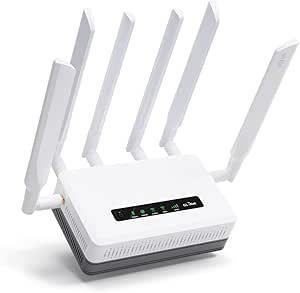 | Best for Battery-Powered, Off-Grid Locations | Maximum Wi-Fi Speed: 2402 Mbps (5 GHz) + 574 Mbps (2.4 GHz) | Cellular Standard: 5G NR | Dual SIM: Yes | VIEW LATEST PRICE | See Our Full Breakdown |
More Details on Our Top Picks
MOFINETWORK MOFI6500-5GXeLTE-RM520-HP 4G/5G Dual SIM Cellular Router with Amplified Wi-Fi 6
This router stands out for its combination of high-speed 5G LTE, dual SIM failover, and enterprise-grade security, making it ideal for remote offices where uninterrupted connectivity is critical. Compared with the InHand Networks FWA12, it offers a more durable all-metal design and built-in Wi-Fi 6 coverage, but lacks the ultra-fast Wi-Fi 7 of the InHand model. Its dual SIM support with automatic failover ensures continuous service even in unstable cellular environments, while its rugged construction suits outdoor or industrial settings. The tradeoff is that it doesn’t specify detailed security protocols or management options, which might be a concern for highly sensitive environments. Overall, this pick makes the most sense for remote offices that need resilient, secure, and durable cellular connectivity with extended Wi-Fi coverage.
Pros:- Dual SIM support with automatic failover ensures continuous connectivity
- All-metal rugged construction enhances durability and heat dissipation
- Amplified Wi-Fi 6 with nine antennas provides extended coverage and high speeds
- Enterprise-grade security protocols including VPN compatibility
Cons:- No customer review data available to confirm real-world performance
- Price information not specified, making cost assessment difficult
Best for: Remote office environments where durability, security, and reliable cellular failover are priorities
Not ideal for: Small home setups or offices with primarily wired internet, as the rugged design and enterprise features may be overkill
- Connectivity:5G, 4G LTE, Wi-Fi 6, Ethernet, USB
- Wi-Fi Generation:Wi-Fi 6 (802.11ax)
- Antennas:9 (Retractable/Detachable)
- SIM Support:Dual SIM with Auto Failover
- Processor:X62 5G NR Solution
- Max Data Transfer Rate:3.4 Gbps
- Ports:5
- Security Protocols:WPA2-Enterprise, WPA2-PSK, WPA3
Our verdict“This router suits remote offices needing durable, secure, and high-speed cellular failover with broad Wi-Fi coverage.”
Teltonika RUTM50 5G Industrial Router – Dual SIM Failover, WiFi 5, Gigabit Ethernet, VPN & RMS Support
Compared with the MOFI6500, the Teltonika RUTM50 offers a rugged, industrial-grade build designed for extreme environments, with reliable 5G connectivity and advanced security features. Its support for multiple wired ports and remote management via RMS makes it ideal for demanding applications where stability and security are non-negotiable. However, it lacks Wi-Fi 6 support, using WiFi 5 instead, which limits coverage and speeds somewhat. The dual SIM failover is highly reliable, but the setup may be complex for users unfamiliar with industrial networking. The RUTM50’s robust construction and security make it the best choice for installations in harsh environments, although it comes at a higher price and complexity, which could be a barrier for smaller or less technical users. It’s perfect for industrial or remote sites requiring maximum reliability and security.
Pros:- Reliable dual SIM failover for continuous service in unstable networks
- Built to withstand extreme temperatures and conditions
- Supports advanced security protocols and remote management
- Multiple wired ports for flexible network integration
Cons:- Limited Wi-Fi speed due to Wi-Fi 5 support
- Complex configuration process for beginners
- Higher price point typical for industrial-grade devices
Best for: Industrial sites and demanding outdoor environments needing rugged, secure, and reliable cellular connectivity
Not ideal for: Small offices or home users who prioritize Wi-Fi 6 or simple setup over industrial durability
- Connectivity:5G
- SIM:Dual SIM Failover
- WiFi:WiFi 5
- Ethernet Ports:Gigabit Ethernet
- Security:OpenVPN, IPsec, WireGuard, Firewall
- Operating Temperature:-10°C to 50°C
Our verdict“This router excels in harsh, industrial environments where reliability and security are critical, despite its complexity and higher cost.”
Hitron D60 5G Cellular Router with Sim Card Slot | AX3000 WiFi 6 Router with Mesh WiFi | Certified with T-Mobile, AT&T, US Cellular | Nano SIM, eSIM for Dual Failover Capability
This router is tailored for users who need a portable 5G solution with high speeds and dual failover options, including eSIM support. Its ability to switch between SIM cards or use eSIM provides flexibility for mobile or temporary setups, which is a step above the InHand router’s wired Ethernet focus. It supports Wi-Fi 6, delivering fast wireless speeds, but it may lack the extensive security features found in more enterprise-focused options like the MOFI or Teltonika models. Its certification with multiple carriers makes it highly versatile across networks, but the device’s compact design and limited port options could restrict its use in more permanent, wired-centric office environments. This makes it ideal for mobile or seasonal remote offices that prioritize speed and flexibility over extensive security or rugged durability.
Pros:- Supports dual SIM and eSIM for flexible failover options
- High-speed 5G with download speeds up to 3.4 Gbps
- Compact, portable design ideal for mobile use
- Certified for multiple major networks
Cons:- Limited security features compared to enterprise models
- Few wired ports may restrict wired connectivity in fixed setups
- No detailed management options specified
Best for: Mobile or temporary remote offices needing high-speed 5G with flexible SIM failover options
Not ideal for: Permanent large-scale offices requiring extensive wired connections or industrial-grade security
- Speed:up to 3.4 Gbps
- Cellular Technology:5G
- Dual SIM:Yes, eSIM and Nano SIM
- Wi-Fi:AX3000
- Antenna:Internal
- Security:WPA3
Our verdict“This router is perfect for mobile or short-term remote setups where speed and SIM flexibility matter most, but less so for permanent, security-intensive deployments.”
GL.iNet GL-X2000 Spitz Plus 4G LTE CAT 12 Wi-Fi 6 Dual-SIM Router
Compared to the higher-end industrial and 5G routers, the GL.iNet Spitz Plus offers a solid balance of speed and cost, making it appealing for small offices or remote setups within North America. Its Wi-Fi 6 support and dual-SIM failover provide reliable and fast cellular connectivity, suitable for less critical environments. However, its performance is limited to LTE CAT 12 speeds and regional network certifications restrict its use outside North America. While it supports multi-WAN and VPN features, these are less advanced than the enterprise options, and real-world speeds may fall short of maximums, especially under heavy load. This device makes sense for budget-conscious remote offices that need decent speed and failover, but not for environments demanding industrial-grade security or ultra-fast 5G.
Pros:- Affordable price point with reliable dual-SIM failover
- Supports Wi-Fi 6 for improved wireless performance
- Multi-WAN capabilities for combining internet sources
- Pre-installed VPN options like OpenWRT support
Cons:- Limited to LTE CAT 12 speeds, lower than 5G options
- Regional network certification restricts global deployment
- Speeds may vary significantly from maximums in real-world use
Best for: Small remote offices or travelers in North America seeking reliable dual-SIM LTE failover on a budget
Not ideal for: Offices outside North America or those requiring high-end security or 5G speeds
- Wi-Fi Standard:Wi-Fi 6 (802.11ax)
- Cellular Standard:4G LTE CAT 12
- Dual-SIM:Yes
- LAN Port Bandwidth:1000 Mbps
- VPN Support:OpenWRT, OpenVPN, WireGuard
- Region:North America Only
Our verdict“This router offers a cost-effective dual-SIM LTE failover solution for North American small remote offices, but lacks the speed and security of higher-tier models.”
Cudy 5G SA/NSA AX3000 4-Port Gigabit Wi-Fi 6 Router with 2X SIM Slots, P5
This model stands out for its triple failover capability, combining wired, cellular, and Wi-Fi sources to maximize uptime. Its dual SIM slots with carrier redundancy allow seamless switching, making it superior to simpler LTE-only routers like the Cudy LT500, which lacks multiple failover options. The AX3000 Wi-Fi 6 supports high-speed connections across multiple devices, ideal for remote offices with demanding data needs. However, its complexity and higher price might be overkill for smaller setups or those with limited IT support. Compared to the GL.iNet Spitz AX, the Cudy P5 offers more extensive failover options but requires more configuration expertise. This pick makes the most sense for organizations prioritizing maximum uptime and network redundancy in remote locations.
Pros:- Triple failover (WAN, Cellular1, Cellular2) for maximum uptime
- Dual SIM slots with carrier redundancy
- High-speed Wi-Fi 6 with 4x GbE ports
Cons:- Complex setup process may require technical skills
- Higher cost compared to simpler LTE routers
Best for: Remote offices needing robust, multi-path internet failover with high-speed Wi-Fi.
Not ideal for: Small home setups or budgets that cannot accommodate advanced networking features.
- Maximum Download Speed:3.4 Gbps
- Wi-Fi Standard:Wi-Fi 6
- Number of SIM Slots:2
- Number of Ethernet Ports:4
- Failover Capability:Triple (WAN/Cellular1/Cellular2)
- Antenna Type:Detachable SMA
- VPN Support:WireGuard, OpenVPN, IPsec
- Coverage:Strong and reliable over large areas
Our verdict“This router is best suited for remote offices where continuous connectivity is critical and technical support is available.”
GL.iNet GL-X3000 (Spitz AX) Cellular Gateway 5G Router for House & RV, Wi-Fi 6, Detachable Antennas, Dual-SIM, T-Mobile & AT&T IoT Device Certified, Family/Rural Area/Road Trips
This pick excels in providing fast 5G and Wi-Fi 6 speeds in mobile or rural environments, supporting dual SIMs with automatic failover, making it a versatile solution for remote sites and road trips. Compared with the Cudy P5, the Spitz AX is more adaptable for on-the-go scenarios, thanks to its built-in, long-lasting battery and support for multiple WAN types. Its OpenWrt-based firmware allows for deep customization, appealing to advanced users needing tailored network setups. However, its complexity and reliance on user configuration can be daunting for non-technical buyers. The Spitz AX’s multi-WAN support and physical eSIM capability make it ideal for users who need reliable, flexible connectivity in areas with inconsistent coverage. This device is best for those who require a portable, customizable solution for temporary or rural deployments.
Pros:- Supports lightning-fast 5G NSA and SA standards
- Dual SIM with automatic failover
- Built-in 6400mAh battery for prolonged use
Cons:- Requires technical knowledge for advanced customization
- Higher price point due to advanced features
Best for: Rural residents, RV owners, and field teams needing flexible, portable internet with failover options.
Not ideal for: Small office environments that prefer plug-and-play simplicity without extensive setup.
- Maximum Wi-Fi Speed:2402 Mbps (5 GHz) + 574 Mbps (2.4 GHz)
- Cellular Standard:5G NSA/SA
- Dual SIM:Yes
- Battery Capacity:6400 mAh
- Multi-WAN Support:Ethernet, Cellular, Tethering
- Operating System:OpenWrt
- Antennas:6 detachable
- Coverage:Long-range and reliable in remote areas
Our verdict“Ideal for mobile or rural users seeking a highly adaptable, resilient internet solution that can operate independently of power sources.”
GL.iNet GL-XE3000 Puli AX 5G Router with Dual SIM and 6400mAh Battery
This device offers a unique advantage with its large built-in battery, providing up to 8 hours of operation, making it perfect for off-grid or power-sensitive environments like construction sites or outdoor events. Its dual SIM slots with automatic failover ensure continuous connectivity, comparable to the Spitz AX but with added mobility. The router’s support for OpenWrt allows for extensive customization, and the dual-band Wi-Fi 6 ensures fast, stable connections for multiple devices. Still, the added bulk of the battery and limited wired Ethernet ports might be less suited for permanent office setups. Unlike the Cudy P5, which emphasizes network redundancy, the XE3000 prioritizes portability and power independence. This makes it ideal for users needing reliable internet in locations with unstable or no power supply.
Pros:- Large 6400mAh battery for up to 8 hours of use
- Dual SIM with automatic failover
- Supports Wi-Fi 6 with high-speed dual-band performance
Cons:- Bulkier due to the large battery, less portable
- Limited Ethernet ports for wired devices
Best for: Field teams, outdoor events, and off-grid setups requiring long-lasting, portable internet access.
Not ideal for: Indoor-only office environments where power supply is stable and portability is less critical.
- Maximum Wi-Fi Speed:2402 Mbps (5 GHz) + 574 Mbps (2.4 GHz)
- Cellular Standard:5G NR
- Dual SIM:Yes
- Battery Capacity:6400 mAh
- Maximum Uptime:Up to 8 hours
- Multi-WAN:Cellular, Ethernet, Tethering
- Operating System:OpenWrt
- Coverage:Ideal for off-grid use
Our verdict“Designed for users who need dependable, long-lasting internet in remote or off-grid settings, prioritizing power independence over compactness.”

How We Picked
These products were evaluated based on a combination of performance, build quality, ease of use, and feature set tailored for remote office needs. Priority was given to routers with reliable 5G connectivity, failover capabilities, and support for multiple SIM cards, ensuring seamless connection switching. We also considered future-proofing features like Wi-Fi 6 and Wi-Fi 7, as well as management tools suitable for remote deployment. Cost-effectiveness was a factor, but only when it did not significantly compromise core reliability and performance. The ranking reflects a balance of these factors, favoring devices that excel in real-world remote office scenarios over those with only niche or limited features.Factors to Consider When Choosing Best 5G Failover Router For Remote Offices
Choosing the right 5G failover router for remote offices involves understanding several key factors beyond basic connectivity. The ideal device must balance performance, reliability, and ease of management, especially in environments with inconsistent network conditions or limited technical support. Considering these factors can help prevent common pitfalls such as overpaying for unnecessary features or selecting a device that cannot handle the demands of a remote setup.Network Compatibility and Failover Features
Ensure the router supports both 5G and LTE networks if future-proofing is a priority. Dual SIM slots are a major advantage, allowing automatic failover between carriers, which is vital for remote offices with unstable primary connections. Look for routers with automatic failover and load balancing capabilities, so downtime is minimized without manual intervention. It’s worth considering whether the device supports carrier aggregation to maximize throughput when connected to multiple networks.
Ease of Setup and Management
Remote offices often lack dedicated IT staff, making user-friendly setup and management tools essential. Routers with intuitive web interfaces or mobile apps reduce deployment time and ongoing maintenance. Features like remote management and cloud-based control panels simplify troubleshooting and configuration updates. Beware of overly complex systems that require specialized knowledge, which can lead to longer downtimes and higher support costs.
Performance and Future-Proofing
Look for routers featuring Wi-Fi 6 or Wi-Fi 7, as these standards offer better performance, lower latency, and increased device capacity—a significant advantage in remote offices with multiple users. Consider the router’s processor and antenna design for coverage and speed. Investing in future-proof technology can extend the device’s lifespan, but often comes at a higher upfront cost. Balance current needs with potential future growth for the most cost-effective solution.
Build Quality and Durability
Remote office environments can be challenging, with exposure to dust, temperature swings, or power fluctuations. Industrial-grade routers like the Teltonika RUTM50 tend to offer enhanced durability and resistance to environmental factors. Cheaper models may save money initially but can require more frequent replacements or repairs. Consider the physical design, cooling solutions, and warranty terms to gauge long-term resilience.
Cost and Value
While budget options can be tempting, they often lack key features like dual SIM support or advanced security. Conversely, premium models provide extensive management tools and higher throughput but may be overkill for small remote setups. Effective purchasing involves matching features to actual needs without paying for unnecessary extras. Think about total cost of ownership, including potential support and maintenance expenses, over the device’s lifespan.
Frequently Asked Questions
Can a 5G failover router handle multiple remote sites?
While most 5G failover routers are designed for single-site deployment, some high-end models support multiple SIM slots and advanced network management features that can be scaled across several locations. For multi-site setups, it’s essential to choose a device that supports centralized management and easy configuration. However, deploying separate routers at each site remains the most straightforward approach for ensuring dedicated failover paths and local performance.
What is the main difference between 4G LTE and 5G routers for remote offices?
5G routers offer significantly higher bandwidth, lower latency, and greater capacity for connected devices compared to 4G LTE models. This means faster internet speeds and more reliable failover during network issues. However, 5G coverage can be inconsistent or limited in rural or remote areas, so verifying local network availability is critical before investing. For many remote offices, a combined 4G/5G device provides a good balance of coverage and future-proofing.
Is it better to choose a dedicated industrial router or a consumer-grade model?
Industrial routers like the Teltonika RUTM50 are built for durability, extended environmental resistance, and high reliability, making them suitable for remote or harsh environments. Consumer-grade models tend to be more affordable and easier to set up but may lack resilience or advanced features necessary for mission-critical applications. The choice depends on the specific environment and the importance of uptime; for mission-critical setups, investing in industrial-grade hardware is often justified.
How important is Wi-Fi 6 or Wi-Fi 7 support in a failover router?
Wi-Fi 6 and Wi-Fi 7 significantly improve network performance, device capacity, and latency, which can be vital for remote offices with multiple users and devices. These standards also help future-proof the network, ensuring compatibility with upcoming devices and higher throughput demands. While initial costs may be higher, the benefits in performance and scalability often outweigh the expense, especially for busy remote setups.
Should I prioritize price or advanced features in my purchase?
Prioritizing price can lead to selecting a device lacking essential failover or security features, risking downtime or security breaches. Conversely, focusing solely on advanced features might push costs beyond what’s needed for small or less critical setups. The best approach is to assess your specific needs—such as the number of users, environment durability, and security—and choose a device that offers the right balance of features and value for your remote office. An investment in quality often pays off through increased reliability and lower maintenance costs over time.
Conclusion
For small remote offices with straightforward needs, a budget-friendly router with dual SIM support like the Cudy LT500 offers simplicity and reliable failover. Larger or mission-critical setups should consider premium options such as the MOFINETWORK MOFI6500-5GXeLTE-RM520-HP for its advanced features and future readiness. Industrial environments or harsh conditions favor the durability of models like the Teltonika RUTM50, while tech-savvy users seeking cutting-edge performance will benefit from Wi-Fi 7-enabled routers like the InHand Networks FWA12. Ultimately, the choice depends on your specific environment, technical expertise, and reliability requirements—matching the right device to your remote office’s unique demands ensures seamless connectivity and peace of mind.