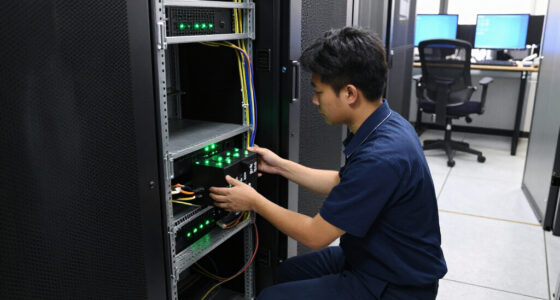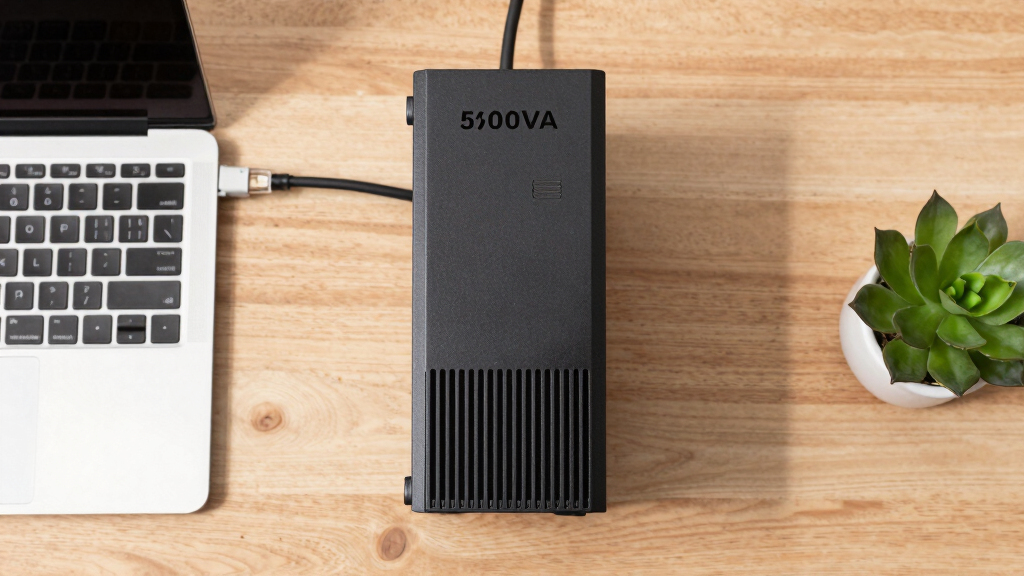

When selecting the best 5000VA UPS for network rooms, reliability and power capacity are critical. The Eaton Tripp Lite SU5000RT stands out as the best overall choice thanks to its robust double-conversion design and proven performance. The APC Smart-UPS Ultra offers impressive lithium-ion technology for extended runtime, while the Eaton 9PX5K provides advanced management features. These models highlight the key tradeoffs in this category: balancing cost, complexity, and runtime. Continue reading for a detailed comparison to help you make an informed decision.

Get business pricing on networking and server gear
- Business-only prices and quantity discounts
- Tax-exempt purchasing
- Multiple users, one account, clear invoices
Key Takeaways
- The top picks share a focus on reliability, with double-conversion topology favored for critical network environments.
- Extended runtime and management features differentiate premium models from more basic options.
- Lithium-ion batteries, as seen in some APC and Vertiv models, offer longer lifespan and less maintenance but come at a higher price.
- Build quality and ease of maintenance are recurring factors that influence long-term value.
- Pricing varies significantly, with more expensive units offering advanced monitoring and redundancy features.
| Eaton Tripp Lite SU5000RT 208V/230V 5000VA Double-Conversion UPS |  | Best Overall for Network Infrastructure | VA: 5000VA | Wattage: 4500W | Input Voltage: 200V-240V | VIEW LATEST PRICE | See Our Full Breakdown |
| APC Smart-UPS Ultra On-Line 5000VA Lithium-ion Rack/Tower UPS |  | Best for Flexibility and Extended Runtime | Capacity: 5000VA | Input Voltage: 208V | Output Outlets: 2 NEMA L6-20R, 2 NEMA L6-30R | VIEW LATEST PRICE | See Our Full Breakdown |
| APC Smart-UPS SRT 5000VA RM |  | Best for Critical Rack-Mount Power | Capacity: 5000 VA / 4250 W | Input Voltage: 208 V | Receptacles: 2 NEMA L6-20R, 2 NEMA L6-30R | VIEW LATEST PRICE | See Our Full Breakdown |
| Eaton 9PX5K 5KVA UPS – 0.05 Hour Full Load, SNMP Manageable |  | Best for Network Management and Power Monitoring | Capacity: 5 KVA | Backup Time: 0.05 Hour at full load | Management: SNMP | VIEW LATEST PRICE | See Our Full Breakdown |
| Vertiv Liebert GXT5-5000HVRT5UXLN Battery Backup UPS 5000VA 5U with RDU120 |  | Best for High Power Factor and Extended Runtime | Voltage: 230 volts | Maximum Power: 5000 watts | Output Voltage: 208 volts | VIEW LATEST PRICE | See Our Full Breakdown |
| Vertiv Liebert GXT5 Lithium-Ion Online UPS 5kVA/5kW 120V/208V Rack/Tower with L14-30P Input and Extended Runtime |  | Best for Long-Lasting Runtime and Scalable Power | Capacity: 5kVA/5kW | Input: L14-30P | Outputs: (2) NEMA L14-30R | VIEW LATEST PRICE | See Our Full Breakdown |
| Eaton Tripp Lite SMART5000XFMRXL 208V 5000VA Pure Sine Wave UPS | 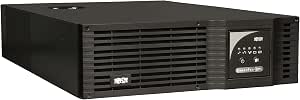 | Best for Power Quality and Network Compatibility | Voltage: 208V | Output Voltage: 208V | Maximum Power: 3750W | VIEW LATEST PRICE | See Our Full Breakdown |
| 5000VA UPS for network room | Input Voltage | Form Factor | Capacity |
|---|---|---|---|
| Eaton Tripp Lite SU5000RT 208V | 200V-240V | Rackmount 3U | — |
| APC Smart-UPS Ultra On-Line 50 | 208V | 2U Rack/Tower | 5000VA |
| APC Smart-UPS SRT 5000VA RM | 208 V | Rack-mount | 5000 VA / 4250 W |
| Eaton 9PX5K 5KVA UPS | — | — | 5 KVA |
| Vertiv Liebert GXT5-5000HVRT5U | — | — | — |
| Vertiv Liebert GXT5 Lithium-Io | — | — | 5kVA/5kW |
| Eaton Tripp Lite SMART5000XFMR | 208V | Rack | — |
More Details on Our Top Picks
Eaton Tripp Lite SU5000RT 208V/230V 5000VA Double-Conversion UPS
This model stands out for its robust double-conversion technology, providing exceptionally clean and stable power ideal for sensitive network equipment. Compared with the Vertiv Liebert GXT5-5000HVRT5UXLN, it offers more extensive remote management options, such as SNMP and LCD display, making it better suited for IT teams managing multiple devices. The expandable battery support up to four external modules offers a clear advantage for longer runtimes during outages, but this comes with a bulkier rack-mount design that might not fit smaller spaces. While setup can be complex for less technical users, the reliability and flexibility make it a top pick for enterprise-level network rooms. Its VRLA batteries are hot-swappable, reducing downtime, though the initial investment can be higher.
Pros:- Provides clean, reliable power with pure sine wave output
- Expandable battery capacity for extended runtime
- Remote management via network interface and LCD display
- Multiple outlets with surge protection
Cons:- Complex setup may require technical expertise
- Extended battery modules sold separately
- Bulkier rack-mount design may not suit small spaces
Best for: IT managers and network administrators seeking a reliable, scalable UPS with remote management capabilities.
Not ideal for: Small office setups with limited rack space or users seeking a plug-and-play solution without technical setup.
- VA:5000VA
- Wattage:4500W
- Input Voltage:200V-240V
- Outlets:2 L6-20R, 2 L6-30R
- Form Factor:Rackmount 3U
- Battery:Hot-swappable VRLA
Our verdict“This UPS is ideal for large network installations requiring reliable power and scalability, despite its installation complexity.”
APC Smart-UPS Ultra On-Line 5000VA Lithium-ion Rack/Tower UPS
This UPS offers a versatile solution suitable for either rack or tower configurations, making it adaptable to different network room layouts. Compared to the Eaton SU5000RT, its lithium-ion batteries provide longer lifespan and faster recharge times, although it requires a 208V supply which may limit compatibility in some environments. Its 5000VA capacity and multiple NEMA outlets support critical equipment effectively, but the larger footprint could pose space challenges in tight setups. The 1.5-hour recharge time is advantageous for frequent power cycles, yet the cost of lithium-ion technology could be higher upfront. This model is best suited for users who value flexible installation and longer-term battery performance.
Pros:- Flexible rack or tower installation
- Longer lifespan and faster recharge with lithium-ion batteries
- High capacity supports critical systems
- Includes network connectivity for remote management
Cons:- Requires 208V power supply, limiting compatibility
- Relatively large footprint
- Potentially higher initial cost
Best for: Network facilities needing adaptable rack or tower placement with extended runtime and quick recharge.
Not ideal for: Environments with limited 208V power supply or users on a tight budget due to potentially higher cost.
- Capacity:5000VA
- Input Voltage:208V
- Output Outlets:2 NEMA L6-20R, 2 NEMA L6-30R
- Receptacle Type:NEMA L6-30P
- Cord Length:10.01 ft
- Form Factor:2U Rack/Tower
Our verdict“This UPS suits those looking for adaptable installation options and longer battery life, despite needing compatible power supplies and higher investment.”
APC Smart-UPS SRT 5000VA RM
This model delivers dependable backup power with a capacity of 5000 VA and 4250 W, optimized for rack-mount environments where space efficiency is key. Its 1.5-hour recharge time outperforms many competitors like the Vertiv GXT5, which may have shorter runtimes but heavier weight. Its rugged design and certified standards (RoHS, Energy Star, Reach) confirm its suitability for demanding settings. However, its weight of over 120 lbs can complicate installation, and its long recharge time might delay readiness after outages. Compared to the Eaton SU5000RT, it offers a more straightforward rack-mount form factor, but at the expense of slightly less advanced remote management options. Overall, it’s a solid choice for dedicated rack installations.
Pros:- Rack-mountable design saves space
- High power capacity for critical equipment
- Certified for energy efficiency and environmental standards
- Multiple receptacles for flexible connections
Cons:- Heavy weight complicates installation
- Long recharge time may delay backup readiness
- Less advanced remote management compared to some models
Best for: Data center racks needing space-efficient, reliable backup with straightforward installation.
Not ideal for: Small or mobile setups where portability or lighter weight is necessary.
- Capacity:5000 VA / 4250 W
- Input Voltage:208 V
- Receptacles:2 NEMA L6-20R, 2 NEMA L6-30R
- Recharge Time:1.5 hours
- Form Factor:Rack-mount
- Weight:123 lbs
Our verdict“This UPS fits for rack environments prioritizing space efficiency and reliable backup, with some tradeoffs in weight and setup complexity.”
Eaton 9PX5K 5KVA UPS – 0.05 Hour Full Load, SNMP Manageable
This model emphasizes remote control and monitoring, featuring SNMP management, an interactive LCD, and ABM technology that extends battery life. Compared with the APC SRT, its real strength lies in detailed load monitoring and management, making it suitable for environments where oversight and control are critical. Its limited backup time of just 0.05 hours at full load is a significant drawback for uninterruptible operation but is acceptable in setups where brief outages are expected to be managed with orderly shutdowns. The UPS’s high efficiency and advanced management tools make it a strong choice for networks needing vigilant power oversight, although setup complexity and short runtime could dissuade less technical users.
Pros:- SNMP management for remote control
- Extended battery life with ABM technology
- Real-time load information on LCD
- High efficiency standards
Cons:- Limited backup time at full load
- Setup complexity for non-technical users
- Not suited for long outages
Best for: Network administrators requiring detailed remote management and real-time load monitoring.
Not ideal for: Users needing longer backup times or simpler plug-and-play solutions.
- Capacity:5 KVA
- Backup Time:0.05 Hour at full load
- Management:SNMP
- Technology:ABM 3-stage charging
Our verdict“This UPS excels in environments where monitoring and management are prioritized over extended runtime, with some limitations on backup duration.”
Vertiv Liebert GXT5-5000HVRT5UXLN Battery Backup UPS 5000VA 5U with RDU120
This UPS distinguishes itself with a high power factor of 0.9-1.0, allowing more equipment to be connected without overloading, which is a significant advantage over models like the APC SRT that have a lower power factor. Its remote management capabilities and a bright color LCD make it user-friendly for complex network environments. The 7-minute runtime at full load offers more operation time during outages than some competitors, but its weight exceeds 200 lbs, making installation more challenging. The 3-hour charge time is typical, and external batteries can extend runtime further. Compared to the Eaton Tripp Lite SU5000RT, it emphasizes energy efficiency and usability, but the setup could be more demanding for non-technical users.
Pros:- High power factor (0.9-1.0) supports more loads
- Remote management with optional network communication
- Energy Star 2.0 certified for efficiency
- Color LCD display with easy-to-use interface
Cons:- Heavy weight complicates installation
- Limited 7-minute runtime at full load
- Setup may be complex for non-technical users
Best for: Network rooms with high power density needs and users seeking efficient space utilization.
Not ideal for: Small or portable setups where weight and size are constraints.
- Voltage:230 volts
- Maximum Power:5000 watts
- Output Voltage:208 volts
- Number of Outlets:8
- Battery Average Life:5 years
- Runtime:7 minutes
Our verdict“This UPS is tailored for high-density network environments demanding efficient space use and detailed management, despite its weight and setup complexity.”
Vertiv Liebert GXT5 Lithium-Ion Online UPS 5kVA/5kW 120V/208V Rack/Tower with L14-30P Input and Extended Runtime
The Vertiv Liebert GXT5 Lithium-Ion UPS stands out for its exceptional battery longevity, offering up to three times the lifespan of traditional VRLA models like the Eaton Tripp Lite SMART5000XFMRXL. This makes it an excellent choice for network rooms that require reliable, extended runtime without frequent maintenance. Its fast recharge ability, capable of returning to 90% capacity in as little as two hours, minimizes downtime after outages. The scalability—supporting up to eight external battery cabinets—gives this model an edge for growing infrastructure needs. However, the higher initial investment and external battery setup may deter smaller or budget-conscious setups. Complex installation also suggests the need for professional assistance. Compared with the Tripp Lite, which offers straightforward setup and pure sine wave output, the Vertiv provides longer battery life and management features but at increased cost and complexity.
Pros:- Lithium-Ion batteries last up to three times longer than VRLA batteries, reducing replacement costs
- Fast recharge time minimizes downtime after outages
- Supports up to eight external battery cabinets for extended runtime
- Includes remote management features for infrastructure monitoring
Cons:- Higher initial cost compared to traditional VRLA-based UPS systems
- External battery cabinets require additional space and setup complexity
- Installation process may require professional expertise
Best for: Network administrators managing critical server or edge locations needing long runtime and scalable power solutions.
Not ideal for: Small offices or budget-conscious users who prefer simpler, less costly UPS systems with minimal setup requirements.
- Capacity:5kVA/5kW
- Input:L14-30P
- Outputs:(2) NEMA L14-30R
- Voltage:120V/208V
- Battery Life:Up to 3x longer than VRLA
- Runtime:Full load of 10 minutes, up to 13 minutes at full load
- Recharge Time:As little as 2 hours to 90%
- Scalability:Supports up to 8 external battery cabinets
- Management:Includes RDU120 SNMP/Webcard, Power Insight
Our verdict“Ideal for large, critical network environments needing extended, scalable runtime with minimal maintenance, despite higher upfront costs.”
Eaton Tripp Lite SMART5000XFMRXL 208V 5000VA Pure Sine Wave UPS
The Eaton Tripp Lite SMART5000XFMRXL offers reliable pure sine wave output, making it especially suitable for sensitive network and telecommunications equipment that demand clean, stable power. Its support for multiple outlets and network management interfaces provides flexibility for complex setups, unlike simpler models that might lack remote monitoring capabilities. The hot-swappable batteries support extended runtime and ease maintenance, but the requirement of three rack spaces can be restrictive for tight server closets. Additionally, its detailed feature set could be overwhelming for users with basic needs, potentially complicating installation. Compared to the Vertiv Liebert GXT5, which emphasizes scalability and long-term battery life, the Tripp Lite is more straightforward but less scalable and with a longer battery charge time of four hours. This makes it better suited for environments valuing power quality and ease of maintenance over maximum runtime scalability.
Pros:- Provides pure sine wave output during brownouts and overvoltage conditions for sensitive equipment
- Supports multiple outlets and network management interfaces for easy remote control
- Field-replaceable, hot-swappable batteries for extended runtime and maintenance convenience
- Designed for reliable, clean power supply in demanding environments
Cons:- Requires three rack spaces, limiting installation in compact setups
- Setup can be complex due to multiple advanced features
- Battery charge time of four hours extends downtime before full recharge
Best for: Network engineers and small data centers needing dependable, high-quality power with remote management features.
Not ideal for: Small or space-limited setups where rack space is at a premium, or users seeking simple, plug-and-play solutions.
- Voltage:208V
- Output Voltage:208V
- Maximum Power:3750W
- Input Voltage:208V
- Battery Charge Time:4 hours
- Form Factor:Rack
- Amperage:50A
Our verdict“Best suited for environments that prioritize power quality, remote management, and straightforward maintenance over maximum runtime scalability.”

How We Picked
I evaluated each UPS based on performance metrics such as power capacity, runtime, and efficiency. Usability factors like management interfaces, ease of installation, and maintenance requirements were also key. Build quality and reliability were assessed through brand reputation and component design. I prioritized models that balance cost with essential features, ranking them according to how well they meet the demands of network rooms that require continuous, stable power. This approach ensures the top choices deliver both performance and value in real-world network environments.Factors to Consider When Choosing Best 5000VA UPS For Network Rooms
Choosing the best 5000VA UPS for a network room requires understanding several critical factors. Beyond basic capacity, features like runtime, management options, and form factor play vital roles. Considering these aspects helps avoid common pitfalls, such as underestimating power needs or selecting a unit with insufficient management tools, which can lead to costly downtime or maintenance issues. The right UPS balances performance, ease of use, and long-term durability tailored to your specific network infrastructure.Power Capacity and Scalability
While 5000VA is a standard benchmark, assessing your actual load is essential. Overloading any UPS risks shutdowns or damage, so evaluate your equipment’s power draw carefully. Also, consider future expansion; a scalable UPS with additional outlets or modular components can save costs later. Avoid models that are just sufficient for current needs but lack headroom for growth, which could lead to early replacements or upgrades.
Runtime and Battery Technology
Runtime determines how long your network can operate during outages. Many models offer extended runtime through additional batteries or advanced battery management. Lithium-ion batteries, present in some high-end units, provide longer lifespan and less maintenance than traditional lead-acid types, but often come at a higher upfront cost. Balancing runtime with budget constraints is key; a longer backup time might justify a higher investment for mission-critical networks.
Management and Monitoring Features
Effective remote management tools, including SNMP, web interfaces, and alert systems, are vital for network environments. They enable proactive maintenance and quick response to power issues. Cheaper models may lack these features, making maintenance more manual and reactive. Investing in a UPS with comprehensive management capabilities can reduce downtime and streamline troubleshooting, especially in complex network setups.
Form Factor and Installation Flexibility
The physical size and design of a UPS influence installation options. Rack-mount units save space in server rooms, but tower models might be easier to deploy in smaller setups. Some models offer hybrid forms or modular designs, providing flexibility in deployment. Misjudging the form factor can cause logistical headaches or inefficient use of space, so measure your environment carefully before choosing.
Price and Total Cost of Ownership
Higher upfront costs often translate into better durability, longer runtimes, and improved management features. However, budget models might suffice for less critical applications, provided they meet your power needs. Remember to factor in ongoing costs, such as battery replacements and maintenance. Investing in a slightly more expensive unit with longer battery life and better management features can lower total ownership costs over time.
Frequently Asked Questions
How do I determine the right size of UPS for my network room?
To size a UPS correctly, start by calculating the total power draw of all connected equipment, including switches, routers, and servers. Add a buffer—typically 20-25%—to account for future expansion or unexpected load surges. This ensures the UPS can handle peak demands without risking shutdowns. Using a detailed power audit simplifies this process and prevents over- or under-provisioning, both of which can lead to inefficiencies or insufficient backup time.
Is a lithium-ion UPS worth the extra cost for my network infrastructure?
Lithium-ion UPS batteries generally last longer—up to three times as long as traditional lead-acid batteries—and require less maintenance. For critical network environments where uptime is paramount, the initial higher investment can translate into lower long-term costs and reduced downtime risks. However, if your backup needs are less demanding or budget-constrained, a well-maintained lead-acid model may suffice and offer better immediate value.
What management features should I prioritize in a 5000VA UPS?
Remote monitoring via SNMP, Web interface, or dedicated software is essential for proactive maintenance. Alerts for battery health, overload conditions, and runtime estimation help prevent unexpected failures. Redundant power paths and hot-swappable batteries further enhance reliability. Prioritize models with these features if minimizing downtime and simplifying maintenance are priorities in your network environment.
Can I install a 5000VA UPS in a small server room?
Yes, but consider the physical dimensions and installation space. Many 5000VA units are designed for rack mounting, which saves space in dense server rooms. Smaller or tower models might be more suitable for limited space or less permanent installations. Always measure your environment carefully and choose a form factor that allows easy access for maintenance and future upgrades.
How often should I replace batteries in my UPS?
Most UPS batteries, particularly lead-acid types, need replacement every 3-5 years depending on usage and environmental conditions. Lithium-ion batteries last longer—around 8-10 years—reducing replacement frequency. Regular battery testing and monitoring can help identify degradation early, preventing unexpected failures. Planning for battery replacement as part of your maintenance schedule is key to maintaining reliable backup power.
Conclusion
For those seeking the best overall performance, the Eaton Tripp Lite SU5000RT offers unmatched reliability and build quality. Budget-conscious buyers should consider models like the Vertiv Liebert GXT5-5000HVRT5UXLN for solid performance at a lower price point. If you need advanced management features and extended runtime, the APC Smart-UPS Ultra or Eaton 9PX5K are excellent choices. Beginners or smaller networks may prefer tower models like the Vertiv Liebert GXT5, which are easier to install and maintain. Ultimately, choose based on your specific power needs, management requirements, and budget constraints to ensure network stability in 2026 and beyond.Columbus Day / Indigenous Peoples' Day Picks
long weekend sales
As an affiliate, we earn on qualifying purchases.