

To prepare cloud evidence for an internal audit, start by organizing thorough, up-to-date documentation of your security controls, logs, and compliance records. Verify that multi-factor authentication, data encryption, and access permissions are properly managed and documented. Gather certificates, audit reports, and service agreements from your cloud providers, ensuring they meet standards. Conduct internal reviews and store all evidence securely. If you keep exploring, you’ll find more tips to streamline your preparation process effectively.
Key Takeaways
- Organize and update all cloud documentation, including logs, security measures, and compliance records for easy access.
- Verify and document implementation of security controls like MFA, encryption, and access management.
- Collect and review compliance certifications, audit reports, and provider SLAs as supporting evidence.
- Conduct internal mock audits to identify gaps and ensure all required documentation is complete and accurate.
- Assign responsibility for maintaining evidence and store it securely in a centralized, accessible platform.
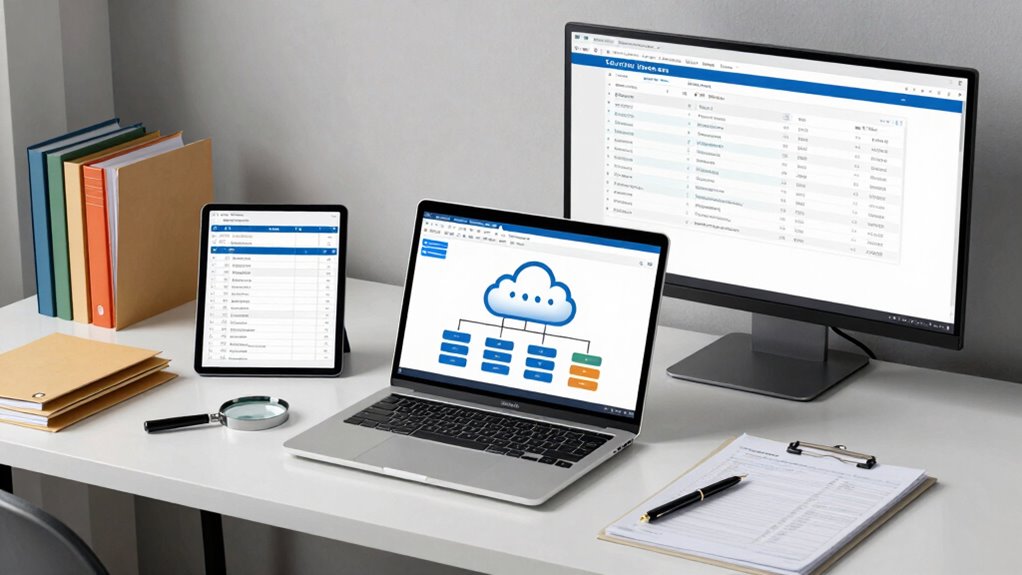
Are you confident your cloud evidence is ready for an internal audit? Preparing for this process involves more than just gathering files; it requires a strategic approach to demonstrate your company’s adherence to cloud security standards and data compliance regulations. First, you need to guarantee that all your cloud-related documentation is thorough, up-to-date, and easily accessible. Audit teams will scrutinize everything from access logs to encryption protocols, so having these organized saves time and reduces stress.
Ensure your cloud documentation is comprehensive, current, and organized to streamline your internal audit process.
Start by reviewing your cloud security measures. Confirm that your security controls are implemented correctly and reflect current best practices. This includes verifying that multi-factor authentication is in place, that data encryption is active both at rest and in transit, and that access permissions are properly managed. You should also compile logs of security incidents, access records, and vulnerability assessments. These documents showcase your proactive security posture and show that you’re actively monitoring and mitigating risks. Conducting regular security assessments can help identify potential gaps before the audit.
Next, focus on data compliance. Your organization must demonstrate adherence to relevant laws and standards, such as GDPR, HIPAA, or PCI DSS, depending on your industry. Gather records of compliance audits, privacy policies, and employee training programs. Make sure your data classification policies are documented and that sensitive data is appropriately protected and handled according to regulations. Any gaps or inconsistencies in your data management practices could trigger red flags, so double-check that your data handling procedures are well-documented and followed.
It’s also vital to verify your cloud service provider’s compliance status. Collect certifications, audit reports, and service level agreements that detail your provider’s adherence to security and compliance standards. This evidence supports your due diligence and demonstrates that your cloud environment operates within regulatory boundaries.
Finally, conduct a thorough internal review before the actual audit. Run mock audits or walkthroughs to identify missing or outdated evidence. Clarify who is responsible for maintaining each piece of documentation, and ensure that your team is familiar with the audit process. Consolidate all your evidence in a centralized, organized manner, ideally in a secure, accessible platform. This way, during the audit, you can quickly locate and present the necessary information, showing that your cloud security and data compliance efforts are robust and ready for scrutiny. Additionally, understanding the importance of cloud evidence in the audit process can help ensure nothing is overlooked.
As an affiliate, we earn on qualifying purchases.
Frequently Asked Questions
How Often Should Cloud Evidence Be Reviewed for Audits?
You should review cloud evidence regularly, ideally aligning with your audit frequency, which often ranges from quarterly to annually. Frequent checks guarantee your cloud storage remains compliant and secure. By establishing a routine review schedule, you catch issues early and keep your evidence audit-ready. Adjust the audit frequency based on your organization’s compliance needs and any regulatory requirements, making sure your cloud storage stays transparent and trustworthy for internal audits.
What Tools Can Automate Cloud Evidence Collection?
Think of automated tools as your trusty lighthouse guiding you through the fog of evidence collection. These tools streamline cloud evidence collection, ensuring accuracy and efficiency. They continuously gather data, logs, and configurations, making evidence verification a breeze. By automating these processes, you reduce human error and save time, allowing you to focus on analysis rather than manual collection. This way, your audit preparedness becomes rock-solid, with clear, trustworthy evidence at your fingertips.
How to Handle Sensitive Data During Cloud Evidence Preparation?
You should handle sensitive data during cloud evidence preparation by applying data encryption to protect it from unauthorized access. Also, implement strict access controls, ensuring only authorized personnel can view or modify the evidence. Regularly review these controls and encryption protocols to maintain security. This approach guarantees the confidentiality and integrity of sensitive data throughout the audit process, helping you meet compliance standards effectively.
What Are Common Compliance Issues in Cloud Evidence?
Like Pandora’s box, compliance issues in cloud evidence can release unforeseen risks. You often face challenges with cloud security, ensuring data remains protected during audits. Data integrity is vital; any discrepancies can lead to non-compliance. Common pitfalls include inadequate access controls, incomplete audit trails, and misaligned data retention policies. Staying vigilant about these issues helps maintain regulatory adherence, safeguarding your organization from penalties and reputational damage.
How to Train Staff for Effective Cloud Evidence Documentation?
You should implement thorough staff training focused on documentation standards for cloud evidence. Use practical workshops and regular refreshers to guarantee everyone understands what to record, how to secure data, and maintain consistency. Encourage questions to clarify procedures, and provide clear, written guidelines. By fostering ongoing education, you empower your team to document effectively, reducing compliance issues and making internal audits smoother and more accurate.

Symantec VIP Hardware Authenticator – OTP One Time Password Display Token – Two Factor Authentication – Time Based TOTP – Key Chain Size
- Compliance: Standard OATH TOTP compliant
- OTP Code: 6-digit code with countdown
- No Software Needed: Zero installation required
As an affiliate, we earn on qualifying purchases.
As an affiliate, we earn on qualifying purchases.
Conclusion
By effectively preparing your cloud evidence, you guarantee a smoother internal audit process. Remember, organizations with well-organized cloud documentation are 50% more likely to pass audits on their first attempt. Keep your records thorough, up-to-date, and easily accessible. This proactive approach not only saves you time but also boosts your confidence during reviews. Stay diligent, stay prepared, and you’ll navigate your internal audit with fewer surprises and greater success.
As an affiliate, we earn on qualifying purchases.
cloud compliance certification documents
As an affiliate, we earn on qualifying purchases.
As an affiliate, we earn on qualifying purchases.




![Galaxy Z Fold 8 Display Corners Can Bend Inward On Purpose, Samsung Says [Gallery]](https://eucloudservers.com/wp-content/uploads/2026/09/galaxy-z-fold-8-display-corners-can-bend-inward-on-purpose-samsung-says-gallery-featured-260x140.jpg)