

To guarantee compliance, you should ask for a complete physical asset register that details all assets, including their location, condition, maintenance history, and lifecycle status. This register helps you verify assets meet safety standards, supports audit preparation, and streamlines operational management. It also assigns responsibility clearly, reducing risks of mismanagement. Having this document at hand ensures transparency and regulatory adherence. Keep exploring to learn how to build an effective asset register that delivers these benefits.

Get business pricing on networking and server gear
- Business-only prices and quantity discounts
- Tax-exempt purchasing
- Multiple users, one account, clear invoices
Key Takeaways
- Ensure the register includes comprehensive details on asset identification, location, condition, and ownership for regulatory transparency.
- Verify the register tracks asset lifecycle stages, including acquisition, maintenance, and disposal, for compliance and operational insights.
- Confirm the register assigns clear accountability for asset management tasks to mitigate risks of mismanagement.
- Check that the register documents risk assessments, inspections, and maintenance history to support safety standards and audits.
- Ensure the register aligns with industry standards and legal requirements, providing a reliable source for audit readiness.
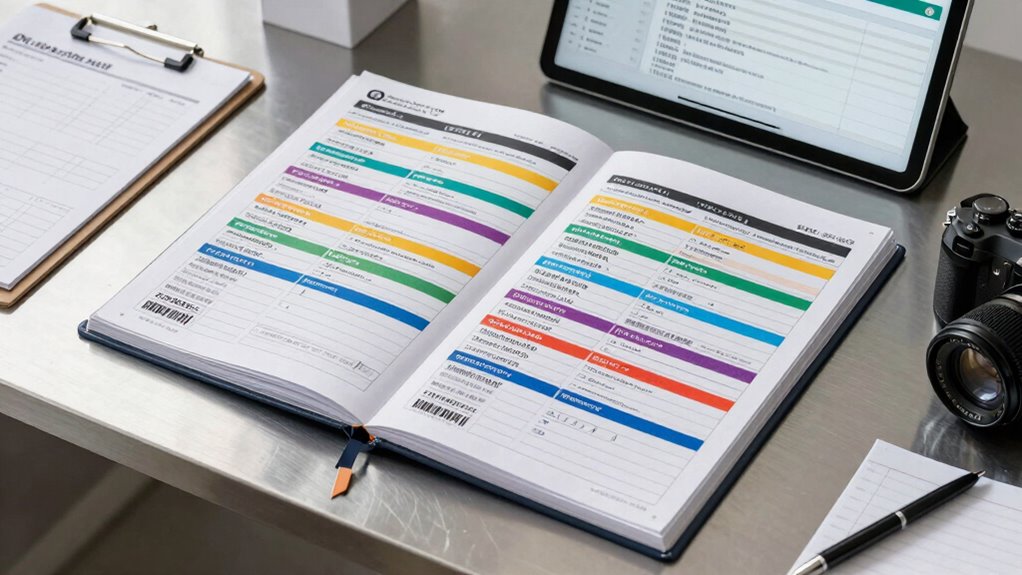
A well-maintained physical asset register is essential for compliance teams to efficiently track and manage organizational assets. It acts as the backbone for ensuring accountability, regulatory adherence, and operational efficiency. When you have a clear and thorough register, you’ll be able to monitor each asset’s entire lifecycle—from acquisition through maintenance, depreciation, and eventual disposal. Understanding the asset lifecycle helps you plan renewals, allocate budgets effectively, and avoid unexpected failures that could lead to compliance issues or safety hazards. This proactive approach minimizes downtime and reduces costs, making your asset management both strategic and compliant.
A comprehensive asset register is vital for accountability, compliance, and efficient lifecycle management.
A key aspect of maintaining this register is conducting regular risk assessments. You need to identify vulnerabilities associated with each asset—whether it’s aging infrastructure, outdated equipment, or assets in high-traffic or hazardous environments. Risk assessment allows you to prioritize inspections, maintenance, and replacements, ensuring that critical assets stay operational and compliant with safety standards. When you integrate risk assessment into your asset management process, you’re better equipped to prevent accidents, mitigate potential liabilities, and meet regulatory requirements. This foresight not only protects your organization but also streamlines audit processes, as you can readily demonstrate compliance with safety and operational standards. Physical asset register plays a crucial role in supporting this proactive management approach. Regular updates and accurate records contribute to asset lifecycle management, helping maintain compliance and operational integrity. Additionally, maintaining an accurate record-keeping system enhances transparency and simplifies reporting during audits. Incorporating compliance standards into your asset management ensures that your records meet industry and legal requirements, reducing the risk of penalties or non-compliance issues.
The asset lifecycle component of your register also helps you track maintenance schedules, warranty periods, and depreciation values. By keeping this information up-to-date, you avoid costly surprises and ensure that assets are functioning at their best throughout their useful life. When assets are properly tracked from purchase to disposal, you gain insight into their performance and can make informed decisions about upgrades or replacements. This visibility is critical for compliance teams, who need to verify that assets meet industry standards and legal mandates at every stage. Furthermore, a detailed asset register supports audits by providing documented evidence of asset management practices, making compliance checks smoother and more transparent. Regular updates and accurate records are vital for maintaining regulatory compliance and ensuring operational integrity.
In addition, an accurate physical asset register enables you to assign responsibility for each asset, ensuring accountability at every level of management. You can easily identify who’s responsible for maintenance, inspections, and compliance checks. This clarity reduces the risk of oversight or mismanagement and helps enforce organizational policies. When combined with risk assessments and a clear understanding of each asset’s lifecycle, your asset register becomes an invaluable tool for maintaining compliance, optimizing asset use, and safeguarding your organization’s operational integrity. Ultimately, a well-structured asset register isn’t just a record-keeping tool; it’s a strategic asset that enhances your entire compliance framework.
As an affiliate, we earn on qualifying purchases.
Frequently Asked Questions
How Often Should the Asset Register Be Updated?
You should update the asset register at least annually to guarantee data accuracy and reflect the asset lifecycle. Regular updates help identify changes in asset status, condition, or location, which are vital for compliance. If your assets experience frequent changes, consider more frequent updates, like quarterly or after major events. Keeping the register current minimizes risks, supports maintenance planning, and guarantees compliance with regulations.
Who Is Responsible for Maintaining the Register?
You’re responsible for maintaining the asset register to guarantee data accuracy and clear asset ownership. Imagine a manufacturing plant where the maintenance team updates the register after every equipment inspection. This keeps records current, reduces downtime, and ensures compliance. By actively managing the register, you prevent errors, establish accountability, and support audits. Your role is crucial in keeping asset information reliable and ensuring regulatory and operational standards are met consistently.
What Details Are Essential for Each Asset Entry?
You should include essential details like asset categorization to classify each item properly, along with asset valuation to determine its worth. Record specific information such as asset ID, location, acquisition date, and condition. This guarantees clear tracking and compliance. Accurate asset categorization helps prioritize maintenance, while asset valuation provides financial insights. Together, these details support effective management, audits, and decision-making processes within your organization.
How Do You Handle Obsolete or Decommissioned Assets?
Think of your asset register as a garden; when assets become obsolete or decommissioned, you prune them back. You handle these by updating your record with obsolete tracking, marking assets clearly as decommissioned, and removing them from active inventory. This keeps your register tidy and accurate. Regular reviews guarantee no rogue assets linger, helping you manage decommissioned assets efficiently and prevent confusion down the line.
Can the Register Integrate With Other Compliance Systems?
Yes, your physical asset register can integrate with other compliance systems through seamless system integration. This allows you to enhance asset tracking by automatically syncing data across platforms, reducing manual input and minimizing errors. When choosing or updating your register, guarantee it supports compatible APIs or data exchange protocols. Effective system integration streamlines compliance processes, provides real-time insights, and helps you maintain thorough, accurate asset records effortlessly.
physical asset register template
As an affiliate, we earn on qualifying purchases.
As an affiliate, we earn on qualifying purchases.
Conclusion
Having a thorough physical asset register is like holding a map in unfamiliar territory—you gain clarity and control. Without it, you’re steering through a maze blindfolded, risking overlooked assets and compliance failures. By proactively maintaining your register, you transform chaos into order, turning potential hazards into manageable steps. It’s your safeguard against surprises, ensuring every asset is accounted for and compliant. Ultimately, it’s the difference between wandering aimlessly and confidently steering your compliance journey.
As an affiliate, we earn on qualifying purchases.
asset condition monitoring tools
As an affiliate, we earn on qualifying purchases.
As an affiliate, we earn on qualifying purchases.
Halloween Picks
halloween
As an affiliate, we earn on qualifying purchases.