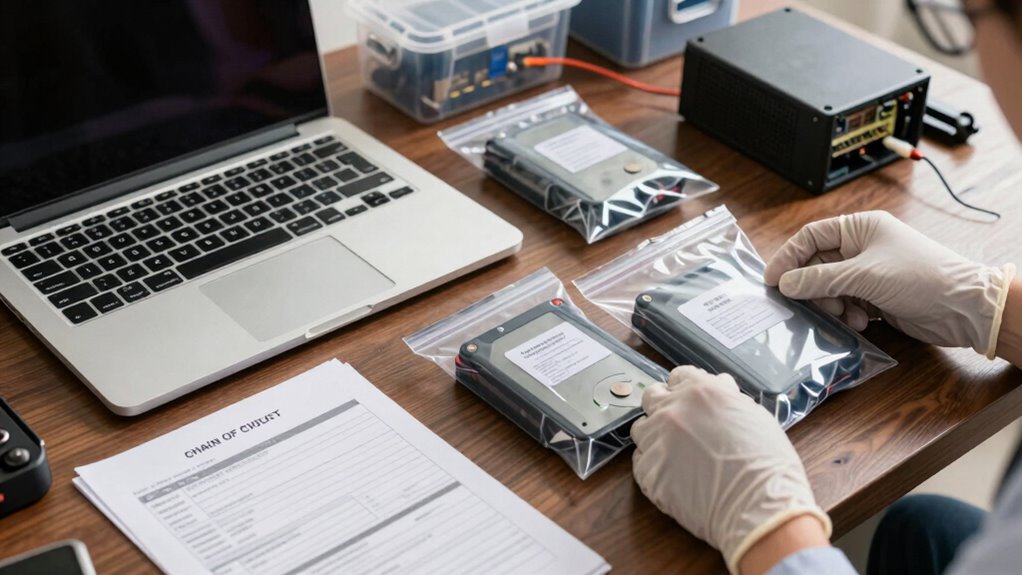

To create a chain of custody for drives, laptops, and network gear, start by securely labeling each device with unique identifiers and documenting details like date, time, location, and responsible personnel. Immediately seal devices with tamper-evident labels and store them securely with restricted access. Maintain detailed records of all transfers, handling, and analysis steps, ensuring encryption is preserved throughout. Proper training and adherence to procedures help prevent tampering or errors—continue to explore how these practices uphold evidence integrity.

Get business pricing on networking and server gear
- Business-only prices and quantity discounts
- Tax-exempt purchasing
- Multiple users, one account, clear invoices
Key Takeaways
- Label all devices with unique identifiers, case references, and relevant details immediately upon seizure.
- Use tamper-evident seals and secure containers for transportation and storage of digital devices.
- Maintain detailed logs of each handling event, including date, time, personnel, and location.
- Encrypt data during transfer and storage, verifying encryption integrity regularly throughout the process.
- Ensure staff are trained in proper evidence handling procedures and document every step meticulously.
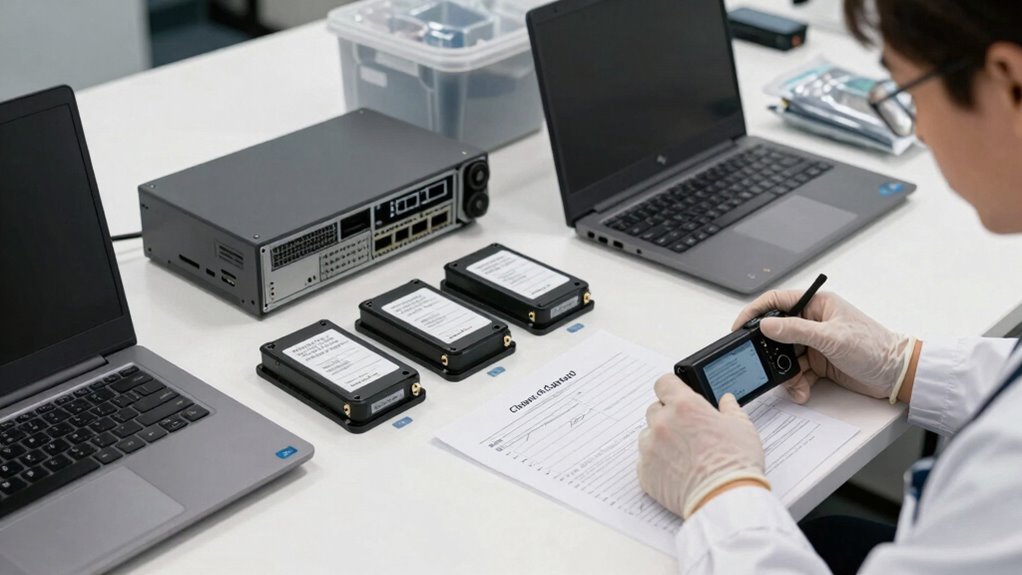
Creating a chain of custody is vital for maintaining the integrity of evidence throughout an investigation. When handling drives, laptops, and network gear, you must guarantee that every piece of evidence remains unaltered and properly documented from the moment you seize it to its presentation in court. One of the most effective ways to do this is by implementing digital encryption. Encrypting data on devices locks the information, preventing unauthorized access and tampering. This step safeguards the evidence’s confidentiality and integrity, making it clear that the data has not been altered since collection. Using strong encryption standards like AES (Advanced Encryption Standard) ensures that, even if a device is compromised, the evidence remains secure and intact.
Creating a chain of custody ensures evidence remains unaltered and secure through proper documentation and strong encryption standards like AES.
Alongside encryption, staff training plays a pivotal role in establishing a reliable chain of custody. You need to educate your team on best practices for handling digital evidence, including how to document each step thoroughly and consistently. Proper training helps prevent accidental contamination or loss of evidence, such as overlooking the importance of logging every transfer or handling procedure. Staff should understand the importance of using tamper-evident seals, secure storage, and detailed chain of custody forms. Regular training sessions also keep everyone updated on evolving digital forensics techniques and legal requirements, reducing the risk of procedural errors that could jeopardize the case. Additionally, understanding digital evidence management is crucial for implementing effective protocols and maintaining the chain of custody. Implementing proper documentation** procedures ensures that each transfer or handling event is recorded accurately, further strengthening the integrity of the evidence. It is also essential to understand legal considerations** to ensure compliance with regulations and avoid jeopardizing the case.
When collecting devices like drives or laptops, you should label each item with a unique identifier—such as a serial number or case reference—and record the date, time, location, and person responsible for seizure. Use tamper-evident bags or seals to secure the devices immediately after collection, and document their condition with photographs whenever possible. During transportation and storage, guarantee that the evidence remains in a secure environment with restricted access. Every transfer must be logged meticulously, noting who handled the evidence and when. This documentation creates an unbroken chain of custody, which is fundamental for establishing authenticity later. Additionally, implementing digital encryption during all stages of evidence handling ensures that the data remains protected against unauthorized access and tampering. It is equally important to periodically verify the encryption status throughout the process to prevent accidental reversion or compromise of the data. Incorporating encryption key management practices can further enhance security and control over access during the investigation.
In addition, digital encryption should be maintained throughout the investigative process. Guarantee that the evidence remains encrypted during analysis, transfer, and storage, preventing unauthorized access. When sharing evidence with forensic analysts or legal teams, verify that proper procedures are followed, including re-encrypting data if necessary. With staff trained to follow these protocols, you reduce the risk of accidental breaches or procedural missteps. Combining strong encryption practices with thorough staff training creates a resilient chain of custody, preserving the integrity of digital evidence and supporting a credible investigation.
As an affiliate, we earn on qualifying purchases.
Frequently Asked Questions
How Long Should a Chain of Custody Be Retained?
You should retain the chain of custody documentation as long as the evidence might be needed for legal proceedings or audits. Typically, this means preserving it until the case or investigation is closed. Proper evidence preservation requires keeping detailed records of all custody transfers, ensuring the chain remains unbroken. This helps maintain the integrity of the evidence and supports its admissibility in court if necessary.
Who Is Authorized to Handle the Equipment During Transfer?
To prevent unauthorized access, only trained personnel with proper equipment labeling should handle the gear during transfer. You must verify that anyone moving the equipment understands the importance of maintaining the chain of custody, documenting each transfer accurately. Keep unauthorized individuals away to avoid mishandling or tampering. Clear procedures and strict access controls safeguard the integrity of the equipment, helping preserve the chain of custody throughout its lifecycle.
What Specific Documentation Is Required for Each Transfer?
You need to document each transfer with detailed records, including digital signatures from the person handing over and receiving the equipment, confirming authenticity. Incorporate access controls by specifying who is authorized to handle or verify transfers. Keep logs that record dates, times, and conditions of transfer, ensuring every document is securely stored. This method guarantees a reliable chain of custody, maintaining integrity and accountability throughout the process.
How Do You Handle Digital Evidence in the Chain?
Handling digital evidence in the chain is essential, and you must treat it like the crown jewels of digital forensics. You start by meticulously logging every action—every transfer, access, or analysis—using precise evidence logging. Make certain you document details such as who handled the evidence, when, and how. This rigorous process guarantees the integrity of the digital evidence, making sure it stands up in court and isn’t compromised.
What Are Common Pitfalls in Maintaining a Chain of Custody?
You should be aware that common pitfalls in maintaining a chain of custody include neglecting proper forensic procedures and failing to guarantee data preservation. If you don’t document every transfer or mishandle evidence, it can compromise the integrity of your investigation. Always follow strict forensic procedures, use tamper-evident seals, and verify data preservation methods. Doing so helps maintain a clear, unbroken chain of custody and preserves the evidence’s reliability.
digital evidence storage containers
As an affiliate, we earn on qualifying purchases.
As an affiliate, we earn on qualifying purchases.
Conclusion
Think of your chain of custody like a trusted river, guiding each piece of equipment safely from source to destination. Every step is a current, every hand a bridge, ensuring the flow remains unbroken. When you carefully document and secure your drives, laptops, and network gear, you’re steering a steady course through the water, avoiding turbulence and loss. Keep this river flowing smoothly, and your evidence will arrive intact, clear, and ready for the next journey.
device labeling kits for evidence
As an affiliate, we earn on qualifying purchases.
As an affiliate, we earn on qualifying purchases.
As an affiliate, we earn on qualifying purchases.
Fall Picks
fall essentials
As an affiliate, we earn on qualifying purchases.