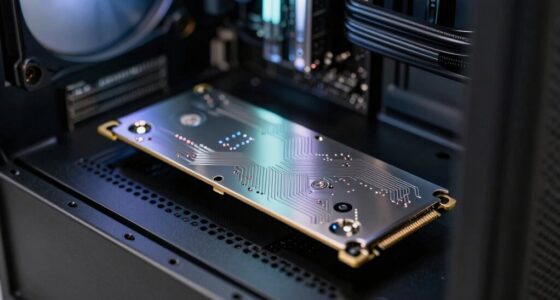
You often assume hardware is fully functional when it might have subtle issues like degraded sectors or firmware corruption. You might think user errors are simple and overlook complex problems like corrupted file systems or malware. You also tend to believe data is intact without testing for corruption or encryption. Standard procedures seem enough, but specialized tools or hardware-specific techniques could be necessary. Keep exploring to uncover more overlooked assumptions that could make or break your recovery success.
Key Takeaways
- Teams often assume hardware is fully functional without conducting detailed diagnostics for subtle issues like firmware corruption or degraded sectors.
- They frequently consider user errors as simple mistakes, neglecting complex factors like malware or corrupted file systems.
- Assumptions about data integrity are common, with insufficient testing for data corruption, encryption, or partial overwrites before recovery attempts.
- Standard procedures are relied upon without assessing whether specialized tools or firmware-specific recovery methods are necessary.
- Hidden hardware problems or data fragmentation are rarely thoroughly tested, leading to overlooked issues that impact recovery success.
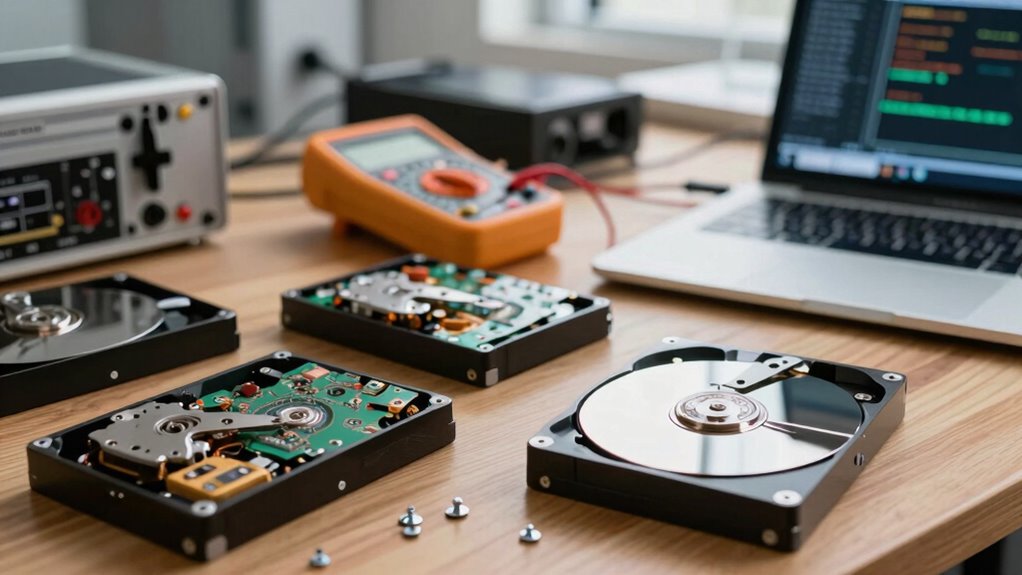
Understanding the assumptions behind data recovery is essential because they directly influence the process and its success. When teams approach data recovery, they often operate under certain beliefs about what caused the data loss and how recovery should proceed. One common assumption is that hardware limitations are the primary barrier to retrieving lost data. Teams might assume that if the hardware appears intact, the data must be recoverable with standard tools. However, this overlooks the potential for subtle hardware issues—like degraded sectors or firmware corruption—that aren’t immediately visible. Overestimating hardware reliability can lead to rushed attempts that overlook deeper hardware problems, ultimately reducing the chances of successful recovery.
Assuming hardware is always reliable can lead to overlooked issues and failed data recovery efforts.
Another assumption that many teams rarely test is related to user error. It’s often believed that user error is straightforward and easy to diagnose, such as accidental deletion or simple file overwrites. But in reality, user error can be far more complex. It might involve corrupted file systems, misconfigured settings, or even malware infections disguised as user mistakes. Teams may fail to thoroughly investigate the nature of user error, assuming that the cause is as simple as an accidental deletion. This oversight can result in applying generic recovery methods that don’t address underlying issues, thereby diminishing the likelihood of fully restoring data. Additionally, misdiagnosing user error can lead teams to overlook critical underlying problems that complicate recovery.
Many teams also operate under the assumption that the data itself is intact and recoverable if hardware and user error aren’t the issues. They often neglect to test for data corruption, partial overwrites, or encryption that could make recovery more challenging than it appears. This assumption can cause teams to underestimate the complexity of the recovery process, especially when dealing with fragmented or encrypted data. Failing to verify the integrity of the data before attempting recovery leads to wasted effort and, in some cases, irreversible data loss. Moreover, corrupted or encrypted data can significantly complicate recovery efforts, requiring specialized tools or techniques. Teams should also consider the potential for data fragmentation, which can hinder recovery if not properly addressed. Additionally, considering the extent of data damage is crucial, as minor corruption can escalate recovery difficulties if not identified early.
Furthermore, teams tend to assume their standard recovery procedures are sufficient for all scenarios. They rarely test whether specialized tools or methods might be needed in particular cases. For example, a drive suffering from firmware corruption may require techniques beyond the usual file recovery processes. Relying solely on common procedures without testing alternative options can hinder successful recovery, especially in complex situations. Additionally, some teams neglect to consider the potential for physical hardware damage, which may not be immediately evident but can significantly impact recovery efforts. Recognizing these assumptions and testing them thoroughly can greatly improve the chances of a successful data recovery.
As an affiliate, we earn on qualifying purchases.
Frequently Asked Questions
How Do Recovery Assumptions Vary Between Data Types?
You’ll find recovery assumptions vary widely between data types. For example, large files like videos often suffer from file fragmentation, making recovery more complex. Encrypted data presents encryption challenges, requiring specialized tools to decrypt without further damage. You need to adjust your approach depending on whether you’re recovering fragmented files or encrypted data, as each type demands different assumptions and techniques to maximize recovery chances effectively.
What Are Common Misconceptions About Data Recovery Success Rates?
Many believe data recovery success is always guaranteed, but that’s a gentle misconception. Encryption challenges can complicate retrieval, especially if keys are lost, and cloud recovery isn’t always foolproof due to connectivity or service issues. Recovery success rates often depend on factors like damage severity and backup quality. Recognizing these nuances helps you set realistic expectations, avoiding overconfidence in your data’s resilience.
Do Recovery Assumptions Account for Physical Damage?
Recovery assumptions often overlook physical damage, such as firmware integrity issues or magnetic interference, which can severely impact success rates. If your drive has physical damage, standard recovery methods may fail, and specialized techniques are necessary. Don’t presume that recovery is straightforward; always evaluate the extent of physical damage first. Testing assumptions thoroughly ensures you account for factors like firmware corruption or magnetic interference that could hinder successful data retrieval.
How Often Should Assumptions Be Reevaluated During Recovery?
You should reevaluate assumptions regularly, especially when progress stalls or unexpected issues arise. Keep an eye on hardware compatibility and software reliability, as these can change over time, impacting recovery success. Don’t put all your eggs in one basket; verify after each major step or when new data suggests shifts in system behavior. This way, you stay adaptable and guarantee your recovery plan remains on solid ground.
Are There Industry Standards for Testing Recovery Assumptions?
Industry standards for testing recovery assumptions aren’t strict, but best practices emphasize regular validation, especially for cloud security and data encryption. You should routinely test your recovery plans to guarantee encryption keys remain secure and cloud setups are resilient. By actively testing, you identify vulnerabilities early, confirm assumptions hold under real conditions, and safeguard sensitive data. This proactive approach helps maintain compliance and strengthens your overall data recovery strategy.
data recovery software for corrupted files
As an affiliate, we earn on qualifying purchases.
As an affiliate, we earn on qualifying purchases.
Conclusion
Don’t let assumptions be the shadows lurking in your data recovery process. By actively testing your strategies, you’re shining a light on hidden pitfalls before they strike. Think of it as tuning a finely crafted instrument—every test ensures harmony, not dissonance. When you challenge your assumptions, you turn uncertainty into confidence. Remember, in the world of data recovery, assumptions are like fragile glass—better to handle them with care before they shatter your plans.
As an affiliate, we earn on qualifying purchases.
encrypted data recovery software
As an affiliate, we earn on qualifying purchases.
As an affiliate, we earn on qualifying purchases.