

To choose between shared and dedicated storage, consider your organization’s security needs, performance demands, and scalability goals. If you want cost-effective, flexible resources for dynamic workloads, shared storage is ideal, but make certain you have proper access controls and encryption. For high-security or high-performance applications, dedicated storage provides exclusive access. By understanding your specific requirements, you can make the best choice, and exploring further will give you more insights to optimize your storage setup.

Get business pricing on networking and server gear
- Business-only prices and quantity discounts
- Tax-exempt purchasing
- Multiple users, one account, clear invoices
Key Takeaways
- Evaluate application performance needs to determine if high-speed, dedicated storage is necessary.
- Consider security requirements; sensitive data may require dedicated storage for better control.
- Assess scalability demands; shared storage offers flexible expansion for growing data workloads.
- Analyze cost implications; shared storage is typically more cost-effective for general use.
- Match storage pattern to organizational growth plans and compliance standards for future readiness.
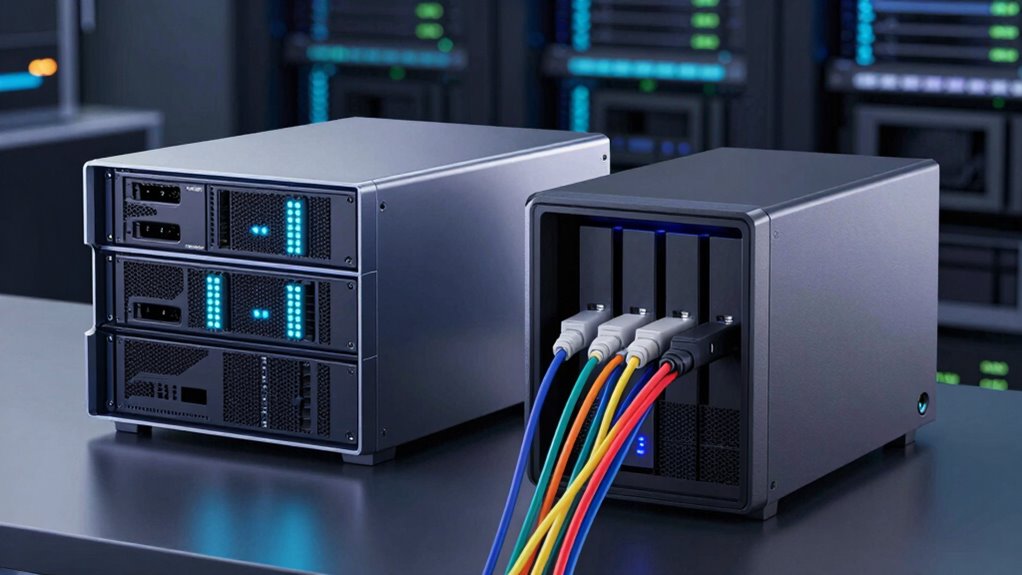
Have you ever wondered how to select the best storage pattern for your data? Making the right choice between shared and dedicated storage can significantly impact your system’s performance, security, and cost-efficiency. When evaluating these options, consider how each aligns with your organization’s needs for cloud scalability and data security. Shared storage involves multiple users accessing the same storage resources, often in a cloud environment, which can offer remarkable flexibility and cost savings. It allows you to easily scale up or down as your data demands change, making it ideal for dynamic workloads. However, because resources are pooled, you must be cautious about data security—ensuring proper access controls and encryption are in place to prevent unauthorized access. Understanding the different storage patterns available can help you make a more informed decision tailored to your organizational needs. Additionally, considering the performance requirements of your applications can guide you toward choosing the most suitable storage pattern. Recognizing the security considerations associated with each pattern is essential in maintaining data integrity and compliance. Moreover, understanding cloud scalability options can help optimize your storage strategy for future growth.
Products Worth Considering

Samsung 32-Inch Odyssey OLED G8 (G80SH) 4K Gaming Monitor

Apple iPad Air 11-inch (M2), 512GB, Wi-Fi, Space Gray

Jackery Explorer 300 Portable Power Station, 292Wh
As an affiliate, we earn on qualifying purchases.
Frequently Asked Questions
How Do I Estimate My Future Storage Needs Accurately?
To estimate your future storage needs accurately, focus on capacity planning and growth forecasting. Analyze your current data usage trends, including peak and average storage consumption. Consider upcoming projects or business expansion, and adjust projections accordingly. Use predictive analytics if available, and regularly review your forecasts to refine them. This proactive approach helps you prevent shortages or excess capacity, ensuring your storage infrastructure supports your growth seamlessly.
What Are the Security Implications of Shared Versus Dedicated Storage?
Shared storage can pose security risks because multiple users access the same environment, making access control and data isolation critical. If not properly managed, sensitive data could be exposed or compromised. Dedicated storage offers better data isolation, reducing the risk of unauthorized access. However, you must still implement strict access controls. Ultimately, your choice depends on your security needs and how well you can enforce access control policies and data isolation measures.
How Does Cost Vary Between Shared and Dedicated Storage Options?
Ironically, shared storage often costs less upfront, making it seem like the budget-friendly choice, but beware—hidden expenses can add up as your needs grow. Dedicated storage requires a bigger initial investment, yet offers predictable costs and better scalability options for expanding demands. Your cost analysis should balance immediate savings against long-term flexibility, ensuring you choose a storage pattern that grows with you without draining your resources unexpectedly.
What Performance Benchmarks Should I Consider for Each Storage Type?
You should consider performance benchmarks like storage scalability and data redundancy when evaluating storage types. For shared storage, look at how well it scales under increased demand and whether it offers sufficient data redundancy for your needs. Dedicated storage typically provides higher data redundancy and consistent performance, making it suitable for demanding applications. Assess these benchmarks to guarantee your chosen storage aligns with your performance, scalability, and redundancy requirements.
Can I Switch Storage Patterns After Initial Setup?
You can switch storage patterns after setup, but it requires considering storage pattern flexibility and migration challenges. Moving from shared to dedicated storage or vice versa involves planning to minimize downtime and data transfer issues. You’ll need to back up your data, update configurations, and confirm compatibility. While feasible, expect some complexity, so weigh the benefits against potential migration challenges before making the switch to guarantee a smooth transition.
Conclusion
Ultimately, selecting between shared and dedicated storage is like choosing the right key for your unique lock. Each pattern offers its own advantages and challenges, so consider your needs carefully. Remember, your storage choice isn’t just a technical decision—it’s the foundation of your data’s safety and performance. Make it wisely, for in the world of data, the right storage pattern is the bridge that connects your business’s potential to reality.