Choosing an unmanaged bare metal server means choosing hardware you will configure and maintain yourself. Among these five Supermicro barebones, the SYS-1028R-TDW is my most balanced general-purpose pick for its dual Xeon support and eight hot-swap bays, while the SYS-1028GR-TRT suits workloads that need 10GbE and extensive PCIe expansion. For compact multi-server density, the four-node SYS-5026TI-BTRF puts four independent systems in a 2U chassis.

Get business pricing on networking and server gear
- Business-only prices and quantity discounts
- Tax-exempt purchasing
- Multiple users, one account, clear invoices
The tradeoffs are substantial: these are not ready-to-run systems, and buyers must verify which processors, memory, storage, and accessories are included. Platform age also separates the options. The LGA1156 four-node models can pack several nodes into little rack space, but they use older DDR3-era technology; the dual-socket LGA2011 models bring DDR4 and stronger expansion, while the Xeon D system emphasizes a lower-power, more integrated design. I rank them by fit for hands-on owners, useful server capacity, and how clearly each chassis serves a different deployment.
Key Takeaways
- For a flexible dual-socket starting point, the SYS-1028R-TDW combines up to 1TB of ECC DDR4 memory with eight 2.5-inch hot-swap bays, but it has only Gigabit Ethernet.
- The SYS-1028GR-TRT is the networking and expansion pick: dual 10GbE and four PCIe x16 slots outweigh its smaller four-bay storage layout for accelerator-oriented builds.
- Both SYS-5026TI-BTRF listings describe essentially the same four-node, 2U LGA1156 platform; compare exact listing condition and included parts rather than treating them as distinct designs.
- The 5038MD-H24TRF is the compact Xeon D option, with a 45W six-core processor specification and redundant power, but its slim-SSD arrangement may require an optional kit.
- All five are barebones hardware, not managed hosting: plan for compatible components, operating-system installation, remote administration, maintenance, and your own support process.
| Supermicro SYS-1028R-TDW 1U Barebone SuperServer | 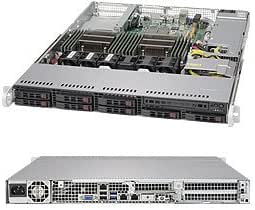 | Best Overall for a Flexible Dual-Socket Build | Form factor: 1U | Processor support: Dual LGA2011; Intel Xeon E5-2600 v3 family | Memory: Up to 1TB ECC DDR4; 16 DIMM sockets; 2133MHz | VIEW LATEST PRICE | See Our Full Breakdown |
| Supermicro SuperServer 1028GR-TRT 1U Barebone Server |  | Best for 10GbE and Expansion | Form factor: 1U | Processor support: Dual socket R3 (LGA2011); Intel Xeon E5-2600 v3 family | Memory: Up to 1TB ECC DDR4; 16 DIMM sockets; up to 2133MHz | VIEW LATEST PRICE | See Our Full Breakdown |
| Supermicro SuperServer 5038MD-H24TRF Barebone Server | 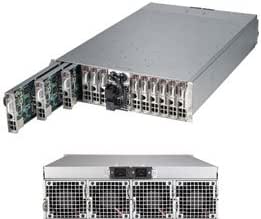 | Best Compact Xeon D Platform | Processor: Intel Xeon D-1531; 6 cores, 12 threads, 45W | Memory: 4 DDR4 DIMM slots; up to 128GB ECC RDIMM or 64GB ECC UDIMM | Drive support: 2 x 2.5-inch SATA3 HDDs or 4 x 2.5-inch slim SSDs with optional kit | VIEW LATEST PRICE | See Our Full Breakdown |
| Supermicro SuperServer SYS-5026TI-BTRF Four-Node 2U Rackmount Barebone Server |  | Best for High Node Density | Form factor: 2U rackmount | Nodes and motherboards: 4 nodes; 4 x Super X8SIT-F | Processor support: LGA1156; Intel Xeon X3400/L3400 and select Core i3, Pentium, Celeron | VIEW LATEST PRICE | See Our Full Breakdown |
| Supermicro SuperServer SYS-5026TI-BTRF Four-Node 2U Rackmount Barebone Server |  | Best Alternate Listing for Legacy Four-Node Builds | Form factor: 2U rackmount | Nodes: 4 | Processor platform: LGA1156; Intel Xeon X3400/L3400 and select Core i3, Pentium, Celeron | VIEW LATEST PRICE | See Our Full Breakdown |
| unmanaged bare metal server | Form factor | Processor support | Memory | Networking |
|---|---|---|---|---|
| Supermicro SYS-1028R-TDW 1U Ba | 1U | Dual LGA2011; Intel Xeon E5-2600 v3 family | Up to 1TB ECC DDR4; 16 DIMM sockets; 2133MHz | Intel i350 dual-port Gigabit Ethernet |
| Supermicro SuperServer 1028GR- | 1U | Dual socket R3 (LGA2011); Intel Xeon E5-2600 v3 family | Up to 1TB ECC DDR4; 16 DIMM sockets; up to 2133MHz | Intel X540 dual-port 10GBase-T |
| Supermicro SuperServer 5038MD- | — | — | 4 DDR4 DIMM slots; up to 128GB ECC RDIMM or 64GB ECC UDIMM | Dual Intel i350 Gigabit Ethernet; dedicated IPMI LAN |
| Supermicro SuperServer SYS-502 | 2U rackmount | LGA1156; Intel Xeon X3400/L3400 and select Core i3, Pentium, Celeron | — | — |
| Supermicro SuperServer SYS-502 | 2U rackmount | — | — | — |
More Details on Our Top Picks
Supermicro SYS-1028R-TDW 1U Barebone SuperServer
I put the SYS-1028R-TDW first because it offers the most balanced starting point for an owner-operated, general-purpose rack server. Dual LGA2011 sockets support the Intel Xeon E5-2600 v3 family, and its 16 DDR4 DIMM slots support up to 1TB of ECC memory. That gives a self-managing builder room to size compute and memory around virtualization, databases, or several services without jumping to the narrower storage or networking layout of another pick.
Its eight 2.5-inch hot-swap SATA bays are a practical advantage over the SYS-1028GR-TRT, which has only four. Swappable drive access can simplify replacement and storage changes in a rack, although both systems remain limited to 2.5-inch bays and SATA drives. The tradeoff is networking: dual Gigabit Ethernet is far less capable than the 10GbE ports on the 1028GR-TRT, so I would not choose this model for a workload whose storage or network traffic depends on high throughput.
This is a barebone platform, not a configured server. The description does not establish that processors or memory are included, and the stated 1.6GHz processor speed should not be read as proof that a particular CPU is supplied. I would verify socket, processor generation, memory type, drive carriers, and the exact included accessories before planning a build. Compared with the Xeon D-1531 5038MD, this 1U chassis takes a more expandable dual-socket approach, but it will also ask the buyer to provision and manage more components.
The 600W Platinum-level supply and dual-port Intel i350 networking make a sound foundation for a conventional 1U system, with a sensible balance between bays and memory. Its ranking reflects versatility, not modernity: E5-2600 v3 and LGA2011 are older platforms, and buyers should check their software and parts requirements rather than assume the newest-generation performance. I would pick it when I want a flexible DDR4 barebone and value drive access more than 10GbE or a dense four-node arrangement.
Pros:- Dual LGA2011 sockets support Intel Xeon E5-2600 v3 processors.
- Sixteen DDR4 DIMM sockets support up to 1TB of ECC memory.
- Eight hot-swap 2.5-inch SATA bays offer more drive slots than the 1028GR-TRT.
- 600W Platinum-level power supply and dual Intel Gigabit Ethernet.
Cons:- Barebone configuration means key components may need to be sourced separately.
- Gigabit Ethernet trails the 10GbE networking on the SYS-1028GR-TRT.
- Storage is limited to 2.5-inch SATA bays rather than larger drive formats.
Best for: Hands-on operators building a versatile dual-socket server for virtualization, mixed services, or memory-heavy workloads that benefit from eight 2.5-inch hot-swap bays.
Not ideal for: Buyers who need 10GbE, 3.5-inch drive capacity, an included ready-to-boot configuration, or a current-generation processor platform.
- Form factor:1U
- Processor support:Dual LGA2011; Intel Xeon E5-2600 v3 family
- Memory:Up to 1TB ECC DDR4; 16 DIMM sockets; 2133MHz
- Drive bays:8 x 2.5-inch hot-swap SATA
- Networking:Intel i350 dual-port Gigabit Ethernet
- Expansion:2 x PCIe 3.0 x8 full-height half-length; 1 x PCIe 3.0 low-profile
- Power supply:600W, Platinum level
Our verdict“I rank the SYS-1028R-TDW first for buyers who want a flexible dual-socket DDR4 barebone with more hot-swap bays than the other dual-Xeon option.”
Supermicro SuperServer 1028GR-TRT 1U Barebone Server
The SYS-1028GR-TRT is my pick when network capacity and PCIe expansion matter more than fitting the largest number of drives. It shares the dual Xeon E5-2600 v3 and up-to-1TB ECC DDR4 foundation of the SYS-1028R-TDW, but swaps that model’s eight-bay layout and Gigabit networking for dual-port 10GbE, four PCIe 3.0 x16 slots, and four 2.5-inch SATA3 bays. That is a very different allocation of chassis capacity, not simply a more powerful version of the first-place system.
Those 10GBase-T ports can make this chassis a stronger fit for fast network storage, traffic-heavy services, or a server connected to a capable switch. Four x16 slots also provide room for cards that need high-bandwidth PCIe connections. The tradeoff is obvious beside the 1028R-TDW: there are half as many listed drive bays. If the workload depends on several local drives, the eight-bay option is easier to configure around; if it depends on fast networking or add-in cards, this model earns its separate role.
The redundant 1600W Platinum-level power supplies and ten counter-rotating fans point to a chassis designed to support demanding components. That does not mean every desired GPU or MIC card is included or supported in a particular build; the listing says optional cards may need to be purchased separately. I would verify card dimensions, cooling requirements, power connections, and the exact barebone contents before assigning it to an accelerator workload. The low-profile 1U format makes those checks especially relevant.
Like the other LGA2011 option, this system is based on the older E5-2600 v3 generation and requires the buyer to supply and configure missing parts. It is less convenient than the SYS-1028R-TDW for a storage-first deployment, and unlike the four-node systems it represents one server rather than several independent nodes. I rank it second because its 10GbE and expansion capabilities are compelling for a specific class of unmanaged deployment, but less broadly useful than the eight-bay alternative for buyers who have not already identified a need for those features.
Pros:- Dual Intel X540 10GBase-T ports outpace the Gigabit networking on the SYS-1028R-TDW.
- Four PCIe 3.0 x16 slots provide substantial expansion capacity for a 1U chassis.
- Up to 1TB of ECC DDR4 memory across 16 DIMM sockets.
- Redundant 1600W Platinum-level power supplies and ten counter-rotating fans.
Cons:- Only four 2.5-inch SATA3 hot-swap bays, compared with eight on the SYS-1028R-TDW.
- Barebone configuration may require processors and optional cards to be sourced separately.
- Older Xeon E5-2600 v3 platform requires a deliberate compatibility check.
Best for: Experienced operators building a bandwidth-heavy server or a system that needs multiple PCIe cards and dual 10GbE connectivity.
Not ideal for: Storage-focused buyers who want eight or more local drive bays, anyone who expects a complete system, or users who do not need 10GbE and extra PCIe capacity.
- Form factor:1U
- Processor support:Dual socket R3 (LGA2011); Intel Xeon E5-2600 v3 family
- Memory:Up to 1TB ECC DDR4; 16 DIMM sockets; up to 2133MHz
- Drive bays:4 hot-swap 2.5-inch SATA3
- Networking:Intel X540 dual-port 10GBase-T
- Expansion:4 x PCIe 3.0 x16; 1 x PCIe 3.0 x8 low-profile
- Power supplies:1600W redundant, Platinum level
Our verdict“I recommend the SYS-1028GR-TRT over the eight-bay model only when dual 10GbE and PCIe expansion are higher priorities than local drive count.”
Supermicro SuperServer 5038MD-H24TRF Barebone Server
I give the 5038MD-H24TRF a different role from the dual-socket systems: it is the lower-power, more integrated choice in this group. Its specified Intel Xeon D-1531 has six cores, 12 threads, and a 45W rating, while the larger LGA2011 models are built around a dual-processor configuration. For an unmanaged deployment where a single compact server is preferable to a high-expansion dual-socket build, the Xeon D design is the more focused fit.
Memory capacity reaches 128GB ECC RDIMM or 64GB ECC UDIMM across four DDR4 DIMM slots. That is well below the 1TB ceiling of either 1028-series server, so this is not the selection for a workload that needs very large memory capacity. In exchange, the Xeon D processor is specified as a 45W part, and the chassis includes an IPMI LAN alongside dual Intel i350 Gigabit Ethernet. Remote management can help an owner administer a server without relying on a managed provider, though it does not replace the buyer’s responsibility for configuration and upkeep.
Storage deserves a close look before choosing this model. The listing describes support for either two 2.5-inch SATA3 hard drives or four 2.5-inch slim SSDs with an optional kit. That flexibility is useful only if the selected arrangement matches the build and the needed parts are available. By comparison, the SYS-1028R-TDW offers eight standard 2.5-inch hot-swap bays, while the 5038MD-H24TRF’s four-slot SSD arrangement depends on an optional kit. I would not assume the kit or drives are included.
Redundant 1600W Platinum-certified power supplies provide a notable power-system feature, but buyers should match the system to the actual load rather than infer low whole-system power from the processor’s 45W rating. This is a barebone listing, and its chassis, processor configuration, memory, storage options, and accessories should be confirmed directly before purchase. I place it third because the distinct Xeon D balance is appealing, but the modest memory ceiling and conditional four-SSD configuration make it less adaptable than the two dual-socket options.
Pros:- Xeon D-1531 is specified as a six-core, 12-thread, 45W processor.
- Supports up to 128GB ECC RDIMM or 64GB ECC UDIMM.
- Dedicated IPMI LAN complements dual Intel Gigabit Ethernet.
- Redundant 1600W Platinum-certified power supplies.
Cons:- Four DIMM slots and a 128GB RDIMM ceiling are well below the dual-socket models’ memory capacity.
- Four slim SSD support requires an optional kit.
- Barebone listing means buyers must verify which processor and other components are supplied.
Best for: Operators who want a single Xeon D-based server with ECC memory, dedicated IPMI networking, and a lower-power processor specification than the dual-socket alternatives.
Not ideal for: Buyers who need very high memory capacity, many standard drive bays, included optional storage hardware, or extensive PCIe expansion.
- Processor:Intel Xeon D-1531; 6 cores, 12 threads, 45W
- Memory:4 DDR4 DIMM slots; up to 128GB ECC RDIMM or 64GB ECC UDIMM
- Drive support:2 x 2.5-inch SATA3 HDDs or 4 x 2.5-inch slim SSDs with optional kit
- Networking:Dual Intel i350 Gigabit Ethernet; dedicated IPMI LAN
- Power:1600W redundant, Platinum certified
- Cooling:4 x 9cm fans
- Dimensions:17.24 x 29.49 x 5.2 inches
Our verdict“I would choose the 5038MD-H24TRF for a compact Xeon D deployment with modest memory needs, not as a substitute for the higher-capacity dual-socket systems.”
Supermicro SuperServer SYS-5026TI-BTRF Four-Node 2U Rackmount Barebone Server
The SYS-5026TI-BTRF takes a different approach from every single-server pick: one 2U chassis houses four independent nodes, each built around a Super X8SIT-F motherboard. I rank it fourth overall because density can be valuable for separate test environments, small services, or an installation that benefits from several discrete systems in a short rack footprint. It is not a newer or more powerful alternative to the dual-socket DDR4 servers; its appeal is fitting four LGA1156 nodes into one enclosure.
Each node supports select Intel Xeon X3400/L3400 or Core i3, Pentium, and Celeron processors, with six DDR3 DIMM slots and a listed ceiling of 32GB ECC registered memory or 16GB ECC unbuffered memory per node. That is a much lower memory ceiling than the 1TB supported by the 1028-series systems. In return, the four-node layout lets an operator separate workloads across independent machines. I would compare total node count and per-node capacity rather than treat the chassis as one large server.
Per-node storage includes three 3.5-inch SATA hot-swap bays, six SATA 2 ports, and the listed RAID support. Dual Intel Gigabit Ethernet controllers are provided per node, along with dedicated management networking described in the supplied specifications. This arrangement gives each node its own network and storage resources, but the network remains Gigabit rather than the dual 10GbE found on the SYS-1028GR-TRT. The older SATA 2 and DDR3 standards also make it a poor fit for buyers seeking modern throughput or a long platform runway.
The listing describes a 920W power supply, while the other SYS-5026TI-BTRF listing specifies a redundant 920W 80 PLUS Platinum supply. I would verify the exact unit and included power hardware rather than assume both listings contain identical parts. In either case, the chassis is barebone and requires compatible processors, memory, drives, and operating-system setup. The old LGA1156 platform is the largest compromise; this pick makes sense when four modest nodes in 2U matter more than memory headroom, contemporary interfaces, or straightforward single-system expansion.
Pros:- Four independent nodes occupy a 2U rackmount chassis.
- Each node has three 3.5-inch SATA hot-swap drive bays.
- Per-node dual Intel Gigabit Ethernet and six DDR3 DIMM slots.
- Supports a range of listed Xeon, Core i3, Pentium, and Celeron processors.
Cons:- Older LGA1156 and DDR3 platform limits performance and parts choices.
- Per-node memory tops out at 32GB ECC registered or 16GB ECC unbuffered.
- Barebone configuration requires compatible processors and other components.
Best for: Lab operators and infrastructure owners who need four independent, modest-capacity nodes in a single 2U chassis and can work with legacy LGA1156 parts.
Not ideal for: Buyers who need current-generation compute, large memory capacity per node, 10GbE, or a complete server ready for operating-system installation.
- Form factor:2U rackmount
- Nodes and motherboards:4 nodes; 4 x Super X8SIT-F
- Processor support:LGA1156; Intel Xeon X3400/L3400 and select Core i3, Pentium, Celeron
- Memory per node:6 DDR3 DIMM slots; up to 32GB ECC registered or 16GB ECC unbuffered
- Storage per node:3 x 3.5-inch SATA hot-swap bays; 6 SATA 2 ports
- Networking per node:Dual Intel 82574L Gigabit Ethernet
- Power supply:920W
Our verdict“I recommend this chassis only when four separate low-capacity nodes in 2U are more valuable than newer platforms or higher per-node resources.”
Supermicro SuperServer SYS-5026TI-BTRF Four-Node 2U Rackmount Barebone Server
This second SYS-5026TI-BTRF listing describes the same central design as the previous entry: four LGA1156 nodes in a 2U rackmount chassis, each using a Super X8SIT-F motherboard. I give it a separate place because it is a distinct supplied listing, but buyers should not read the two entries as different server architectures. Their shared strengths are node density and per-node 3.5-inch hot-swap bays; their shared weakness is the age of the platform.
The specification here states a redundant 920W 80 PLUS Platinum power supply, four cooling fans, per-node dedicated IPMI networking, and more detail about the memory speeds and I/O. Those details give this listing a clearer account of the power design than the first listing, which simply calls out a 920W supply. I would still check the exact listing contents and condition. Similar model names do not guarantee identical included components, especially for a barebone product where processors and memory may be absent.
Its per-node configuration is unchanged in the areas that matter most to workload selection: six DDR3 DIMM slots, up to 32GB ECC registered or 16GB ECC unbuffered memory, six SATA 2 ports, and three 3.5-inch hot-swap bays. Compared with the 5038MD-H24TRF, it provides four separate systems and more per-node drive bays, but replaces that Xeon D-era DDR4 platform with much older LGA1156 and DDR3 hardware. Compared with the single 1028-series servers, it offers more independent nodes but dramatically less memory capacity per system.
I rank this listing fifth not because the chassis format has no purpose, but because it duplicates the previous entry while giving buyers no distinct platform advantage in the supplied description. Its strongest case is when four legacy nodes and the specifically stated redundant Platinum supply are the desired combination. Anyone who needs a modernized server, high per-node memory, or higher-speed networking should skip both SYS-5026TI-BTRF listings and compare the DDR4 options instead. Before ordering, verify that the processors, memory, drive carriers, power supply, and management features match the actual unit being offered.
Pros:- Four-node 2U design supports dense legacy lab deployments.
- Listing specifies a redundant 920W 80 PLUS Platinum power supply.
- Three 3.5-inch SATA hot-swap bays and six SATA 2 ports per node.
- Per-node dual Gigabit Ethernet and dedicated IPMI LAN are specified.
Cons:- Same SYS-5026TI-BTRF architecture as the other listing, not a distinct platform choice.
- LGA1156, DDR3, and SATA 2 are dated compared with the DDR4 systems.
- Barebone hardware requires compatible components and careful listing verification.
Best for: Buyers deliberately sourcing a four-node LGA1156 chassis who want the listing that explicitly specifies a redundant 920W Platinum supply and per-node IPMI.
Not ideal for: Most buyers who do not need four legacy nodes, especially those seeking DDR4, more memory per system, or high-speed Ethernet.
- Form factor:2U rackmount
- Nodes:4
- Processor platform:LGA1156; Intel Xeon X3400/L3400 and select Core i3, Pentium, Celeron
- Memory per node:6 DDR3 DIMM slots; up to 32GB ECC registered or 16GB ECC unbuffered
- Drive bays per node:3 x 3.5-inch SATA hot-swap
- Networking per node:Dual Intel Gigabit Ethernet; dedicated IPMI LAN
- Power supply:920W redundant, 80 PLUS Platinum
Our verdict“I would select this alternate SYS-5026TI-BTRF listing only after confirming its redundant power supply and included parts, since its underlying hardware is the same legacy four-node design.”

How We Picked
I ranked these systems for buyers who specifically want unmanaged bare metal hardware, not a provider-operated server with included deployment or support. That changes the comparison: a useful chassis must leave room for the buyer’s intended workload, yet its platform, node layout, drive access, network interfaces, and remote management all affect how practical it is to own and operate.
I gave the most weight to usable compute and memory capacity, storage layout, networking, and expansion. For example, eight hot-swap bays make the SYS-1028R-TDW more adaptable to storage-heavy duties than the four-bay SYS-1028GR-TRT, while the latter’s 10GbE ports and four x16 slots make it a better match for bandwidth-intensive or accelerator-focused builds. I treated the 5038MD-H24TRF differently because its Xeon D-1531 is specified as a 45W processor, giving it a distinct lower-power role rather than direct parity with the dual-socket systems.
I also considered the ownership burden. Every listing is described as a barebone system, so buyers need to confirm what is actually supplied and source compatible parts. The two SYS-5026TI-BTRF entries have the same model and core configuration; I list both because they are separate supplied listings, but their ranking reflects the same older platform rather than a meaningful hardware distinction. None of these should be mistaken for current-generation hardware or a managed service. Buyers should check exact condition, firmware and component compatibility, rack fit, power needs, and availability before committing.
| unmanaged bare metal server | Processor support | Networking |
|---|---|---|
| Supermicro SYS-1028R-TDW 1U Ba | Dual LGA2011; Intel Xeon E5-2600 v3 family | Intel i350 dual-port Gigabit Ethernet |
| Supermicro SuperServer 1028GR- | Dual socket R3 (LGA2011); Intel Xeon E5-2600 v3 family | Intel X540 dual-port 10GBase-T |
| Supermicro SuperServer 5038MD- | — | Dual Intel i350 Gigabit Ethernet; dedicated IPMI LAN |
| Supermicro SuperServer SYS-502 | LGA1156; Intel Xeon X3400/L3400 and select Core i3, Pentium, Celeron | — |
| Supermicro SuperServer SYS-502 | — | — |
Factors to Consider When Choosing Unmanaged Bare Metal Servers
I would start by matching the chassis to the workload, then confirm the exact components and management responsibilities. An unmanaged bare metal server gives the owner control over the physical machine, but it also leaves provisioning and ongoing care with the owner.Choose node density or capacity per server
The first decision is whether you need several independent machines or one server with more resources. The two SYS-5026TI-BTRF listings put four nodes in 2U, which can suit labs or services that need separation between systems. Each node, however, has a much lower memory ceiling than either dual-socket 1028 model. If a workload needs large memory pools, the SYS-1028R-TDW or SYS-1028GR-TRT offers up to 1TB ECC DDR4 per server. Do not compare the four-node chassis as though its aggregate resources were interchangeable with a single large-memory machine; plan for node-level limits, networking, and workload placement.
Treat generation and compatibility as purchasing criteria
These listings span distinct hardware generations. The LGA1156 systems use DDR3 and SATA 2; the LGA2011 systems support Xeon E5-2600 v3 processors and DDR4; the 5038MD-H24TRF lists a Xeon D-1531 and DDR4. Older platforms may still suit a lab or a specific existing parts inventory, but they should not be assumed to match current software needs or a desired service life. Before selecting one, verify CPU support, memory type and configuration, firmware availability, operating-system compatibility, and whether compatible replacement parts can be sourced.
Match bays and interfaces to how data moves
Bay count alone does not tell the whole storage story. The SYS-1028R-TDW has eight 2.5-inch hot-swap SATA bays, the 1028GR-TRT has four 2.5-inch SATA3 bays, and each four-node LGA1156 system lists three 3.5-inch SATA hot-swap bays per node. The 5038MD-H24TRF supports two 2.5-inch drives or four slim SSDs with an optional kit. Consider drive size, interface, hot-swap access, RAID requirements, and included carriers. For networking, the 1028GR-TRT is the only listed system with dual 10GbE; the others specify Gigabit Ethernet, which may be limiting for high-throughput storage or busy network services.
Calculate the complete build, not just the chassis
Every option here is presented as barebone hardware. A buyer may need to add processors, ECC memory, storage, operating-system media, and other parts, but the supplied information does not settle what each individual listing includes. The 5038MD-H24TRF’s four-slim-SSD arrangement needs an optional kit, and the SYS-1028GR-TRT may need separately sourced processor or expansion components. Check the actual contents, CPU support list, memory compatibility, drive carriers, power leads, and any rack hardware before committing. A listing title is not a substitute for a parts inventory.
Plan for owner-operated management
Unmanaged means the owner takes responsibility for tasks a managed hosting provider might otherwise perform. That commonly includes installing and configuring the operating system, securing remote access, monitoring hardware, applying updates, planning backups, and responding to failures. The dedicated IPMI options can assist with remote administration, but IPMI availability does not make a machine managed. I would also plan for rack space, airflow, electrical capacity, noise, replacement drives, and a recovery process. If your team cannot take on those duties, a hosted managed service may fit better than any barebone server in this list.
Frequently Asked Questions
What does unmanaged bare metal mean for these products?
These listings are physical server hardware rather than a managed hosting service. The buyer is responsible for completing the hardware build where parts are missing, installing the operating system, configuring services and security, monitoring the machine, and arranging maintenance or recovery. Some systems specify IPMI or other management hardware, which can provide remote access to server functions, but it does not include a provider taking care of daily administration.
Are the two SYS-5026TI-BTRF products different server models?
Both supplied entries identify the SYS-5026TI-BTRF four-node 2U platform and share the key LGA1156, DDR3, and per-node drive specifications. The second description states a redundant 920W 80 PLUS Platinum supply and dedicated IPMI networking more explicitly, while the first gives a simpler 920W supply description. I would treat them as two listings for the same core design and confirm the exact unit, condition, and included parts before choosing between them.
Which model is the best choice for high-speed networking?
The SYS-1028GR-TRT is the clear choice in this group for high-speed wired networking because it specifies dual-port Intel X540 10GBase-T. The SYS-1028R-TDW, both four-node systems, and the 5038MD-H24TRF specify Gigabit Ethernet. The 1028GR-TRT gives up drive bays compared with the SYS-1028R-TDW, so I would choose it when network throughput and PCIe expansion matter more than fitting a larger number of local drives.
Do any of these barebones include all the parts needed to run a server?
The supplied descriptions identify all five as barebone systems, and they do not establish a complete, ready-to-run configuration for every listing. Processor, memory, storage, and other components may need to be sourced separately, and the 5038MD-H24TRF’s four-slim-SSD option requires an optional kit. Check the exact seller listing and inventory, then verify compatibility for each component before planning deployment or assuming a particular processor is included.
Which option fits a buyer who needs several independent servers in one chassis?
Either SYS-5026TI-BTRF listing fits that physical requirement because each chassis contains four nodes in 2U. The compromise is that these are older LGA1156 systems with DDR3 and limited memory per node, so they make more sense for a legacy lab or modest services than for workloads needing modern interfaces or large per-server memory capacity. If memory capacity matters more than node count, I would compare the dual-socket DDR4 systems instead.
Conclusion
For most hands-on buyers, I would start with the SYS-1028R-TDW: its dual-socket Xeon support, DDR4 memory capacity, and eight hot-swap bays give it the broadest practical balance here. Choose the SYS-1028GR-TRT instead when dual 10GbE and PCIe expansion are requirements, and accept its four-bay storage layout. The 5038MD-H24TRF is the more focused choice for an owner who values its Xeon D specification, ECC memory, and IPMI but does not need the other systems’ memory ceiling.
For a lab that needs four independent machines inside 2U, either SYS-5026TI-BTRF listing may fit, provided legacy LGA1156 hardware suits the workload and the exact listing contents check out. I would not select it for a new high-throughput or memory-heavy deployment. Whichever model you choose, budget time for compatibility checks, component sourcing, installation, monitoring, and maintenance: these are unmanaged barebones, so the buyer is also the operator.
Halloween Picks

Vexalify 11-Inch Halloween Pumpkin Fog Machine with Bluetooth Speaker and 12-Color LED Lights

Fun Costumes Creepy Twin Boys Halloween Animatronic

Spirit Halloween 4 Ft. 6 In. Scary Sitting Scarecrow Animatronic
As an affiliate, we earn on qualifying purchases.