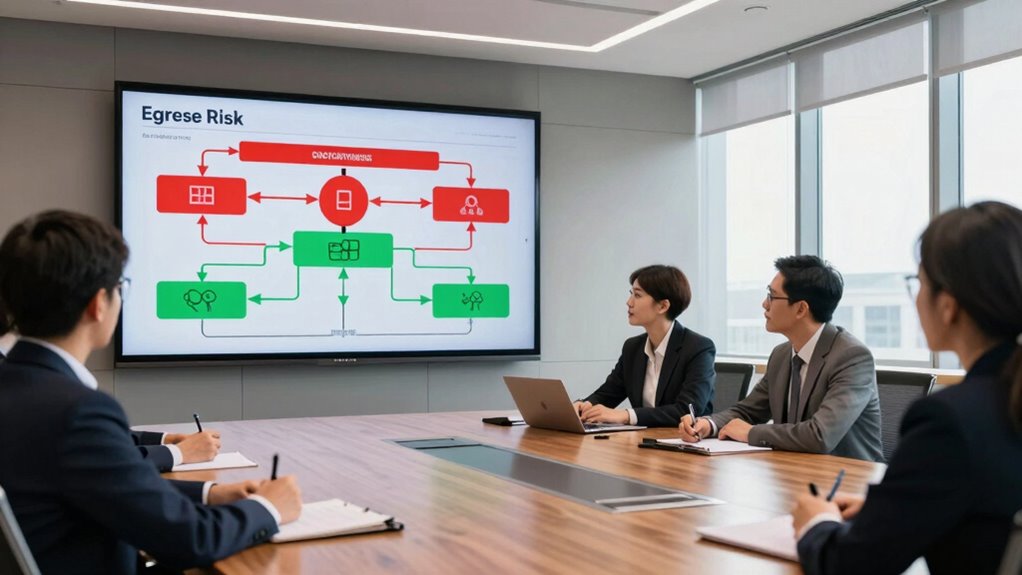

Egress risk refers to the chance of sensitive data leaving your organization’s networks, which can lead to breaches, regulatory fines, or data leaks. For finance and procurement teams, it’s about protecting financial details and supplier information from unauthorized access or accidental leaks. Implementing control tools and encryption helps prevent risky data transfers, ensuring compliance and safeguarding your reputation. Understanding these risks is vital, and exploring further can help you strengthen your organization’s data security measures more effectively.

Get business pricing on networking and server gear
- Business-only prices and quantity discounts
- Tax-exempt purchasing
- Multiple users, one account, clear invoices
Key Takeaways
- Egress risk involves the potential for sensitive data to leave our systems, risking leaks, breaches, and non-compliance penalties.
- Managing egress risk safeguards financial information, maintaining trust and avoiding costly legal or regulatory consequences.
- Implementing monitoring and encryption controls helps prevent unauthorized data transfers, protecting company assets and reputation.
- Proper egress control ensures compliance with regulations like GDPR and HIPAA, avoiding fines and legal issues.
- Egress risk management is essential for organizational security, affecting both operational integrity and stakeholder confidence.

Understanding egress risk is essential for finance and procurement teams because it directly impacts your organization’s security and compliance. When data exits your network, whether through emails, cloud services, or external devices, it creates opportunities for breaches, leaks, or unauthorized access. That’s why you need to grasp the importance of controlling and monitoring data egress. It’s not just a technical issue—it’s a core component of your organization’s risk management strategy, especially when it comes to safeguarding sensitive financial data and ensuring regulatory compliance.
Understanding egress risk is vital for safeguarding financial data and ensuring regulatory compliance.
At its core, egress risk involves the potential exposure of data as it leaves your organization’s controlled environment. You might think of it as a leakage point—if data escapes without proper safeguards, it becomes vulnerable to malicious actors or accidental misuse. Implementing data encryption is your first line of defense. When you encrypt data, even if it leaves your organization, it remains unreadable without the decryption key. This means that, regardless of where the data goes, unauthorized individuals can’t access its contents. Encryption acts as a barrier, reducing the risks associated with data egress and helping you meet stringent regulatory standards that demand the protection of sensitive information. Additionally, understanding the data lifecycle can help you identify critical points where egress risks are most likely to occur.
Regulatory compliance is another key reason why understanding egress risk matters. Many industries, especially finance and procurement, are subject to strict regulations like GDPR, HIPAA, or PCI DSS, which specify how data should be protected and transferred. Failing to control egress can lead to non-compliance, resulting in hefty fines, legal consequences, and damage to your organization’s reputation. Explaining this to your team means emphasizing that managing egress isn’t just about preventing data breaches; it’s also about adhering to legal obligations that protect your clients and stakeholders. Additionally, implementing content inspection tools can help detect and prevent unauthorized data transfers, further reducing egress risks. Incorporating automated monitoring solutions can improve the efficiency of your egress security measures, ensuring faster detection and response.
You should also highlight that monitoring and controlling data egress involves deploying tools that can detect unusual transfer patterns or unauthorized access. These tools can flag potential risks before they escalate, giving your organization a chance to respond proactively. Combining data encryption with these monitoring techniques ensures that even if data leaves your network, it does so securely and in compliance with regulations. Recognizing the importance of data monitoring helps your organization respond swiftly to potential threats and maintain trust with clients and partners. Being aware of how data breaches occur and the potential consequences can motivate teams to prioritize egress controls. When you communicate these points clearly, your teams will better understand that egress risk management isn’t just an IT concern—it’s a vital part of your organization’s overall security posture and compliance framework.
Products Worth Considering

LG UltraGear 27-inch QHD OLED Gaming Monitor, 240Hz

LG UltraGear 25G590B-B 25-Inch Full HD 1000Hz Gaming Monitor

LG UltraGear 32GX850A-B 32-inch 4K UHD OLED Gaming Monitor
As an affiliate, we earn on qualifying purchases.
Frequently Asked Questions
How Does Egress Risk Impact Overall Cybersecurity Posture?
Egress risk directly impacts your cybersecurity posture by increasing the chances of data exfiltration through unauthorized data transfers. If insider threats aren’t managed, malicious or careless employees could leak sensitive information, compromising your organization. This risk exposes vulnerabilities that cybercriminals can exploit, leading to financial loss and reputation damage. Strengthening egress controls helps you prevent data breaches, ensuring your cybersecurity defenses stay robust against insider threats and external attacks.
What Are Common Indicators of High Egress Risk?
You notice unusual data transfers or large volumes leaving your network unexpectedly—that’s a red flag for high egress risk. Insider threats often cause these spikes, especially when sensitive data is exfiltrated. Unexpected access to external servers, increased bandwidth usage, or data transfers outside normal business hours also signal potential trouble. These indicators suggest someone might be trying to steal data, making it vital to act swiftly to protect your organization.
How Can Finance Teams Help Reduce Egress Risk?
You can help reduce egress risk by advocating for strong data encryption and robust access controls. Encourage your teams to implement encryption for sensitive data, making it unreadable if intercepted. Promote strict access controls, ensuring only authorized personnel can access critical information. Regularly review permissions and monitor data transfers. Your proactive approach strengthens security, minimizes data leakage, and aligns financial and procurement processes with best practices for managing egress risk effectively.
What Tools Are Recommended for Monitoring Egress Traffic?
You might think monitoring egress traffic is as simple as watching network logs, but it’s more nuanced. Tools like advanced network segmentation and data encryption solutions are your best allies. They help identify unusual data flows, flag potential leaks, and guarantee sensitive info stays secure. By implementing these, you gain real-time insights, making egress monitoring smarter and more effective — because sometimes, the most obvious tools aren’t enough.
How Does Egress Risk Influence Compliance Requirements?
Egress risk directly impacts compliance requirements because it involves data leaving your network, risking exposure. You need to implement data encryption to protect sensitive information during transfer. Additionally, user training is vital to prevent accidental data leaks. By understanding and managing egress risk, you guarantee your organization adheres to regulations, reduces potential penalties, and maintains customer trust, all while safeguarding your data assets effectively.
Conclusion
Understanding egress risk is like steering a busy river, where every splash and ripple can signal danger or opportunity. By grasping its flow and potential pitfalls, you’re guiding your organization away from hidden rapids and toward calmer waters. Think of yourself as the captain charting a course through these digital currents — with clear insight, you’ll avoid the whirlpools of unexpected costs and keep your voyage smooth and secure. Stay vigilant, and let your awareness be your compass.