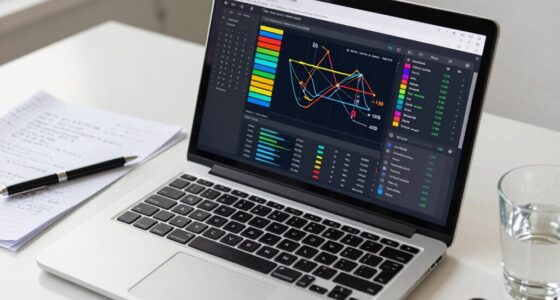

Logs, metrics, and traces are the core signals that help you understand and troubleshoot distributed systems. Logs record detailed, timestamped events; metrics provide real-time numerical data on system health; traces show how requests flow across services, revealing dependencies and bottlenecks. Combining these signals gives you an all-encompassing view of your system, making it easier to detect issues, diagnose root causes, and optimize performance. Explore further to uncover how to leverage each signal effectively.

Get business pricing on networking and server gear
- Business-only prices and quantity discounts
- Tax-exempt purchasing
- Multiple users, one account, clear invoices
Key Takeaways
- Logs offer detailed, timestamped event records for debugging and forensic analysis.
- Metrics provide real-time, numerical summaries of system health, such as error rates and resource usage.
- Traces map request paths across distributed services, revealing bottlenecks and dependencies.
- Combining logs, metrics, and traces delivers a comprehensive view for monitoring, troubleshooting, and performance optimization.
- Cross-signal correlation using trace IDs and contextual data enhances rapid issue detection and root cause analysis.
system observability logs metrics traces tool
As an affiliate, we earn on qualifying purchases.
As an affiliate, we earn on qualifying purchases.
Understanding the Core Signals of Observability

Understanding the core signals of observability is essential for gaining a thorough, all-encompassing view of your system’s health and performance. Logs, metrics, and traces each provide unique insights. Logs record timestamped events, offering detailed context for debugging and forensic analysis. Metrics deliver numerical, time-series data on system states like CPU usage or error rates, enabling real-time monitoring and trend analysis. Traces map the flow of individual requests across services, revealing bottlenecks and dependencies. Together, these signals form a comprehensive picture; metrics highlight overall health, traces show request flow, and logs provide detailed incident details. Recognizing how each signal contributes allows you to detect issues early, diagnose root causes accurately, and optimize system performance efficiently. Additionally, understanding how these signals interconnect helps in creating a unified observability strategy that enhances system reliability and troubleshooting effectiveness. Developing a comprehensive view of the system through these signals ensures proactive management and resilience. Furthermore, the choice of appropriate monitoring tools can significantly improve the effectiveness of observability efforts.
distributed system monitoring software
As an affiliate, we earn on qualifying purchases.
As an affiliate, we earn on qualifying purchases.
Distinguishing Characteristics and Data Types
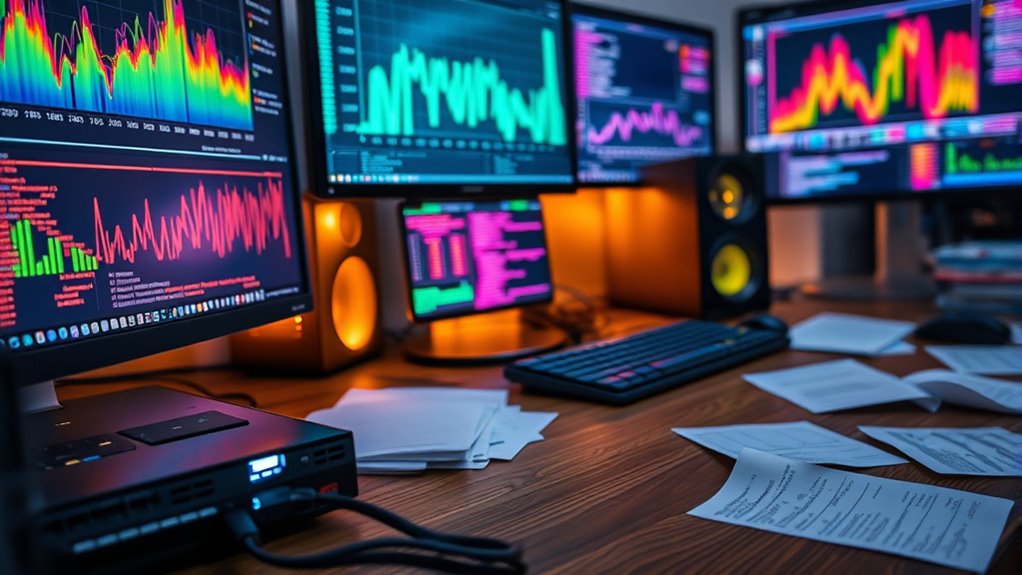
Logs, metrics, and traces each have distinct characteristics that set them apart in how they capture and represent system data. Logs are high-volume, unstructured or structured textual records capturing individual events with timestamps. Metrics are compact, numerical time-series data reflecting system health, such as CPU or error rates. Traces are structured, ordered spans showing request flow across services, often sampled to manage volume. These differences influence how you store, analyze, and utilize each signal.
| Characteristic | Description |
|---|---|
| Volume | Logs: high; Metrics: low; Traces: variable |
| Structure | Logs: unstructured/structured; Metrics: numeric; Traces: spans |
| Retention | Logs: long; Metrics: medium/long; Traces: short |
| Cardinality | High in logs and metrics; manageable in traces |
| Cost | Higher for logs; moderate for metrics and traces |
application performance monitoring tools
As an affiliate, we earn on qualifying purchases.
As an affiliate, we earn on qualifying purchases.
Leveraging the Strengths of Each Signal

By combining the unique strengths of logs, metrics, and traces, you can gain an all-encompassing view of your system’s health and performance. Use metrics for real-time monitoring, SLA tracking, and trend analysis to quickly identify anomalies. Leverage logs for detailed error diagnosis, security audits, and forensic investigations, providing context that metrics lack. Rely on traces to visualize request flow, uncover latency hotspots, and understand service dependencies, enabling root-cause analysis across distributed systems. Cross-signal correlation helps pinpoint issues faster—trace IDs link related data, while logs and metrics add depth. By integrating these signals effectively, you create a comprehensive observability strategy that enhances troubleshooting, optimizes performance, and supports proactive incident response.
log analysis and tracing software
As an affiliate, we earn on qualifying purchases.
As an affiliate, we earn on qualifying purchases.
Navigating the Challenges and Limitations

Managing the challenges of observability requires balancing the limitations inherent in logs, metrics, and traces. You’ll face issues like sampling, which can omit rare but critical traces, risking missed insights. Noise in logs complicates analysis, especially without proper filtering or enrichment. Scalability is another hurdle; collecting, storing, and querying vast amounts of telemetry demands specialized tools and architecture. Correlation across signals can be complex, needing consistent identifiers and robust tooling. Cost management becomes tricky—higher fidelity increases expenses for storage and processing. You must also handle high-cardinality data that strains systems, impacting performance. To succeed, you’ll need to implement strategic sampling, structured data, and cost-aware retention policies, all while maintaining effective cross-signal correlation. Additionally, adopting free floating approaches can help optimize resource utilization and reduce costs.
Best Practices for Effective Telemetry Instrumentation

Effective telemetry instrumentation starts with establishing standardized practices that guarantee consistent, meaningful data collection across your systems. To achieve this, focus on clear guidelines for instrumenting code and propagating context. Use trace identifiers like trace_id and span_id to link signals across logs, metrics, and traces. Emit semantic metrics with controlled label cardinality to avoid overload. Prefer structured JSON logs with a consistent schema for quick querying. Apply adaptive sampling strategies, especially for traces, to balance fidelity and volume. Finally, align instrumentation efforts with your service-level objectives (SLOs), prioritizing signals that directly impact user experience and business outcomes. Incorporating observability best practices can help ensure your telemetry data remains reliable and actionable.
Standardize telemetry practices to ensure meaningful, consistent data across systems.
- Use consistent naming conventions and schemas for logs and metrics
- Propagate trace context through all service boundaries
- Focus on meaningful, aggregated metrics for alerts
- Filter and enrich logs to reduce noise
- Regularly review instrumentation for relevance and performance
Frequently Asked Questions
How Can I Effectively Correlate Logs, Metrics, and Traces Across Diverse Systems?
You can effectively correlate logs, metrics, and traces by ensuring consistent identifiers like trace_id and span_id propagate through your systems. Use structured logging with common schemas and meaningful labels for quick querying. Leverage unified telemetry platforms or open standards like OpenTelemetry to centralize data. Apply adaptive sampling to maintain trace fidelity, and employ your tools’ correlation features to link signals, helping you pinpoint issues faster across diverse systems.
What Are the Best Strategies for Managing High-Cardinality Labels in Telemetry Data?
Managing high-cardinality labels feels like balancing on a tightrope over a sea of data. To do this effectively, you should limit label use to essential dimensions, employ label normalization, and avoid unnecessary unique identifiers. Use sampling or aggregation for rare or overly detailed labels, and leverage dedicated storage for high-cardinality data. These strategies help keep your telemetry manageable, cost-effective, and responsive, ensuring meaningful insights without drowning in complexity.
How Do Emerging Standards Like Opentelemetry Influence Observability Architecture?
Emerging standards like OpenTelemetry shape your observability architecture by providing a vendor-neutral framework for collecting, correlating, and analyzing telemetry data. You benefit from consistent instrumentation across services, enabling seamless data integration. OpenTelemetry’s open standards promote interoperability, reduce vendor lock-in, and streamline tooling. It also supports scalable, flexible collection methods, helping you implement best practices like context propagation, structured data, and adaptive sampling, ultimately improving your system’s visibility and troubleshooting capabilities.
What Role Does Ai/Ml Play in Enhancing Observability Signal Analysis?
Imagine AI/ML as a sharp-eyed navigator guiding you through a storm of data. They sift through noisy signals, highlight anomalies, and connect the dots across logs, metrics, and traces. By automating root-cause analysis and anomaly detection, AI/ML transforms overwhelming information into clear insights. This empowers you to act swiftly, pinpoint issues accurately, and maintain system health even amid chaos, making observability smarter and more proactive.
How Can I Balance Cost and Fidelity When Scaling Telemetry Collection?
You can balance cost and fidelity by implementing adaptive sampling strategies, collecting only the most relevant data, and leveraging tiered storage to keep high-fidelity signals for critical periods. Use open standards like OpenTelemetry to guarantee consistency across signals, and prioritize instrumentation based on your service-level objectives. Regularly review your telemetry needs, optimize label cardinality, and employ automated tools to filter noise, maintaining a cost-effective yet insightful observability setup.
Conclusion
By mastering logs, metrics, and traces, you can get a clear picture of your system’s health. Each signal offers unique insights, and when combined, they form a powerful toolkit. Remember, don’t put all your eggs in one basket—use them together to see the full story. With the right approach, you’ll be better equipped to catch issues early and keep things running smoothly. It’s all about playing your cards right in the world of observability.
Columbus Day / Indigenous Peoples' Day Picks
long weekend sales
As an affiliate, we earn on qualifying purchases.