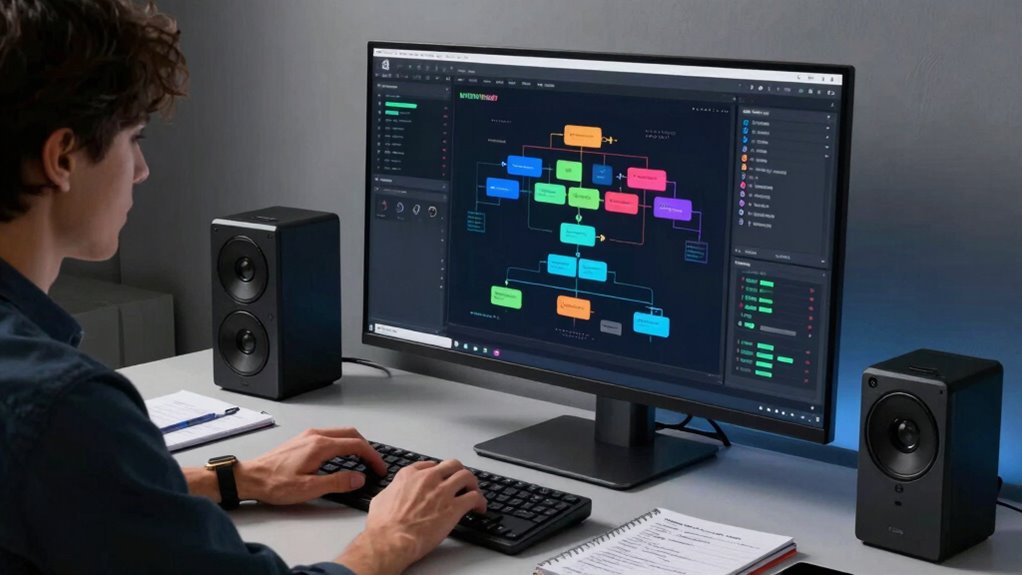
To treat observability as an architecture input, you need to embed monitoring and data collection from the start of your system design. Prioritize instrumentation, choose scalable tech, and build architecture that supports thorough data gathering. Use insights to shape ongoing improvements, making monitoring an ongoing process. By doing so, your system becomes more resilient and easier to troubleshoot. Keep exploring how integrating observability early can transform your system’s reliability and performance.

Get business pricing on networking and server gear
- Business-only prices and quantity discounts
- Tax-exempt purchasing
- Multiple users, one account, clear invoices
Key Takeaways
- Embed sensors and instrumentation during system design to ensure seamless integration of observability from the start.
- Prioritize meaningful data collection aligned with system goals to inform architecture decisions.
- Design scalable infrastructure that supports real-time monitoring and analysis without impacting performance.
- Incorporate observability requirements into architecture reviews and planning to reinforce their importance.
- Cultivate a mindset that views observability as essential for resilience, maintainability, and long-term system health.

Have you ever considered how observability can shape your system’s architecture from the ground up? Instead of treating it as an afterthought or a mere troubleshooting tool, you should see observability as a core component that influences how your system is built and operates. This mindset encourages you to prioritize data collection and system monitoring as integral parts of your design process. When you embed observability into your architecture, you create a foundation that not only simplifies troubleshooting but also enhances performance, reliability, and scalability.
Designing with observability in mind means you’re intentional about what data you gather and how you collect it. It’s not enough to simply log errors or monitor resource usage; you need to think proactively about the kinds of metrics, traces, and logs that will give you meaningful insights into your system’s behavior. This approach ensures that data collection is comprehensive, efficient, and aligned with your operational goals. By doing so, you enable your team to detect anomalies early, understand root causes faster, and prevent issues before they escalate. Incorporating comprehensive data collection into your architecture also helps you anticipate future growth and adapt your system accordingly.
Proactively select meaningful metrics, traces, and logs to gain valuable insights and prevent issues before they escalate.
System monitoring becomes a continuous, integral process rather than a reactive measure. When observability is baked into your architecture, monitoring tools are designed to work seamlessly with your system components. This means deploying sensors and instrumentation from the start, rather than retrofitting them later. With this setup, you gain real-time visibility into system health, performance bottlenecks, and user experiences. The data collected feeds into dashboards and alert systems, helping you make informed decisions quickly. It’s about creating a feedback loop where insights drive improvements, and the system evolves based on data-driven understanding. Building this monitoring integration early ensures that your system remains resilient and adaptable over time. In addition, designing for scalability ensures your observability solutions can handle increasing data volumes without degrading performance.
Treating observability as an architecture input also influences your choices around technology stacks and infrastructure. For example, you might choose distributed tracing or structured logging to better understand complex interactions within microservices. You’ll consider how to store and analyze large volumes of data efficiently, ensuring that your system can scale without sacrificing visibility. This proactive planning reduces technical debt and prevents the need for costly overhauls later on. Additionally, understanding the importance of comprehensive data collection can help you design a more resilient and transparent system from the outset.
In essence, making observability a fundamental part of your system’s architecture shifts your mindset from reactive to proactive. You’re not just fixing problems after they occur; you’re designing systems that are inherently more transparent, resilient, and easier to maintain. It’s about integrating data collection and system monitoring into your core design principles, ensuring that observability supports your system’s growth and stability from the outset.
As an affiliate, we earn on qualifying purchases.
Frequently Asked Questions
How Early Should Observability Be Integrated Into the Development Process?
You should integrate observability early, ideally during the initial design phase. Incorporate data instrumentation and establish real-time monitoring from the start to identify issues quickly and build a resilient system. Doing this guarantees your architecture is built with observability in mind, making debugging easier and performance more reliable. Embedding these practices early helps you proactively detect problems, rather than reacting after failures occur.
What Are Common Pitfalls When Treating Observability as an Architecture Input?
You might fall into common pitfalls like relying on legacy monitoring tools that don’t fit modern architectures, leading to incomplete insights. Siloed metrics can obscure the bigger picture, making it harder to diagnose issues efficiently. To avoid these traps, make sure your observability inputs are integrated across teams and systems. This way, you get an all-encompassing view, enabling proactive problem resolution and better architectural decisions.
How Does Observability Influence System Scalability and Performance?
When you prioritize observability, it transforms your system into an unstoppable juggernaut of scalability and performance. You’ll detect system bottlenecks instantly and fix them before they become disasters. The magic lies in data correlation — linking logs, metrics, and traces — which sharpens your insight. This proactive approach guarantees your system scales seamlessly, performs flawlessly, and stays ahead of the curve, making failures feel like ancient history.
What Tools Best Support Observability-Driven Architecture Design?
You should prioritize tools that foster a monitoring culture and enable data integration, like Prometheus, Grafana, and Datadog. These tools help you collect, visualize, and analyze data seamlessly, making observability a core part of your architecture. By integrating data across systems and encouraging continuous monitoring, you’ll design more resilient, scalable architectures that adapt quickly to issues and performance bottlenecks.
How Can Teams Measure the Effectiveness of Observability in Architecture?
Think of your observability as a compass—its effectiveness hinges on clear monitoring metrics and compelling data visualization. You can measure success by tracking how quickly issues are detected and resolved, and how well your dashboards reveal system health. Regularly review these metrics to identify gaps, ensuring your observability tools serve as a true extension of your architecture. This keeps your system resilient, responsive, and continually improving.
As an affiliate, we earn on qualifying purchases.
Conclusion
By treating observability as a core architecture input, you’ll catch issues faster and improve system resilience. In fact, 60% of high-performing teams say integrating observability early reduces downtime markedly. Don’t wait for problems to escalate—embed observability into your design from the start. This proactive approach not only boosts reliability but also empowers your team with actionable insights, making your systems smarter and more responsive. Start viewing observability as an essential architectural element today.
As an affiliate, we earn on qualifying purchases.
As an affiliate, we earn on qualifying purchases.
Halloween Picks
halloween
As an affiliate, we earn on qualifying purchases.