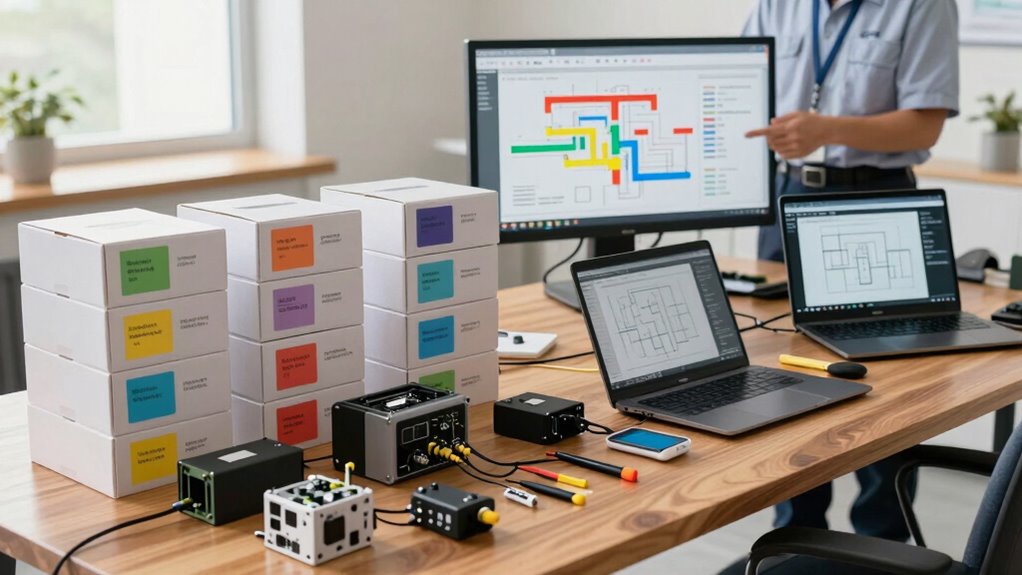

To prepare hardware orders for multi-site rollouts without chaos, start by thoroughly inventorying existing equipment and identifying what each site needs. Develop a detailed schedule aligning procurement, shipping, and installation. Maintain clear communication with vendors and your team, using tracking tools to monitor progress. Build in buffer time for delays and coordinate deliveries carefully to avoid congestion. Staying organized and proactive guarantees a smooth rollout—keep going to discover even more strategies for success.

Get business pricing on networking and server gear
- Business-only prices and quantity discounts
- Tax-exempt purchasing
- Multiple users, one account, clear invoices
Key Takeaways
- Create a detailed inventory and needs assessment for each site to ensure accurate ordering and prevent overstocking.
- Establish strong vendor relationships and confirm lead times to synchronize deliveries with installation schedules.
- Develop a comprehensive timeline, including buffer periods for logistical delays and customs processing.
- Use project management tools to track orders, shipments, and installation progress, maintaining clear communication.
- Coordinate delivery to align precisely with deployment dates, minimizing storage issues and last-minute rushes.

Preparing hardware orders for multi-site rollouts requires careful planning and coordination to make certain each location receives the right equipment on time. Your first step is to develop a detailed inventory management plan. This means taking stock of what hardware you already have and identifying exactly what each site needs. You should create an extensive list of devices, accessories, and peripherals, ensuring nothing gets overlooked. This way, you avoid overordering or missing critical components, which can cause delays or frustration. An organized inventory system also helps track what’s been ordered, shipped, and received, giving you real-time visibility across all locations. Additionally, integrating networking considerations into your inventory planning ensures that all hardware components will work seamlessly together once deployed. Implementing a centralized tracking system can also improve visibility and accountability throughout the process.
Develop a comprehensive inventory plan to ensure timely, accurate hardware distribution across multiple sites.
Next, you need to focus on vendor coordination. Building strong relationships with your suppliers is essential for a smooth rollout. Communicate your project timeline clearly and confirm lead times for each item. Establishing reliable communication channels ensures you can quickly resolve issues, such as delays or incorrect shipments. When negotiating with vendors, make sure to specify your requirements precisely, including quantities, delivery dates, and quality standards. Regular follow-ups help prevent surprises and keep the process on schedule. If possible, work with vendors who offer flexible shipping options or expedited services, in case you encounter unexpected setbacks. Ensuring supply chain reliability is also crucial to avoid disruptions during the rollout process. Moreover, keeping an eye on logistics trends can help you anticipate potential delays and adjust your plans proactively.
Timing is critical, so create a detailed schedule that aligns procurement, shipping, and installation phases. Coordinate with your vendors to ensure that hardware arrives at each site just in time for deployment, avoiding storage issues or congestion. When ordering equipment, consider potential customs or logistical delays, and build buffer time into your plan. This proactive approach minimizes the risk of last-minute scramble and ensures each location is prepared to receive their hardware.
Throughout the process, maintain open lines of communication with your team and vendors. Regular updates on inventory status, shipping progress, and installation timelines keep everyone aligned. Use project management tools or spreadsheets to track all orders, deadlines, and contacts. This organizational clarity reduces errors and helps you quickly identify any bottlenecks before they escalate. Incorporating detailed planning into your strategy can significantly improve the efficiency and success of your multi-site rollout.
multi-site hardware inventory management software
As an affiliate, we earn on qualifying purchases.
As an affiliate, we earn on qualifying purchases.
Frequently Asked Questions
How Do I Handle Last-Minute Hardware Changes Across Multiple Sites?
When handling last-minute hardware changes across multiple sites, prioritize clear communication with suppliers to guarantee quick updates and accurate delivery schedules. Maintain inventory accuracy by regularly updating your inventory system to reflect changes. You should also coordinate with each site to confirm their specific needs and timelines. This proactive approach minimizes delays, prevents errors, and keeps your rollout organized despite last-minute adjustments.
What Are Best Practices for Tracking Hardware Order Statuses?
You should implement robust inventory management systems to track hardware order statuses in real-time, ensuring accurate updates across all sites. Maintain open communication with suppliers, confirming order progress and delivery timelines frequently. Use centralized tracking tools or software to monitor statuses, flag delays early, and coordinate adjustments swiftly. This proactive approach minimizes confusion, keeps everyone informed, and helps you manage hardware orders efficiently during multi-site rollouts.
How Can I Ensure Hardware Compatibility Across Different Sites?
Did you know that 85% of hardware issues in multi-site rollouts stem from incompatibility? To guarantee hardware compatibility, establish clear hardware standards across all sites and conduct thorough compatibility testing before ordering. This proactive approach helps identify potential conflicts early, saving time and resources. By standardizing components and testing compatibility, you’ll streamline deployment, reduce delays, and ensure consistent performance across every site.
What Are Common Pitfalls in Multi-Site Hardware Ordering?
Common pitfalls in multi-site hardware ordering include poor inventory management, leading to shortages or excess stock, and ineffective supplier communication, causing delays or mismatched equipment. You might overlook site-specific needs or fail to confirm compatibility, resulting in rework. To prevent this, maintain accurate inventory records, establish clear communication channels with suppliers, and regularly verify order details against site requirements. Proactive planning ensures a smooth, coordinated rollout across all locations.
How Do I Coordinate Hardware Delivery Schedules Efficiently?
You should streamline your hardware delivery schedules by maintaining tight inventory management and clear vendor communication. Regularly update your inventory data to track what’s on hand and what’s needed. Coordinate with vendors early and set specific delivery timelines, confirming schedules frequently. Use collaborative tools to share updates instantly, ensuring everyone stays aligned. This approach minimizes delays, reduces confusion, and keeps your multi-site rollout running smoothly and on time.
project management tools for hardware rollout
As an affiliate, we earn on qualifying purchases.
As an affiliate, we earn on qualifying purchases.
Conclusion
By staying organized and planning ahead, you can keep your multi-site hardware rollout running smoothly. Double-check your orders, coordinate with vendors, and keep communication clear. Remember, a stitch in time saves nine—address minor issues early to avoid chaos later. When you’re proactive and prepared, you’ll guarantee a seamless deployment, saving time and resources. With the right approach, you’ll have everything in place before you know it, making the process as smooth as silk.
hardware tracking system for IT deployment
As an affiliate, we earn on qualifying purchases.
As an affiliate, we earn on qualifying purchases.
vendor communication tools for equipment delivery
As an affiliate, we earn on qualifying purchases.
As an affiliate, we earn on qualifying purchases.
Halloween Picks
halloween
As an affiliate, we earn on qualifying purchases.