

To prevent quiet security gaps, you need an all-encompassing badge management process that verifies identities upfront and links badges to access levels. Issue and track badges with RFID chips or barcodes, monitor movements in real-time, and automate badge updates when roles change or individuals leave. Secure digital systems prevent duplication and enable instant revocation. Maintaining organized, up-to-date records ensures only authorized people access sensitive areas, keeping your facility safe at all times — explore how this system works in detail.

Get business pricing on networking and server gear
- Business-only prices and quantity discounts
- Tax-exempt purchasing
- Multiple users, one account, clear invoices
Key Takeaways
- Implement continuous badge monitoring and real-time updates to promptly revoke or reprogram access for role changes or security breaches.
- Use secure, digital badge systems that prevent duplication and unauthorized use of badges.
- Automate badge issuance, expiration, and deactivation to minimize human error and ensure current access rights.
- Collect and manage badges efficiently post-visit to prevent lingering or unauthorized reuse.
- Maintain detailed, organized records for quick identification and response during security incidents or emergencies.
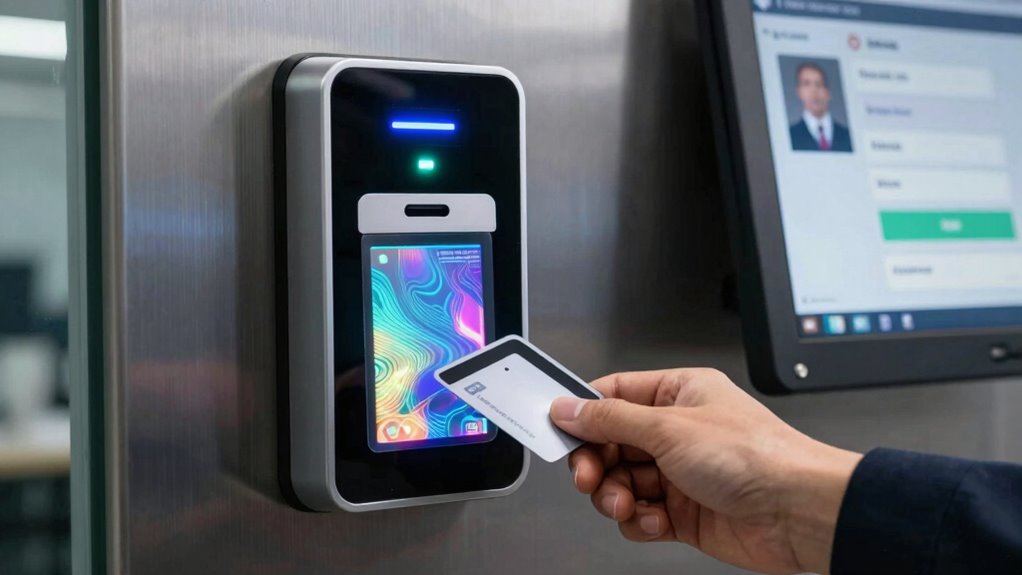
Have you ever wondered how organizations efficiently manage access control through badges? It’s a vital part of maintaining security, especially when it involves visitor tracking. When you understand the badge management process, you realize how it helps prevent quiet security gaps that could otherwise be exploited. A well-designed badge system ensures that only authorized individuals gain entry to sensitive areas, and it keeps a record of all visitors and employees. This process isn’t just about issuing badges; it involves a series of steps that keep security tight and organized.
First, the process begins with pre-registration. When someone needs access, their details are collected in advance, either through an online portal or a security desk. This step allows you to verify their identity before they arrive, reducing the risk of unauthorized access. When the visitor arrives, staff promptly issue a badge that’s linked to their identity and the specific access level assigned. These badges often contain RFID chips or barcodes, making it easier to track movement within the premises. This tracking is essential for visitor management, enabling security personnel to monitor who’s on-site and where they’re located at any given time. It also facilitates quick response in case of emergencies, as you can easily identify visitors and employees. Additionally, implementing secure badge systems can significantly enhance overall security by preventing unauthorized duplication or misuse of badges. Incorporating digital badge management can further streamline the process and improve accuracy. Moreover, leveraging automated systems can help ensure that badge data remains consistent and up-to-date across all access points.
The badge management process also involves continuous monitoring and updating. As employees change roles or leave the organization, their badges are deactivated or reprogrammed to reflect new permissions. For visitors, badges are typically collected at the end of their visit, but some systems allow for temporary or one-time use, reducing the risk of badge reuse. Digital systems enhance this process by automating badge issuance, expiration, and deactivation, minimizing human error and guaranteeing real-time accuracy. Security personnel can instantly revoke access if needed, such as when someone’s credentials are compromised, or if a visitor overstays their welcome.
Products Worth Considering

DJI Osmo Mobile 8 Standard Combo Phone Gimbal Stabilizer

Apple iPad Air 11-inch (M2), 512GB, Wi-Fi, Space Gray

Jackery Explorer 300 Portable Power Station, 292Wh
As an affiliate, we earn on qualifying purchases.
Frequently Asked Questions
How Often Should Badge Access Permissions Be Reviewed?
You should review badge access permissions at least quarterly to guarantee security. During these access audits, you identify outdated permissions and make necessary updates promptly. Regular permission updates help prevent unauthorized entry and maintain a clear record of who has access to sensitive areas. By staying consistent with these reviews, you minimize security risks and ensure everyone’s access rights align with their current roles and responsibilities.
What Security Measures Prevent Badge Cloning?
Think of your badge as a treasure chest—its security hinges on strong locks. To prevent badge cloning, you use holographic badges that act like magical shields, making duplication nearly impossible. Additionally, badge encryption guarantees that data remains locked tight, even if someone tries to steal it. These measures work together like a fortress, safeguarding your access and keeping unauthorized copies at bay.
How Is Employee Offboarding Handled in Badge Management?
During employee offboarding, you follow strict exit protocols by promptly executing badge deactivation procedures. This involves removing access rights from digital systems and disabling physical badges to prevent unauthorized entry. You guarantee that all access privileges are revoked immediately upon employee departure, reducing security risks. By meticulously managing badge deactivation, you maintain a secure environment and close potential security gaps, ensuring only authorized personnel retain access.
Can Badge Management Systems Integrate With Existing Security Infrastructure?
Your badge management system can seamlessly integrate with existing security infrastructure, turning your access controls into an impenetrable fortress. It automates credential verification, ensuring only authorized personnel gain entry. This integration creates a unified security environment, drastically reducing vulnerabilities. You’ll experience peace of mind knowing your security layers work together like a well-oiled machine, safeguarding your assets and people from threats that could otherwise lurk unnoticed in the shadows.
What Training Is Required for Staff Managing Badges?
You need to train your staff on access control protocols and credential issuance procedures to guarantee effective badge management. They should understand how to securely issue, update, and revoke badges, preventing unauthorized access. Training should also cover the use of your badge management system, security policies, and troubleshooting common issues. Regular refreshers keep staff up-to-date on best practices, reducing risks and maintaining a robust security environment.
Conclusion
Think of your badge management process as the sturdy gatekeeper of your security castle. When you stay vigilant and keep your procedures tight, you prevent quiet gaps from slipping through unnoticed. Just like a vigilant guard, your careful oversight ensures every access point is secure, safeguarding your organization’s valuable assets. Make certain to refine your process, and you’ll build a fortress that’s resilient against unseen threats, protecting your team and operations from silent breaches.