
Container image signing solves the problem of verifying that images are genuine, unaltered, and come from trusted sources. It helps you guarantee images haven’t been tampered with, maintaining their integrity from build to deployment. By establishing a chain of trust, it also traces the origin and provenance of images, reducing supply chain risks. If you want to understand how this enhances security and compliance, there’s more to explore below.

Get business pricing on networking and server gear
- Business-only prices and quantity discounts
- Tax-exempt purchasing
- Multiple users, one account, clear invoices
Key Takeaways
- Ensures images are authentic and unaltered, maintaining trust in the deployment process.
- Establishes a chain of trust and provenance, linking images to trusted sources and build systems.
- Verifies images at runtime to prevent malicious or unauthorized artifacts from running in production.
- Provides auditable evidence of authorized images, supporting compliance and regulatory requirements.
- Strengthens overall security posture by integrating trusted signatures into modern DevSecOps workflows.

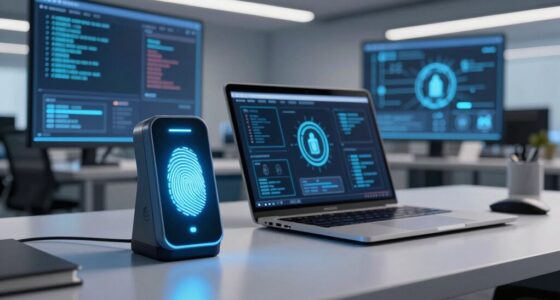
Have you ever wondered how to guarantee that a container image you’re deploying is authentic and untampered? Container image signing provides a cryptographic way to do just that. When you sign an image, you create a digital signature that confirms it hasn’t been altered since it was signed. This signature acts like a digital fingerprint, ensuring the image remains in its original, trusted state from build to deployment. Using asymmetric encryption, you sign the image with a private key, and anyone verifying the image uses the corresponding public key. This process establishes a chain of trust, from the creator through to the final deployment, helping you confidently deploy only what’s verified and safe.
The core purpose of signing is to verify integrity. Any bit-for-bit modification after signing invalidates the signature. Hash functions generate a unique fingerprint—a cryptographic hash—that detects even tiny changes. When you pull an image, the system verifies the signature against this hash, blocking unsigned or altered images from running. This prevents you from deploying tampered artifacts, reducing the risk of runtime compromise. Signatures also bind the image to a specific build output, enabling you to verify that the image matches exactly what was produced during continuous integration (CI). By doing so, signing helps guarantee the exact same image that was built is what gets deployed, reinforcing reproducibility and trust.
Authenticity and provenance are equally essential. Signatures authenticate the image’s origin by associating it with a specific signer or build system through a signing key. When you verify the signature, you confirm the image was produced by a trusted source, not a malicious actor. Embedded provenance metadata—such as who signed the image, when, and which CI job was responsible—further enhances traceability across the supply chain. This traceability supports enforcement of policies that only allow images from approved teams or pipelines. In case of security incidents, linked provenance helps quickly trace back to the exact build, aiding incident response and forensic analysis.
Container image signing also considerably reduces supply chain risks. It prevents attackers from substituting malicious images in your pipeline, especially if signatures are verified during runtime. By integrating signing with runtime verification mechanisms like admission controllers, you enforce a strong chain of trust from CI to production. Even if a registry is compromised, images lacking valid signatures can be rejected automatically, limiting the attack surface. Moreover, widespread signing adoption raises the difficulty for attackers, who would need to compromise private keys or CI systems to succeed.
Finally, signing supports compliance, auditability, and accountability. It provides auditable evidence linking images to approved builds and organizations, fulfilling regulatory requirements. Signature metadata enables retrospective verification of deployed artifacts, making it easier to demonstrate that you only used authorized images. Ownership and accountability become transparent through key management and signature records. Container image signing is increasingly recognized as a best practice in modern DevSecOps environments, and integrating signing with other security measures significantly enhances overall container security posture.
As an affiliate, we earn on qualifying purchases.
Frequently Asked Questions
How Does Image Signing Impact Deployment Speed?
Image signing can initially slow down deployment because it adds an extra step of verifying signatures before deployment. But, once set up, it speeds up the process by automating trust checks, reducing manual audits, and preventing delays caused by security concerns. Overall, it streamlines your deployment pipeline, ensuring only verified images are used, which can save time and prevent issues later.
What Are the Key Differences Between Signing and Encryption?
The key difference between signing and encryption is that signing verifies authenticity and integrity, while encryption protects confidentiality. When you sign an image, you create a digital fingerprint that confirms it’s from a trusted source and hasn’t been altered. Encryption, on the other hand, scrambles data so only authorized parties can read it. Signing proves who created the image; encryption keeps its contents secret from unauthorized viewers.
Can Image Signing Prevent All Types of Supply Chain Attacks?
No, image signing can’t prevent all types of supply chain attacks. While it verifies the authenticity and integrity of container images, attackers can still target other parts of the supply chain, like compromised build processes or insecure dependencies. Signing adds a strong layer of security, but you need exhaustive measures—like secure CI/CD pipelines, access controls, and monitoring—to truly defend against all attack vectors in the supply chain.
Is Container Image Signing Compatible With All Container Registries?
Yes, container image signing is compatible with most container registries, even if they don’t naturally support it. You can sign images before pushing and verify them after pulling, integrating signing tools into your CI/CD pipeline. Many registries, like Docker Hub and private solutions, support signature validation through third-party tools or APIs. This flexibility helps you guarantee authenticity and integrity across diverse environments without major compatibility issues.
How Are Private Keys Securely Managed During Signing Processes?
You should store private keys securely using hardware security modules (HSMs) or dedicated key management services (KMS). These tools protect keys from unauthorized access, hardware tampering, and accidental exposure. Regularly rotate keys and restrict access with strict permissions. Use encryption to secure backups, and implement audit logs for tracking key usage. By following these practices, you guarantee that your private keys remain safe during the signing process.
digital signature for Docker images
As an affiliate, we earn on qualifying purchases.
As an affiliate, we earn on qualifying purchases.
Conclusion
By signing container images, you greatly reduce the risk of deploying tampered or malicious software, boosting your security posture. Did you know that over 80% of organizations have experienced container security incidents in the past year? This highlights the importance of image signing as a critical safeguard. Embrace this practice to guarantee your containers are trustworthy, and you protect your applications and data from potential threats before they even reach production.
container image security verification
As an affiliate, we earn on qualifying purchases.
As an affiliate, we earn on qualifying purchases.
cryptographic signing for container images
As an affiliate, we earn on qualifying purchases.
As an affiliate, we earn on qualifying purchases.
Columbus Day / Indigenous Peoples' Day Picks
long weekend sales
As an affiliate, we earn on qualifying purchases.