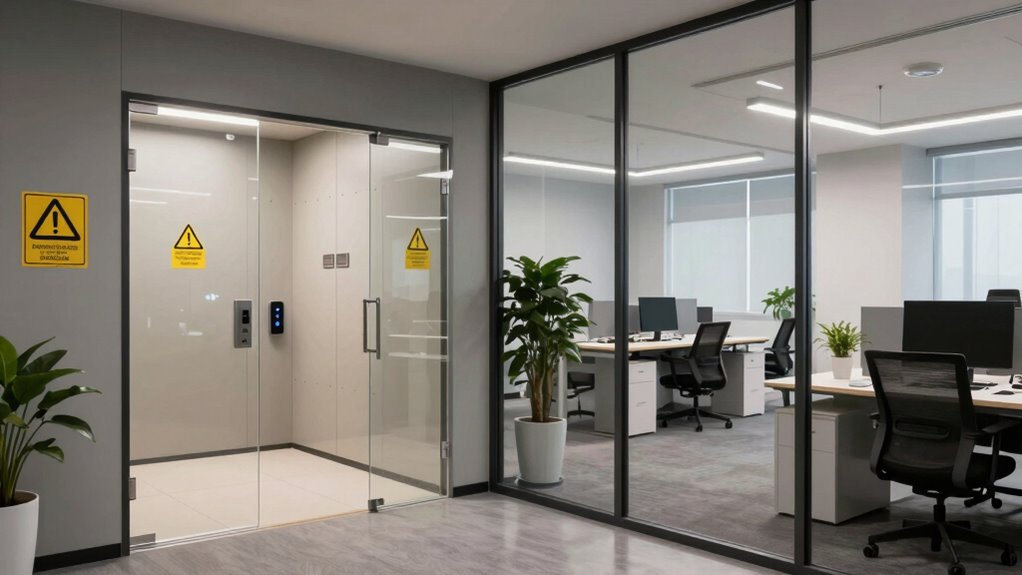

To separate office access zones based on real risks, start by analyzing your space to identify high-risk areas like server rooms and executive offices, then assign access based on importance. Use physical barriers such as locked doors, turnstiles, and signage to restrict entry, and implement access control systems like key cards or biometric scanners. Regularly review and update these zones as threats change, helping you stay secure. Keep exploring to discover more ways to strengthen your security.

Get business pricing on networking and server gear
- Business-only prices and quantity discounts
- Tax-exempt purchasing
- Multiple users, one account, clear invoices
Key Takeaways
- Conduct a comprehensive risk assessment to identify high-value and vulnerable areas needing stricter access controls.
- Categorize office zones into high, medium, and low risk based on data sensitivity and security threats.
- Implement tailored access control measures like biometric scanners for high-risk areas.
- Use physical barriers and clear signage to delineate and restrict access to different zones.
- Regularly review and update access permissions based on evolving threat levels and personnel changes.
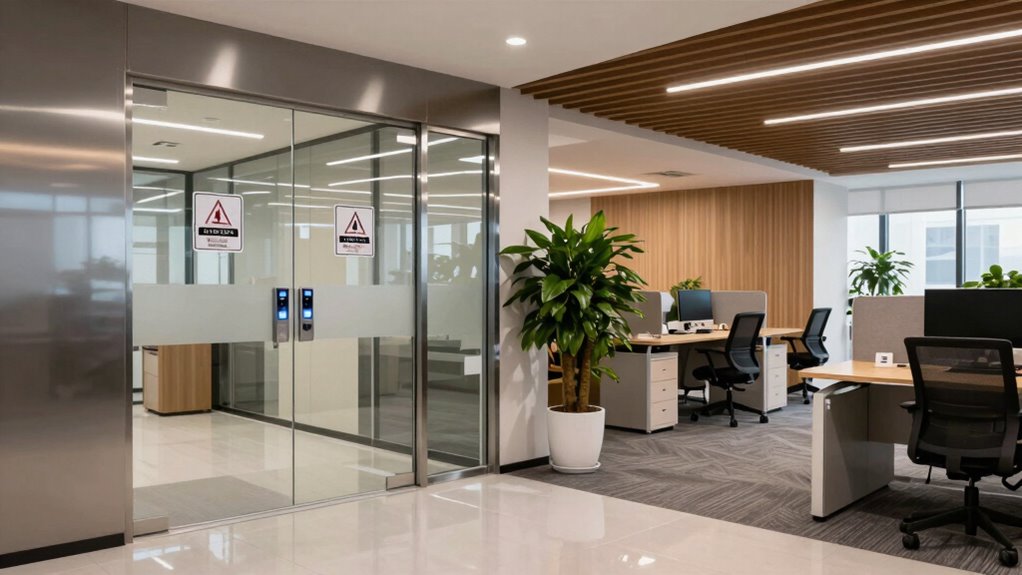
Have you ever wondered how to effectively control access in your office based on actual risks? The key lies in understanding your space, evaluating potential threats, and implementing a strategic approach to zoning. By dividing your office into different access zones, you can reduce security vulnerabilities and protect sensitive information more efficiently. The first step involves analyzing which areas require the highest level of protection, such as server rooms, executive offices, or areas storing confidential data. These zones should be restricted to authorized personnel only, creating a clear separation from general workspaces.
Dividing your office into access zones enhances security and safeguards sensitive information effectively.
Once you’ve identified these high-risk zones, establishing clear security protocols becomes essential. These protocols serve as the foundation for controlling access and ensuring staff knows exactly how to handle different areas. For example, you might implement key card systems, biometric scanners, or PIN codes for sensitive zones. But technology alone isn’t enough—your employees must understand and follow these protocols at all times. That’s why thorough employee training plays a vital role. Training sessions should cover not only how to use access controls but also why certain areas are restricted and the importance of maintaining security standards. When employees are well-informed, they’re more likely to adhere to security measures without constant supervision.
In addition to employee training, you should regularly review and update your security protocols. Risks evolve, and so should your access controls. Conduct periodic audits to ensure only authorized personnel have access to specific zones and that all security measures are functioning properly. If you notice any gaps or vulnerabilities, adapt your protocols accordingly. For instance, if an employee no longer needs access to a particular area, revoke their permissions immediately to prevent accidental or malicious breaches. Understanding security protocols and how they adapt to changing threats is crucial for maintaining a secure environment. Incorporating risk assessments into your routine can help identify new vulnerabilities before they become serious issues. Additionally, leveraging cloud-based security solutions can provide real-time monitoring and alerting to further enhance your security posture. Staying informed about emerging security threats enables you to proactively respond and strengthen your defenses. Regular security audits also help ensure that your safeguards remain effective over time.
Creating physical barriers further enforces the separation of access zones. Use locked doors, turnstiles, or security checkpoints to prevent unauthorized entry. Signage can also remind staff and visitors of the access restrictions and the importance of security. Remember, the goal is to make it clear which areas are high security and to make unauthorized access as inconvenient as possible, encouraging compliance.
Ultimately, successful separation of office access zones based on real risk hinges on a combination of strategic planning, effective employee training, and strict security protocols. When your team understands the importance of security measures and follows established procedures, you create a safer, more secure working environment. This proactive approach not only protects your assets but also fosters a culture of security awareness that benefits everyone in your organization.
As an affiliate, we earn on qualifying purchases.
Frequently Asked Questions
How Often Should Access Zones Be Reassessed for Risk?
You should reassess access zones regularly, ideally every six months, or whenever there are significant changes in the office environment or operations. This guarantees your access control measures stay effective and aligned with current risks. Incorporate risk management strategies during these reviews to identify new vulnerabilities, adjust zones accordingly, and maintain a secure workspace. Frequent evaluations help prevent unauthorized access and protect sensitive areas.
What Legal Regulations Influence Office Access Zoning?
Did you know that over 80% of workplaces face legal penalties due to non-compliance with zoning standards? Legal regulations like OSHA standards and local building codes heavily influence office access zoning, ensuring safety and security. You must adhere to these laws for legal compliance, which specify how zones are designated, managed, and maintained. Staying updated on these regulations helps protect your organization from fines and liabilities while fostering a safe work environment.
How to Train Staff on New Access Protocols?
You should implement thorough staff training focused on new access control protocols. Start by clearly explaining the importance of access control and how it enhances safety. Use practical demonstrations and role-playing to reinforce understanding. Regularly update staff on protocol changes and guarantee they feel confident in applying them. Reinforcing these practices helps prevent unauthorized access and maintains a secure office environment. Consistent training ensures everyone stays informed and compliant.
What Are the Costs Associated With Implementing Zoning?
The costs of implementing zoning include expenses for access control systems, security planning, and physical modifications like signage or barriers. You’ll need to budget for technology upgrades, such as card readers or biometric scanners, and staff training. Additionally, consider ongoing maintenance and updates to guarantee the zones remain effective. These investments enhance overall security, helping you better control who enters different areas and minimize risk.
How to Handle Emergencies Within Designated Zones?
In emergencies, you must act swiftly, as coincidence reminds us that chaos can strike unexpectedly. You handle emergencies within designated zones through clear emergency response plans, ensuring everyone knows evacuation routes and procedures. Maintain zone security by controlling access and communication. Regular drills reinforce preparedness, helping you respond effectively. When you combine quick action with secure zones, you create a safer environment, turning coincidence into opportunity for safety and resilience.
As an affiliate, we earn on qualifying purchases.
Conclusion
By carefully evaluating risks and designing access zones accordingly, you create a fortress that keeps threats at bay while allowing smooth operations. Think of it as weaving a safety net that catches hazards before they reach your team. When you understand the real risks and tailor your access controls, you turn your office into a well-guarded castle—strong, secure, and ready for anything. Your proactive approach ensures safety isn’t just a goal, but a guaranteed outcome.
As an affiliate, we earn on qualifying purchases.
As an affiliate, we earn on qualifying purchases.
Fall Picks
fall essentials
As an affiliate, we earn on qualifying purchases.