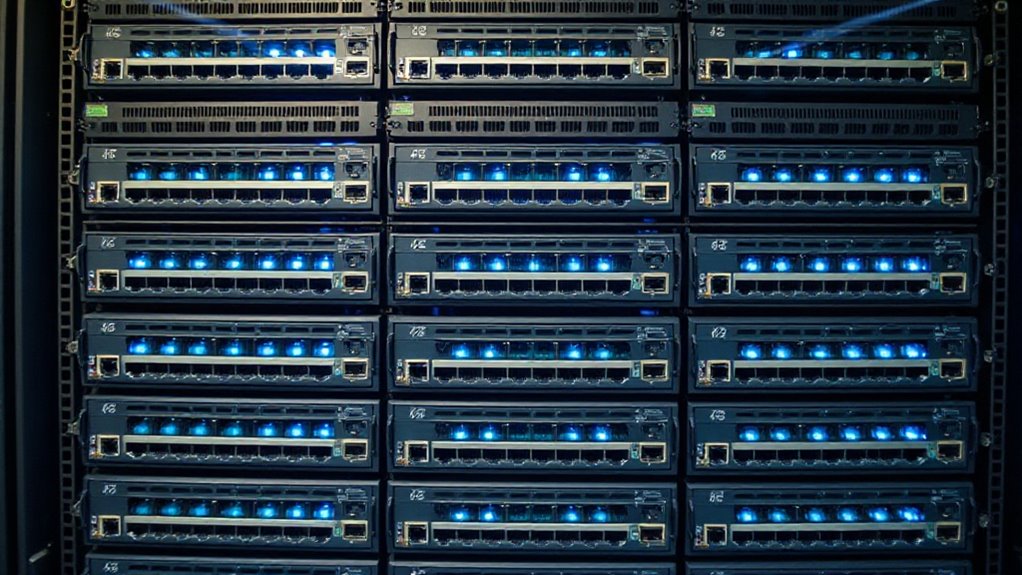

If you’re searching for a 48 port managed switch for small business, you’re likely balancing performance, features, and budget. The Cisco CBS220-48P-4G stands out as the best overall choice for its reliability and robust PoE capabilities. For those prioritizing value, the TP-Link TL-SG3452P offers a strong feature set at a lower price point. Meanwhile, the HPE 1930 Series provides a premium experience with advanced management features. The main tradeoffs involve balancing advanced features versus cost, and ease of setup versus customization. Keep reading for a detailed comparison to find the best fit for your small business network.

Get business pricing on networking and server gear
- Business-only prices and quantity discounts
- Tax-exempt purchasing
- Multiple users, one account, clear invoices
Key Takeaways
- The top-ranked switches combine PoE support with high port density, ideal for powering IP devices and expanding your network.
- Managed switches with layer 2+ features deliver essential VLAN and traffic management without the complexity of layer 3 routing.
- The best value options often include PoE but sacrifice some advanced management features found in premium models.
- Ease of setup and user-friendly interfaces are consistent differentiators for small business owners new to managed networking.
- Build quality and warranty support are critical for ensuring long-term reliability in a small business environment.
| Cisco CBS220-48P-4G Smart Switch, 48 Ports, PoE, 4x1G SFP, 3-Year Warranty |  | Best Overall Managed Switch for Small Businesses | Number of Ports: 48 | Compatible Devices: Desktop | Maximum Power: 382W | VIEW ON AMAZON | See Our Full Breakdown |
| Cisco Catalyst 1200-48P-4G Smart Switch, 48 Port GE, PoE, 4x1GE SFP |  | Best Security and Management Features for Growing Small Businesses | Ports: 48 10/100/1000 + 4x 1GE SFP | PoE Power Budget: 375W | Security: IEEE 802.1X, ACLs | VIEW ON AMAZON | See Our Full Breakdown |
| TP-Link TL-SG3452P 48-Port Gigabit L2+ Managed PoE Switch with 4 SFP Slots |  | Best for Advanced Network Features and Flexibility | Number of Ports: 52 | PoE Power Budget: 384W | Layer: 3 | VIEW ON AMAZON | See Our Full Breakdown |
| NETGEAR 52-Port Gigabit Ethernet PoE Smart Managed Switch (GS348TPv2) |  | Best User-Friendly Management and Deployment Flexibility | Number of Ports: 48 | PoE+ Ports: 48 | PoE Power Budget: 380W | VIEW ON AMAZON | See Our Full Breakdown |
| NETGEAR 52-Port PoE Gigabit Ethernet Smart Managed Network Switch (GS752TP) |  | Best for Remote Management and Scalability | Number of Ports: 48 | PoE+ Ports: 48 | PoE Power Budget: 380W | VIEW ON AMAZON | See Our Full Breakdown |
| Aruba Instant On 1830 48-Port Gigabit Ethernet Managed Switch with 24-Port PoE (370W) and SFP Ports |  | Best for Cost-Conscious Small Business Environments | Number of Ports: 48 | PoE Power: 370W | Interface: RJ45, SFP | VIEW ON AMAZON | See Our Full Breakdown |
| Cisco Business CBS220-48T-4G Smart Switch |  | Best for User-Friendly Management and Security | Switch Ports: 48 Gigabit Ethernet | SFP Ports: 4 x 1G | Dimensions: 17.32 x 10.12 x 1.73 inches | VIEW ON AMAZON | See Our Full Breakdown |
| Grandstream GWN7806P 48-Port Gigabit Ethernet Layer 2+ Managed PoE Switch |  | Best for Large Network Density and Layer 2+ Features | Number of Ethernet ports: 48 | PoE: Yes | Gigabit SFP ports: 2/4/6 | VIEW ON AMAZON | See Our Full Breakdown |
| TP-Link SG2452LP, 48 Port Gigabit Fully Managed Switch |  | Best for Advanced Management and Security | Ports: 48 Gigabit Ethernet | Management: Omada Cloud, CLI, SNMP | Security Features: 802.1X, ACL | VIEW ON AMAZON | See Our Full Breakdown |
| EnGenius Fit EWS7952P-FIT 48-Port Gigabit PoE+ Managed Switch |  | Best for Small Business with High PoE Power and Flexibility | Number of Ports: 48 | PoE+ Power Budget: 410W | Management: Hybrid (Cloud and On-Premises) | VIEW ON AMAZON | See Our Full Breakdown |
| Omada SG3452 48 Port Gigabit L2+ Smart Managed Switch |  | Best Overall for Scalability and Security | Number of Ports: 48 RJ45 ports | SFP Slots: 4 | Speed: Gigabit (10/100/1000 Mbps) | VIEW ON AMAZON | See Our Full Breakdown |
| Hewlett Packard Enterprise Networking Instant On Switch Series 1930 48-Port Gb Smart-Managed Layer 2+ Ethernet Switch with PoE |  | Best for PoE-Enabled Small Business Networks | Number of Ports: 48 | PoE Support: Yes | PoE Power: 370W | VIEW ON AMAZON | See Our Full Breakdown |
| NETGEAR 48-Port Gigabit Ethernet Smart Managed Network Switch (GS748T) |  | Best for Silent, Energy-Efficient Environments | Number of Ports: 48 | Ethernet Speed: 1.0Gbps | SFP Ports: 4 (2 shared) | VIEW ON AMAZON | See Our Full Breakdown |
| port managed switch for small business | Number of Ports | Management |
|---|---|---|
| Cisco CBS220-48P-4G Smart Swit | 48 | — |
| Cisco Catalyst 1200-48P-4G Sma | — | Cisco Business mobile app, web interface |
| TP-Link TL-SG3452P 48-Port Gig | 52 | — |
| NETGEAR 52-Port Gigabit Ethern | 48 | Web, SNMP |
| NETGEAR 52-Port PoE Gigabit Et | 48 | SNMP, NETGEAR Insight |
| Aruba Instant On 1830 48-Port | 48 | — |
| Cisco Business CBS220-48T-4G S | — | — |
| Grandstream GWN7806P 48-Port G | — | — |
| TP-Link SG2452LP | — | Omada Cloud, CLI, SNMP |
| EnGenius Fit EWS7952P-FIT 48-P | 48 | Hybrid (Cloud and On-Premises) |
| Omada SG3452 48 Port Gigabit L | 48 RJ45 ports | Web, CLI, SNMP, RMON, Dual Image |
| Hewlett Packard Enterprise Net | 48 | — |
| NETGEAR 48-Port Gigabit Ethern | 48 | Smart management with NETGEAR Insight |
More Details on Our Top Picks
Cisco CBS220-48P-4G Smart Switch, 48 Ports, PoE, 4x1G SFP, 3-Year Warranty
The Cisco CBS220-48P-4G stands out for its balanced combination of usability, PoE capacity, and Cisco’s trusted management platform. Compared with the NETGEAR GS752TP, it offers a more straightforward management experience via a user-friendly dashboard and mobile app, making it ideal for small teams without dedicated network staff. Its 382W PoE budget supports many devices, but the lack of active cooling in some models could raise concerns during heavy loads. While it excels in retail and office environments, its management complexity might challenge users unfamiliar with Cisco’s ecosystem. The switch’s energy-efficient design and 3-year warranty add to its overall value, though some may find setup requires a bit of technical familiarity. It’s a top choice for small businesses seeking reliability and ease of use without sacrificing network power.
Pros:- Intuitive management dashboard and mobile app support
- High PoE power budget suitable for multiple devices
- Compact, energy-efficient design with 3-year warranty
Cons:- Some models may lack active cooling, affecting performance during heavy use
- Requires some technical knowledge for optimal setup
Best for: Small businesses needing a reliable, Cisco-managed switch with strong PoE support and straightforward management.
Not ideal for: Home offices or environments with minimal networking needs, where simplicity and lower cost are more important than advanced management features.
- Number of Ports:48
- Compatible Devices:Desktop
- Maximum Power:382W
- Interface:PoE, SFP
- Data Transfer Rate:1000 Mbps
- Warranty:3 years
Our verdict“This switch is ideal for small businesses seeking a trusted, manageable solution with solid PoE capacity and Cisco’s security features.”
Cisco Catalyst 1200-48P-4G Smart Switch, 48 Port GE, PoE, 4x1GE SFP
The Cisco Catalyst 1200-48P-4G offers a robust set of security features like IEEE 802.1X and ACLs, making it an excellent choice for businesses prioritizing network protection. Compared to the Cisco CBS220, it provides advanced security options and a slightly higher PoE power budget of 375W, suitable for powering security cameras and VoIP phones. Its management via Cisco’s app and web interface is intuitive, but its setup might be more complex for users unfamiliar with enterprise-grade equipment. The switch’s built-in security makes it a strong candidate for businesses with sensitive data, yet its higher cost and potentially overkill features make it less suitable for very small or budget-conscious teams. Its durability and security focus make it a dependable backbone for expanding networks, though installation may require more technical expertise.
Pros:- Built-in security features like IEEE 802.1X and ACLs
- Easy management via Cisco’s mobile app and web interface
- Built-in security features to protect sensitive data
Cons:- Setup complexity may challenge less technical users
- Higher price point compared to basic switches
Best for: Small businesses that need a secure, manageable switch with advanced network protection features.
Not ideal for: Very small or budget-focused startups that don’t require advanced security or enterprise-level features.
- Ports:48 10/100/1000 + 4x 1GE SFP
- PoE Power Budget:375W
- Security:IEEE 802.1X, ACLs
- Management:Cisco Business mobile app, web interface
- Warranty:Limited lifetime
- Data Transfer Rate:1000 Mbps
Our verdict“Ideal for small businesses that prioritize security and management convenience over initial cost or simplicity.”
TP-Link TL-SG3452P 48-Port Gigabit L2+ Managed PoE Switch with 4 SFP Slots
The TP-Link TL-SG3452P provides a compelling option for users who need more granular control and advanced features like SDN support and static routing. Compared with the NETGEAR GS348TPv2, it offers a higher layer 3 functionality, appealing to businesses looking to expand their network management capabilities. Its 384W PoE+ budget supports up to 48 PoE+ ports, making it suitable for dense device environments. While setup is straightforward for those with technical experience, its multiple management options—including CLI, web, SNMP, and cloud—may be overwhelming for novices. The larger size could be a concern in tight spaces, but its feature set justifies the bulk for those needing sophisticated network controls. It’s best for companies with future growth plans or more complex network demands.
Pros:- Supports advanced Layer 3 features and SDN integration
- High PoE+ power budget supporting many connected devices
- Multiple management options including CLI, web, SNMP, and cloud
Cons:- Setup complexity can be challenging for less experienced users
- Bulkier size may limit placement options
Best for: Small businesses with in-house IT staff or network administrators seeking advanced management and layered security features.
Not ideal for: Small teams or less technical users who prefer plug-and-play solutions without extensive configuration.
- Number of Ports:52
- PoE Power Budget:384W
- Layer:3
- Interface:RJ45, SFP
- Management Options:Web, CLI, SNMP, Cloud
- Data Transfer Rate:1000 Mbps
Our verdict“Perfect for growing small businesses that require advanced network control and scalability.”
NETGEAR 52-Port Gigabit Ethernet PoE Smart Managed Switch (GS348TPv2)
The NETGEAR GS348TPv2 delivers a high-density, PoE+ supported switch with a straightforward management interface, making it a strong pick for small teams without dedicated IT personnel. Its 48 Gigabit ports and 380W PoE budget are comparable to Cisco’s offerings, but its management software is more accessible for less technical users. The inclusion of fiber SFP ports adds network expansion flexibility. However, it lacks mention of advanced Layer 3 features, which could limit future scalability. Its simple setup and flexible mounting options make it a practical choice for retail or office environments, but users should be aware that it might not support complex routing or security configurations needed for more sophisticated networks. It balances ease of use with performance for smaller, straightforward deployments.
Pros:- High port density and PoE+ support
- Includes fiber optic SFP ports for expansion
- User-friendly management interface
Cons:- Lacks advanced Layer 3 routing features
- Setup may still be complex for absolute beginners
Best for: Small businesses or retail environments needing a manageable, high-port-density switch without complex setup.
Not ideal for: Organizations with plans for advanced routing or security features requiring Layer 3 capabilities.
- Number of Ports:48
- PoE+ Ports:48
- PoE Power Budget:380W
- SFP Ports:4
- Management:Web, SNMP
- Mounting Options:Desktop or rack-mount
Our verdict“This switch is well-suited for small, growing businesses seeking a manageable, high-capacity network solution.”
NETGEAR 52-Port PoE Gigabit Ethernet Smart Managed Network Switch (GS752TP)
The NETGEAR GS752TP emphasizes remote management capabilities via NETGEAR Insight, making it ideal for distributed small business setups. Its 48 PoE+ ports with a 380W budget support a wide range of powered devices, while the 4 SFP ports facilitate fiber connectivity. Compared to the TP-Link TL-SG3452P, its remote management feature simplifies oversight across multiple locations. While its compact design fits most setups, the switch’s lack of active cooling options or silent operation could pose challenges in quiet environments. Setup is straightforward for users familiar with NETGEAR’s Insight platform, but beginners might find initial configuration a bit complex. This pick suits growing businesses that value remote control and scalable network management.
Pros:- Supports remote management via NETGEAR Insight
- High port density with PoE+ and fiber SFP ports
- Compact design suitable for varied deployment
Cons:- No mention of silent or fanless operation
- Setup might be complex for unfamiliar users
Best for: Small businesses with multiple locations or remote management needs, leveraging NETGEAR Insight for centralized control.
Not ideal for: Small offices or environments without reliable internet access where remote management is unnecessary.
- Number of Ports:48
- PoE+ Ports:48
- PoE Power Budget:380W
- SFP Ports:4
- Management:SNMP, NETGEAR Insight
- Mounting Options:Desktop or rack-mount
Our verdict“This switch is a smart choice for businesses prioritizing remote management and network scalability across multiple sites.”
Aruba Instant On 1830 48-Port Gigabit Ethernet Managed Switch with 24-Port PoE (370W) and SFP Ports
This switch stands out for its fanless design, making it ideal for quiet office settings where noise reduction matters. Its high PoE budget supports multiple IoT devices without additional infrastructure, and the inclusion of fiber ports helps reduce network bottlenecks compared to models with only copper Ethernet. Unlike the Cisco CBS220, it focuses on simplicity and cost-efficiency, but it offers limited advanced features and requires familiarity with network setup. It’s a solid choice for small businesses prioritizing quiet operation and PoE capacity over extensive management tools.
Pros:- Supports high PoE power for multiple IoT devices
- Includes fiber ports to reduce network bottlenecks
- Fanless and compact design for quiet operation
Cons:- Limited detailed specifications on advanced features
- No price information provided
- Requires technical knowledge for setup
Best for: Small businesses with a focus on quiet operation and PoE for IoT or VoIP devices
Not ideal for: Organizations needing advanced Layer 3 routing, extensive security, or detailed management features
- Number of Ports:48
- PoE Power:370W
- Interface:RJ45, SFP
- Data Transfer Rate:104 gigabits_per_second
- Color:white
- Case Material:Metal
- Item Weight:14.4 pounds
- Switch Type:Managed
Our verdict“This switch suits small offices needing quiet, PoE-rich connectivity without complex management features.”
Cisco Business CBS220-48T-4G Smart Switch
Compared with the Aruba 1830, the Cisco CBS220 offers a more intuitive management experience via its dashboard and mobile app, making it appealing for small teams without dedicated network staff. Its PoE+ support is reliable for powering phones and access points, and security features like IP-MAC binding provide additional protection. However, it lacks the advanced Layer 3 routing found in higher-end switches like the TP-Link SG2452LP, making it less suitable for growing networks that need more scalability. This model fits small to medium businesses seeking straightforward management and security with a compact footprint.
Pros:- Easy to manage with intuitive dashboard and mobile app
- Supports PoE+ for powering network devices
- Enhanced security features including IP-MAC binding
Cons:- Limited to small and medium business use cases
- Renewed product may have less warranty coverage
- No advanced Layer 3 routing features
Best for: Small-to-medium business IT managers prioritizing security and ease of management
Not ideal for: Large enterprises requiring advanced routing or high-end features beyond basic security and PoE
- Switch Ports:48 Gigabit Ethernet
- SFP Ports:4 x 1G
- Dimensions:17.32 x 10.12 x 1.73 inches
- Item Weight:7.01 pounds
- Model Number:CBS220-48T-4G
Our verdict“Ideal for small businesses wanting simple, secure network management without complex configurations.”
Grandstream GWN7806P 48-Port Gigabit Ethernet Layer 2+ Managed PoE Switch
This switch is geared toward larger network setups needing high port density, similar to the EnGenius Fit EWS7952P-FIT but with a focus on Layer 2+ capabilities. Its fiber SFP ports facilitate backbone connectivity, making it suitable for expanding networks. Unlike the TP-Link SG2452LP, it emphasizes network management at Layer 2+ with less focus on advanced security or cloud management, which may be a limitation for some small businesses. It’s a practical choice for growing networks where port density and fiber connectivity are priorities, but it offers limited details on specific performance features.
Pros:- High port density suitable for large networks
- Managed switch with Layer 2+ features
- PoE support simplifies device powering
Cons:- Limited details on specific features or performance
- No price or customer ratings provided
- Less focus on security or advanced management
Best for: Small to medium businesses planning network expansion with high port needs
Not ideal for: Organizations requiring comprehensive security features or advanced Layer 3 routing
- Number of Ethernet ports:48
- PoE:Yes
- Gigabit SFP ports:2/4/6
Our verdict“Best for networks that demand high port count and fiber connectivity with basic Layer 2+ management.”
TP-Link SG2452LP, 48 Port Gigabit Fully Managed Switch
Compared with the Cisco CBS220, the TP-Link SG2452LP excels in advanced network management, offering options like Omada Cloud, CLI, and SNMP, ideal for teams needing detailed control. Its fanless design ensures quiet operation, suitable for open-office environments. However, its setup can be complex for users unfamiliar with networking, and it lacks built-in Wi-Fi, which might be a drawback for some small businesses seeking all-in-one solutions. Priced higher than basic switches, it targets organizations that need scalability and security rather than plug-and-play simplicity.
Pros:- Advanced management with Omada Cloud platform
- Silent fanless design for quiet environments
- Comprehensive security features including ACL and 802.1x
Cons:- Setup complexity may challenge beginners
- No integrated Wi-Fi functionality
- Price not specified, potentially higher cost
Best for: IT teams requiring detailed management, security, and scalability in their small business network
Not ideal for: Small businesses with limited IT staff or those seeking plug-and-play solutions
- Ports:48 Gigabit Ethernet
- Management:Omada Cloud, CLI, SNMP
- Security Features:802.1X, ACL
- Design:Fanless
- Warranty:5 years
Our verdict“Recommended for tech-savvy small business networks needing detailed control and security features.”
EnGenius Fit EWS7952P-FIT 48-Port Gigabit PoE+ Managed Switch
Compared to the Aruba 1830, the EnGenius Fit offers robust PoE+ support with a 410W budget, making it ideal for powering numerous PoE devices in small offices. Its hybrid management setup provides flexible control, blending cloud and on-premises options. While it offers a comprehensive set of Layer 2+ features like link aggregation and QoS, its interface may be more complex for users unfamiliar with network management. Unlike the Cisco CBS220, it provides greater PoE capacity at a similar price point, but detailed specs and customer feedback are limited, making it more suitable for users comfortable with network configuration.
Pros:- High port density with 48 Gigabit Ethernet ports
- PoE+ support with 410W budget
- Flexible management via hybrid cloud and on-premises
Cons:- Potentially complex for users unfamiliar with network management
- No specific price or extensive customer reviews
- Designed mainly for small business, not enterprise-level
Best for: Small businesses needing high PoE capacity and flexible management options
Not ideal for: Enterprises seeking advanced security or Layer 3 routing features
- Number of Ports:48
- PoE+ Power Budget:410W
- Management:Hybrid (Cloud and On-Premises)
- Switching Capacity:104 Gbps
- Uplink Ports:4 SFP
Our verdict“A strong choice for small offices requiring high PoE power and flexible deployment options.”
Omada SG3452 48 Port Gigabit L2+ Smart Managed Switch
The Omada SG3452 stands out as the most comprehensive option for small businesses seeking a balance of advanced features and centralized management. Its high port density, including 48 gigabit ports and 4 SFP slots, makes it ideal for expanding networks, especially when paired with Omada SDN for remote control. Compared with the NETGEAR GS748T, it offers deeper security features and static routing, but requires a more complex setup and SDN compatibility, which could pose a challenge for less experienced users. The absence of PoE support limits its use for powering devices directly, a drawback for businesses needing integrated device management. Best for those needing scalable, secure, and centrally managed networks, willing to handle setup complexity.
Pros:- High port density with 48 gigabit ports and 4 SFP slots for flexible high-speed connectivity
- Centralized management via Omada SDN and cloud access for remote control
- Advanced security features including VLANs, ACLs, and RADIUS authentication
Cons:- Requires SDN-compatible firmware, adding setup complexity
- No PoE support, limiting device powering options
- Steeper learning curve for beginners unfamiliar with network management
Best for: Small businesses planning for future growth that require centralized control and security.
Not ideal for: Small offices or retail setups needing PoE for IP phones and cameras, or those seeking plug-and-play simplicity.
- Number of Ports:48 RJ45 ports
- SFP Slots:4
- Speed:Gigabit (10/100/1000 Mbps)
- Management:Web, CLI, SNMP, RMON, Dual Image
- Security Features:802.1Q VLAN, IP-MAC-Port binding, ACL, Port Security, DoS defend, Storm control, DHCP Snooping, 802.1X radius authentication
- SDN Compatibility:Yes
- Warranty:5 years
Our verdict“This switch is best suited for small businesses that need scalable, secure management but are prepared for a more involved setup.”
Hewlett Packard Enterprise Networking Instant On Switch Series 1930 48-Port Gb Smart-Managed Layer 2+ Ethernet Switch with PoE
The HPE 1930 is tailored for small businesses needing PoE support, making it an excellent choice for deploying IP phones, cameras, and wireless access points. Its 48 ports include dedicated fiber SFP+ ports for high-speed uplinks, offering a good balance of wired and fiber connectivity. Compared with the NETGEAR GS748T, it adds PoE capabilities, but only supports Layer 2+ features, lacking Layer 3 routing and more advanced security. The management via mobile app and web GUI simplifies setup, but it may lack the extensive security controls found in higher-end switches. This switch makes the most sense for small offices prioritizing PoE and simple management over advanced routing or security protocols.
Pros:- Supports PoE with 370W power budget for powering IP phones, cameras, and access points
- Dedicated fiber ports (4x SFP+) for high-speed uplinks
- User-friendly management via mobile app and web interface
Cons:- Limited to Layer 2+ features, lacking routing capabilities
- No detailed security features beyond basic controls
- PoE support may be unnecessary for networks without powered devices
Best for: Small business environments needing PoE for connected devices and straightforward management.
Not ideal for: Larger networks requiring Layer 3 routing or complex security features, or users seeking non-PoE switches.
- Number of Ports:48
- PoE Support:Yes
- PoE Power:370W
- Fiber Ports:4x SFP+
- Model:1930
- Form Factor:Layer 2+ Ethernet switch
Our verdict“Best suited for small offices needing PoE-powered devices and simple setup, but not for advanced routing or security needs.”
NETGEAR 48-Port Gigabit Ethernet Smart Managed Network Switch (GS748T)
The NETGEAR GS748T provides a dependable, fanless design ideal for quiet office environments, especially where energy efficiency matters. Its 48 gigabit ports support extensive wired connectivity, complemented by 4 SFP ports for fiber uplinks. Compared with the Omada SG3452, it offers easier setup and remote management via NETGEAR Insight but lacks the security depth and static routing capabilities. Its fanless, metal build makes it a good fit for open workspaces, though it doesn’t support PoE, limiting the ability to power network devices directly. This switch is best for small offices prioritizing silent operation and low power consumption over advanced security or PoE features.
Pros:- Fanless, silent operation suitable for noise-sensitive spaces
- Energy-efficient design with IEEE 802.3az support
- Remote management via NETGEAR Insight for ease of control
Cons:- No built-in PoE support, limiting device powering options
- Limited to gigabit speeds, not suitable for 10Gbps needs
- May be complex for users unfamiliar with network management tools
Best for: Small offices or conference rooms requiring quiet operation and energy efficiency, without PoE needs.
Not ideal for: Environments needing PoE or advanced Layer 3 features, or those with high security demands.
- Number of Ports:48
- Ethernet Speed:1.0Gbps
- SFP Ports:4 (2 shared)
- Management:Smart management with NETGEAR Insight
- Design:Fanless, metal
- Energy Efficiency:IEEE 802.3az
Our verdict“Ideal for small offices seeking quiet, energy-efficient wired connectivity without PoE or advanced security features.”

How We Picked
These switches were evaluated based on performance, build quality, feature set, ease of management, and value. Preference was given to models that provide reliable operation with PoE support, as many small businesses rely on IP cameras, VoIP, and wireless access points. Ease of setup and management interface were also key criteria, ensuring the switches are accessible for small business owners without extensive network experience. Price was a factor, but not at the expense of essential features needed for small business growth. This ranking balances cost-effectiveness with features that support scalability and security.Factors to Consider When Choosing 48 Port Managed Switch For Small Business
Choosing the right 48 port managed switch involves balancing features, ease of use, and future-proofing. Small businesses should consider their current needs while also thinking about scalability, power requirements, and management complexity. A good switch should simplify network management without overspending on unnecessary features. Understanding these key factors can help you avoid common pitfalls and select a switch that aligns with your business goals.Port Power and PoE Support
If your business relies on IP cameras, VoIP phones, or wireless access points, PoE (Power over Ethernet) support becomes essential. Prioritize switches with enough PoE ports and sufficient wattage to power all devices. However, overestimating PoE needs can lead to higher costs without benefit, so assess your current and near-future device requirements carefully.
Layer 2+ vs. Layer 3 Features
Most small businesses benefit from layer 2+ features like VLAN segmentation and traffic management, which improve network security and efficiency. Layer 3 features, including routing, are less common but can be valuable if your network grows complex. Understand your current needs and future plans to avoid paying for unnecessary advanced routing capabilities that you don’t yet require.
Management Interface and Usability
An intuitive management interface reduces setup time and ongoing maintenance. Look for switches with a user-friendly web GUI and clear documentation. If you lack network expertise, opt for models with simplified management features, even if it means sacrificing some customization options. Conversely, more advanced users may prefer CLI access for finer control.
Build Quality and Warranty
Durability and support are often overlooked but are vital for small business continuity. Choose switches from reputable brands with solid warranties and responsive support. Cheaper, lesser-known brands may save money upfront but can lead to higher costs from downtime or repairs later.
Future Scalability and Budget
Consider your planned network growth. If expansion is likely, select switches that support stacking or have ample uplink options. Balancing current budget constraints with future needs helps prevent costly upgrades down the line. Investing a bit more initially can provide a smoother path for scaling your network as your business expands.
Frequently Asked Questions
Is PoE necessary for my small business switch?
PoE support can simplify wiring and reduce clutter if your business uses IP cameras, VoIP phones, or wireless access points. For small setups with minimal IP devices, a non-PoE switch might suffice, saving costs. However, PoE provides flexibility for device placement and can ease future upgrades, making it a worthwhile consideration for most growing small businesses.
Should I prioritize managed or unmanaged switches?
Managed switches offer greater control, security, and flexibility, making them suitable for most small businesses aiming to optimize their network. Unmanaged switches are simpler and cheaper but lack features like VLANs, QoS, and traffic monitoring. If your network requires segmentation or future scalability, investing in a managed switch is generally a smarter choice despite the higher initial cost.
How much should I budget for a 48 port managed switch?
Prices vary depending on features, brand, and support, but expect to spend between $800 and $2000 for a reliable, feature-rich model. The lower end often covers basic layer 2+ managed switches, while premium options include advanced security, stacking, and comprehensive management tools. Prioritize features that support your current needs but also allow room for growth to maximize your investment.
Are Layer 3 features worth paying extra for in a small business switch?
Layer 3 routing features are typically unnecessary for small businesses unless you have complex network segments or multiple sites. For most, layer 2+ features provide sufficient traffic management, VLAN segmentation, and security. Investing in layer 3 capabilities might add unnecessary complexity and cost unless your network design explicitly requires routing between multiple VLANs or subnets.
What should I consider regarding warranty and support?
Reliable warranty and responsive support can save significant time and money if issues arise. Look for brands with a reputation for good customer service and at least a 3-year warranty. Support options like remote management, software updates, and onsite repairs add value, especially as your network becomes more critical to daily operations.
Conclusion
For small business owners seeking the best overall performance, the Cisco CBS220-48P-4G remains a top choice, combining reliability and PoE capabilities. Budget-conscious buyers will find the TP-Link TL-SG3452P offers excellent value with solid features. Those looking for a premium experience with advanced management should consider the HPE 1930 Series. Beginners or less technical users benefit from models with intuitive interfaces, while growing networks should prioritize scalability features. Ultimately, your choice depends on balancing current needs with future growth plans to ensure a network that supports your business effectively.
Fall Picks
fall essentials
As an affiliate, we earn on qualifying purchases.