
For a home lab, the StarTech 18U 4-Post Server Rack is my best overall pick because its adjustable depth and high stated capacity suit a broad mix of equipment. The GlobalRack 27U stands out for a growing setup that needs more space, while the VEVOR 9U is a compact choice for a smaller footprint. The main tradeoffs are rack height, mounting depth, mobility, and how much assembly or accessory planning your setup requires. Open frames support airflow and access, but they offer less protection from dust and accidental contact than enclosed cabinets. Read on for the full breakdown of all 14 options and guidance on choosing a rack that fits your equipment and room.

Get business pricing on networking and server gear
- Business-only prices and quantity discounts
- Tax-exempt purchasing
- Multiple users, one account, clear invoices
Key Takeaways
- Adjustable depth and 4-post support make the StarTech 18U a flexible overall choice for mixed home-lab equipment, while its size may exceed a small setup’s needs.
- More rack units do not automatically mean a better fit: the 27U GlobalRack and 32U Sysracks suit expansion, but require more floor space than compact 9U–16U models.
- Compact racks trade future capacity for a smaller footprint: the VEVOR 9U and wall-mountable RackPath models suit limited spaces, provided the equipment and mounting surface are compatible.
- Included shelves, casters, and power accessories vary by model: compare the full package and mounting plan rather than assuming similarly sized racks arrive equally equipped.
- Depth is as important as rack height: check equipment rail requirements, cable clearance, and rear access before choosing among adjustable-depth and fixed-depth frames.


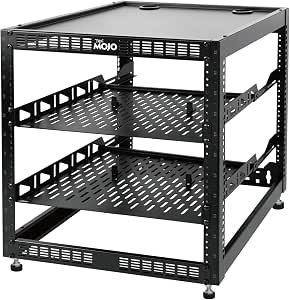


| open frame server rack for home lab | Material | Dimensions |
|---|---|---|
| RackPath 12U Open Frame Networ | Cold-rolled steel | — |
| Sysracks 32U 4-Post Open Frame | Alloy steel | 36 x 21 x 64 inches (D x W x H) |
| VEVOR 15U Open Frame Server Ra | Carbon steel | 20.1 x 23 x 30 inches (D x W x H) |
| RackPath 16U Open Frame Networ | Reinforced cold-rolled steel | 20.47 x 20.47 x 28.06 inches (D x W x H) |
| GlobalRack 27U Open Frame Serv | Cold-rolled steel | 35 x 21 x 43.5 inches (D x W x H) |
| VEVOR 9U Open Frame Server Rac | Carbon steel | 23 × 20.1 × 22.1 inches |
| StarTech 18U 4-Post Server Rac | Cold-rolled steel | — |
| Tecmojo 12U Open Frame Network | Cold-rolled steel | — |
| RIVECO 25U Network Rack with R | SPCC cold-rolled steel | 21.7 × 19.7 × 48 inches |
| ECHOGEAR 15U Open Frame Rack w | Alloy steel | 20.4 × 20.42 × 26.25 inches |
| TECMOJO 12U Open Frame Network | Cold-rolled steel | — |
| VEVOR 12U Open Frame Server Ra | Carbon steel | — |
| StarTech 15U 4-Post Server Rac | Cold-rolled steel | — |
| RIVECO 18U Open Frame Server R | Cold-rolled steel | 19.7 in W × 21.7 in D × 38.5 in H with casters |
More Details on Our Top Picks
RackPath 12U Open Frame Network Rack with Vented Shelves, Wall Mount/Floor Standing, Heavy Duty 150 lbs Capacity
For a home lab built around compact devices rather than deep rack servers, this 12U RackPath stands out for including two vented shelves and supporting either wall or floor placement. The shelves give you a way to house equipment that lacks rack ears, while their 14-inch depth sets a clear limit on what will fit. Compared with the RackPath 16U, this model takes less vertical space but gives up four rack units; both share the 150-pound capacity and short shelves. It is also much less suited to deep equipment than the Sysracks 32U, which has adjustable rails extending from 24 to 37 inches. Pick this RackPath for a modest, mixed-device lab; skip it if your gear needs deep support or you expect to expand substantially.
Pros:- Two included vented shelves support equipment that is not rack-mountable.
- Wall-mount and floor-standing options suit different home-lab layouts.
- 150-pound stated capacity supports a substantial load for a compact rack.
- Vented shelf surfaces allow airflow around shelf-mounted devices.
Cons:- The 14-inch shelves may be too shallow for many full-size servers and other deep equipment.
- At 12U, it offers less room to expand than the RackPath 16U.
- The open frame provides little protection from dust or accidental contact.
Best for: Home-lab beginners with a few compact network, desktop, or AV devices who want shelves and a choice of wall or floor placement.
Not ideal for: Owners of deep rack servers or growing labs that need more than 12U, longer mounting depth, or enclosure-style dust and impact protection.
- Rack height:12U
- Shelf count:2
- Shelf depth:14 inches
- Weight capacity:150 lbs
- Material:Cold-rolled steel
- Mounting options:Wall mount or floor standing
- Item weight:23.1 lbs
- Finish:Black powder-coated
Our verdict“Choose this RackPath for a compact, shelf-based home lab; choose a deeper four-post rack if you plan to mount full-size servers.”
Sysracks 32U 4-Post Open Frame Server Rack
The Sysracks 32U is the strongest fit here for a home lab built around standard 19-inch equipment that needs real mounting depth and room to grow. Its 24-to-37-inch adjustable depth accommodates a wider range of rack equipment than the short-shelf RackPath models, while the welded steel frame is rated for 460 pounds. That capacity is far below the GlobalRack 27U’s listed 1,200 pounds, but the Sysracks offers five more rack units and a clear depth adjustment range. Open sides make cabling and airflow accessible, though they do not keep dust or curious hands away. This is a more substantial project than a small wall rack: it arrives unassembled, and its 64-inch height needs a dedicated spot. Choose it for a serious, expandable equipment stack, not a compact corner setup.
Pros:- 32U capacity leaves room for a larger equipment stack and future additions.
- Adjustable 24-to-37-inch depth fits more equipment than the RackPath shelf-based racks.
- Welded steel construction carries a stated 460-pound load.
- Includes 50 mounting screws and cage nuts for rack installation.
Cons:- Assembly is required, so setup takes more work than choosing a smaller, simpler rack.
- The 64-inch height and 36-inch depth demand dedicated floor space.
- Open construction offers no stated security or dust barrier.
Best for: Home-lab owners with multiple 19-inch servers or network appliances who need adjustable depth, substantial vertical capacity, and open access for cabling.
Not ideal for: Apartment or desk-side users with limited floor space, or anyone who needs an assembled rack, dust protection, or a lockable enclosure.
- Rack height:32U
- Mounting standard:19-inch
- Adjustable depth:24 to 37 inches
- Load capacity:460 lbs
- Material:Alloy steel
- Dimensions:36 x 21 x 64 inches (D x W x H)
- Item weight:62 lbs
- Included hardware:50 mounting screws and cage nuts
- Warranty:2-year manufacturer warranty
Our verdict“Pick the Sysracks if you need an expandable, deep 19-inch rack and have room to assemble and place it.”
VEVOR 15U Open Frame Server Rack
This VEVOR 15U makes sense when your home lab may need to move or change layout: it supports floor or wall mounting, includes casters, and adjusts from 23 to 40 inches deep. That range gives it more flexibility for server-sized equipment than the RackPath 12U’s 14-inch shelves. The key caveat is load: the stated limit is 300 pounds on the floor but only 150 pounds on a wall, so mounting choice changes what the rack can safely carry. Compared with the Sysracks 32U, VEVOR is shorter and lighter, with a higher listed floor capacity but less room for equipment. Its carbon-steel frame and open access suit hands-on tinkering, not a dusty or security-sensitive room. Check your loaded weight and mounting surface before choosing wall installation.
Pros:- Adjusts from 23 to 40 inches deep for varied equipment sizes.
- Floor-mount capacity is listed at 300 pounds.
- Can be used as a floor rack or wall-mounted, subject to the lower wall load limit.
- Casters and included mounting accessories support mobility and setup.
Cons:- The wall-mounted load limit is half the stated floor capacity.
- At 15U, it has substantially less expansion room than the Sysracks 32U.
- The open frame does not protect equipment from dust or physical access.
Best for: Home-lab builders who want adjustable depth, included casters, and the option to use a compact rack on the floor or mount it to a suitable wall.
Not ideal for: Buyers who need 32U-scale expansion, a protected enclosure, or a wall-mounted rack carrying more than the stated 150-pound limit.
- Rack height:15U
- Adjustable depth:23 to 40 inches
- Floor load capacity:300 lbs
- Wall load capacity:150 lbs
- Material:Carbon steel
- Dimensions:20.1 x 23 x 30 inches (D x W x H)
- Item weight:31.9 lbs
- Mounting types:Floor mount or wall mount
- Warranty:2 years
Our verdict“Choose the VEVOR for a movable 15U lab with adaptable depth, but use the floor configuration for heavier loads.”
RackPath 16U Open Frame Network Rack with 2 Vented 1U Shelves, Wall Mount/Floor Standing, Heavy Duty 150 lbs Capacity
Compared with the RackPath 12U, this 16U RackPath gives a small home lab four more rack units without changing the basic approach: two vented shelves, a 150-pound capacity, and wall- or floor-standing placement. That makes it a sensible step up for users who have outgrown a tiny rack but still want a compact mixed-device setup. Its 14-inch-deep shelves remain the limiting factor; the adjustable-depth VEVOR 15U can accommodate deeper equipment, while this RackPath gives you one extra unit and included shelf space for non-rack devices. Reinforced cold-rolled steel and a powder-coated finish provide a straightforward frame, but the rack has no stated lock or dust barrier. Pick it for manageable, shelf-based growth—not a stack of deep servers.
Pros:- 16U capacity adds room beyond the RackPath 12U while retaining a compact format.
- Two vented, rear-supported shelves hold compatible equipment that lacks rack ears.
- Wall-mount and floor-standing installation allow flexible placement.
- Reinforced cold-rolled steel has a black powder-coated finish.
Cons:- The 150-pound load limit is lower than the floor capacity listed for the VEVOR 15U.
- 14-inch shelf depth restricts fit for full-depth server hardware.
- No lock or dust protection is specified for the open frame.
Best for: Home-lab users adding a few more network or AV components who need shelves and want wall or floor installation in a compact footprint.
Not ideal for: Builders with deep servers, heavier loads above 150 pounds, or a need for lockable or dust-shielded equipment storage.
- Rack height:16U
- Shelf count:2
- Shelf size:1U, 14 inches deep
- Load capacity:150 lbs
- Material:Reinforced cold-rolled steel
- Dimensions:20.47 x 20.47 x 28.06 inches (D x W x H)
- Item weight:24 lbs
- Mounting options:Wall mount or floor standing
- Finish:Black powder-coated
Our verdict“Choose this model over the RackPath 12U when you want more rack space but still plan to use shallow, shelf-mounted equipment.”
GlobalRack 27U Open Frame Server Rack, 22-35″ Depth Adjustable with Wheels
The GlobalRack 27U is the capacity-focused pick in this group: its listed 1,200-pound load limit is far above the Sysracks 32U’s 460 pounds and the smaller VEVOR’s 300-pound floor limit. It also provides 27U of space, adjustable depth from 22 to 35 inches, and wheels for repositioning a home-lab setup. That combination suits a substantial rack that may need to move during room changes, though a loaded rack still demands careful handling. The Sysracks offers five more U and reaches 37 inches deep, making it a better match for users prioritizing maximum height or deeper equipment. GlobalRack’s stated three-month warranty is a notable drawback beside the Sysracks’ two-year warranty. Choose this model for its stated capacity and mobility, not for long warranty coverage or enclosed protection.
Pros:- Listed 1,200-pound capacity exceeds the other reviewed racks’ stated load limits.
- 27U provides room for a sizable home-lab installation.
- Depth adjusts from 22 to 35 inches to fit a range of equipment.
- Wheels support repositioning the rack when its location needs to change.
Cons:- The stated three-month warranty is much shorter than the Sysracks 32U’s two-year warranty.
- Assembly is required, and moving a loaded rack on wheels calls for care.
- The 35-inch maximum depth falls short of the Sysracks’ 37-inch adjustment range.
Best for: Home-lab builders assembling a heavy, multi-device rack who need 27U, adjustable depth, and wheels for repositioning the frame.
Not ideal for: Buyers who need more than 27U, equipment deeper than its 35-inch adjustment range, longer warranty coverage, or protection from dust and access.
- Rack height:27U
- Adjustable depth:22 to 35 inches
- Load capacity:1,200 lbs
- Material:Cold-rolled steel
- Dimensions:35 x 21 x 43.5 inches (D x W x H)
- Item weight:46 lbs
- Mounting type:Rack mount
- Mobility:Wheels included
- Warranty:3 months
Our verdict“Pick the GlobalRack when high stated load capacity and wheeled mobility matter more than warranty length or maximum rack height.”
VEVOR 9U Open Frame Server Rack with Adjustable Depth and Casters
The VEVOR 9U suits a home lab that needs adaptable equipment depth without committing to a tall rack. Its rails adjust from 23 to 40 inches, giving it more room for deeper gear than the fixed-depth ECHOGEAR 15U, while its casters make repositioning easier during setup. The 9U capacity keeps the footprint and rack space modest, though it leaves less room to grow than the Tecmojo 12U or the 18U StarTech. Floor mounting supports up to 300 pounds; wall mounting is an option too, but depth adjustment is unavailable in that configuration and the listed wall limit is 200 pounds. I’d choose it for a compact, changing mix of equipment, not a wall-mounted build that depends on adjustable rails.
Pros:- Adjustable 23–40-inch mounting depth accommodates varied equipment sizes.
- Casters make the floor-standing rack easier to move during setup.
- Floor-mounted capacity is listed at up to 300 pounds.
- Accessory kit includes trays and cage nuts.
Cons:- Depth cannot be adjusted in wall-mounted mode.
- Wall-mounted capacity is lower, at 200 pounds.
- 9U provides less expansion room than the Tecmojo 12U or StarTech 18U.
Best for: Home-lab owners with a small rack footprint who need to fit equipment at different depths and may reposition the rack.
Not ideal for: Buyers planning a wall-mounted installation that needs adjustable depth, or a growing setup likely to outgrow 9U.
- Capacity:9U
- Adjustable depth:23–40 inches
- Dimensions:23 × 20.1 × 22.1 inches
- Material:Carbon steel
- Floor-mounted capacity:300 pounds
- Wall-mounted capacity:200 pounds
- Mounting:Floor mount or wall mount
- Weight:14.1 pounds
- Warranty:1 year
Our verdict“Choose the VEVOR 9U if adjustable depth and mobility matter more than expansion space or wall-mount flexibility.”
StarTech 18U 4-Post Server Rack with Adjustable Depth and 1200lb Capacity
For a home lab built around heavier servers, the StarTech 18U makes a stronger case than the smaller VEVOR 9U: it pairs four-post support with a stated 1,200-pound capacity and adjustable 22–40-inch mounting depth. That combination gives standard 19-inch equipment more room and support than a compact rack aimed at lighter setups. Casters help with positioning, while leveling feet provide a steadier alternative once the rack is in place; cable-management hooks also help keep the open frame usable as connections multiply. The tradeoff is its 18U ceiling, which offers less expansion than the RIVECO 25U, and the rack requires assembly. I’d place it high for substantial gear, but not for buyers whose main need is a small or wall-mounted rack.
Pros:- Listed 1,200-pound weight capacity suits heavier rack equipment.
- Adjustable 22–40-inch depth fits a range of standard 19-inch devices.
- Casters and leveling feet support both repositioning and stable placement.
- Cable-management hooks help organize connections on the open frame.
Cons:- Assembly and installation take more effort than a small, simple rack.
- 18U offers less room to expand than the RIVECO 25U.
- No wall-mount configuration is listed.
Best for: Home-lab builders installing multiple standard 19-inch servers or other heavy equipment that needs adjustable depth and four-post support.
Not ideal for: Buyers with a compact space, a wall-mount requirement, or plans for more than 18U of equipment.
- Capacity:18U
- Mounting depth:22–40 inches
- Weight capacity:1,200 pounds
- Material:Cold-rolled steel
- Standard:EIA/ECA-310-E
- Height:35 inches
- Included accessories:Casters, leveling feet, cable-management hooks
- Mounting:Four-post floor-standing rack
Our verdict“Pick the StarTech 18U for heavy, depth-variable equipment when a floor-standing four-post rack matters more than compact size.”
Tecmojo 12U Open Frame Network Rack with Shelves and Hardware
The Tecmojo 12U is the most ready-to-organize choice here for a starter lab mixing network, AV, and other equipment that may not attach directly to rack rails. It comes with two ventilated shelves, stops, and Velcro straps, so smaller devices have a supported place rather than needing separate shelf purchases. Its floor- and wall-mount options make it more adaptable than the floor-only RIVECO 25U, though the tradeoff is a lower stated capacity: 260 pounds on the floor and 130 pounds on the wall. Like the ECHOGEAR 15U, it leaves equipment exposed to dust and access, but its included shelves give it a more complete starting setup. Wall installation requires drilling, and the open frame offers no security enclosure.
Pros:- Includes two ventilated 1U shelves and four shelf stops.
- Velcro straps and mounting hardware help organize and secure equipment.
- Supports both floor-standing and wall-mounted installation.
- Open construction allows airflow and access to devices.
Cons:- Wall-mounted load capacity is limited to 130 pounds.
- Wall installation requires drilling.
- Open-frame construction provides no security or dust protection.
Best for: First-time home-lab builders combining rack-mount gear with smaller network or AV devices that need shelves and straps.
Not ideal for: Owners of heavy server builds near the rack’s stated limits, or anyone needing a lockable, dust-protective enclosure.
- Capacity:12U
- Material:Cold-rolled steel
- Floor-mounted capacity:260 pounds
- Wall-mounted capacity:130 pounds
- Included shelves:Two 1U rack shelves
- Other included accessories:Four shelf stops, four Velcro straps, mounting hardware
- Device compatibility:19-inch networking, audio, and video devices
- Mounting:Floor standing or wall mounted
Our verdict“Choose the Tecmojo 12U if you want shelves and basic organization included for a mixed-device starter lab.”
RIVECO 25U Network Rack with Reinforced Top Cover, Casters, Shelves, and Power Strip
The RIVECO 25U is the expansion pick in this group: it offers more rack space than the StarTech 18U and arrives with shelves and a power distribution unit, reducing the number of separate pieces needed for a floor-standing setup. Its reinforced top and bottom plates and cold-rolled steel frame support a stated 500 pounds on leveling feet, or 400 pounds on casters. That difference matters if the rack will carry substantial equipment: the wheels add mobility but lower the listed capacity. At 48 inches tall, it also asks for more vertical room than the 9U VEVOR or 12U Tecmojo. I’d favor it for a growing lab with standard 19-inch gear, while buyers who need adjustable depth should compare the StarTech instead.
Pros:- 25U capacity provides more expansion space than the StarTech 18U.
- Includes a PDU, shelves, casters, leveling feet, and mounting hardware.
- Listed capacity is 500 pounds with leveling feet.
- Vented top and bottom plates support airflow.
Cons:- Capacity drops to 400 pounds when using casters.
- At 48 inches tall, it needs more vertical space than the smaller racks.
- A fully loaded rack may be difficult to move.
Best for: Home-lab owners planning to add multiple standard 19-inch devices and wanting shelves, a PDU, and room to expand in one floor-standing rack.
Not ideal for: Buyers with limited vertical space, a wall-mount requirement, or a need for adjustable mounting depth.
- Capacity:25U
- Dimensions:21.7 × 19.7 × 48 inches
- Material:SPCC cold-rolled steel
- Capacity with leveling feet:500 pounds
- Capacity with casters:400 pounds
- Mounting:Floor standing
- Compatibility:Standard 19-inch equipment
- Included:Mounting hardware, leveling feet, casters, PDU, shelves
- Warranty:2 years
Our verdict“Choose the RIVECO 25U if you want an expandable floor rack with useful accessories and can accommodate its height and weight limits.”
ECHOGEAR 15U Open Frame Rack with Optimal Air Flow, DIY Assembly, 20.4” Depth
The ECHOGEAR 15U suits compact servers and network or AV components that fit within its 19-inch equipment depth limit. Its open frame and vented shelves favor airflow and easy access, while wall mounting or use with leveling feet gives it more placement flexibility than the floor-standing RIVECO 25U. The fixed, shallow fit is also the key compromise: unlike the adjustable-depth StarTech 18U and VEVOR 9U, it cannot be configured around deeper equipment. At 37.1 pounds, it is heavier to handle during installation than the small VEVOR 9U, so wall mounting may call for a second person. This is a sensible choice for a tidy, shallow-device setup, but I’d skip it if deeper servers or a growing equipment mix are likely.
Pros:- 15U capacity offers more space than the VEVOR 9U.
- Vented shelves and open construction support airflow and easy access.
- Can be wall mounted or set on included leveling feet.
- Includes hardware and assembly instructions.
Cons:- Depth is limited to equipment up to 19 inches deep.
- Fixed depth is less adaptable than the StarTech 18U or VEVOR 9U.
- The 37.1-pound rack may be awkward to mount without assistance.
Best for: Home-lab owners with shallow networking or AV equipment who want 15U, open airflow, and a wall-mount or leveling-foot setup.
Not ideal for: Buyers with servers deeper than 19 inches, a need for adjustable mounting depth, or limited help for wall installation.
- Capacity:15U
- Dimensions:20.4 × 20.42 × 26.25 inches
- Equipment depth limit:Up to 19 inches
- Weight:37.1 pounds
- Material:Alloy steel
- Mounting:Wall mount or leveling feet
- Model number:EGAV-PROF15
- Color:Black
Our verdict“Choose the ECHOGEAR 15U for shallow equipment and flexible placement, but select an adjustable-depth rack for deeper servers.”
TECMOJO 12U Open Frame Network Rack with Casters and Shelves
The TECMOJO makes the most sense for a home lab built around a mix of rack gear and smaller devices that need shelf space. Its two ventilated shelves and included stops, screws, and Velcro straps give it a more ready-to-organize setup than the VEVOR 12U, which emphasizes adjustable mounting depth instead. Four casters help when I need to reach rear connections or move equipment for maintenance, while the stated 260-pound capacity gives it room for a practical collection of home networking and AV hardware.
The tradeoff is less flexibility for unusually deep rack-mounted equipment: the supplied details do not specify an adjustable depth. Assembly may also take more effort than a simple shelf installation. Like the other open-frame options here, it offers little protection from dust or casual access, so I would skip it for a shared or unsecured space.
Pros:- Two ventilated shelves accommodate equipment that is not rack-mounted.
- Four casters make access and repositioning easier.
- 260-pound stated load capacity suits many compact home-lab setups.
- Includes shelf stops, mounting hardware, Velcro straps, and assembly guidance.
Cons:- No adjustable depth is listed, limiting confidence about fit for deep equipment.
- Assembly may be complex for some buyers.
- Open construction provides little security or dust protection.
Best for: Home-lab builders combining rack-mounted gear with routers, small appliances, or other devices that fit better on ventilated shelves.
Not ideal for: Buyers with deep servers that need a specified adjustable mounting depth, or anyone who needs a lockable, dust-protective cabinet.
- Capacity:12U
- Material:Cold-rolled steel
- Load-bearing capacity:260 lbs
- Shelves:2 ventilated shelves
- Casters:4
- Included accessories:Shelf stops, mounting screws, Velcro straps, assembly manual, drilling template
Our verdict“Choose the TECMOJO if shelves and included organizing accessories matter more than adjustable depth.”
VEVOR 12U Open Frame Server Rack
Among these 12U choices, the VEVOR is the clearest fit when equipment depth is the deciding factor. Its 23–40-inch adjustable depth can accommodate a broader range of servers and network gear than the TECMOJO 12U, whose supplied specs list shelves but no depth adjustment. The VEVOR also gives a home-lab owner a choice between free-standing and wall-mounted installation, with a stated 500-pound ground-mounted capacity for a heavier floor setup.
That load figure needs context: the listed wall-mounted capacity drops to 150 pounds, so I would not treat the two mounting methods as interchangeable. Casters and a large hardware set support setup and mobility, but the open frame leaves equipment exposed to dust and access. Compared with the TECMOJO, this rack favors fit flexibility and load capacity over included shelves for small devices.
Pros:- Adjustable 23–40-inch depth supports a wide range of equipment sizes.
- Offers free-standing or wall-mount installation.
- Stated ground-mounted capacity is 500 pounds.
- Includes casters, grounding wire, cage nuts, and mounting hardware.
Cons:- Wall-mounted capacity is limited to 150 pounds.
- Open sides and lack of doors provide little dust or access protection.
- Two pallets and extensive hardware may make assembly less straightforward.
Best for: Home-lab builders with equipment of mixed depths who want the option to configure a 12U rack for floor or wall mounting.
Not ideal for: Buyers seeking a high-capacity wall-mounted installation, included shelves, or protection from dust and unauthorized access.
- Rack units:12U
- Adjustable depth:23–40 inches
- Material:Carbon steel
- Ground-mounted load capacity:500 lbs
- Wall-mounted load capacity:150 lbs
- Mounting type:Free-standing or wall mount
- Included:2 pallets, 145 M5×10 screws, 4 casters, 4 M10×50 expansion screws, 10 M6×12 cage nuts, grounding wire, user manual
Our verdict“Pick the VEVOR when adjustable depth and floor-mount capacity matter more than shelves or enclosure.”
StarTech 15U 4-Post Server Rack, 19in Open Frame Rack with 40in (101cm) Mounting Depth and 1200lb (544kg) Weight Capacity, Mobile or Floor Mount IT Rack
The StarTech is the strongest match here for a home lab with full-size, heavy equipment. Its 22–40-inch adjustable depth and 15U height give it more room for varied server layouts than the 12U TECMOJO and VEVOR racks, while its stated 1,200-pound static capacity is well above the RIVECO 18U’s 600-pound rating. Clear U and depth markings help reduce guesswork during installation, and included casters, leveling feet, and cable-management hooks make it adaptable to mobile or floor-mounted use.
Its capacity is not the same while rolling: the listed rolling limit is 660 pounds. At 15U, it also has less vertical room than the RIVECO 18U, and its open frame offers no side panels or doors. I would choose this over the RIVECO when load rating and depth range matter more than additional rack units.
Pros:- Adjustable 22–40-inch depth fits a broad range of rack equipment.
- Stated static capacity of 1,200 pounds supports heavy installations.
- U and depth markings help with equipment placement.
- Includes casters, leveling feet, base plate, and cable-management hooks.
Cons:- Rolling capacity is 660 pounds, well below its static rating.
- 15U may be restrictive for a growing equipment stack.
- Open-frame design lacks dust and access protection.
Best for: Home-lab owners installing heavy, full-depth servers who need adjustable mounting depth and a high static load rating.
Not ideal for: Buyers planning a tall expansion beyond 15U, or those who need doors and panels to limit dust or access.
- Height:15U
- Width:19 inches
- Adjustable depth:22–40 inches (56.0–101.7 cm)
- Static weight capacity:1,200 lbs (544 kg)
- Rolling weight capacity:660 lbs (300 kg)
- Material:Cold-rolled steel
- Included accessories:Casters, leveling feet, base plate, cage nuts, screws, cable-management hooks
- Warranty:2 years
Our verdict“Choose the StarTech for a heavy, deep server build when its 15U limit is enough.”
RIVECO 18U Open Frame Server Rack with Brake Casters, Heavy Duty 4-Post, Quick Assembly, 19-inch Network Rack, Durable Black
The RIVECO gives a home lab more vertical room without jumping to a much larger rack: its 18U capacity exceeds the 15U StarTech, which may matter when switches, patch panels, and servers need separate mounting space. It supports standard 19-inch equipment and includes brake casters for repositioning plus leveling feet for a stationary setup. At 27 pounds, the rack itself is comparatively light to move before equipment is installed, and its stated 600-pound capacity suits a moderate floor-based build.
The StarTech is the stronger choice for heavy loads and offers a specified adjustable depth; the RIVECO’s supplied data gives a fixed 21.7-inch depth instead. That can rule it out for deeper servers. Its open structure also leaves gear exposed, and I would treat the caster setup cautiously with a heavy load rather than assuming the brakes replace anchoring.
Pros:- 18U provides more vertical capacity than the 15U StarTech.
- Brake casters allow movement and help hold the rack in place.
- Leveling feet support a stationary floor setup.
- Powder-coated finish is described as resistant to scratches and rust.
Cons:- Listed 21.7-inch depth may not fit deeper server equipment.
- 600-pound capacity is below the StarTech’s stated static rating.
- Open frame leaves equipment exposed, and heavy setups may need extra securing.
Best for: Home-lab owners who want 18U of floor-standing space for standard-depth equipment and expect to add devices over time.
Not ideal for: Buyers with deep servers, loads beyond the stated 600-pound capacity, or a need for enclosed dust and access protection.
- Rack size:18U
- Dimensions:19.7 in W × 21.7 in D × 38.5 in H with casters
- Material:Cold-rolled steel
- Weight capacity:600 lbs
- Mounting type:Floor mount
- Caster type:Brake casters
- Rack weight:27 lbs
- Color:Black
Our verdict“Choose the RIVECO when extra rack height and braked mobility matter more than adjustable depth or maximum load capacity.”

How We Picked
I compared these racks around the decisions that matter in a home lab: rack-unit capacity, mounting depth, frame design, mobility, and stated load capacity. I also looked at practical usability details such as included shelves or hardware, adjustable components, wall-mount or floor-standing options, and how much a buyer may need to add before installation. Product descriptions vary in the details they provide, so I treat listed capacities and included accessories as stated specifications rather than independent performance guarantees.
The ranking favors models that balance flexibility with a realistic home-lab footprint. The StarTech 18U leads for its adjustable depth and high stated capacity; compact models earn a place for small installations rather than being treated as lesser versions of larger racks. Larger frames rank well for expansion but sit behind more versatile picks when they demand extra space. I also account for drawbacks: an open frame leaves equipment exposed, casters need suitable flooring and secure positioning, and shelves cannot replace rails for gear designed to mount directly to posts.
| open frame server rack for home lab | Material |
|---|---|
| RackPath 12U Open Frame Networ | Cold-rolled steel |
| Sysracks 32U 4-Post Open Frame | Alloy steel |
| VEVOR 15U Open Frame Server Ra | Carbon steel |
| RackPath 16U Open Frame Networ | Reinforced cold-rolled steel |
| GlobalRack 27U Open Frame Serv | Cold-rolled steel |
| VEVOR 9U Open Frame Server Rac | Carbon steel |
| StarTech 18U 4-Post Server Rac | Cold-rolled steel |
| Tecmojo 12U Open Frame Network | Cold-rolled steel |
| RIVECO 25U Network Rack with R | SPCC cold-rolled steel |
| ECHOGEAR 15U Open Frame Rack w | Alloy steel |
| TECMOJO 12U Open Frame Network | Cold-rolled steel |
| VEVOR 12U Open Frame Server Ra | Carbon steel |
| StarTech 15U 4-Post Server Rac | Cold-rolled steel |
| RIVECO 18U Open Frame Server R | Cold-rolled steel |
Factors to Consider When Choosing Open Frame Server Rack For Home Lab
Before choosing a model, I would map the equipment and the room rather than start with rack height alone. These points help prevent a rack that technically fits but leaves no room for cables, cooling, or safe movement.
Count Rack Units, Then Leave Room to Grow
List the equipment you plan to mount and add up its rack-unit height, including any blank panels or ventilation space you want between components. A rack filled to the last unit can be awkward to rearrange when a switch, patch panel, or additional server joins the lab. At the same time, buying a much taller frame than the room can accommodate may create more clutter than useful capacity. Growth estimates should be grounded in your actual plans, not a vague assumption that every spare unit will be used. For a fixed corner or desktop area, a smaller frame can make cable management and access easier. If you expect multiple full-depth servers, prioritize expansion space alongside a footprint that still works in the room.
Match Mounting Depth to the Longest Device
Measure the chassis from its front mounting points to its rear, then add room for power plugs, network cables, and airflow. A listed frame depth may describe the rack structure rather than the usable clearance available once equipment and connectors are installed. Adjustable-depth posts can accommodate different chassis lengths, but confirm the adjustment range against every device in your plan. Short-depth shelves may support routers or small computers while leaving longer server chassis unsupported. Avoid relying on a shelf edge or cable bend as a substitute for proper rear clearance. When device dimensions are uncertain, verify the manufacturer’s rail or mounting requirements before selecting a fixed-depth frame.
Choose Wall Mounting or Floor Standing Around the Load
A wall-mountable rack can free floor space, but the wall and fasteners must be suited to the complete loaded rack, not just the empty frame. Check whether the product is designed for wall mounting in the configuration you intend to use; some models also support floor standing, but the installation requirements may differ. A floor rack avoids concentrating the load on a wall and can be easier to expand, though it occupies usable room. Think about how you will reach rear connections and lift heavy equipment into position before committing to either layout. Do not treat a stated rack capacity as permission to exceed the limits of the wall, floor, shelves, or casters. If mounting conditions are unclear, have the structure and hardware assessed before loading the rack.
Treat Casters as a Mobility Feature, Not a Safety Plan
Wheels are useful when you need to reach rear connections or reposition a rack for maintenance. They also make it easier for a loaded frame to move unexpectedly, especially on uneven floors or when cables pull against it. Check for locking or brake casters, confirm the floor can support the load, and leave enough slack in cables for any planned movement. A rack that stays in one place may be better on fixed feet or a stable floor-mounted setup. If mobility matters, consider whether the rack can be safely moved while loaded and whether the route has thresholds or tight turns. Keep frequently accessed connections reachable without making routine adjustments depend on rolling a heavy frame.
Plan Shelves, Rails, and Accessory Compatibility
Not all home-lab gear uses standard rack ears, so plan how small computers, modems, and loose components will be supported. Included shelves can reduce extra purchases, but check their size, ventilation, and compatibility with the equipment you actually own. Devices designed for rails need appropriate rails or mounting hardware; a flat shelf alone may not provide the support or restraint they require. Compare included fasteners and accessories across models because similar product names do not guarantee the same package. Leave space for cable managers, power distribution, and any blanking panels you intend to use. A rack with fewer bundled accessories may still suit you better if it provides the right frame dimensions and lets you choose parts that fit your setup.
Balance Open Airflow Against Dust and Contact
An open frame gives you access to equipment from multiple sides and avoids enclosing hot components, but it does not protect gear from dust, spills, pets, or accidental bumps. Think about where the rack will sit: a clean utility room differs from a busy living space or a workshop. Keep fan intakes and exhausts clear, and avoid placing the rack where household items can block airflow or snag cables. Open construction can make inspection and rewiring easier, yet exposed connections may need careful cable routing and strain relief. If physical protection matters more than easy access, compare an open rack with an enclosed cabinet before buying. For an open frame, regular dust removal and a deliberate placement plan are part of ownership.
Frequently Asked Questions
Should I choose a 2-post rack or a 4-post rack for a home lab?
I would choose based on the equipment’s mounting requirements, not on the rack’s appearance. A 4-post frame supports equipment at both front and rear and is generally the safer direction for deeper or heavier chassis when the rack and mounting hardware are rated for the load. A 2-post design can suit lighter network gear that is built for that mounting style, but it may not support every server chassis. Confirm the device’s rail kit requirements and the rack’s depth before ordering. If your lab may add servers later, a 4-post frame gives you more flexibility across equipment types.
How much rack-unit space should I leave unused?
There is no single spare-unit count that fits every lab; it depends on planned expansion and cooling needs. I would reserve room for equipment you expect to add soon, along with any cable-management parts, shelves, or blank panels that take rack space. Leaving some open units also makes changes easier than packing every device tightly together, though spacing alone does not guarantee good cooling. Check each component’s airflow direction and follow its installation guidance. If your equipment list is stable and the room is tight, a smaller rack can be more practical than buying capacity you will not use.
Can I put a full-depth server on a shelf in an open frame rack?
Only if the shelf is designed for the server’s dimensions and weight and can be secured to the rack appropriately. A general-purpose vented shelf may work for compact devices, but it should not be assumed to substitute for the server’s specified rails. Check the shelf’s usable depth, load rating, attachment method, and clearance for rear cables. Also verify that the rack itself and its floor or mounting surface can support the combined load. When the server manufacturer specifies rails, matching rails are usually the more dependable mounting approach.
Are casters a good idea if my rack will hold heavy equipment?
Casters can help with service access, but a loaded rack must remain stable while parked and during movement. Check that the rack includes locking or brake casters and that their load rating accounts for the full equipment load. Moving a heavy rack across thresholds or uneven flooring can shift equipment and strain connected cables. I would disconnect or manage cables before moving it and avoid rolling it with devices that are not secured. If the rack will rarely move, a fixed placement may reduce risk and simplify cable routing.
What should I verify before mounting a rack on a wall?
Confirm the rack is approved for wall mounting in the configuration you plan to use, then check the loaded weight against the wall structure and fasteners. A product’s stated frame capacity does not establish what a particular wall can hold. Identify suitable structural attachment points and account for equipment weight, shelves, power gear, and future additions. Make sure the installation leaves room to load devices and access cables without pulling against the rack. If you are unsure about the wall material or anchoring method, get qualified help before installing or loading it.
Conclusion
For most home labs, I recommend the StarTech 18U 4-Post Server Rack as the best overall because its adjustable depth and high stated capacity offer room for a varied equipment mix. The VEVOR 15U is my best value-style pick for buyers seeking a mid-sized frame, while the StarTech 15U is my premium-leaning choice for those who prioritize a 4-post design, deep mounting space, and high stated capacity. Beginners with modest setups can start with the VEVOR 9U, provided its capacity and depth match their gear. For a growing installation, consider the GlobalRack 27U; for a tight footprint, compare the compact VEVOR and wall-mountable RackPath options. Before deciding, match the rack to your equipment’s mounting needs, room dimensions, and intended load—not just the number of rack units.