When selecting a switched rack PDU for remote reboots, the key factors are control, reliability, and ease of integration. The TreNDnet TPI-L14 stands out as the overall best choice for its comprehensive management features and robust build. For budget-conscious setups, the netBooter NP-05B offers reliable remote control at a lower price, though with fewer outlets. A common challenge in this category is balancing advanced features against ease of use and cost. Continue reading for a detailed comparison that clarifies which model best fits your needs.

Get business pricing on networking and server gear
- Business-only prices and quantity discounts
- Tax-exempt purchasing
- Multiple users, one account, clear invoices
Key Takeaways
- The best products combine reliable remote reboot capabilities with easy-to-use management interfaces.
- Higher outlet counts and power ratings typically mean increased complexity and cost, but better scalability.
- UL or TUV certification often correlates with higher build quality and safety standards.
- Many top models include metering features, but these can add to the cost and complexity for simpler setups.
- Choosing a PDU with TAA compliance or specific certifications matters for data center or government procurement.
| TRENDnet TPI-L14 14-Outlet Managed 2U Rackmount Switched PDU |  | Best Overall for Enterprise Cloud Management | Device Interface: 14 NEMA 5-15R outlets, 2 Gigabit ports | Protection: 3-year manufacturer protection | Compliance: NDAA and TAA compliant | VIEW ON AMAZON | See Our Full Breakdown |
| Smart PDU – IP Remote Reboot Power, 4 Switched NEMA 5-15R Outlets |  | Best for Small to Medium Deployments with Network Control | Number of Outlets: 4 | Outlet Type: NEMA 5-15R | Connectivity: Gigabit LAN, optional Wi-Fi (802.11 g/n/ac) | VIEW ON AMAZON | See Our Full Breakdown |
| NP-0501DU Switched & Metered PDU Remote Power Management System |  | Best for Versatile Control in Data Centers | Number of outlets: 5 | Management protocols: HTTP/HTTPS, Telnet, SNMP, USB | Compliance: UL/FCC, TUV(US), UL-60950-1, FCC Class B | VIEW ON AMAZON | See Our Full Breakdown |
| NP-1601DUH Remote Power Switched PDU, 16 C13 Outlets, UL-STD TUV Listed |  | Best for High-Density, Professional Environments | Number of Outlets: 16 | Outlet Type: IEC320 C13 | Input Voltage: 120-230 VAC | VIEW ON AMAZON | See Our Full Breakdown |
| TRENDnet 6-Outlet Managed PDU, UL Certified, TPI-06 | 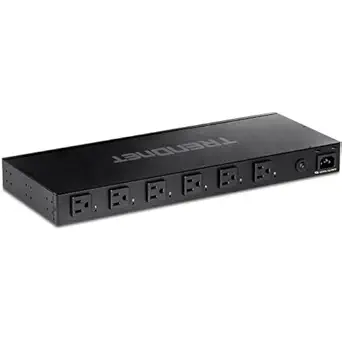 | Best Compact Managed PDU for Small Racks | Number of Outlets: 6 managed outlets + 1 bypass | Outlet Type: NEMA 5-15R | Max Current: 15A per outlet | VIEW ON AMAZON | See Our Full Breakdown |
| Tripp Lite 1.4kW Single-Phase ATS/Switched PDU with LX Platform Interface, 120V Outlets, 1U Rack-Mount |  | Best Overall for Redundant Power Management in Small to Medium Setups | Power: 1.4kW | Phase: Single-phase | Voltage: 120V | VIEW ON AMAZON | See Our Full Breakdown |
| netBooter NPB-20DU Remote Switched & Metered 0U 20 Outlet Power Strip/PDU, 120V/20A |  | Best for High-Density, High-Current Environments Needing Versatile Control | Number of Outlets: 20 | Outlet Type: NEMA 5-15R | Capacity: 120V/20A | VIEW ON AMAZON | See Our Full Breakdown |
| netBooter NP-1601DU Remote Switched and Metered PDU with 16 Power Outlets, 120V/30A |  | Best for High-Load, Automated Power Management in Critical Environments | Number of Outlets: 16 | Outlet Type: NEMA5-15P | Capacity: 120V/30A | VIEW ON AMAZON | See Our Full Breakdown |
| netBooter NP-05B Remote Switched PDU with 5 Power Outlets, 120V/15A |  | Best for Small-Scale, Cost-Effective Remote Power Control | Number of Outlets: 5 | Voltage: 120V | Maximum Current: 15A | VIEW ON AMAZON | See Our Full Breakdown |
| Vertiv Geist Switched Rack PDU – Data Center Power Distribution Unit – 24 NEMA 5-20R Outlets, L5-30P Plug, 120V, 2.8kW |  | Best for Large Data Centers Needing Extensive Outlet Control and Management | Outlets: 24 NEMA 5-20R | Plug: L5-30P | Voltage: 120V | VIEW ON AMAZON | See Our Full Breakdown |
| Tripp Lite PDU Single-Phase Switched 200V-240V 15A C13 8 Outlet C14 Horizontal 1URM, TAA |  | Best Overall for Versatile Rack Power Management | Number of outlets: 8 | Voltage: 200-240V | Current: 15A | VIEW ON AMAZON | See Our Full Breakdown |
| Monoprice Blackbird Pro 4-Outlet Smart PDU, IP-Based Remote Power Management Solution |  | Best for Secure, Remote Power Control in Small Setups | Number of outlets: 4 | Network interface: Ethernet 10/100 | Control: Remote via TCP/IP, local control | VIEW ON AMAZON | See Our Full Breakdown |
| IP-Based PDU Remote Power Switch with Auto Ping Support |  | Best for Network-Heavy Data Center Management | Number of outlets: 2 | Control method: Web, LAN, WAN, manual | Power rating: 12-AMP circuit breaker | VIEW ON AMAZON | See Our Full Breakdown |
| Tripp Lite Single Phase Switched Mini PDU, 100/120/127V, Remote LX Platform Interface, 6 ft. Cord, 0U, TAA (PDU15NETLX) |  | Best for Small-Scale, Space-Constrained Power Management | Compatible devices: Personal computer | Connector type: Cable ATX | Output wattage: 100 W | VIEW ON AMAZON | See Our Full Breakdown |
More Details on Our Top Picks
TRENDnet TPI-L14 14-Outlet Managed 2U Rackmount Switched PDU
This model stands out for its comprehensive remote cloud management via TRENDnet Hive, making it ideal for data centers that require centralized control. Unlike the Smart PDU, which offers local network management but lacks cloud integration, the TPI-L14 allows for detailed diagnostics and automated scheduling at an enterprise level. However, the additional fee for cloud services can add up, and its U.S.-only compliance limits global deployment. The LCD display provides quick insights into power consumption, while individual outlet control helps with targeted resets. Its 14 outlets and network ports support complex infrastructure setups, but the reliance on cloud management means it’s less suited for environments with strict data sovereignty concerns.
Pros:- Supports remote cloud management for easy control and diagnostics
- Allows individual outlet control and energy monitoring
- Includes automated reboot and scheduling features
Cons:- Additional fee required for cloud management system
- Limited to U.S. and Canada due to compliance restrictions
Best for: Large data centers or network operations teams needing centralized, cloud-based power control
Not ideal for: Small offices or environments where cloud fees or regional restrictions are a concern
- Device Interface:14 NEMA 5-15R outlets, 2 Gigabit ports
- Protection:3-year manufacturer protection
- Compliance:NDAA and TAA compliant
- Management:Remote cloud management via TRENDnet Hive
- Display:LCD screen showing power consumption and network info
- Features:On/off scheduling, outlet reboot automation, STP/RSTP support, email notifications
Our verdict“This pick makes the most sense for large-scale facilities prioritizing cloud integration and detailed remote management.”
Smart PDU – IP Remote Reboot Power, 4 Switched NEMA 5-15R Outlets
This enterprise-level IP-enabled switch supports remote reboot and power management with multiple security protocols, making it suitable for network engineers seeking flexible control. Compared with the NP-0501DU, which offers more outlets but fewer security features, the Smart PDU’s support for SSH, SNMP, and HTTPS provides robust options for secure remote access. Its setup can be complex, especially with multiple management protocols, and environmental sensors are optional rather than integrated. It’s a good fit where remote device uptime is critical, but its limited outlets and lack of integrated environmental monitoring make it less ideal for large-scale data centers.
Pros:- Supports remote power management and reboot via network
- Includes comprehensive security and user permissions
- Offers remote monitoring and alert notifications
Cons:- Complex setup with multiple management protocols
- Requires optional sensors for environmental monitoring
Best for: Network administrators managing multiple devices across different locations needing secure remote control
Not ideal for: Small setups or users seeking plug-and-play simplicity, due to setup complexity
- Number of Outlets:4
- Outlet Type:NEMA 5-15R
- Connectivity:Gigabit LAN, optional Wi-Fi (802.11 g/n/ac)
- Management Protocols:HTTP(S), SSH, Telnet, SNMP v2/v3, IPv6/IPv4
- Monitoring:Current, temperature, humidity, smoke, door sensors (optional)
Our verdict“This model is better suited to professional network environments where security and remote access are priorities.”
NP-0501DU Switched & Metered PDU Remote Power Management System
The NP-0501DU offers five independently managed outlets supporting web, Telnet, SNMP, and USB interfaces, making it flexible for various network environments. Unlike the NP-1601DUH, which provides more outlets and higher capacity, this model emphasizes versatility and straightforward event notifications for scheduled reboots. Its lack of detailed load ratings and power capacity info can be a concern for capacity planning, but its multi-protocol management makes it a reliable choice for environments needing scheduled resets and remote control. It’s less suited for large-scale or high-capacity deployments where detailed power metrics are essential.
Pros:- Supports multiple management protocols for flexible control
- Independently managed outlets enable scheduled operations
- Event notifications via email improve monitoring
Cons:- No mention of power capacity or load ratings
- Requires network connection for remote management
Best for: IT teams needing reliable, multi-protocol remote control for small to medium network racks
Not ideal for: High-capacity or high-density environments requiring detailed load management
- Number of outlets:5
- Management protocols:HTTP/HTTPS, Telnet, SNMP, USB
- Compliance:UL/FCC, TUV(US), UL-60950-1, FCC Class B
- Independently Managed Outlets:Yes
- Event Notifications:Email
Our verdict“This pick makes sense for small to medium setups that need flexible, multi-protocol power control with scheduled resets.”
NP-1601DUH Remote Power Switched PDU, 16 C13 Outlets, UL-STD TUV Listed
The NP-1601DUH delivers 16 IEC320 C13 outlets with support for web, Telnet, SNMP, API, and RS-232 management—ideal for professional or industrial settings. Compared to the Treindnet TPI-L14, which offers more outlets but less control flexibility, the NP-1601DUH emphasizes multiple control methods and automation features like autoping reboot and scheduling. Its setup requires technical expertise, and without integrated remote monitoring alerts, users must rely on external systems. This makes it suitable for environments where high-density power control is needed but less so for smaller setups or those seeking simple plug-and-play solutions.
Pros:- Supports multiple control methods for flexible management
- Features autoping reboot and scheduling for automation
- Designed and supported in the USA with local tech support
Cons:- Requires technical knowledge to set up and operate
- Limited remote monitoring alerts included
Best for: Industrial or data center environments requiring high-density power management and automation
Not ideal for: Small offices or users seeking intuitive, user-friendly management interfaces
- Number of Outlets:16
- Outlet Type:IEC320 C13
- Input Voltage:120-230 VAC
- Capacity:30A
- Control Methods:Web, Telnet, SNMP, API, RS-232
- Standards:UL-STD 60950-1, FCC Class B
Our verdict“This model is best suited for professional or industrial environments needing high-capacity, automated power control.”
TRENDnet 6-Outlet Managed PDU, UL Certified, TPI-06
The TPI-06 offers six controllable outlets plus a bypass, all in a 1U form factor, making it ideal for limited rack space. Its remote management via cloud service enables quick configuration and control, but the additional fee for cloud features can deter budget-conscious users. Compared with larger models like the NP-1601DUH, the TPI-06 is simpler to set up and manage in small environments, though it lacks the high outlet density and advanced automation options of bigger units. Its surge protection and energy monitoring support basic power management, but it’s limited to 120V environments and requires technical setup.
Pros:- Remote management and configuration via cloud service
- Individual outlet control and scheduling
- Energy monitoring with dashboard
Cons:- Additional fee for cloud management features
- Limited to 120V AC environments
Best for: Small server racks or network closets needing managed power with minimal footprint
Not ideal for: High-density data centers or environments requiring extensive automation and high capacity
- Number of Outlets:6 managed outlets + 1 bypass
- Outlet Type:NEMA 5-15R
- Max Current:15A per outlet
- Voltage:120V AC
- Certification:UL 62368-1
- Connectivity:Gigabit port
- Surge Protection:2160J
Our verdict“This pick is best for small-scale setups where space is tight and basic remote control suffices.”
Tripp Lite 1.4kW Single-Phase ATS/Switched PDU with LX Platform Interface, 120V Outlets, 1U Rack-Mount
This Tripp Lite PDU stands out for its combination of remote access via the LX platform and support for redundant A/B power, making it ideal for critical network devices. Unlike the netBooter models, which focus on high outlet counts, this unit is more compact, fitting into a 1U rack. It’s perfect for environments where space and reliable power are priorities, but its reliance on a compatible network setup and limited to 120V outlets means it’s less suited for high-voltage or large-scale data center needs. The built-in current meter helps monitor load, providing an extra layer of control. Compared with the Vertiv Geist PDU, which manages more outlets and supports multiple units, this model offers simpler, single-device control with similar remote features.
Pros:- Remote access via built-in LX platform interface
- Individually switched outlets for flexible control
- Supports redundant A/B power for critical devices
- Compact 1U rack-mount design
Cons:- Limited to 120V outlets, restricting higher voltage applications
- Requires compatible network setup for remote access
Best for: Small to medium-sized data centers needing reliable remote reboots with redundancy features
Not ideal for: Large enterprise data centers requiring high-density outlet management and higher voltage support
- Power:1.4kW
- Phase:Single-phase
- Voltage:120V
- Outlets:8 NEMA 5-15R
- Inputs:2 NEMA 5-15P
- Mounting:1U Rack-Mount
- Warranty:2 years
- Compliance:TAA, GSA Schedule
Our verdict“This pick suits organizations seeking reliable, remotely controllable power with redundancy in a compact form factor.”
netBooter NPB-20DU Remote Switched & Metered 0U 20 Outlet Power Strip/PDU, 120V/20A
The netBooter NPB-20DU excels in environments where multiple outlets and flexible control are essential. Its 20 outlets and support for 20A make it suitable for data centers or labs with demanding power needs. Unlike the smaller NP-05B, this model offers more outlets and higher current capacity, making it ideal for larger setups. Its support for multiple control protocols—web, telnet, SNMP, API, and USB—provides broad compatibility, but it lacks detailed remote monitoring features like real-time power consumption stats. Compared to the Vertiv Geist PDU, which emphasizes outlet management and energy efficiency, this model is more about capacity and remote control flexibility, though it demands more rack space due to its size.
Pros:- Supports multiple control protocols including web, telnet, SNMP, and USB
- Handles high current capacity with 20A support
- Features autoping reboot and daily scheduling for automation
- High outlet count suitable for dense environments
Cons:- No detailed remote power monitoring or real-time analytics
- Large physical size may need significant rack space
Best for: Data centers or labs requiring high outlet density and multi-protocol remote control
Not ideal for: Small office setups or environments needing advanced power monitoring and detailed analytics
- Number of Outlets:20
- Outlet Type:NEMA 5-15R
- Capacity:120V/20A
- Inlet:C20
- Network Protocols:HTTP/HTTPS, IP/TCP, ICMP, NTP, SMTP, POP3, DHCP, Telnet, BootP
- Safety Certifications:cTUV, UL-60950, FCC
Our verdict“This unit is perfect for environments that prioritize capacity and flexible remote control over detailed power monitoring.”
netBooter NP-1601DU Remote Switched and Metered PDU with 16 Power Outlets, 120V/30A
The netBooter NP-1601DU offers a substantial 16 outlets with 30A support, making it well-suited for high-power racks. Its ability to be controlled via web, Telnet, SNMP, API, or USB means it fits into diverse management strategies, surpassing smaller units like the NP-05B. Its autoping reboot and scheduling features help automate routine tasks, but it doesn’t specify remote power consumption monitoring, which limits visibility into energy usage. Compared with the Vertiv Geist PDU with its extensive outlet control, this model is more about capacity and automation versatility, though it may require more rack space and lacks integrated power analytics.
Pros:- Supports multiple control methods including web, telnet, SNMP, and USB
- Features autoping reboot and scheduling for automation
- High current capacity with 16 outlets at 120V/30A
- Flexible integration options with API support
Cons:- No detailed remote power consumption data or analytics
- Bulkier form factor may limit placement options
Best for: Critical infrastructure requiring high current capacity and automated remote control
Not ideal for: Small-scale setups or users needing detailed power monitoring dashboards
- Number of Outlets:16
- Outlet Type:NEMA5-15P
- Capacity:120V/30A
- Control Methods:Web, Telnet, SNMP, API, USB
- Features:Autoping reboot, daily scheduling
- Manufactured in:States
Our verdict“This PDU is best suited for high-demand, automated environments where capacity and remote control flexibility are priorities.”
netBooter NP-05B Remote Switched PDU with 5 Power Outlets, 120V/15A
The netBooter NP-05B is a compact, budget-friendly solution for managing up to 5 devices remotely. Its simple web, telnet, or USB control makes it accessible for smaller setups or environments with limited power needs. While it’s less powerful than units like the NP-1601DU, it’s easy to install and operate, making it suitable for small office or lab environments. However, its limited outlets and lower current support mean it’s not suitable for large or high-load setups. It also lacks advanced scheduling or power analytics, which could be a drawback in environments needing automation and monitoring.
Pros:- Remote control via web, telnet, or USB
- Simple, straightforward setup and operation
- Durable polycarbonate and rubber enclosure
Cons:- Limited to 120V/15A applications with only 5 outlets
- No advanced scheduling or power analytics features
Best for: Small offices, labs, or remote sites with minimal power management needs
Not ideal for: Large data centers or environments requiring detailed power monitoring and high current capacity
- Number of Outlets:5
- Voltage:120V
- Maximum Current:15A
- Power Plug Type:Type B
- Item Dimensions:19″L x 1.75″W
- Item Weight:3.5 pounds
Our verdict“This unit provides a cost-effective, straightforward remote power solution for small-scale environments.”
Vertiv Geist Switched Rack PDU – Data Center Power Distribution Unit – 24 NEMA 5-20R Outlets, L5-30P Plug, 120V, 2.8kW
The Vertiv Geist PDU excels in large-scale data centers with its 24 outlets and ability to manage up to 100 units via Vertiv’s management platform. Its remote outlet control simplifies power cycling of critical equipment, while energy-efficient bi-stable relays reduce power consumption when outlets are off. Unlike smaller or less sophisticated units, it provides scalable management for extensive rack environments. However, its focus on 120V power and absence of integrated surge protection or detailed power analytics might limit its utility in environments demanding comprehensive monitoring or higher voltage support. Its high outlet count makes it less suitable for small or medium setups where simplicity is preferred.
Pros:- Remote outlet level control for efficient management
- Energy-saving bi-stable relays
- Supports management of multiple units via Vertiv platform
- High outlet density suitable for large racks
Cons:- Limited to 120V power supply, restricting higher voltage applications
- Lacks integrated surge protection or detailed power analytics
Best for: Large data centers requiring extensive, remote-controlled power distribution and management
Not ideal for: Small offices or setups needing detailed power analytics or higher voltage support
- Outlets:24 NEMA 5-20R
- Plug:L5-30P
- Voltage:120V
- Power:2.8kW
- Current:30A
- UL Listed:Yes
Our verdict“This PDU is ideal for large data centers seeking scalable, remote outlet control with energy efficiency at the core.”
Tripp Lite PDU Single-Phase Switched 200V-240V 15A C13 8 Outlet C14 Horizontal 1URM, TAA
This Tripp Lite model stands out for its comprehensive feature set, including support for custom power sequences and a visual current meter, making it ideal for complex rack setups. Compared to the Monoprice Blackbird Pro, it offers more outlets and better integration with network management systems, but it lacks the advanced security features and IP-based controls of IP-based PDUs. Its horizontal, reversible housing offers flexible installation options, and its compatibility with PowerAlert enhances remote monitoring. The main tradeoff is that it is limited to single-phase applications and doesn’t include surge protection, which could be a concern for sensitive equipment.
Pros:- Supports custom power-on and power-off sequences for controlled device startups
- Includes a visual current meter for real-time load monitoring
- Reversible housing allows flexible rack installation
Cons:- Limited to single-phase applications, reducing versatility for some setups
- No built-in surge protection, which may impact sensitive equipment
Best for: IT professionals managing large, multi-device rack environments needing customizable power control.
Not ideal for: Small offices or home labs that require simple, plug-and-play solutions with surge protection.
- Number of outlets:8
- Voltage:200-240V
- Current:15A
- Cord length:6.5 ft
- Housing:Horizontal rackmount, reversible
- Compatibility:PowerAlert Network Management System
Our verdict“This model suits advanced users who need detailed control and monitoring in professional rack environments.”
Monoprice Blackbird Pro 4-Outlet Smart PDU, IP-Based Remote Power Management Solution
The Monoprice Blackbird Pro excels in providing remote management via a web interface, supporting secure control over four outlets with customizable power sequences. Compared with the Tripp Lite PDU, it offers IP-based remote management, making it highly accessible from anywhere, but with fewer outlets and less load capacity. Its advanced security features, including TLS encryption and multi-user access, make it suitable for sensitive environments. However, its limited number of outlets means it’s best suited for small-scale or critical device management rather than extensive rack setups, and its setup complexity may challenge less technical users.
Pros:- Remote management via secure web interface from anywhere
- Supports customizable power-up sequences and delays
- Secure with TLS encryption and multi-user access
Cons:- Limited to 4 outlets, restricting scalability
- Setup may require technical expertise for proper configuration
Best for: Small data centers or network closets needing secure remote reboot capabilities with minimal outlets.
Not ideal for: Large enterprise racks or setups requiring many outlets and high power capacity.
- Number of outlets:4
- Network interface:Ethernet 10/100
- Control:Remote via TCP/IP, local control
- Security:Two-level password, TLS 1.2 encryption
- Mounting options:Desk or rack mount
- Power control:Remote power cycling, sequencing
Our verdict“Ideal for small, security-conscious environments that prioritize remote control over multiple devices with minimal hardware.”
IP-Based PDU Remote Power Switch with Auto Ping Support
This IP-based PDU offers two AC outlets with web-based management, making it suitable for critical data center applications that require auto ping, Wake-On-LAN, and scheduled power cycles. Compared to the Monoprice Blackbird Pro, it emphasizes network automation features, including auto ping and email/SMS alerts, but only provides two outlets, limiting its scope. Its support for security features like IP filtering and multi-user access enhances control, but the setup complexity and limited outlets make it less suitable for large rack deployments. It’s best for environments where automation and network health monitoring take precedence over sheer outlet count.
Pros:- Supports auto ping, Wake-On-LAN, and scheduled power cycles
- Secure multi-user access with IP filtering
- Alerts via email and SMS for power events
Cons:- Limited to just 2 outlets, reducing scalability
- Setup complexity may require technical knowledge
Best for: Data center administrators managing critical servers needing automated health checks and remote power cycling.
Not ideal for: Small offices or users needing simple remote reboot without extensive automation features.
- Number of outlets:2
- Control method:Web, LAN, WAN, manual
- Power rating:12-AMP circuit breaker
- Security features:IP filter/mask, multi-user access
- Additional features:Auto ping, email/SMS alerts
- Rack mount:1U rack mount ready
Our verdict“This device is tailored for data centers where automation and network health monitoring are essential for uptime management.”
Tripp Lite Single Phase Switched Mini PDU, 100/120/127V, Remote LX Platform Interface, 6 ft. Cord, 0U, TAA (PDU15NETLX)
This Tripp Lite Mini PDU offers remote control and monitoring for small setups, with two individually switched outlets and a built-in LX platform for continuous access. Compared with the larger Tripp Lite PDU, its 0U, compact design fits tight spaces but limits the number of outlets. Its remote LX platform provides reliable management for small networks, but the absence of surge protection and limited outlet count make it less suited for larger or more sensitive environments. This pick makes the most sense for small offices or single-device racks that need straightforward remote reboot capabilities without occupying rack space.
Pros:- Remote access and control via LX platform for continuous monitoring
- Compact 0U form factor fits tight spaces
- Includes a 6-foot power cord for flexible placement
Cons:- Limited to only two outlets, restricting scalability
- No surge protection features included
Best for: Small offices or home labs needing simple remote power control within tight space constraints.
Not ideal for: High-density racks or environments requiring surge protection or numerous outlets.
- Compatible devices:Personal computer
- Connector type:Cable ATX
- Output wattage:100 W
- Form factor:0U
- Wattage:1.4 KW
- Control:Remote via LX platform
- Cord length:6 ft
Our verdict“This device suits small-scale, space-conscious setups that require reliable remote control over minimal devices.”

How We Picked
In evaluating these switched rack PDUs, I focused on their remote reboot capabilities, build quality, and management features. Performance and reliability in real-world conditions are vital, so I prioritized products that consistently offer stable remote control and power switching. Usability, including management interfaces and setup simplicity, also played a significant role. Cost-effectiveness was considered, but only when paired with dependable performance. The ranking reflects a balance between advanced features, safety compliance, and value, ensuring options suit a range of budgets and needs.Factors to Consider When Choosing Switched Rack Pdu For Remote Reboots
Selecting the right switched rack PDU for remote reboots involves understanding several key factors that influence performance, ease of use, and value. Beyond basic power control, features like management interfaces, certifications, and scalability can make a significant difference in operational efficiency and safety. Considering these factors helps avoid common pitfalls such as overpaying for unnecessary features or choosing a device incompatible with your existing infrastructure.Power Capacity and Outlet Count
Matching the PDU’s power rating and outlet quantity to your equipment load is essential. Overestimating capacity can lead to unnecessary expense, while underestimating may cause operational issues. Larger data centers or setups with many devices benefit from higher outlet counts, but this can increase complexity and cost. Carefully assess your current needs and future growth plans to select a model that scales effectively without overspending.
Management Interface and User Experience
The ease of managing the PDU remotely depends heavily on its interface. Web-based dashboards, mobile app support, and clarity of controls improve responsiveness and reduce setup errors. Some models offer SNMP or API integrations, which are crucial for automation in larger environments. Prioritize products that provide intuitive management, especially if you lack dedicated network staff, to minimize operational headaches.
Certifications and Safety Standards
Look for certifications such as UL, TUV, or TAA compliance, especially if the PDU is for enterprise or government use. These certifications indicate adherence to safety and quality standards, reducing the risk of electrical faults or compliance issues. Higher-grade certifications often correlate with more durable components and better protection features, which are vital in mission-critical environments.
Scalability and Future-proofing
Consider whether the PDU can accommodate future expansion, both in terms of outlets and management capabilities. Modular or stackable designs can save costs as your infrastructure grows. Additionally, check compatibility with existing power sources and management systems to ensure seamless integration. Overlooking scalability can lead to costly upgrades or replacements down the line.
Cost and Total Cost of Ownership
While initial purchase price is a key factor, evaluate the total cost of ownership, including maintenance, energy efficiency, and potential upgrades. Higher-quality PDUs may cost more upfront but often deliver better reliability and lower operational costs. Conversely, cheaper models might save money initially but could lead to higher downtime or maintenance expenses, impacting overall value.
Frequently Asked Questions
Can I use a switched rack PDU for both remote rebooting and power monitoring?
Yes, many switched rack PDUs include power monitoring features alongside remote reboot capabilities. These features allow you to view real-time power consumption, helping optimize energy use and prevent overloads. When selecting such a device, ensure that the management interface is user-friendly and supports the specific data collection or automation tools you rely on. Keep in mind, models with advanced monitoring may come at a higher cost, so evaluate your actual needs carefully.
What is the difference between a managed and an unmanaged PDU for remote reboots?
Managed PDUs offer remote control, monitoring, and configuration options through web interfaces or APIs, making them ideal for operational flexibility. Unmanaged models typically provide basic power switching without remote access or detailed management, limiting their usefulness for remote reboots. For critical environments where uptime and control are essential, investing in a managed PDU provides significant advantages, even if it costs more upfront.
Are there specific certifications I should look for in a switched rack PDU?
Certifications like UL, TUV, and TAA compliance are important indicators of safety, quality, and legal suitability for certain markets. UL certification, for instance, ensures that the device has undergone rigorous safety testing, reducing the risk of electrical faults. TAA compliance is particularly relevant for government procurement and ensures the product meets specific standards. Always verify these certifications before purchasing for mission-critical or regulated environments.
How does outlet type and power rating impact my choice?
The outlet type and power rating directly influence compatibility with your equipment and overall system capacity. For example, C13 or C19 outlets suit different server and networking gear, while higher voltage ratings support larger loads. Ensuring the PDU’s power capacity exceeds your total load prevents overloads, which can cause shutdowns or damage. Always measure your equipment’s power requirements and select a PDU that offers enough headroom for future expansion.
Is it worth paying more for a PDU with advanced metering features?
Advanced metering features can provide valuable insights into power consumption, helping reduce operational costs and improve efficiency. However, these features often come with increased complexity and higher initial costs. If your environment demands detailed power monitoring for compliance or cost management, investing in a model with metering makes sense. For smaller setups or less critical environments, simpler models without metering may suffice, saving money without sacrificing essential control.
Conclusion
For most buyers, the TreNDnet TPI-L14 offers the best overall balance of features, reliability, and management simplicity. If you’re on a tighter budget, the netBooter NP-05B provides dependable remote reboot capabilities without breaking the bank. For enterprise-scale or mission-critical environments, investing in a premium model like the Vertiv Geist Switched Rack PDU ensures scalability and safety. Beginners or small setups should prioritize user-friendly options, while larger data centers benefit from advanced management and monitoring features. Carefully choose based on your current needs and future growth plans to maximize value and uptime.
Fall Picks
fall essentials
As an affiliate, we earn on qualifying purchases.