
Finding the best 0U PDU for dense racks means balancing space efficiency with reliable power distribution. The APC Netshelter AP8841 stands out as the overall best for its robust metering and high capacity, while the Tripp Lite Metered PDU, 30A, 48 Outlets offers exceptional outlet density for complex setups. For those seeking simplicity and affordability, the Tripp Lite Metered PDU, 15A, 8 Outlets delivers essential features at a lower price point. The main challenge in this category is choosing between high capacity, advanced monitoring, and ease of installation—each tradeoff impacts overall performance and manageability. Continue reading for a detailed breakdown of these options to find the perfect match for your dense rack environment.

Get business pricing on networking and server gear
- Business-only prices and quantity discounts
- Tax-exempt purchasing
- Multiple users, one account, clear invoices
Key Takeaways
- The top PDUs balance high outlet density with reliable metering for effective power management.
- Advanced features like switched outlets and remote monitoring are key for larger, complex racks.
- Build quality and ease of installation vary, with some models offering plug-and-play simplicity.
- Higher capacity PDUs often come with increased costs but can support denser, more power-hungry equipment.
- Choosing the right PDU depends heavily on your rack size, power needs, and management preferences.


| 0U PDU for dense rack | Cord Length | Outlets | Mounting | Input Voltage |
|---|---|---|---|---|
| Tripp Lite Metered PDU | 10 ft | 32 NEMA 5-15/20R | 0U Vertical Rack-Mount | — |
| APC Netshelter Rack PDU AP8841 | 9.8 feet | (36) C13, (6) C19 | — | 200V-240V |
| APC NetShelter Switched Rack P | 9.8 feet | 16 C13 | — | — |
| APC AP8861 Metered 0U 208V 36- | 5.9 feet | 36 C13, 6 C19 | 0U vertical | 208V |
| Tripp Lite Metered PDU | 10 ft | 38 | Vertical Rack-Mount | — |
| Tripp Lite Metered PDU | — | — | — | — |
| APC AP9567 Rack Power Distribu | 11.8 feet | — | Vertical 0U | 100V-120V |
| Tripp Lite Metered PDU | 10 ft | 48 (4 C19 and 44 C13) | Vertical rack-mount | 208/240V |
| APC AP7532 Rack PDU | 9.8 feet | — | Vertical, 0U | 120V |
| Tripp Lite Metered PDU | — | — | — | — |
More Details on Our Top Picks
Tripp Lite Metered PDU, 20A Dual Circuit, 32 Outlets, 120V, Vertical Rack-Mount
This PDU stands out for its dual independent circuits and dedicated current monitoring, making it ideal for managing high-density server racks while maintaining safety and efficiency. Compared with the APC Netshelter AP8841, it offers more granular control over each circuit but lacks surge protection, which could be a concern in environments prone to power fluctuations. Its 120V compatibility limits use in some data centers, but for standard North American setups, this PDU provides reliable power distribution with clear outlet management thanks to color coding. The switchless design reduces accidental shutdown risks, making it a solid choice for continuous operation. However, its limited voltage range and absence of surge protection mean it’s best suited for stable environments where those features are less critical.
Pros:- Dual independent circuits with dedicated current monitoring
- Color-coded outlets for easy cable management
- Switchless design prevents accidental shutdown
Cons:- Limited to 120V applications, reducing versatility in some data centers
- No built-in surge protection, increasing risk during power spikes
Best for: IT teams managing high-density 120V racks needing reliable, circuit-separated power monitoring.
Not ideal for: Facilities requiring surge protection or 208V power configurations, as this model is limited to 120V applications.
- Current:20A per circuit
- Outlets:32 NEMA 5-15/20R
- Voltage:120V
- Cord Length:10 ft
- Mounting:0U Vertical Rack-Mount
- Design:Metered, dual circuit, switchless
Our verdict“This PDU is best suited for high-density racks operating at 120V that prioritize circuit control over surge protection.”
APC Netshelter Rack PDU AP8841, Metered, 5kW, 30A, 200/208V, L6-30P Input, (36) C13 & (6) C19 Outlets
Compared to the Tripp Lite models, the APC AP8841 offers a higher power capacity with 5kW and 30A support, making it suitable for dense, high-power racks in 200/208V environments. Its multiple outlets provide flexibility for connecting various equipment, while the metered display ensures ongoing power monitoring. However, its reliance on a single-phase input and the lack of surge protection could limit its use in environments prone to power surges or with different voltage requirements. The vertical mounting design maximizes valuable rack space, but the limited voltage range means it’s less compatible outside North American or specific European setups. This model is a good fit for users needing high capacity and outlet versatility in compatible environments.
Pros:- Supports up to 5kW power capacity for dense racks
- Multiple outlets for diverse device connections
- Metered for precise power usage monitoring
Cons:- Limited to 1-phase 200/208V input, restricting versatility
- No surge protection built-in, risking device safety during power surges
Best for: Data centers or server rooms with 200/208V power supplies seeking high-capacity, flexible power distribution.
Not ideal for: Locations with 120V power or environments needing integrated surge protection, as this model supports only 200/208V and lacks surge features.
- Input Voltage:200V-240V
- Input:L6-30P
- Power Capacity:5.0 kW
- Current:30A
- Outlets:(36) C13, (6) C19
- Cord Length:9.8 feet
Our verdict“Ideal for high-power racks in compatible voltage environments that prioritize capacity and outlet flexibility over surge protection.”
APC NetShelter Switched Rack PDU, 9000 Series, APDU9959NA3, 0U Vertical, 208V, 16A, Input Plug L6-20P, 9.8′ Cord
This APC switch-enabled PDU excels at providing remote monitoring and outlet control, making it suitable for environments where IT staff need to manage power loads without physical access. Its wireless capabilities add flexibility, although they require additional hardware for full functionality. Its 208V, 16A support is ideal for APC-specific setups but might limit compatibility with other systems. Compared to the metered PDUs, the switched model offers more granular control over individual outlets, which is critical for managing power during maintenance or troubleshooting. The large size and reliance on compatible APC enclosures mean it’s best for users heavily invested in APC infrastructure, though it’s less suitable for smaller or mixed environments.
Pros:- Remote monitoring and outlet control for efficient management
- Wireless connectivity adds flexible setup options
- Toolless mounting simplifies installation
Cons:- Requires additional wireless device (sold separately) for full remote features
- Heavy and relatively large, requiring ample rack space
- Limited to APC-compatible enclosures
Best for: Data centers with APC infrastructure seeking remote, granular outlet control for maintenance and load balancing.
Not ideal for: Non-APC environments or those needing simple power distribution without remote control features, as this unit’s advanced management may be unnecessary.
- Current Rating:16A
- Maximum Input Voltage:208V
- Outlets:16 C13
- Outlets:0 C19
- Input Plug:L6-20P
- Cord Length:9.8 feet
Our verdict“Best suited for APC-centric environments requiring remote control and management capabilities for rack power loads.”
APC AP8861 Metered 0U 208V 36-Outlets Power Distribution Unit
The APC AP8861 offers a compact, 0U vertical design with a high outlet count, making it a strong choice for dense 208V racks where space is limited but power distribution needs are high. Its metered 208V, 36-outlet configuration ensures comprehensive monitoring, which is essential for managing large-scale rack setups. Compared to the Tripp Lite options, it provides a more compact footprint with similar capacity, though it lacks surge protection, which could be a concern in unstable power environments. Its support for 208V makes it ideal for European or North American high-voltage data centers, but it’s less suitable if your environment operates at different voltages or requires surge suppression. This model makes the most sense where space is at a premium and detailed power monitoring is a priority.
Pros:- High outlet density in a compact 0U design
- Metered power distribution for effective load management
- Supports 208V power for high-voltage setups
Cons:- Limited to 208V input, reducing compatibility with other voltage standards
- No surge protection features included
Best for: Operators of dense 208V racks needing high outlet counts in limited space with precise power monitoring.
Not ideal for: Environments with unstable power or those needing built-in surge protection, as this model does not include surge features.
- Input Voltage:208V
- Input:NEMA L21-20P
- Power Capacity:5.7 kW
- Outlets:36 C13, 6 C19
- Cord Length:5.9 feet
- Mounting:0U vertical
Our verdict“This PDU is best for space-constrained dense racks requiring extensive outlet support at 208V with monitoring capabilities.”
Tripp Lite Metered PDU, 20A, 38 Outlets, 200-240V, 10 ft Cord, Vertical Rack-Mount
This Tripp Lite PDU provides an impressive 38 outlets, making it suitable for extensive dense rack setups that operate at 200-240V. Its long 10-foot cord offers flexible installation options, while the two-digit digital meter supplies clear current monitoring, helping prevent overloads. Compared with APC models, it offers more outlets and a broader voltage range but lacks advanced remote management features or surge protection, which could be limiting in critical environments. Its robust capacity and space-saving vertical rack-mount design make it ideal for large data centers or enterprise server rooms where maximizing outlet count within limited space is essential. However, the absence of remote control features restricts its utility where remote management is critical.
Pros:- 38 outlets for high-density rack needs
- Long 10-foot cord for flexible installation
- Digital current monitoring for overload prevention
Cons:- Limited to 20A capacity, restricting maximum load
- No remote management or surge protection features
Best for: Large-scale rack environments needing numerous outlets at 200-240V with straightforward current monitoring.
Not ideal for: Environments requiring remote control, surge protection, or complex power management, as this model offers basic monitoring only.
- Current:20A
- Voltage:200-240V
- Outlets:38
- Outlet Types:C19 & C13
- Cord Length:10 ft
- Mounting:Vertical Rack-Mount
Our verdict“This PDU is best for large dense racks where high outlet count and basic monitoring suffice over remote control or surge protection.”
Tripp Lite Metered PDU, 30A, 30 Outlets (6 C19 & 24 C13), 208/240V, L6-30P, 10 ft. Cord, Vertical Rack-Mount
This Tripp Lite model stands out for its combination of high outlet count and built-in digital meters, making it ideal for dense rack environments where monitoring power consumption is critical. Unlike the APC AP7532, which offers surge protection but lacks load monitoring, this unit provides real-time current readings for each load bank, helping prevent overloads. Its rack-mount design maximizes vertical space, but understanding electrical loads is necessary to leverage its full benefits. While its 30A capacity suits most medium to large setups, it might fall short in very high-power applications. The absence of remote management features is a limitation for some users who need remote oversight.
Pros:- Provides real-time current monitoring for each load bank
- Supports a high number of outlets in a compact design
- Includes mounting hardware for easy setup
- Durable and robust build
Cons:- Requires electrical expertise to interpret load data
- Limited to 30A capacity, not suitable for higher power needs
- No remote or network monitoring capabilities
Best for: Data center managers needing precise real-time monitoring of multiple outlets in dense racks
Not ideal for: Small office server rooms with lower power demands or those requiring remote management
- Brand:TRIPP LITE
- Model:PDUMV30HV
- Number of Outlets:30 (6 C19, 24 C13)
- Voltage:208/240V
- Current Capacity:30A (derated to 24A)
- Power Cord Length:10 ft
- Input Plug:L6-30P
- Mounting Type:Vertical rack-mount
- Display:Two digital current meters
Our verdict“This pick is best for professionals who prioritize real-time load visibility in dense rack setups and can handle basic electrical management.”
APC AP9567 Rack Power Distribution Unit
The APC AP9567 offers a straightforward solution for dense server racks that need multiple outlets without extra monitoring features. Its 14 outlets and vertical 0U mounting save rack space, similar to the APC AP7532 but with a higher power capacity of 1.4 kW at 15A. Compared to the Tripp Lite options, it lacks digital monitoring or load management, making it less suitable for environments where power tracking is critical. Its simplicity makes it ideal for users seeking reliable power distribution without complexity. However, the limited 15A capacity and basic feature set mean it isn’t ideal for high-power or monitoring-intensive applications.
Pros:- Vertical mounting saves rack space
- Multiple outlets for dense setups
- Long 11.8-foot power cord offers flexible placement
- Simple, reliable design
Cons:- Limited to 15A capacity
- No digital load monitoring or advanced features
- Basic functionality may not meet future scalability needs
Best for: IT professionals seeking a reliable, space-saving power solution for standard server racks without monitoring needs
Not ideal for: Environments requiring detailed load monitoring or remote management features
- Input Voltage:100V-120V
- Input:NEMA 5-15P
- Output Receptacles:14 x 5-15 outlets
- Power Capacity:1.4 kW
- Mounting:Vertical 0U
- Cord Length:11.8 feet
Our verdict“This unit is suitable for users needing straightforward power distribution in dense racks without monitoring complexity.”
Tripp Lite Metered PDU, 30A, 48 Outlets, 208/240V, L6-30P, 10 ft. Cord, Rack-Mount
This Tripp Lite model is designed for environments where high outlet density and load management are priorities. Its 48 outlets and two load banks with dedicated circuit breakers resemble the smaller 30-outlet version but on a larger scale, making it ideal for extensive server setups. Compared to the APC AP9567, which offers surge protection but fewer outlets, this PDU emphasizes real-time load monitoring and safety. Its all-metal construction and clear labeling improve durability and usability, but the complexity of setup may demand technical expertise. The 30A rating limits its use in very high-power environments, though it balances capacity with detailed load management.
Pros:- Provides detailed real-time load monitoring
- High outlet density for large rack environments
- Includes dedicated circuit breakers for safety
- Sturdy all-metal construction
Cons:- Setup can be complex for non-technical users
- Limited to 30A capacity, not suitable for very high power loads
- No remote management features
Best for: Data centers requiring extensive outlet capacity with real-time current monitoring and balanced load distribution
Not ideal for: Small or low-capacity racks that do not justify the high outlet count or complexity
- Product Dimensions:6.9 x 9.7 x 75.9 inches
- Item Weight:12.35 pounds
- Input Voltage:208/240V
- Current:30A
- Outlets:48 (4 C19 and 44 C13)
- Cord Length:10 ft
- Mounting:Vertical rack-mount
- Warranty:2-year limited
Our verdict“This PDU fits well for large, power-intensive rack environments where load management and safety are priorities.”
APC AP7532 Rack PDU, Switched, Zero U, 24A, 120V Surge Protector
The APC AP7532 offers a compact, zero-U form factor with 24 outlets and surge protection, making it a strong choice for dense setups where space is at a premium. Its 120V input aligns with typical North American outlets, but the 24A capacity limits its use to moderate power loads. Compared to the Tripp Lite models with real-time monitoring, this unit focuses on surge protection and basic power distribution, lacking load measurement features. Its 0U design maximizes rack space, but the absence of monitoring or remote features might be a drawback for environments demanding detailed oversight.
Pros:- Zero U space-saving design
- Multiple outlets for dense racks
- Surge protection for equipment safety
- Reliable brand with proven performance
Cons:- Limited to 120V, not suitable for all regions
- Lacks load monitoring or remote management
- Capacity may be insufficient for high-power racks
Best for: Small to medium rack setups needing surge protection and space efficiency without load monitoring
Not ideal for: High-density, high-power environments that require load monitoring or remote management
- Input Voltage:120V
- Input:NEMA L5-30P
- Output Receptacles:24 x 5-15 outlets
- Power Capacity:2.9 kW
- Cord Length:9.8 feet
- Mounting:Vertical, 0U
Our verdict“This PDU is ideal for dense racks prioritizing surge protection and space efficiency over advanced monitoring features.”
Tripp Lite Metered PDU, 15A, 8 Outlets, 120V, 15 ft Cord, Vertical Rack-Mount
This Tripp Lite model offers a compact solution for smaller rack needs with its 8 outlets and clear two-digit meter displaying total current. Its 15A capacity aligns well with lower-power setups, but the de-rating to 12A for continuous operation limits its usefulness in higher-load environments. Compared to the larger 30A units, this model sacrifices outlet count and power capacity for a smaller footprint and extended cord length. It’s best suited for setups where space is tight, and load monitoring is still a priority, though its limited outlets may restrict larger deployments.
Pros:- Real-time load monitoring with clear display
- Compact 0U design saves space
- Long 15-foot power cord for flexible placement
- Reliable for lower-power applications
Cons:- De-rated to 12A, limiting high-power devices
- Only 8 outlets may restrict scalability
- Limited to 120V, not suitable for all regions
Best for: Small-scale server racks or network closets requiring basic load monitoring and space efficiency
Not ideal for: High-density or high-power racks that need more outlets or higher current capacity
Our verdict“This unit fits small racks needing basic power monitoring without occupying much space and with a lengthy cord for flexibility.”
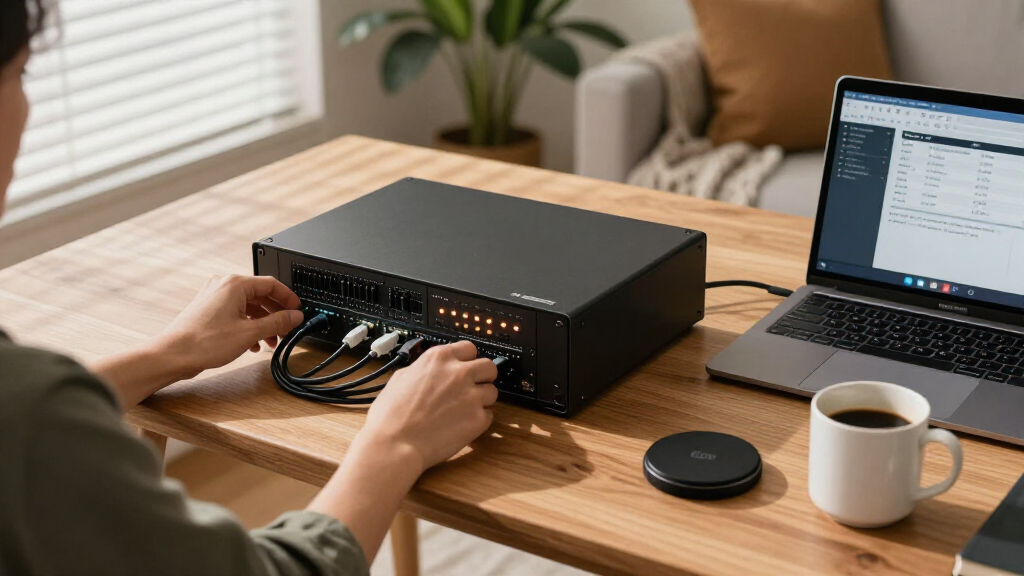
How We Picked
The products in this roundup were evaluated based on their space efficiency, power capacity, and feature set. Priority was given to models that fit into 0U form factors while offering enough outlets and monitoring capabilities for dense racks. Durability and ease of installation also influenced rankings, as well as value for cost, especially in high-density environments where reliability is critical. Products were compared directly on power ratings, outlet configuration, and additional features like switching or remote management. This approach ensures the selected PDUs meet both current and future scalability needs for data centers and server rooms.Factors to Consider When Choosing Best 0U PDU For Dense Racks
Choosing the best 0U PDU for dense racks involves more than just outlet count. It requires understanding your power demands, management needs, and physical constraints. A well-chosen PDU not only fits into tight spaces but also provides reliable, scalable power distribution that simplifies maintenance and controls costs. Below are key factors to consider that will help you make an informed decision beyond just specifications.Space Efficiency and Form Factor
In dense racks, every inch counts. 0U PDUs are designed to maximize space while providing ample outlets and features. When evaluating options, consider whether the PDU’s physical design allows for easy installation without blocking airflow or access to other equipment. Some models are more compact or have flexible mounting options that suit tight environments. Keep in mind that a slightly larger unit with more outlets might still be preferable if it simplifies wiring and future expansion.
Power Capacity and Outlet Configuration
Matching the PDU’s power capacity to your equipment load is critical. Higher amperage ratings support denser configurations, but they also tend to cost more and may require special wiring. Outlet types and counts directly influence how many devices you can connect—look for models with a mix of C13 and C19 outlets if you anticipate high-power servers. Overestimating capacity can lead to unnecessary costs, while underestimating risks overloads, so precise calculation is key.
Monitoring and Management Features
In dense environments, remote monitoring and switching capabilities become invaluable. PDUs with metering help track power consumption, preventing overloads and optimizing energy use. Switched units allow remote power cycling, reducing the need for physical access. However, these features increase costs and complexity. Consider your team’s technical expertise and whether these management tools justify the investment for your scale of operation.
Build Quality and Reliability
Durability and build quality determine how well a PDU withstands continuous operation. Look for sturdy construction, quality connectors, and reliable surge protection, especially in high-density racks that demand consistent power. Cheaper units might save money initially but could require replacement sooner. Investing in reputable brands often results in better longevity and support, critical for minimizing downtime and maintenance costs.
Cost and Future Scalability
While budget constraints matter, opting for the cheapest model can limit future growth and features. It’s wise to consider a slightly higher investment for units with better management features or higher capacity, especially if your rack may expand. Think about your long-term needs: will your power demands grow? Will remote management be necessary? These questions help balance current affordability with future-proofing.
Frequently Asked Questions
How do I determine the right current capacity for my dense rack?
Calculating the total power draw of your equipment is the first step. Add up the wattages or amperages of all devices, then include a safety margin—typically 20-25%—to avoid overloads. Use this total to select a PDU with sufficient amperage and outlet capacity. Remember, higher capacity units often come with added features and costs, so balancing your current needs with potential growth is essential for a scalable solution.
Should I prioritize metering or switching features in my PDU?
It depends on your management needs. If monitoring energy consumption and preventing overloads are primary concerns, metered PDUs are advantageous. Switched PDUs add remote power cycling, which simplifies maintenance and can reduce downtime. For dense racks with critical equipment, combining both features—metered and switched—can provide comprehensive control, but this often increases the price. Assess your operational complexity and budget before choosing.
What are common mistakes to avoid when choosing a 0U PDU?
One common mistake is underestimating future expansion, leading to frequent replacements. Overlooking compatibility with your power supply or outlet types can cause installation issues. Focusing solely on outlet count without considering management features or build quality can result in unreliable operation. Lastly, ignoring physical space constraints may cause installation problems, especially in tight, high-density racks. Careful planning helps avoid these pitfalls.
How important is remote management in dense rack environments?
Remote management becomes increasingly valuable as rack density and complexity grow. It enables real-time monitoring, power control, and troubleshooting without physical access, saving time and reducing downtime risks. However, it adds to the initial cost and complexity. For large data centers or critical setups, investing in PDUs with remote capabilities can justify the expense through improved efficiency and operational control. Smaller or less critical environments might manage without these features.
Is it worth paying more for a switched or monitored PDU?
Paying extra for switched or monitored PDUs often results in better long-term management and energy savings. These features help prevent overloads and facilitate quick maintenance, especially in dense racks where physical access is limited. However, the added cost should align with your operational needs; if your setup is simple or budget-constrained, basic metered units might suffice. Consider your management requirements and future scalability when making this decision.
Conclusion
For those managing critical, densely packed racks, the APC Netshelter AP8841 offers a balanced mix of capacity, monitoring, and reliability, making it ideal as the best overall choice. Budget-conscious buyers or smaller setups will find the Tripp Lite Metered PDU, 15A, 8 Outlets provides essential features at a lower cost. Large data centers with complex needs should consider models like the APC AP9567 or Tripp Lite Metered PDU, 30A, 48 Outlets for scalability and advanced management. Beginners or those with minimal space constraints will benefit from simple, reliable units like the Tripp Lite 8-outlet model, while high-density environments demanding maximum outlet density and remote control should prioritize switches and monitoring. Tailoring your choice to your specific rack size, power needs, and management preferences ensures lasting efficiency and performance.
Fall Picks
fall essentials
As an affiliate, we earn on qualifying purchases.