

To evaluate IT hardware refresh cycles responsibly, start by considering lifecycle analysis, including environmental impacts from procurement to disposal. Use performance metrics and lifespan data to identify the most suitable timing for upgrades that balance technology needs with sustainability. Choose vendors committed to eco-friendly manufacturing and recycling programs. Plan for responsible disposal or refurbishment to extend hardware life. Focusing on these strategies helps reduce waste and aligns your refresh cycle with sustainable practices—exploring further can deepen your approach.

Get business pricing on networking and server gear
- Business-only prices and quantity discounts
- Tax-exempt purchasing
- Multiple users, one account, clear invoices
Key Takeaways
- Conduct lifecycle analysis to determine optimal replacement timing based on performance, usage, and environmental impact.
- Incorporate environmental footprint data into decision-making to balance technological needs and sustainability goals.
- Prioritize hardware with eco-friendly manufacturing, energy efficiency, and responsible disposal options.
- Align refresh cycles with sustainable practices, avoiding premature replacements that increase waste and resource use.
- Collaborate with certified recyclers and consider refurbishing or donating hardware to extend lifespan and reduce e-waste.
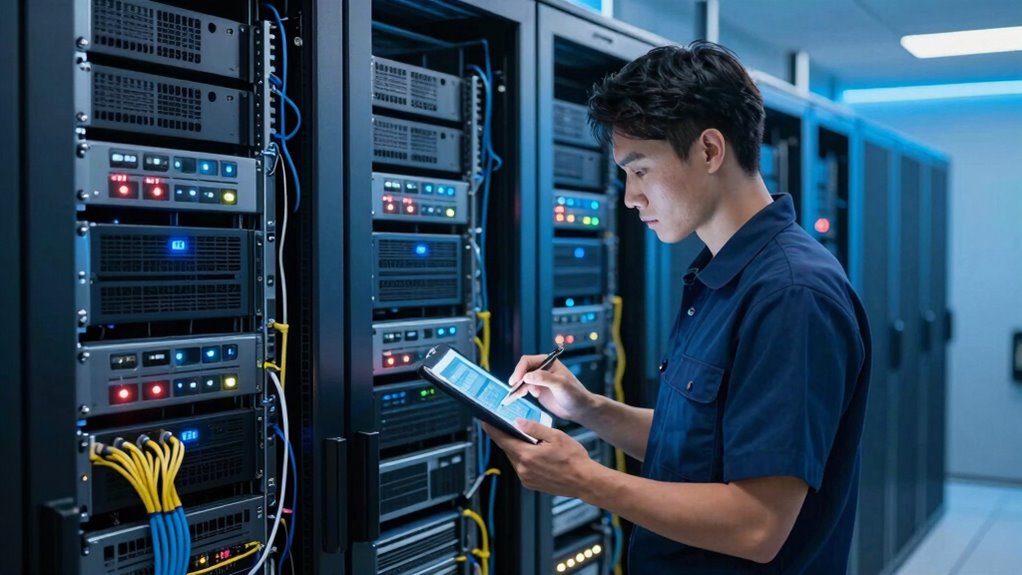
Deciding when to refresh IT hardware is a crucial part of managing technology investments responsibly, yet many organizations overlook the broader impacts of their decisions. Instead of focusing solely on cost or performance, you should consider the environmental footprint of your hardware lifecycle. Conducting a thorough lifecycle analysis helps you understand the full journey of your equipment—from procurement to disposal—and identify opportunities to reduce waste and minimize environmental harm. This process involves evaluating the duration of hardware usage, considering technological advancements, and evaluating the long-term costs associated with maintenance and energy consumption. By doing so, you guarantee your refresh cycles align with sustainable practices and avoid unnecessary replacements that contribute to electronic waste. Incorporating biodiversity preservation into your planning can further enhance your organization’s commitment to environmental responsibility. When planning a hardware refresh, sustainable disposal becomes a critical factor. You need to have a clear strategy for responsibly recycling or repurposing outdated equipment. This not only helps in complying with environmental regulations but also demonstrates your organization’s commitment to reducing its carbon footprint. Look for certified e-waste recyclers who prioritize environmentally sound disposal methods, ensuring that hazardous materials are safely handled and valuable components are recovered. Additionally, consider refurbishing or donating functional hardware, extending its life and reducing landfill waste. Including lifecycle analysis as part of your decision-making process ensures a comprehensive understanding of environmental impacts. Implementing sustainable procurement practices at the start can also influence the entire lifecycle of your hardware, encouraging manufacturers to adopt greener production methods. Engaging with vendors committed to eco-friendly manufacturing can further support your sustainability goals. Incorporate these sustainable disposal practices into your overall lifecycle analysis to make informed decisions that balance technological needs with environmental responsibility.
Prioritize sustainable lifecycle analysis to optimize hardware refresh timing and reduce electronic waste responsibly.
Timing your refresh cycles wisely is essential to maximizing both performance and sustainability. If you replace hardware too early, you risk increasing electronic waste and wasting valuable resources. On the other hand, delaying upgrades can lead to higher energy consumption, security vulnerabilities, and decreased productivity. By analyzing usage patterns, performance metrics, and the lifespan of your current hardware, you can pinpoint the ideal moment for a refresh. This approach allows you to maximize the value of your investments while minimizing environmental impact, ensuring your hardware lifecycle is as efficient and responsible as possible.
Furthermore, incorporating sustainable procurement practices at the outset can influence the entire lifecycle of your hardware. Choose vendors who prioritize eco-friendly manufacturing, energy-efficient products, and take-back programs. These initiatives support a circular economy, where materials are reused and recycled rather than discarded. When combined with a thorough lifecycle analysis and sustainable disposal methods, this holistic approach helps you develop responsible refresh cycles that benefit both your organization and the environment. Ultimately, managing IT hardware refreshes with sustainability in mind creates a more resilient and environmentally conscious technology strategy.
Products Worth Considering

LG 34GX90SA-W 34-inch Ultragear WQHD OLED Curved Gaming Monitor

Samsung 27 Odyssey OLED G5 (G50SF) QHD QD-OLED Gaming Monitor

Samsung 32-Inch Odyssey OLED G8 (G80SH) 4K Gaming Monitor
As an affiliate, we earn on qualifying purchases.
Frequently Asked Questions
How Do Environmental Factors Influence Hardware Refresh Timing?
Environmental factors, like climate and energy availability, influence your hardware refresh timing by affecting operational costs and lifespan. You need to contemplate the environmental impact of manufacturing, transportation, and disposal, which ties into sustainability considerations. Extreme temperatures or humidity can shorten hardware longevity, prompting earlier replacements. By monitoring these factors, you can plan refresh cycles more responsibly, reducing environmental impact while maintaining ideal performance and aligning with your sustainability goals.
What Role Does Vendor Support Play in Refresh Decisions?
Think vendor support is just a bonus? Think again! Vendor contracts and support escalation processes directly influence your refresh decisions, ensuring you don’t get stranded in hardware limbo. Reliable support means faster fixes, less downtime, and more confidence in sticking with existing gear longer. Ignoring this can turn your refresh cycle into a nightmare, so prioritize vendors who offer robust support, clear escalation paths, and proactive service.
How Can User Productivity Impact Hardware Refresh Cycles?
Your user productivity directly impacts hardware refresh cycles because higher efficiency and positive productivity metrics often justify delaying upgrades. When you work faster and more effectively, your current hardware meets your needs longer. Conversely, declining productivity or outdated equipment can signal it’s time for a refresh. Monitoring these metrics helps you and your organization make informed decisions, ensuring hardware upgrades support peak user efficiency and prevent productivity losses.
Are There Industry-Specific Standards for Hardware Refresh Intervals?
Industry-specific standards for hardware refresh intervals vary widely, but they’re vital for effective lifecycle management and cost optimization. For example, financial institutions may upgrade every 3-4 years to guarantee security, while creative agencies might do so every 5-6 years. You can’t afford to ignore these standards—they’re like a lifeline in a sea of rapid technological change. Staying aligned with industry benchmarks helps maximize hardware lifespan and minimizes unnecessary expenses.
How Do Emerging Technologies Affect Refresh Cycle Planning?
Emerging technologies like cloud integration and advanced security protocols considerably influence your refresh cycle planning. Cloud integration allows you to shift workloads efficiently, reducing hardware strain and extending device lifespans. Upgrading security protocols often requires newer hardware to support enhanced features. You should regularly assess these tech developments to determine ideal refresh timing, ensuring your infrastructure stays secure and efficient without unnecessary replacements.
Conclusion
By understanding your needs, evaluating your assets, and planning your budget, you can evaluate refresh cycles more responsibly. By staying informed, balancing cost and performance, and planning ahead, you guarantee your hardware stays reliable, secure, and efficient. By making thoughtful decisions, embracing flexibility, and prioritizing sustainability, you’ll not only optimize your IT investments but also support your organization’s long-term growth. Ultimately, responsible refresh cycles empower you to lead with confidence and foresight.