
TL;DR

Get business pricing on networking and server gear
- Business-only prices and quantity discounts
- Tax-exempt purchasing
- Multiple users, one account, clear invoices
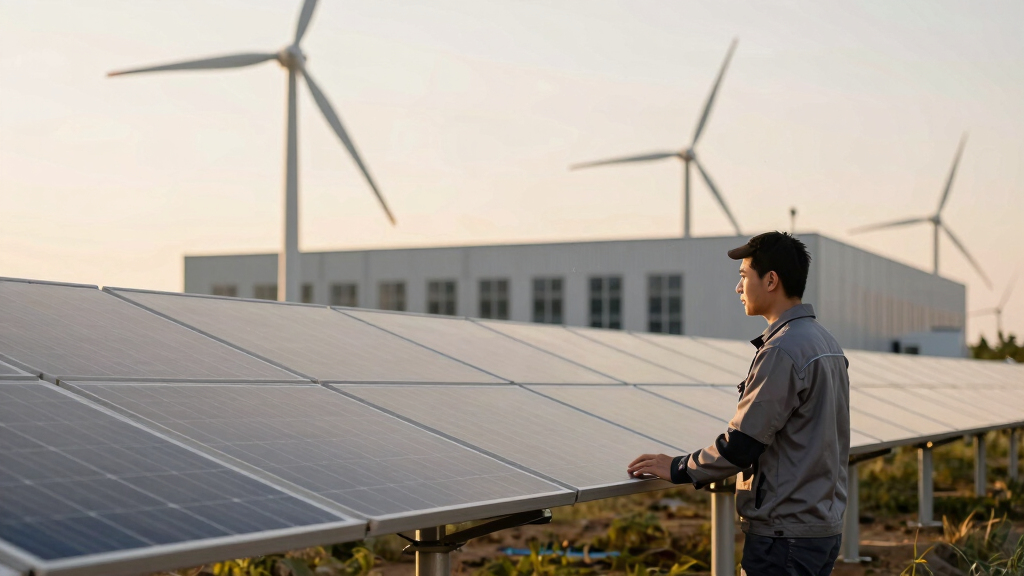
A LUT University study confirms that data centers can be powered entirely by intermittent renewables like wind and solar when paired with significant overcapacity, backup generation, and demand-side flexibility. This approach, feasible in Nordic environments, could challenge traditional baseload power sources.
A recent study by LUT University finds that data centers can be powered continuously by wind and solar energy when paired with overbuild, backup generation, and demand flexibility, making renewables a viable baseload option in Nordic regions.
The study explores the techno-economic feasibility of using seven times the baseline renewable capacity—primarily wind and solar—to ensure uninterrupted power supply for data centers. It models two scenarios: one with full baseload operation at 8,760 hours annually and another with at least 8,000 hours, akin to nuclear power plant operation. Both configurations incorporate backup power and demand-side flexibility measures.
Results indicate that location significantly impacts costs: the most favorable sites could see levelized costs of electricity (LCOE) as low as 80 €/MWh, while less favorable locations could reach up to 100 €/MWh. The research emphasizes that high overcapacity leads to curtailment during peak production hours, but with proper siting and demand management, the approach remains economically viable. The study also highlights that the Nordic climate’s seasonal constraints can be mitigated by storage and balancing capacity, making renewables competitive with nuclear power.
Researchers note that the simplified load profile used in the model does not account for detailed operational behaviors like cooling or dynamic load variations in actual data centers. They are planning further research involving real-world cases through a project called Net Zero Energy Communities, which will analyze actual data center operations and siting considerations.
Implications for Renewable Data Center Deployment in High-Latitude Regions
This study suggests that high-latitude regions like the Nordics can feasibly host renewable-powered data centers with cost levels comparable to nuclear power, despite seasonal and geographic challenges. The findings could influence policy discussions and investment strategies, emphasizing the importance of location, overcapacity, and demand flexibility in renewable energy planning for data infrastructure. If proven scalable, this approach may reduce reliance on fossil fuels and nuclear energy, accelerating decarbonization efforts in the data center sector.
solar power backup generator for data centers
As an affiliate, we earn on qualifying purchases.
As an affiliate, we earn on qualifying purchases.
Renewable Overbuild and Data Center Power Challenges in Nordic Environments
The concept of powering data centers with renewables has gained interest amid rising energy demand and climate goals. Previous research has highlighted the intermittency of wind and solar, requiring backup systems and overcapacity to ensure reliability. The Nordic region, with its high wind potential and seasonal solar variability, presents unique opportunities and challenges. Past studies have examined hybrid systems and storage solutions, but the recent LUT University analysis is among the first to quantify the cost-effectiveness of a sevenfold overbuild in this context.
Historically, data centers rely on stable, baseload power sources such as nuclear or fossil fuels. Transitioning to renewables necessitates overcoming technical and economic hurdles, including high capital costs, curtailment, and siting constraints. The recent study builds on these foundations, providing a detailed techno-economic assessment tailored to Nordic conditions and emphasizing the importance of location-specific analysis.
“It depends on the location. According to a recent report by IRENA, solar PV and BESS based baseload supply can reach levelized cost of electricity of less than €100 per MWh in several locations around the globe.”
— an anonymous researcher
wind turbine energy storage system
As an affiliate, we earn on qualifying purchases.
As an affiliate, we earn on qualifying purchases.
Limitations and Uncertainties in Renewable Power Modeling for Data Centers
The study’s simplified load profile does not include detailed operational factors such as cooling demands or dynamic load variations, which could impact real-world feasibility. The actual cost-effectiveness depends heavily on site-specific conditions, infrastructure, and future technological developments, which remain to be tested in practice. The full scalability and integration of such systems across different regions are still uncertain and require further research and pilot projects.
renewable energy demand flexibility tools
As an affiliate, we earn on qualifying purchases.
As an affiliate, we earn on qualifying purchases.
Next Steps in Validating and Expanding Renewable Data Center Models
The researchers plan to implement the Net Zero Energy Communities project to analyze real data center operations and siting strategies. Additional pilot projects are expected to test the techno-economic assumptions in different geographic and climatic contexts. Policymakers and industry stakeholders will likely monitor these developments to assess the viability of large-scale renewable-powered data centers, potentially influencing future energy policies and investment decisions.
As an affiliate, we earn on qualifying purchases.
Key Questions
Can data centers operate entirely on wind and solar energy?
According to the LUT University study, with significant overcapacity—around seven times the baseload requirement—combined with backup generation and demand flexibility, it is technically feasible for data centers to operate continuously on wind and solar energy.
What are the main challenges to implementing this approach?
Key challenges include high capital costs for overcapacity, managing curtailment during peak production, site-specific economic viability, and ensuring reliable backup and demand flexibility measures. Seasonal and geographic variability also impact feasibility.
How does location influence the cost of renewable-powered data centers?
The study indicates that location significantly affects costs: the most favorable sites could see costs below 80 €/MWh, while less optimal sites could reach 100 €/MWh. Regional factors like wind potential and solar insolation are critical.
Will this approach replace nuclear or fossil fuel baseload power?
While promising, the approach is still under investigation. It could complement or partially replace traditional baseload sources in specific regions, especially where high renewable potential and demand flexibility are available.
What are the next steps for this research?
The team plans to analyze real-world data through the Net Zero Energy Communities project and conduct pilot implementations to validate the techno-economic assumptions and identify practical challenges.
Source: PV Magazine
Columbus Day / Indigenous Peoples' Day Picks
long weekend sales
As an affiliate, we earn on qualifying purchases.