
When you involve technical teams late in cloud procurement, delays and costly mistakes often happen because solutions become misaligned with deployment needs and complexities are overlooked. Without early technical input, decision-making slows, hidden costs may be ignored, and you risk choosing vendor options that don’t fit long-term goals. This disconnect can lead to rework, security gaps, and performance issues down the line. Keep exploring to discover how early involvement can prevent these challenges and guarantee a smoother process.
Key Takeaways
- Delayed technical input causes misaligned solutions and overlooked complexities, leading to costly procurement mistakes.
- Late involvement hampers requirement clarity, increasing decision delays and the risk of unsuitable vendor choices.
- Without early technical engagement, hidden costs like data transfer and compliance are often ignored.
- Rework and configuration adjustments become necessary when architecture is misaligned with business goals.
- Early technical participation ensures scalable, secure solutions, reducing long-term risks and costs.

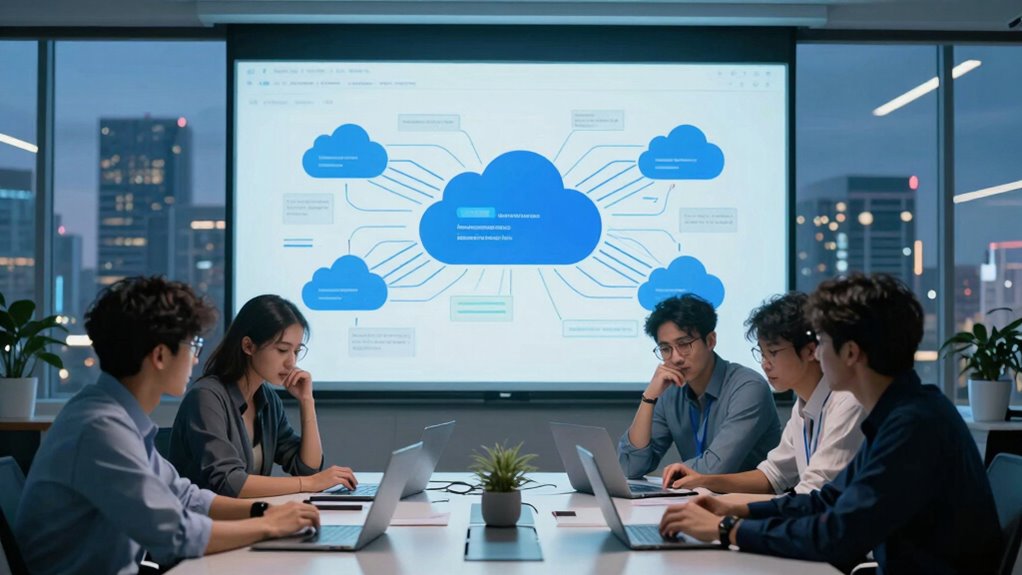
When technical teams join cloud procurement processes too late, organizations often face costly delays and misaligned solutions. Without early involvement from your technical experts, procurement efforts can become disconnected from the actual needs and complexities of deploying cloud services. This disconnect hampers effective vendor collaboration because the technical team isn’t part of the initial discussions, leading to misunderstandings about capabilities, integrations, and security requirements. As a result, procurement teams might select vendors based on surface-level features or cost alone, overlooking crucial technical nuances that could impact long-term performance or compatibility.
Early technical involvement prevents costly delays and ensures cloud solutions meet complex business and security needs.
Vendor collaboration suffers when technical teams aren’t involved from the start because they’re unable to influence the selection process or provide critical insights. Early technical input helps clarify requirements, set realistic expectations, and identify potential risks. When teams are brought in late, there’s often a scramble to understand vendor offerings, which slows down decision-making and increases the chances of choosing solutions that don’t fit seamlessly into existing infrastructure. This can lead to friction, miscommunication, and a failure to leverage vendor expertise fully, ultimately reducing the effectiveness of your cloud strategy.
Cost optimization becomes increasingly difficult when technical teams are sidelined until the later stages. Without their early engagement, procurement might prioritize short-term savings or flashy features instead of total cost of ownership. Technical input is vital for evaluating hidden costs, such as data transfer fees, compliance requirements, or the need for additional security measures. When technical teams are brought in too late, organizations risk selecting solutions that seem affordable upfront but turn out to be expensive to operate or scale. This oversight can inflate budgets, delay projects, and require costly adjustments later on—negating any initial savings.
Furthermore, late technical involvement can lead to redundant efforts and rework, which drive up costs and extend timelines. Technical teams need to be part of planning from the beginning to align cloud architecture with business goals and technical realities. When they’re only brought in after procurement decisions are made, it’s often too late to optimize configurations for performance and cost-efficiency. This reactive approach results in missed opportunities for automation, resource optimization, and streamlined integrations—all of which are essential for a successful, cost-effective cloud deployment.
In addition, integrating technical expertise early helps organizations avoid costly mistakes by ensuring that cloud solutions are scalable, secure, and compliant from the outset. Early involvement also promotes a comprehensive understanding of cloud architecture and how different components interact, which is crucial for long-term success. This understanding can be further enhanced by recognizing the importance of ongoing vendor relationships, which are more effectively managed when technical teams are involved early. Moreover, early technical participation can help identify potential security vulnerabilities and ensure compliance with industry standards before deployment. When technical teams are involved too late, organizations risk missing out on the benefits of a well-architected cloud environment that aligns with industry best practices.
In essence, merging procurement and technical expertise early creates a collaborative environment that ensures solutions are aligned with business objectives, technically feasible, and cost-efficient. Delaying the technical team’s involvement hampers vendor collaboration, hampers cost optimization, and ultimately undermines the entire cloud strategy. To succeed, organizations must integrate technical input from the start, fostering a unified approach that maximizes value and minimizes risks.
cloud procurement management software
As an affiliate, we earn on qualifying purchases.
As an affiliate, we earn on qualifying purchases.
Frequently Asked Questions
How Can Early Technical Involvement Improve Cloud Procurement Processes?
Early technical involvement improves cloud procurement by guiding vendor selection and guaranteeing technical requirements align with business goals. When you’re involved from the start, you can identify the best vendors, negotiate more favorable contracts, and prevent costly misunderstandings. This collaborative approach streamlines decision-making, reduces risks, and guarantees the chosen cloud solutions meet technical standards, ultimately making the procurement process more efficient and effective for your organization.
What Are Common Signs of Late Technical Team Engagement?
You’ll notice late technical team engagement through hasty vendor evaluations and rushed contract negotiations, ironically, when technical details should be guiding decisions. It’s a sign you’re missing vital input, leading to overlooked costs or incompatible solutions. When tech teams join late, procurement becomes reactive instead of strategic, risking delays, increased expenses, and suboptimal cloud setups. Early involvement guarantees smoother evaluations and negotiations, preventing these common pitfalls.
How Does Delayed Technical Input Impact Cloud Cost Management?
Delayed technical input hampers your cloud cost management by causing inefficient vendor negotiations, leading to unfavorable terms or missed savings. When technical teams join late, you risk contract non-compliance, as providers might not tailor agreements to your actual needs. This oversight can result in higher expenses and overlooked cost-saving opportunities. Prompt technical involvement guarantees better negotiations, aligns contracts with your requirements, and keeps cloud spending under control.
What Strategies Ensure Seamless Technical Integration During Procurement?
To guarantee seamless technical integration during procurement, you should prioritize vendor collaboration early on, involving technical teams from the start. Engage in transparent contract negotiations that clearly define technical requirements and expectations. This proactive approach helps align all stakeholders, prevents surprises, and streamlines implementation. By fostering open communication and detailed agreements, you set the stage for smooth integration, reducing delays and ensuring cloud solutions meet your technical and business needs effectively.
Which Roles Should Participate in Cloud Procurement Discussions Early?
Think of your cloud procurement like a classic car rally—early involvement is key. You should involve technical teams, vendor negotiation experts, and legal advisors early on. They evaluate contracts, scrutinize vendor proposals, and guarantee technical feasibility. Their input shapes the procurement strategy, preventing costly missteps later. When these roles join late, it’s like racing without knowing the track—missed opportunities and costly rework await. Early collaboration keeps the process smooth.
As an affiliate, we earn on qualifying purchases.
Conclusion
If you wait too long to bring your technical team into the cloud procurement dance, you risk stepping on toes and tripping over hidden pitfalls. Think of it like trying to steer a ship without your navigator—chaotic and prone to crashing. To stay afloat and sail smoothly, involve your tech experts early. They’re the compass guiding you through the cloud’s stormy seas, ensuring your journey is steady, swift, and successful.

Cloud FinOps: Collaborative, Real-Time Cloud Value Decision Making
As an affiliate, we earn on qualifying purchases.
As an affiliate, we earn on qualifying purchases.
cloud security compliance solutions
As an affiliate, we earn on qualifying purchases.
As an affiliate, we earn on qualifying purchases.