

To set a standard everyone follows, define thorough security policies based on recognized frameworks like CIS or NIST. Use automation tools to enforce these policies continuously, and establish clear roles for security ownership. Build baseline configurations for resources, enforce identity controls, and secure data with encryption. Regularly monitor compliance through dashboards and audits to catch deviations early. Implementing these practices creates a strong, consistent security foundation that adapts to changes—discover the key steps to achieve this next.

Get business pricing on networking and server gear
- Business-only prices and quantity discounts
- Tax-exempt purchasing
- Multiple users, one account, clear invoices
Key Takeaways
- Develop a comprehensive, policy-driven baseline aligned with recognized frameworks like CIS, NIST CSF, and vendor benchmarks.
- Automate enforcement of security controls using policy-as-code, cloud-native tools, and continuous compliance monitoring.
- Define clear ownership roles for security, policy, and engineering teams, with formal change-management processes.
- Implement identity management best practices, including least privilege, MFA, and regular access recertification.
- Standardize secure configurations, data encryption, and network defaults to minimize exposure and ensure consistency across environments.
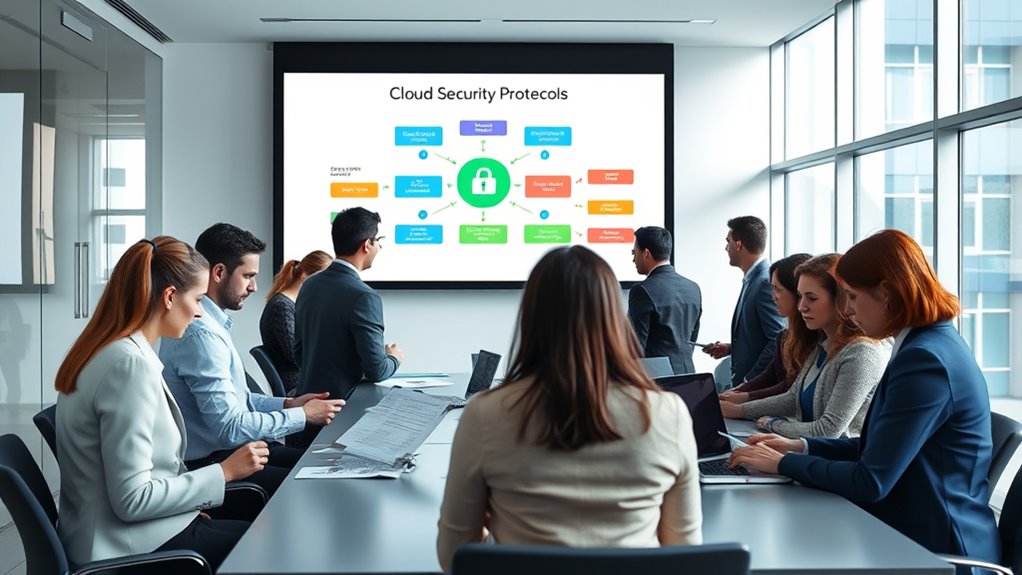
Are you looking to establish a strong security foundation for your cloud environment? Creating a minimum secure cloud baseline is vital to protect your digital assets from vulnerabilities and threats. A security baseline sets the minimum requirements across critical areas, ensuring consistent controls and a standard security posture. It acts as an auditable starting point that maps to recognized frameworks like CIS, NIST CSF, and vendor-specific benchmarks, providing clarity and accountability for your cloud controls.
Establishing a secure cloud baseline ensures consistent controls and maps to recognized security frameworks.
To begin, define a thorough policy that clearly states your baseline requirements. This policy should specify ownership and decision authorities—security owners, policy owners, and engineering teams—and establish formal change-control processes. This helps prevent ad-hoc deviations and keeps your controls aligned with evolving threats. Incorporate risk-informed tailoring so assets are classified by their confidentiality, integrity, and availability needs, rather than applying a one-size-fits-all approach. This ensures controls are proportionate and appropriate for each asset.
Enforce guardrails through automation tools like policy-as-code, cloud provider policy initiatives, and orchestration rules. These mechanisms translate your baseline statements into automated enforcement, reducing manual errors and maintaining consistency. Regular measurement and reporting are essential—use continuous compliance dashboards, periodic baseline assessments, and KPIs such as resource compliance percentages and remediation times to track adherence and identify gaps.
Identity and access management form a critical part of your baseline. Implement least-privilege role-based access control (RBAC), with role definitions, approval workflows, and periodic recertification. Enforce multi-factor authentication (MFA) for all privileged accounts and administrative interfaces to strengthen security. Standardize identity lifecycle controls, including onboarding, offboarding, just-in-time access, and temporary elevation, to minimize exposure. Service identity standards like managed identities, short-lived credentials, and key rotation policies further reduce risks associated with long-lived secrets. Privileged access should be monitored with session logging, recordings, or just-in-time approval logs, enabling quick detection of suspicious activities.
Configuration controls should include publishing resource configuration templates that embed secure defaults for VMs, storage, databases, and serverless functions. These templates should align with benchmarks such as CIS or DISA STIG and be automatable via Infrastructure as Code (IaC). Default network configurations must prioritize minimal exposure through private subnets and deny-by-default ingress rules. Data should be encrypted at rest and in transit, with documented cipher and key management standards. Trusted image management, including signed images and vulnerability scans, ensures workloads are deployed securely. Additionally, understanding cloud security frameworks helps organizations align their controls with industry best practices.
Finally, continuous assessment tools like CSPM or SCuBA should be deployed to scan cloud environments for baseline deviations. These tools, along with scheduled vulnerability scans and inventory reconciliation, provide ongoing visibility into compliance status. By establishing and enforcing these minimum controls, you create a scalable, consistent security foundation that adapts to your cloud environment’s growth and complexity.
cloud security compliance dashboard
As an affiliate, we earn on qualifying purchases.
As an affiliate, we earn on qualifying purchases.
Frequently Asked Questions
How Often Should Cloud Security Baselines Be Reviewed and Updated?
You should review and update your cloud security baselines at least quarterly, or more frequently if there are significant changes in your environment, new threats, or updates to standards. Regular reviews guarantee your controls stay effective against evolving vulnerabilities. Keep an eye on industry best practices and regulatory requirements, and automate the monitoring process where possible to identify deviations early. This approach helps maintain a strong security posture continuously.
What Tools Are Best for Automating Baseline Enforcement in Cloud Environments?
You should use tools like Microsoft Defender for Cloud, which automatically monitors and enforces security baselines across your cloud environment. Additionally, CSPM (Cloud Security Posture Management) tools like Dome9 or Palo Alto Networks Prisma Cloud help you identify misconfigurations and uphold policies continuously. Automating patch management with tools like Ansible or Terraform also ensures your controls stay up-to-date. These tools streamline enforcement, reduce manual effort, and help maintain a consistent security posture.
How Do Baselines Differ Between Public, Private, and Hybrid Clouds?
You’ll find that baselines differ across cloud models because public clouds often require more flexible, scalable controls, whereas private clouds demand stricter, customized security measures. Hybrid clouds combine both, so you need to tailor your standards accordingly. Public clouds leverage provider tools and shared responsibility models, while private and hybrid setups require you to implement all-encompassing controls internally. Adjust your baseline controls based on the cloud type’s specific risks and compliance needs.
What Challenges Are Common When Implementing Security Baselines at Scale?
Did you know that 60% of organizations struggle to implement security baselines at scale? When scaling, you face challenges like maintaining consistency across diverse teams, managing complex configurations, and ensuring ongoing compliance. Automating deployment and monitoring helps, but you also need clear documentation and training. Balancing security with operational flexibility is tough, but focusing on automation and communication makes it more manageable, ultimately strengthening your cloud security posture.
How Can Organizations Ensure Compliance With Different Regulatory Standards Using Baselines?
You can guarantee compliance by aligning your security baselines with relevant regulatory standards like HIPAA, GDPR, or FedRAMP. Regularly map your controls to these requirements, automate compliance monitoring with tools like Microsoft Defender, and conduct periodic audits. Training your team on specific standards helps maintain awareness. Consistently update your baselines based on evolving regulations, and leverage dashboards to track compliance status across all environments.
IAM multi-factor authentication hardware token
As an affiliate, we earn on qualifying purchases.
As an affiliate, we earn on qualifying purchases.
Conclusion
By establishing minimum secure cloud baselines, you guarantee consistent protection across your organization. Are you confident your current standards are enough to defend against evolving threats? Setting clear, enforceable standards not only safeguards your data but also promotes a security-conscious culture. Don’t wait for a breach to realize the importance of these baselines—take proactive steps today. After all, isn’t it better to be prepared than to face unnecessary risk tomorrow?
Infrastructure as Code security templates
As an affiliate, we earn on qualifying purchases.
As an affiliate, we earn on qualifying purchases.
cloud resource configuration management tools
As an affiliate, we earn on qualifying purchases.
As an affiliate, we earn on qualifying purchases.
Evergreen bestsellers Picks
bestsellers
As an affiliate, we earn on qualifying purchases.