

Kubernetes management platforms help teams operate clusters and build safer, more consistent paths for deploying applications. My best overall pick is Production Kubernetes, which focuses on building application platforms for real operational needs; Multi-Cluster Kubernetes for Platform Teams stands out for fleet management, while Platform Engineering on Kubernetes is a strong choice for teams shaping internal developer platforms. The main tradeoff is scope: foundational guides teach Kubernetes concepts, while specialist books address GitOps, multi-cluster operations, or platform engineering. These titles are books and guides rather than software platforms, so the right choice depends on the knowledge your team needs before selecting or operating tooling. Continue reading for the full comparison and a guide to choosing the right learning resource.

Get business pricing on networking and server gear
- Business-only prices and quantity discounts
- Tax-exempt purchasing
- Multiple users, one account, clear invoices
Key Takeaways
- Production Kubernetes leads for readers who need an application-platform perspective, rather than a guide limited to basic cluster administration.
- Multi-Cluster Kubernetes for Platform Teams is the most directly targeted resource for fleet operations across 5–50 clusters, a distinct need from managing one cluster well.
- Platform Engineering on Kubernetes and Crossplane Step by Step focus on building internal developer platforms, but serve different learning needs: broad platform practice versus a specific control-plane tool.
- The lineup separates into foundations, operational specialties, and platform-building guides; choosing by your current challenge is more useful than choosing by title breadth alone.
- Several titles address adjacent but narrower topics—such as Talos Linux, OpenShift, Harness, GitOps, or AI workloads—so their value depends on whether those technologies match your environment.
| The Talos Linux Handbook: A Practical Guide to Building Secure and Immutable Kubernetes Platforms |  | Best for Immutable Infrastructure | Format: Book | Primary topic: Building Kubernetes platforms | Linux platform: Talos Linux | VIEW LATEST PRICE | See Our Full Breakdown |
| The Kubernetes Bible: A Guide to Deploying and Managing Kubernetes |  | Best for Broad Environment Coverage | Format: Book | Primary topic: Kubernetes | Coverage: Cloud and on-premises environments | VIEW LATEST PRICE | See Our Full Breakdown |
| Implementing GitOps with Kubernetes: Automate, Manage, Scale, and Secure Infrastructure and Cloud-Native Applications on AWS and Azure |  | Best for GitOps Automation | Format: Book | Primary topic: GitOps with Kubernetes | Cloud platforms: AWS and Azure | VIEW LATEST PRICE | See Our Full Breakdown |
| The Kubernetes Book | 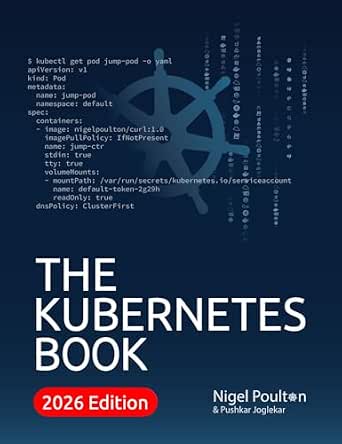 | Best for a General Kubernetes Starting Point | Format: Book | Title: The Kubernetes Book | Stated subject: Kubernetes | VIEW LATEST PRICE | See Our Full Breakdown |
| Red Hat OpenShift: The Complete Guide to Enterprise Kubernetes |  | Best for Enterprise OpenShift | Format: Book | Platform: Red Hat OpenShift | Stated focus: Enterprise Kubernetes | VIEW LATEST PRICE | See Our Full Breakdown |
| Multi-Cluster Kubernetes for Platform Teams: Fleet Management, Cluster Lifecycle, and Cross-Cluster Networking for 5–50 Clusters |  | Best for Multi-Cluster Fleet Management | Topic: Multi-cluster Kubernetes | Intended audience: Platform teams | Cluster count: 5–50 | VIEW LATEST PRICE | See Our Full Breakdown |
| Platform Engineering for Artificial Intelligence: Mastering Kubernetes Orchestration for Natural Language Processing with LLM |  | Best for AI and NLP Platform Teams | Format: Book | Subject: Platform engineering for artificial intelligence | Orchestration focus: Kubernetes | VIEW LATEST PRICE | See Our Full Breakdown |
| Platform Engineering on Kubernetes |  | Best for General Platform Engineering Foundations | Product identifier: 1617299324 | Stated subject: Platform engineering on Kubernetes | Named technology: Kubernetes | VIEW LATEST PRICE | See Our Full Breakdown |
| Production Kubernetes: Building Successful Application Platforms |  | Best for Production Application Platform Context | Subject: Production Kubernetes | Stated goal: Building successful application platforms | Named technology: Kubernetes | VIEW LATEST PRICE | See Our Full Breakdown |
| Crossplane Step by Step for Platform Engineering: A Practical Guide to Building Internal Developer Platforms |  | Best for Crossplane and Infrastructure Provisioning | Primary technology: Crossplane | Platform focus: Internal developer platforms | Related technology: Kubernetes | VIEW LATEST PRICE | See Our Full Breakdown |
| Platform Engineering with Harness: Building Internal Developer Platforms for Self-Service Software Delivery |  | Best for Harness-Focused Platform Engineering | Format: Book | Primary topic: Platform engineering | Platform focus: Internal developer platforms | VIEW LATEST PRICE | See Our Full Breakdown |
| Kubernetes management platform | Product identifier | Format |
|---|---|---|
| The Talos Linux Handbook: A Pr | ASIN B0G2J9H7XD | Book |
| The Kubernetes Bible: A Guide | ISBN 1835464718 | Book |
| Implementing GitOps with Kuber | ASIN B0D7VHG4PB | Book |
| The Kubernetes Book | ASIN B072TS9ZQZ | Book |
| Red Hat OpenShift: The Complet | ASIN B0GKC5BSM5 | Book |
| Multi-Cluster Kubernetes for P | — | — |
| Platform Engineering for Artif | B0HHSG3TBJ | Book |
| Platform Engineering on Kubern | 1617299324 | — |
| Production Kubernetes: Buildin | B0C2JG8HN4 | — |
| Crossplane Step by Step for Pl | — | — |
| Platform Engineering with Harn | — | Book |
More Details on Our Top Picks
The Talos Linux Handbook: A Practical Guide to Building Secure and Immutable Kubernetes Platforms
I’d put this guide on the shortlist for platform engineers who want to build Kubernetes around Talos Linux and an immutable infrastructure approach. That focus gives it a narrower purpose than The Kubernetes Bible, which is described as covering deployment and management across cloud and on-premises environments. The distinction matters: this title points toward a particular platform-building philosophy, rather than broad Kubernetes coverage. The available details do not say which Talos workflows, cluster operations, or security practices the book explains, so I can’t judge its depth or suitability as a step-by-step manual. It also does not appear to cover the named cloud-provider focus of Implementing GitOps with Kubernetes. Choose it for its stated Talos and immutability focus; skip it if you need a clearly specified general-purpose or cloud-specific guide.
Pros:- Focuses specifically on building Kubernetes platforms with Talos Linux
- Centers secure platform design
- Addresses immutable infrastructure, a distinct approach from the broader coverage described for The Kubernetes Bible
Cons:- The available product information does not specify chapters, examples, or operational procedures
- No cloud-provider coverage or integration details are provided
- Its Talos-specific focus may be too narrow for readers seeking general Kubernetes management guidance
Best for: Platform engineers evaluating Talos Linux who want a guide focused on secure, immutable Kubernetes platforms.
Not ideal for: Readers seeking documented cloud-specific instructions, broad cloud and on-premises coverage, or a detailed contents list before choosing.
- Format:Book
- Primary topic:Building Kubernetes platforms
- Linux platform:Talos Linux
- Platform approach:Immutable infrastructure
- Stated focus:Secure Kubernetes platforms
- Product identifier:ASIN B0G2J9H7XD
Our verdict“Choose this guide if Talos Linux and immutable infrastructure are central to your platform plans, but not if you need a well-documented broad or cloud-specific manual.”
The Kubernetes Bible: A Guide to Deploying and Managing Kubernetes
Among these titles, The Kubernetes Bible has the clearest broad-management remit: it is described as covering Kubernetes deployment and management across cloud and on-premises environments. That makes it a stronger starting point for readers comparing operating settings than The Talos Linux Handbook, whose stated focus is a specific Linux platform and immutable infrastructure. It is also less specialized than Implementing GitOps with Kubernetes, which names AWS and Azure alongside automation, scaling, and security. The tradeoff is that the supplied information gives no chapter list, technical depth, or named tooling, so buyers cannot tell how far the guide goes beyond its broad scope. I’d favor it when a general deployment-and-management overview across environments matters more than a specialized platform or workflow.
Pros:- Explicitly covers cloud and on-premises environments
- Addresses both deploying and managing Kubernetes
- Offers a broader stated scope than the Talos-focused handbook
Cons:- The available details do not name cloud providers, tools, or supported Kubernetes versions
- No chapter outline or depth information is provided
- Its broad scope may be less useful than a focused GitOps or Talos guide for specialized tasks
Best for: Kubernetes administrators and infrastructure teams who need a guide spanning cloud and on-premises deployments.
Not ideal for: Readers who specifically need Talos Linux instructions, GitOps implementation details, or verified information about a book’s technical depth.
- Format:Book
- Primary topic:Kubernetes
- Coverage:Cloud and on-premises environments
- Stated purpose:Deploying and managing Kubernetes
- Product identifier:ISBN 1835464718
- Named cloud providers:Not specified
Our verdict“Pick this for a broad cloud-and-on-premises Kubernetes guide, but choose a specialized title when you need concrete GitOps or Talos coverage.”
Implementing GitOps with Kubernetes: Automate, Manage, Scale, and Secure Infrastructure and Cloud-Native Applications on AWS and Azure
This is the most workflow-specific option in the group: its stated subject is GitOps with Kubernetes, with infrastructure and cloud-native application work on AWS and Azure. I’d rank it ahead of The Kubernetes Bible for teams seeking an automation-centered approach across those named providers, while the Bible is the clearer fit for general cloud and on-premises coverage. Its emphasis on scaling and security also gives it a distinct platform-operations angle beyond the Talos handbook’s focus on immutable infrastructure. The tradeoff is equally clear: the description does not identify GitOps tools, implementation examples, or how the AWS and Azure material is divided. It is a poor substitute for a general Kubernetes primer if the reader first needs broad deployment fundamentals.
Pros:- Makes GitOps the central Kubernetes management approach
- Covers infrastructure automation and cloud-native applications
- Names AWS and Azure as its cloud platforms
- Includes scaling and security in its stated scope
Cons:- The supplied information does not identify specific GitOps tools or implementation patterns
- Cloud coverage is limited to the two named providers in the description
- No chapter outline or level of prerequisite knowledge is provided
Best for: Platform and DevOps engineers planning GitOps-based infrastructure and application management on AWS or Azure.
Not ideal for: Beginners seeking broad Kubernetes foundations, teams on providers other than AWS and Azure, or buyers who need confirmed tool and chapter details.
- Format:Book
- Primary topic:GitOps with Kubernetes
- Cloud platforms:AWS and Azure
- Infrastructure focus:Automation, management, scaling, and security
- Application focus:Cloud-native applications
- Product identifier:ASIN B0D7VHG4PB
Our verdict“Choose this when GitOps on AWS or Azure is your main management goal; choose The Kubernetes Bible for broader environment coverage.”
The Kubernetes Book
The Kubernetes Book has the broadest-sounding title here, but the supplied product details provide no description of its contents, intended audience, or technical scope. That makes it difficult to recommend ahead of The Kubernetes Bible, which explicitly describes deployment and management across cloud and on-premises environments. It is also impossible to tell whether this book covers operational platform work, or serves as an introduction to Kubernetes concepts. I’d treat it as a possible general reference only when a buyer can verify the edition and contents elsewhere. Compared with Implementing GitOps with Kubernetes, it offers no stated workflow or provider focus; compared with the Talos handbook, it names no specific platform approach. Its broad title is not enough to establish breadth.
Pros:- A general Kubernetes title that may suit readers seeking a non-specialized reference
- Does not signal a single named cloud-provider focus
- Can be compared against the more clearly scoped guides in this roundup
Cons:- No description or contents information is provided
- The intended audience and technical level are unknown
- There is no stated management, platform, or operations coverage to verify
Best for: Readers who can confirm the edition and contents independently and want a general Kubernetes book without a stated specialty.
Not ideal for: Platform teams choosing a guide by specific coverage, such as cloud and on-premises operations, GitOps, or Talos Linux.
- Format:Book
- Title:The Kubernetes Book
- Stated subject:Kubernetes
- Description:Not provided
- Coverage details:Not provided
- Product identifier:ASIN B072TS9ZQZ
Our verdict“Consider it only if you can check its contents and edition first; The Kubernetes Bible is the safer choice when stated management coverage matters.”
Red Hat OpenShift: The Complete Guide to Enterprise Kubernetes
This guide is the most clearly enterprise-oriented choice in the batch, with named coverage of Red Hat OpenShift, container orchestration, CI/CD pipelines, service mesh, and hybrid cloud management. That gives it a more specific enterprise platform remit than The Kubernetes Bible, whose description spans cloud and on-premises Kubernetes without naming OpenShift. It also differs from Implementing GitOps with Kubernetes: the latter centers GitOps on AWS and Azure, while this title’s stated scope groups several enterprise platform topics. The tradeoff is its OpenShift specialization; teams standardizing on another Kubernetes distribution may find less direct value. The product information does not name OpenShift versions, tools, or chapter depth, so buyers should verify those details if compatibility or hands-on instructions matter.
Pros:- Explicitly focuses on Red Hat OpenShift and enterprise Kubernetes
- Covers container orchestration and CI/CD pipelines
- Includes service mesh and hybrid cloud platform management
- Addresses a broader set of named enterprise topics than the AWS-and-Azure-focused GitOps title
Cons:- OpenShift specialization may limit its relevance to teams using other Kubernetes platforms
- The supplied details do not identify product versions or specific tools
- No chapter outline or level of hands-on detail is available
Best for: Enterprise platform teams adopting Red Hat OpenShift across hybrid cloud environments and coordinating orchestration, delivery pipelines, and service mesh.
Not ideal for: Teams using a different Kubernetes distribution, or readers who need confirmed version-specific steps and named tooling.
- Format:Book
- Platform:Red Hat OpenShift
- Stated focus:Enterprise Kubernetes
- Topics:Container orchestration, CI/CD pipelines, service mesh, and hybrid cloud platform management
- Cloud approach:Hybrid cloud
- Product identifier:ASIN B0GKC5BSM5
Our verdict“Choose this for an enterprise OpenShift and hybrid-cloud focus, but look elsewhere if your team needs distribution-neutral or version-specific guidance.”
Multi-Cluster Kubernetes for Platform Teams: Fleet Management, Cluster Lifecycle, and Cross-Cluster Networking for 5–50 Clusters
Built for teams operating 5–50 clusters, this guide focuses on fleet-level work rather than Kubernetes fundamentals or a single-cluster platform. Its coverage of cluster lifecycle management and cross-cluster networking gives platform teams a useful frame for coordinating clusters as their environments grow. Compared with Production Kubernetes: Building Successful Application Platforms, which is framed around production application platforms, this title is more directly aimed at fleet operations and inter-cluster concerns. The tradeoff is its defined scope: the description does not identify particular tools, implementation examples, or coverage of application-platform design. Readers seeking a broad introduction may get more from The Kubernetes Book; teams already managing several clusters are likelier to value this guide’s narrower focus.
Pros:- Centers on fleet management rather than treating clusters as isolated environments
- Addresses cluster lifecycle management for multi-cluster operations
- Includes cross-cluster networking as a distinct fleet concern
- Names a specific operating scale of 5–50 clusters
Cons:- The described scope does not specify concrete tools, procedures, or implementation examples
- Its multi-cluster focus may be too narrow for readers still learning Kubernetes basics
- The description gives no detail about security, observability, or application delivery coverage
Best for: Platform teams responsible for the lifecycle and networking of roughly 5–50 Kubernetes clusters
Not ideal for: Readers seeking a general Kubernetes introduction, a single-cluster deployment guide, or documented coverage of specific vendor tools
- Topic:Multi-cluster Kubernetes
- Intended audience:Platform teams
- Cluster count:5–50
- Focus area:Fleet management
- Lifecycle coverage:Cluster lifecycle management
- Networking coverage:Cross-cluster networking
Our verdict“Choose this guide if your platform team already operates multiple clusters and needs a focused resource on fleet lifecycle and networking.”
Platform Engineering for Artificial Intelligence: Mastering Kubernetes Orchestration for Natural Language Processing with LLM
This title is the most specialized option here, connecting Kubernetes orchestration with AI and natural language processing using LLMs. That subject focus sets it apart from Platform Engineering on Kubernetes, whose title signals platform engineering more broadly, and from Multi-Cluster Kubernetes for Platform Teams, which centers on fleet operations. It may suit readers whose platform work specifically supports AI or NLP workloads, but the available description offers no detail about chapters, tools, deployment patterns, or technical depth. That lack of information makes it harder to judge how actionable the guidance is. Buyers looking for a general Kubernetes management resource should favor a broader title; this one makes the most sense when AI orchestration is the reason for reading.
Pros:- Connects platform engineering with Kubernetes orchestration for AI workloads
- Names NLP and LLMs as specific areas of focus
- Offers a more specialized angle than broad platform engineering titles
Cons:- The available product information does not describe its chapters or technical approach
- No specific tools, deployment examples, or operational practices are identified
- Its AI and NLP focus may not match teams managing conventional application platforms
Best for: Platform engineers and technical leads building Kubernetes environments for AI, NLP, or LLM workloads
Not ideal for: Readers seeking a general Kubernetes platform guide or who need confirmed details about tools, examples, and coverage before choosing
- Format:Book
- Subject:Platform engineering for artificial intelligence
- Orchestration focus:Kubernetes
- Workload focus:Natural language processing
- AI topic:Large language models
- Product identifier:B0HHSG3TBJ
Our verdict“Choose this title if your Kubernetes platform work centers on AI, NLP, or LLM workloads, but look to a broader guide for general platform operations.”
Platform Engineering on Kubernetes
Platform engineering on Kubernetes is the broadest fit among these titles by subject, making it a plausible starting point for readers who want platform-engineering context without narrowing immediately to AI, Crossplane, or multi-cluster networking. That general scope contrasts with Crossplane Step by Step for Platform Engineering, which explicitly names an infrastructure provisioning approach, and with Platform Engineering for Artificial Intelligence, which targets AI and NLP. The main limitation is also clear: no product description was supplied, so the intended reader level, tools, examples, and treatment of Kubernetes management cannot be confirmed. I would choose it for a broad topic match, not for a promise of specific operational guidance; readers needing known subject coverage should prefer a title with a fuller description.
Pros:- Directly links platform engineering with Kubernetes
- Has a broader stated subject than the AI- and Crossplane-specific titles
- May suit readers who want to explore platform engineering without choosing a narrow subtopic
Cons:- No product description is available to verify coverage or intended experience level
- The supplied information does not identify tools, examples, or practical exercises
- Its title alone does not establish how much attention it gives to Kubernetes management
Best for: Platform engineering learners who want a Kubernetes-centered resource without a stated specialty such as AI, Crossplane, or fleet networking
Not ideal for: Buyers who need confirmed details about technical depth, tools, examples, or specific Kubernetes management workflows
- Product identifier:1617299324
- Stated subject:Platform engineering on Kubernetes
- Named technology:Kubernetes
- Named discipline:Platform engineering
- Description provided:No
- Specific tools or methods listed:Not provided
Our verdict“Consider this for a broad Kubernetes platform-engineering topic, but choose a more fully described guide if you need confirmed practical coverage.”
Production Kubernetes: Building Successful Application Platforms
This title points toward Kubernetes in production and the work of building application platforms, a useful distinction for teams concerned with operating services rather than only learning cluster concepts. Compared with Multi-Cluster Kubernetes for Platform Teams, it appears less narrowly focused on fleets and cross-cluster networking; compared with Platform Engineering on Kubernetes, its title makes production application platforms the explicit destination. The available description, however, does not say which practices, tools, or production challenges the book covers. That makes it a less verifiable choice for buyers who need concrete management guidance. I’d shortlist it when application-platform design is the goal, but choose the multi-cluster guide when fleet lifecycle is the immediate problem.
Pros:- Explicitly focuses on Kubernetes in production
- Frames the subject around building application platforms
- Offers a production-oriented angle distinct from multi-cluster fleet management
- May fit teams thinking beyond basic cluster deployment
Cons:- The description provides no detail about tools, methods, or technical examples
- It does not identify whether multi-cluster operations or cross-cluster networking are covered
- Buyers cannot verify the scope of production topics from the supplied information
Best for: Engineering teams planning or refining production application platforms built on Kubernetes
Not ideal for: Readers who need confirmed coverage of cluster fleet tooling, specific production procedures, or a detailed topic outline
- Subject:Production Kubernetes
- Stated goal:Building successful application platforms
- Named technology:Kubernetes
- Product identifier:B0C2JG8HN4
- Detailed contents provided:No
- Specific tools listed:Not provided
Our verdict“Pick this title when production application-platform design is your priority, and choose the fleet-focused guide for explicit multi-cluster coverage.”
Crossplane Step by Step for Platform Engineering: A Practical Guide to Building Internal Developer Platforms
Crossplane gives this guide a specific center of gravity: building internal developer platforms with Kubernetes-based infrastructure, alongside compositions, GitOps, policy, and multi-cloud infrastructure. That makes it a more targeted choice than Platform Engineering on Kubernetes, whose supplied information names no particular method, and a different fit from Multi-Cluster Kubernetes for Platform Teams, which concentrates on fleet lifecycle and networking. Its practical-guide framing may appeal to teams shaping self-service infrastructure, but the description gives no further detail about examples, supported providers, or the depth of each topic. It is also a poor match for readers who need general cluster administration rather than platform provisioning. Choose it when Crossplane is central to your plan, not merely because Kubernetes appears in the title.
Pros:- Explicitly focuses on Crossplane for internal developer platforms
- Names compositions, GitOps, and policy as covered subjects
- Addresses infrastructure across multiple clouds
- Frames the material as a practical guide to platform building
Cons:- The product description gives no detail about examples or implementation depth
- Crossplane-specific scope may be too narrow for teams not using that approach
- The supplied information does not identify supported cloud providers or tools beyond Crossplane
Best for: Platform engineers building internal developer platforms with Crossplane, GitOps, policy, and infrastructure across cloud environments
Not ideal for: Kubernetes administrators seeking general cluster operations guidance or readers who need confirmed provider-specific examples
- Primary technology:Crossplane
- Platform focus:Internal developer platforms
- Related technology:Kubernetes
- Topics:Compositions, GitOps, and policy
- Infrastructure scope:Multi-cloud
- Guide type:Practical guide
Our verdict“Choose this guide if you are building a Crossplane-based internal developer platform; look elsewhere for broad Kubernetes cluster-management coverage.”
Platform Engineering with Harness: Building Internal Developer Platforms for Self-Service Software Delivery
This book is aimed at teams building an internal developer platform around Harness, with Kubernetes, GitOps, and cloud automation as parts of a self-service delivery approach. That focus sets it apart from broader references such as The Kubernetes Book, which centers on Kubernetes itself rather than developer-platform design. The value here is the connection between platform capabilities and the goal of letting developers deliver software with less operations-team involvement.
The tradeoff is its Harness-specific emphasis: readers seeking a vendor-neutral introduction or guidance centered on cluster operations may get more from Production Kubernetes: Building Successful Application Platforms. The available description also does not specify the book’s depth, examples, or coverage of particular cloud providers, so buyers should not assume it serves as a complete Kubernetes administration manual.
Pros:- Connects internal developer platform design with self-service software delivery
- Covers Harness alongside Kubernetes, GitOps, and cloud automation
- Frames platform engineering around reducing friction in software delivery
Cons:- Harness-specific focus may be a poor fit for teams standardizing on another platform
- The supplied product details do not establish how much hands-on implementation guidance the book provides
- Its platform-engineering focus is less suited to readers seeking a general Kubernetes administration guide
Best for: Platform engineers and engineering leaders planning a Harness-based internal developer platform that combines Kubernetes, GitOps, cloud automation, and self-service delivery.
Not ideal for: Readers who want a vendor-neutral Kubernetes operations reference, a broad beginner’s guide, or detailed coverage of cluster lifecycle and fleet management.
- Format:Book
- Primary topic:Platform engineering
- Platform focus:Internal developer platforms
- Named platform:Harness
- Container orchestration:Kubernetes
- Delivery approach:GitOps
- Additional topic:Cloud automation
- Delivery goal:Self-service software delivery
Our verdict“Choose this book if you are shaping a Harness-based self-service platform; choose a broader Kubernetes guide if your priority is cluster administration rather than platform design.”

How We Picked
I ranked these titles by how directly they help readers make decisions about operating Kubernetes and building platforms around it. The main criteria were relevance to real platform-team work, clarity of scope, usefulness for the stated audience, and the degree to which a guide addresses practical concerns such as cluster lifecycle, secure operations, deployment workflows, or self-service infrastructure. I also distinguished general Kubernetes learning from focused resources, since a specialized guide can be a better choice than a broad one when a team has a defined gap.
Production Kubernetes ranks first for its direct application-platform focus. The multi-cluster guide follows for readers managing fleets, while the platform-engineering titles score well for internal developer platform work. Foundational books and technology-specific guides rank lower for this roundup because they support Kubernetes learning or a particular implementation rather than covering management needs across a wider range of teams. These are books and educational guides, not competing software products; the ranking reflects how closely each title’s stated scope matches the search intent.
Factors to Consider When Choosing Kubernetes Management Platforms
Before choosing a Kubernetes management resource, match its scope to the operational problem you need to solve. A platform team preparing to standardize application delivery needs different material from an engineer learning cluster basics or an organization coordinating many clusters.
Match the guide to your current operating scale
Start by identifying whether your team is learning Kubernetes, running a production cluster, or coordinating a fleet. These stages bring different problems: foundational concepts matter early, while lifecycle consistency and cross-cluster policy become more pressing as environments multiply. A common mistake is buying a multi-cluster resource before the organization has stable practices for a single cluster. The opposite mistake is relying on beginner material when teams already need repeatable fleet operations. Look for a scope that matches your next operational milestone, not just your eventual ambitions. For teams with a known cluster count and fleet challenge, a specialized guide can save time; for teams still defining their model, broader platform material may be more useful.
Separate cluster administration from platform engineering
Kubernetes administration covers the operation of clusters, while platform engineering asks how infrastructure and workflows become usable by application teams. Those goals overlap, but they are not interchangeable. A guide about cluster setup may not explain service catalogs, self-service workflows, or how platform teams set boundaries for developers. Before choosing, write down the user outcome you want: fewer manual cluster tasks, consistent application delivery, or a developer-facing platform. Avoid treating “platform” in a title as proof that the material covers your full internal developer platform strategy. Choose a resource that addresses the decisions your team owns, and pair it with other learning material when the responsibility spans both infrastructure and developer experience.
Check whether a technology-specific focus fits your stack
Some guides center on particular technologies or approaches, including Talos Linux, OpenShift, GitOps, Crossplane, and Harness. That focus can make a resource more actionable when your organization already uses the technology or is actively evaluating it. It can also limit how much of the guidance transfers to a different stack. Before choosing, compare the guide’s named tools with your current infrastructure, cloud providers, and deployment conventions. A common purchasing error is selecting a compelling specialist title without confirming that its assumptions match the team’s environment. If you are still deciding among tools, begin with a broader platform or operations resource, then use specialist material to answer concrete implementation questions.
Choose the right level of detail for the readers
A useful resource has to fit the people who will apply it, not only the person who selects it. Newer practitioners may need clear explanations of Kubernetes fundamentals, while experienced platform engineers may gain more from material about production design, automation, and platform workflows. If engineers across experience levels share the same resource, check whether it can support both reference use and structured learning. Avoid equating a broad title with beginner-friendly instruction; breadth does not guarantee a gradual explanation. Teams can also assign different resources to different roles rather than asking one book to serve administrators, application developers, and platform architects equally. That approach takes more coordination but can make learning time more relevant.
Evaluate operational depth, not just feature coverage
For management work, concepts matter most when they help teams make repeatable operational decisions. Look for attention to lifecycle practices, security, automation, scaling, and the responsibilities between platform and application teams. A list of tools or features may be useful as a reference, but it does not necessarily explain how to maintain a platform over time. Ask whether the material addresses what happens after initial deployment: upgrades, policy changes, drift, team growth, and ongoing support. This distinction helps separate a setup-focused tutorial from resources aimed at production operations. When time is limited, prioritize the guide that maps most clearly to a recurring pain point your team can name.
Pay for specialization when it answers a defined need
Specialist learning material is most useful when it resolves a real decision, such as whether to adopt a fleet-management approach or how to offer infrastructure through Crossplane. Broad introductory coverage may be a better starting point if your team is still clarifying its architecture or vocabulary. Do not choose a narrow resource just because its subject sounds advanced; confirm that someone will use the knowledge soon. Consider the cost of staff time as well as the learning resource itself: irrelevant material can delay a platform decision without improving operations. For a focused project, a specialist title can provide a more direct path than a general guide. For an early-stage team, build shared fundamentals first, then add targeted material as requirements become clearer.
Frequently Asked Questions
Are these Kubernetes management platforms or books about managing Kubernetes?
These 11 entries are books and practical guides, not deployable management software. They cover subjects that inform Kubernetes management, including production operations, multi-cluster fleets, GitOps, and internal developer platforms. That distinction matters if you arrived looking for a product to install: this roundup can help with learning and planning, but it does not compare vendor platforms or software capabilities. Use the guides to develop a shortlist of operational requirements, then evaluate actual tools against those requirements. If you want a software comparison, look for a roundup that explicitly evaluates Kubernetes management products.
Which title is the best starting point for a platform team building an internal developer platform?
Platform Engineering on Kubernetes is the broadest fit when you want material centered on platform engineering in a Kubernetes setting. Crossplane Step by Step is a more focused choice if your team specifically wants to explore Crossplane as a way to build self-service infrastructure. Platform Engineering with Harness is narrower again, tying platform work to Harness and self-service software delivery. The best starting point depends on whether you need general practice, a particular control-plane approach, or guidance tied to an existing delivery tool. Avoid choosing a tool-specific guide before confirming that its assumptions align with your architecture.
What should I choose if my team manages several Kubernetes clusters?
The clearest match in this lineup is Multi-Cluster Kubernetes for Platform Teams, whose stated scope covers fleet management, cluster lifecycle, and cross-cluster networking for 5–50 clusters. It is more directly aligned with fleet concerns than foundational books or guides focused on a single operating environment. Before choosing it, confirm that your team’s cluster count and operating challenges resemble its intended scope. If you are still developing reliable practices for one cluster, a production-focused resource may provide a better foundation first. Multi-cluster guidance is most useful when there is a real need to coordinate policy, lifecycle, or networking across environments.
Should beginners choose a general Kubernetes guide or a platform engineering book?
Beginners who lack core Kubernetes knowledge will usually benefit from a foundational guide before tackling platform engineering decisions. The Kubernetes Book and The Kubernetes Bible are positioned as broad learning resources, while titles such as Production Kubernetes and Platform Engineering on Kubernetes address more operational or architectural concerns. Starting with advanced platform material can leave gaps in the concepts needed to judge its recommendations. On the other hand, experienced Kubernetes practitioners may find a fundamentals-first resource too basic for their immediate work. Choose based on what the intended readers already understand, not only on the team’s job title.
When does a specialist guide make more sense than a broad Kubernetes book?
A specialist guide makes sense when your team has a defined project or technology decision that it needs to support. Examples in this roundup include secure, immutable infrastructure with Talos Linux, GitOps on AWS and Azure, Red Hat OpenShift, AI workloads, Crossplane, and Harness. A broad Kubernetes book is more useful when readers need shared foundations or have not yet settled on a technical direction. Check that the specialist’s technology and operating assumptions match your environment before relying on it as implementation guidance. Teams can pair a broad guide with one specialist resource, rather than expecting either type to answer every platform question.
Conclusion
For the best overall balance of Kubernetes operations and application-platform thinking, I recommend Production Kubernetes. The best value for broad learning is The Kubernetes Book for readers building foundational understanding, while best for beginners also depends on whether the team prefers its approach or the broader coverage of The Kubernetes Bible. For a best premium, specialist choice, I would match the resource to the project: choose the multi-cluster guide for fleet operations, or a focused title such as Crossplane or Harness when that technology is already under consideration. For teams building an internal developer platform, start with Platform Engineering on Kubernetes; for secure immutable clusters, choose The Talos Linux Handbook. These recommendations are learning resources, not software platform endorsements, so use them to clarify your requirements before selecting management tooling.
Halloween Picks
halloween
As an affiliate, we earn on qualifying purchases.