
Where you place a data center considerably influences its environmental impact. Choosing locations with cleaner energy sources, like renewable or low-carbon grids, reduces emissions. Conversely, sites in regions relying on coal or natural gas produce more pollution and greenhouse gases. Water availability, climate, and community health also matter. Your decisions on placement can cut emissions and conserve resources—you’ll see how strategic choices make a real difference as you explore further.
Key Takeaways
- Data center locations in regions with fossil-fuel-heavy grids produce higher CO2 emissions.
- Siting in areas with cleaner energy sources reduces the environmental footprint of data centers.
- Regional water availability and climate impact cooling efficiency and water usage.
- Proximity to disadvantaged communities can worsen environmental justice and health issues.
- Strategic location choices help minimize overall ecological and social impacts of data center operations.
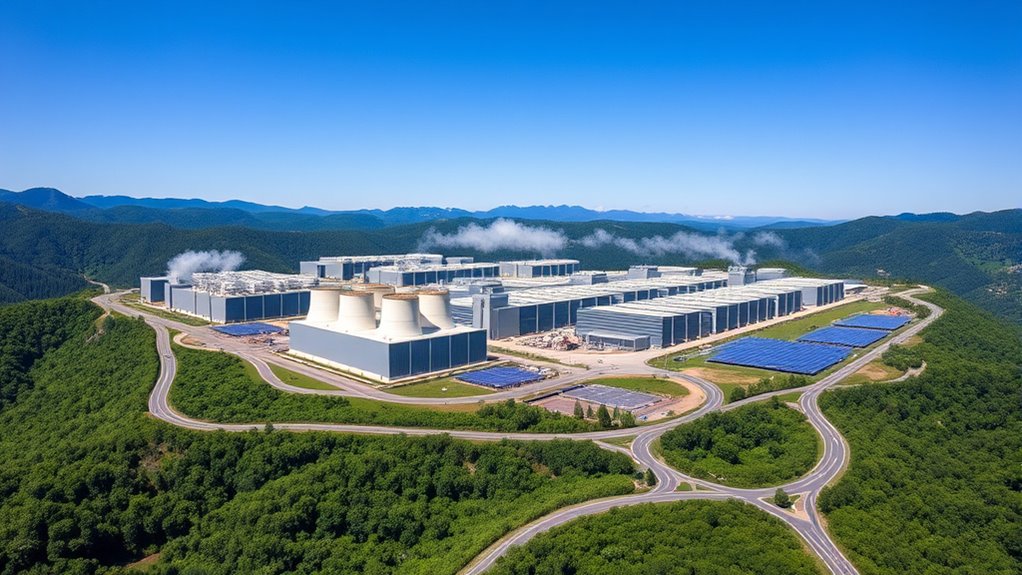
Have you ever wondered how the placement of data centers influences their environmental impact? The truth is, location plays a pivotal role in determining how much harm these facilities cause to the environment. When you consider that data centers account for over 4% of US electricity use—and produce more than 105 million tons of CO2 annually—it’s clear that where they are built matters. Data centers in regions with fossil-fuel-heavy grids, like Virginia, Texas, and Oregon, tend to emit far more CO2 than those in areas with cleaner energy sources. Virginia, despite having a lower regional carbon intensity, leads the nation in CO2 emissions because of its massive data center footprint. Conversely, Texas and Oregon also rank high in emissions, largely due to their energy mixes that rely heavily on coal and natural gas. When you situate data centers in these high-carbon regions, their operational emissions skyrocket, inflating the overall environmental footprint.
Data center location impacts environmental footprint, with fossil-fuel-heavy regions causing significantly higher CO2 emissions.
Your choice of location can either mitigate or exacerbate these impacts. Locating data centers in areas with cleaner grids—those with higher renewable energy shares—reduces their carbon footprint markedly. If a data center is built before regional grid decarbonization, it ends up locked into higher emissions for its lifetime, making location decisions even more vital. Moreover, the regional fuel mix influences the carbon intensity of each facility, which varies across balancing authority regions. So, two data centers of similar size can have vastly different emissions depending solely on where they sit. This regional variability underscores the importance of strategic siting to minimize environmental harm. Additionally, implementing sustainable location planning can significantly improve environmental outcomes and community health.
Location also influences water usage, which is another vital concern. Data centers in water-stressed regions face major risks from cooling needs. Large facilities can consume millions of liters daily, often drawing water from already strained local sources. For example, hyperscale centers, while more water-efficient per workload, still withdraw enormous amounts, sometimes equivalent to the water use of tens of thousands of residents annually. In hot, arid climates, cooling becomes more challenging and costly, forcing operators to weigh the trade-offs between water conservation and energy efficiency. Building in regions with abundant water supplies may seem ideal, but it can come at the expense of environmental justice, especially if local communities already face pollution or water scarcity.
The siting of data centers also impacts local air quality and community health. Facilities that rely on backup diesel generators during outages emit pollutants like PM2.5 and NOx, disproportionately affecting nearby vulnerable populations. In some regions, data centers are situated close to disadvantaged neighborhoods, intensifying environmental justice concerns. The heavy reliance on fossil fuels and diesel during peak times or outages means that your location choices can have immediate health implications for local residents. Ultimately, where you place a data center isn’t just about infrastructure—it’s about the broader environmental and social footprint it leaves behind.
Advanced Concepts for Renewable Energy Supply of Data Centres
As an affiliate, we earn on qualifying purchases.
As an affiliate, we earn on qualifying purchases.
Frequently Asked Questions
How Do Data Center Locations Impact Local Air Quality?
Your data center’s location directly impacts local air quality because it often relies on fossil fuels, releasing pollutants like PM2.5, SO2, and NOx. Backup diesel generators emit harmful particles, especially in vulnerable communities. If you place your data center in an area with dirty energy sources or limited pollution controls, you contribute to smog, respiratory issues, and environmental degradation nearby. Choosing greener locations helps reduce these local air quality impacts.
What Are the Economic Trade-Offs of Siting Data Centers in Various Regions?
You might find that siting data centers in different regions offers economic benefits and drawbacks. In areas with abundant renewable energy, you could reduce operational costs and emissions, but face higher land and infrastructure expenses. Conversely, locating in regions with cheaper land may boost short-term profits but increase environmental and water-related costs. Balancing these trade-offs requires careful assessment of local energy prices, resource availability, and community impacts.
How Does Climate Change Influence Future Data Center Placement Decisions?
Climate change is shifting the map for data center placement, like a storm rearranges the stars. You’ll need to prioritize cooler, wetter regions that can better handle cooling demands and water scarcity. Rising temperatures increase cooling costs, while droughts threaten water supplies. You must weigh climate risks against access to renewable energy, aiming for locations that balance sustainability, water availability, and resilience to future climate impacts.
Are There Policies Incentivizing Sustainable Data Center Siting?
Yes, policies incentivize sustainable data center siting. You’ll find tax credits, grants, and rebates that encourage locating centers near renewable energy sources or in regions with low-carbon grids. Regulations also promote water efficiency and emissions reductions. Governments and states aim to reduce environmental impacts by offering these incentives, so you can prioritize sites that maximize renewable energy use, minimize water and pollution issues, and align with climate goals.
How Do Water Scarcity Concerns Shape Data Center Location Choices?
Water scarcity influences where you choose to site data centers by making you prioritize regions with abundant water resources, reliable water supply, and sustainable cooling options. You avoid areas facing droughts, low rainfall, or overused aquifers. Instead, you seek locations with access to renewable water sources, efficient cooling infrastructure, and climate conditions that reduce water needs. This strategic decision helps you minimize environmental impacts while maintaining operational efficiency and resilience.

ordinarYone Efficient Water Cooling Block For Data Center GPUs V100 A100 32G SXM2 Featuring double trail Copper Base
- Compatible GPU Models: Fits V100 and A100 32G SXM2 GPUs
- Precise Mounting Design: Includes accurate holes for optimal alignment
- Efficient Copper Cooling Plate: Two-direction copper plate for heat transfer
As an affiliate, we earn on qualifying purchases.
As an affiliate, we earn on qualifying purchases.
Conclusion
Remember, location isn’t just about convenience; it directly impacts your data center’s emissions. Choosing the right site can reduce energy use and lower your carbon footprint, making a real difference for the environment. As the saying goes, “A good beginning makes a good ending.” By prioritizing geography in your planning, you set the stage for a more sustainable future. So, think wisely about your data center’s location—you hold the power to make a positive change.
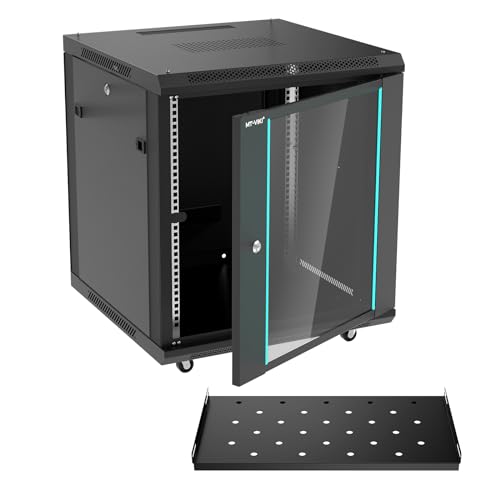
MT-VIKI 12U Server Cabinet Network Rack Vented Enclosure w/Moving Wheel, 0.8mm Thick Steel, 23.6‘’ Deep (600mm), for 19'' IT Equipment, Included 1pcs 12'' Depth Rack Shelf
- Size and Mounting: 12U wall mount cabinet
- Material and Capacity: Made from 0.8mm steel, 132lbs capacity
- Security Features: Locking front door and side panel
As an affiliate, we earn on qualifying purchases.
As an affiliate, we earn on qualifying purchases.
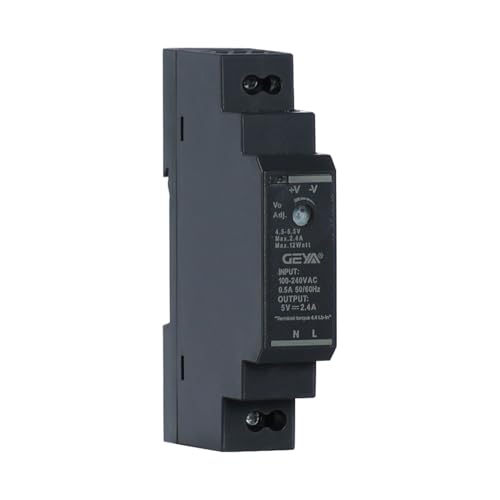
IGOYE Ultra Slim Step-Shape 1SU DIN Rail Power Supply, 5V 2.4A 12W GPHDR-15-5 for Industrial Automation, Communication Base Stations, Data Centers and Medical Equipment
- Ultra-thin design: Only 16mm thick for tight spaces
- Product parameters: 5V, 2.4A, 12W, 100-240VAC
- Stable output: Reliable 5V/2.4A power supply
As an affiliate, we earn on qualifying purchases.
As an affiliate, we earn on qualifying purchases.