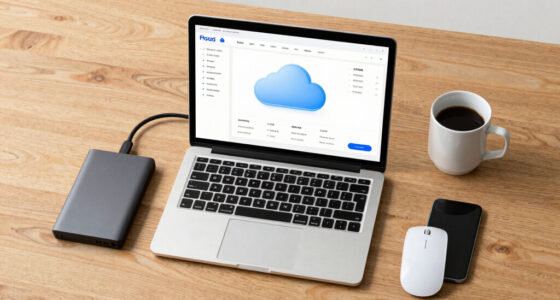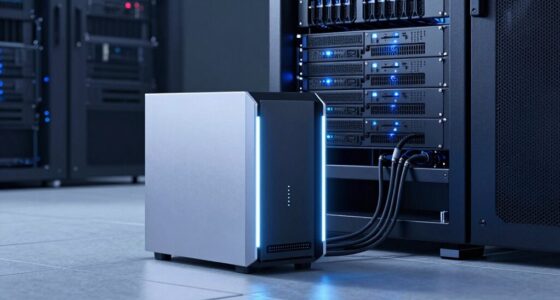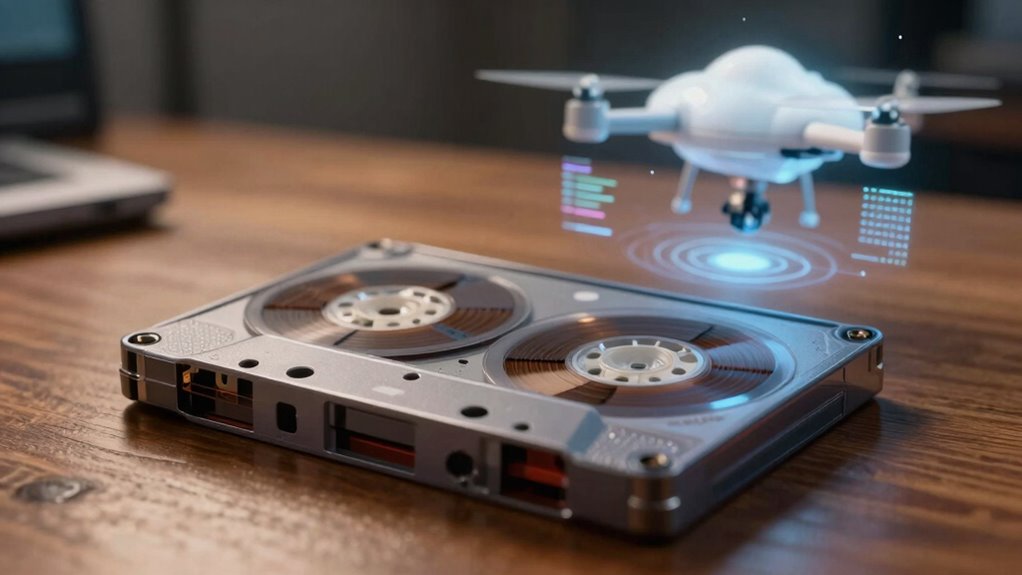

To explain tape storage to cloud teams, emphasize its long-standing role in data management since the 1950s, offering a cost-effective, secure way to archive large volumes of infrequently accessed data. Highlight that tapes require minimal ongoing costs, are offline, and resistant to cyber threats, making them ideal for backups and compliance. Understanding how tape complements cloud solutions for long-term storage will deepen your appreciation of its strategic value—continue to uncover more.

Get business pricing on networking and server gear
- Business-only prices and quantity discounts
- Tax-exempt purchasing
- Multiple users, one account, clear invoices
Key Takeaways
- Emphasize tape’s role in cost-effective, long-term archival storage complementing cloud solutions.
- Highlight tape’s offline security benefits, reducing cyberattack risks unlike always-connected cloud storage.
- Explain tape’s historical evolution and ongoing strategic relevance for compliance and data retention.
- Clarify that tape is not replacing cloud but optimizing overall data management and cost efficiency.
- Use analogies like vaults or safes to illustrate tape’s function as a secure, reliable storage layer.
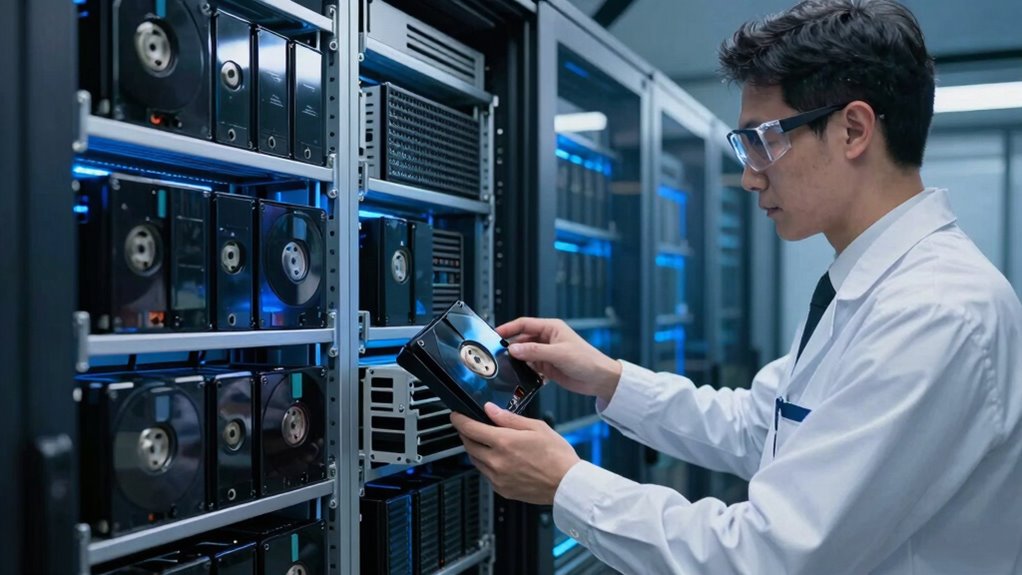
Understanding tape storage can seem overwhelming, especially to modern cloud teams more familiar with digital and cloud-based solutions. But if you look back at its historical context, you’ll see how tape has played a crucial role in data management for decades. Originally, tape storage emerged in the 1950s as a way to store large amounts of data economically. Back then, it revolutionized how businesses handled data, offering a portable, durable, and relatively affordable method of archiving information. Over the years, tapes became the backbone of enterprise data centers, especially for backups and long-term storage, because they could hold enormous data volumes at a fraction of the cost of early disk storage.
Tape storage has been a vital, cost-effective solution for long-term data management since the 1950s.
When you compare tape storage to modern cloud solutions, the cost comparison becomes quite striking. Cloud providers often tout the convenience of on-demand storage, but that convenience comes with ongoing expenses—monthly fees for data transfer, storage, and retrieval. Tapes, on the other hand, involve an upfront investment in tape cartridges and drives, but once purchased, they incur minimal maintenance costs. For organizations with vast data archives that don’t require frequent access, tapes can be significantly cheaper over time. You don’t pay for bandwidth or energy to keep tapes spinning; they simply sit offline until needed. This offline nature also makes tapes inherently more secure against cyber threats, a growing concern for cloud environments. Additionally, offline data storage can provide an extra layer of protection against ransomware attacks. Recognizing the cost-effectiveness of tape storage is essential for making informed decisions about data management strategies.
You might wonder why tape storage isn’t more prominent today, especially given its low cost. The reason is speed and accessibility. Cloud storage offers near-instant access to data, supporting rapid retrieval and real-time processing, which tapes can’t match. Yet, for archival purposes, where data is stored long-term and retrieved infrequently, tape remains highly relevant. Think of tape as a cost-effective, reliable vault for your data, especially when compliance or long-term retention is a priority. While cloud solutions excel in agility and ease of use, tapes shine in their simplicity and economy for large-scale, infrequently accessed data. Understanding the historical significance of tape storage helps clarify why it remains a viable option in today’s data landscape. Recognizing the evolution of data storage technologies also highlights how tape has adapted over time to meet changing needs.
Additionally, understanding the historical context of tape storage helps clarify its continued relevance in the evolving landscape of data management. Recognizing these distinctions helps you appreciate why tape storage still exists, despite the digital age‘s push toward cloud solutions. It’s not about replacing the cloud but supplementing it where budget and data access patterns align. Conducting a thorough cost comparison reveals that tape storage isn’t outdated—it’s a strategic component in a balanced data management portfolio. As a modern cloud team, knowing when and why to leverage tape can help optimize costs and ensure long-term data security, even in a cloud-dominated world.
As an affiliate, we earn on qualifying purchases.
Frequently Asked Questions
How Does Tape Storage Compare to SSD Speeds?
Tape storage is considerably slower than SSDs in data transfer speeds, often by hundreds of times. You’ll notice higher read latency, meaning accessing data takes longer on tapes. While SSDs provide near-instant data retrieval suitable for real-time needs, tapes are better for archival storage where speed isn’t critical. So, when comparing, remember SSDs excel in quick data transfer and low read latency, unlike tape storage, which prioritizes cost-effective long-term storage.
What Are the Cost Benefits of Tape Over Cloud Storage?
Tape storage offers significant cost efficiency over cloud storage, especially for long-term data retention, because tapes are cheaper per gigabyte and don’t incur ongoing cloud service fees. Plus, tapes are environmentally friendly, consuming less energy during storage and retrieval, which reduces carbon footprint. This makes tape an attractive option for organizations seeking budget-friendly, sustainable data solutions, especially for archiving large volumes of data that aren’t accessed frequently.
Can Tape Storage Integrate With Cloud Environments?
Yes, tape storage can integrate with cloud environments effectively. You can use tape for offline accessibility, ensuring long-term data preservation thanks to tape longevity. Modern solutions allow seamless integration through cloud gateways or APIs, enabling you to move data between tape and cloud easily. This setup offers a cost-effective, reliable backup option that complements cloud storage, especially for archival or infrequently accessed data, without sacrificing accessibility or longevity.
How Is Data Security Managed With Tape Backups?
You manage data security with tape backups through air-gapped security, keeping tapes offline and isolated from network threats. This setup guarantees your backups remain protected from cyberattacks. For long-term retention, you store tapes securely, periodically verifying their integrity. By maintaining physical control and implementing strict access protocols, you can confidently safeguard sensitive data on tape, ensuring it stays secure and retrievable when needed.
What Are Common Use Cases for Tape Today?
You use tape storage today mainly for archival stability, ensuring long-term data preservation with minimal environmental impact. It’s ideal for backing up large datasets, disaster recovery, and regulatory compliance, where data must stay intact over years. Tape’s low energy consumption and recyclability make it eco-friendly. Plus, it provides a secure, offline storage option that reduces cyberattack risks, making it a practical choice for sensitive or infrequently accessed data.
As an affiliate, we earn on qualifying purchases.
Conclusion
So, next time you hear about tape storage, remember it’s not just relics of the past. In fact, some experts argue it’s still the most reliable, cost-effective way to archive massive amounts of data securely. While cloud solutions are great for speed and accessibility, tape offers longevity and offline protection that modern teams might overlook. Embracing both can give you a balanced, resilient data strategy—proving old tech still has a role in today’s digital world.
As an affiliate, we earn on qualifying purchases.
As an affiliate, we earn on qualifying purchases.
Columbus Day / Indigenous Peoples' Day Picks
long weekend sales
As an affiliate, we earn on qualifying purchases.