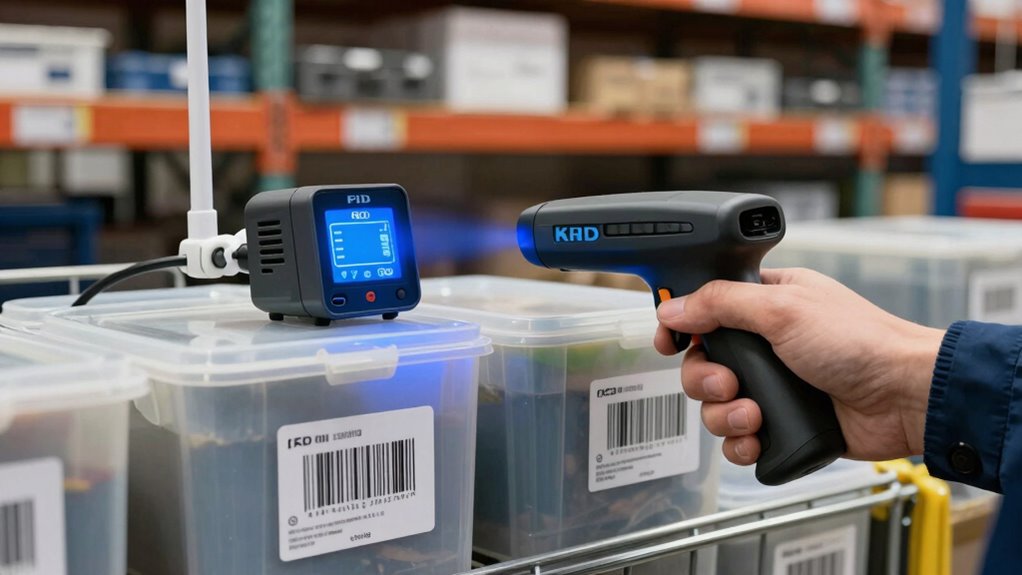

Choosing between barcode and RFID for asset tracking depends on your environment and needs. If you want a low-cost, easy-to-implement solution with minimal training, barcodes are ideal, especially in low to moderate turnover settings. However, if you need faster, more accurate updates and manage high inventory movement, RFID offers long-term savings despite higher upfront costs. To find the best fit for your operations and discover more options, keep exploring the details ahead.

Get business pricing on networking and server gear
- Business-only prices and quantity discounts
- Tax-exempt purchasing
- Multiple users, one account, clear invoices
Key Takeaways
- RFID is ideal for high-turnover, dynamic environments due to faster, automatic scanning without line-of-sight.
- Barcodes are cost-effective and suitable for low to moderate inventory environments with minimal asset movement.
- Environmental factors like metal or liquids can negatively impact RFID performance, making barcodes preferable in such cases.
- RFID offers real-time updates and reduces manual errors, benefiting large-scale, fast-paced asset management.
- Consider initial costs, operational environment, and asset complexity to choose the most effective tracking technology.
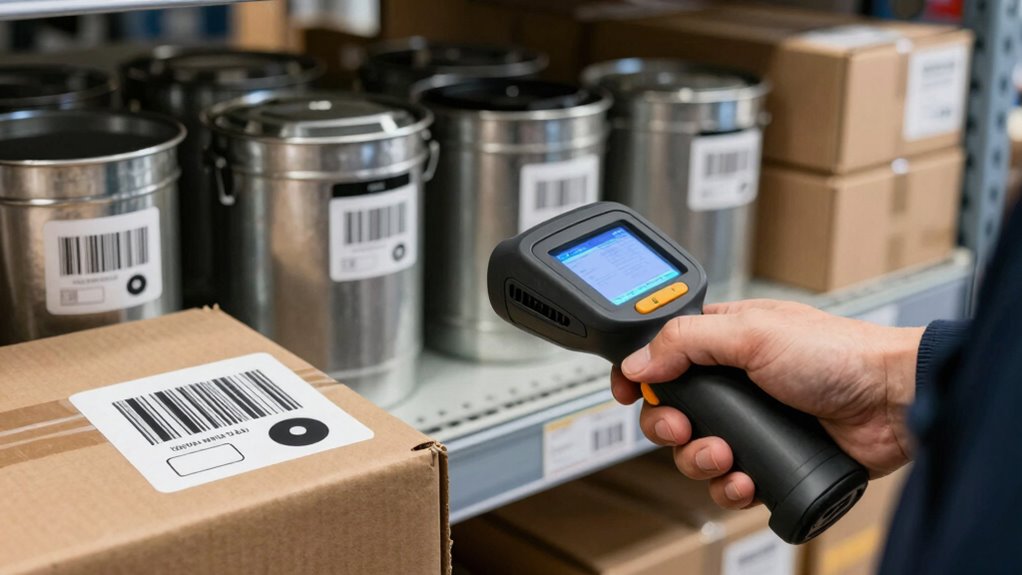
When it comes to asset tracking, choosing between barcodes and RFID can considerably impact your efficiency and accuracy. Your decision affects how quickly you can update inventories, reduce errors, and manage costs. Barcodes are simple, widely used, and cost-effective, making them a popular choice for many organizations. They require line-of-sight scanning, so each item needs to be physically visible for a scanner to read it. This can slow down operations if you’re dealing with large inventories or items stored in hard-to-reach places. However, barcodes excel at providing solid inventory accuracy when properly maintained. They’re inexpensive to produce, easy to print, and require minimal training to use. If your environment involves low to moderate inventory turnover and you don’t need rapid updates, barcodes can be a reliable and budget-friendly solution.
On the other hand, RFID technology offers significant advantages for environments demanding high inventory accuracy and speed. RFID tags don’t require line-of-sight, so you can scan multiple items simultaneously without opening boxes or searching for each label. This drastically reduces time spent on inventory counts and asset audits. RFID systems can automatically detect assets as they pass through designated points, enabling real-time updates and minimizing manual data entry errors. Although RFID tags are more expensive upfront, their capacity to streamline processes and reduce labor costs can lead to better cost efficiency over time. If your environment involves frequent asset movement, high turnover, or needs rapid, accurate inventory updates, RFID provides a powerful advantage. Additionally, RFID can enhance asset visibility across your entire operation, offering better control and planning capabilities. As technology continues to evolve, cost reduction and improved performance are making RFID an increasingly popular choice for many organizations. When evaluating your options, consider how initial investment and ongoing operational costs will impact your overall budget in the long run. Furthermore, understanding the environmental constraints can influence your choice, as RFID performs differently under various physical conditions. Implementing RFID can also improve supply chain management, streamlining logistics and inventory processes more effectively.
Your choice ultimately depends on your operational environment and priorities. If you prioritize low initial costs and don’t require rapid scanning or real-time updates, barcodes are a practical choice. They’re straightforward, dependable, and suitable for many traditional applications. But if you need to maximize inventory accuracy, speed, and automation, investing in RFID can significantly improve your workflow. Keep in mind that RFID’s higher initial investment might be justified by long-term savings in labor and errors. So, consider the complexity of your assets, the frequency of inventory updates, and your budget constraints. Both technologies have their strengths, but understanding your specific needs will help you select the most efficient and accurate solution for your asset tracking system.
As an affiliate, we earn on qualifying purchases.
Frequently Asked Questions
How Do Cost Differences Impact Long-Term Asset Tracking Strategies?
Cost differences considerably influence your long-term asset tracking strategies. By conducting a thorough cost analysis, you can identify upfront expenses versus ongoing costs, helping you plan your budget effectively. RFID might have higher initial costs but offers faster, more accurate tracking over time, while barcodes may be cheaper initially but require more manual work. Your decision should balance these costs with your operational needs and long-term efficiency goals.
Can Barcode and RFID Systems Be Integrated Simultaneously?
Yes, you can integrate barcode and RFID systems simultaneously, but it requires careful planning to manage tagging accuracy and system complexity. You’ll need compatible hardware and software that work together smoothly. Combining both methods can enhance tracking precision and flexibility, especially in diverse environments. Be prepared for increased system complexity, but if done right, this integration offers an all-encompassing solution that leverages the strengths of both tagging technologies.
What Are the Environmental Considerations for RFID Tag Durability?
Think of RFID tags as soldiers facing environmental challenges; their durability depends on careful material choice. You must consider environmental impact and material resilience when selecting tags, especially in harsh conditions like moisture, extreme temperatures, or chemicals. Using sturdy, weather-resistant materials like plastic or metal can extend their lifespan. Ultimately, understanding your environment helps you choose RFID tags that stand strong, ensuring reliable asset tracking without succumbing to nature’s test.
How Does Data Security Differ Between Barcode and RFID?
You’ll find that RFID offers more advanced data security than barcodes, thanks to features like data encryption and access control. RFID systems can encrypt data transmitted between tags and readers, reducing the risk of interception. Additionally, access controls limit who can read or modify RFID data. Barcodes lack these security measures, making them more vulnerable to tampering or unauthorized access. As a result, RFID provides better security for sensitive asset information.
What Is the Typical Lifespan of RFID Versus Barcode Labels?
You’ll find RFID tags typically last longer than barcode labels, often enduring several years, thanks to their superior label durability and environmental resilience. Barcode labels may start to fade or peel after exposure to harsh conditions, reducing their lifespan. RFID tags are designed to withstand extreme temperatures, moisture, and chemicals, making them a resilient choice. So, if longevity is your goal, RFID tags are the way to go — they stick around longer than barcodes.
As an affiliate, we earn on qualifying purchases.
Conclusion
Ultimately, choosing between barcode and RFID for asset tracking depends on your environment’s unique needs. Barcodes are like trusty sidekicks—simple, affordable, and reliable for straightforward tasks. RFID, on the other hand, is a high-tech superhero, capable of scanning multiple assets instantly from a distance. Your decision shapes your asset management future—don’t settle for less than a game-changer that’ll revolutionize your efficiency and keep your assets flying under control like a well-oiled machine.
As an affiliate, we earn on qualifying purchases.
As an affiliate, we earn on qualifying purchases.
Fall Picks
fall essentials
As an affiliate, we earn on qualifying purchases.