
Choosing the right server form factor is vital for your small IT team to optimize performance, control costs, and plan for future growth. Consider factors like power efficiency, cooling needs, and space constraints to guarantee your infrastructure supports current and future demands. Whether you opt for rack-mounted or blade servers, the right choice can improve reliability and scalability. Keep exploring, and you’ll discover how to select the perfect setup to keep your organization running smoothly.

Get business pricing on networking and server gear
- Business-only prices and quantity discounts
- Tax-exempt purchasing
- Multiple users, one account, clear invoices
Key Takeaways
- Choose a form factor that aligns with your organization’s current and future scalability needs.
- Consider power supply efficiency to reduce energy costs and extend hardware lifespan.
- Assess cooling requirements based on server size and environment to prevent overheating and hardware failure.
- Evaluate space constraints and airflow to select appropriate cooling strategies for your server setup.
- Opt for scalable form factors that support growth without major infrastructure overhauls.

Choosing the right server form factor is vital for building an efficient and scalable IT infrastructure. When you select a server type that fits your needs, you directly influence your organization’s performance, maintenance costs, and future growth potential. One of the key considerations is power supply efficiency, which impacts both energy consumption and operational costs. Opting for servers with high-efficiency power supplies ensures you minimize waste, reduce electricity bills, and support sustainable practices. Efficient power supplies also help prevent overheating and extend hardware lifespan, which is crucial when managing limited budgets and resources. Additionally, understanding server form factors helps in planning your infrastructure more effectively, ensuring your setup aligns with your organization’s current and future needs. Recognizing the impact of power efficiency on overall system performance can guide you in selecting the most appropriate hardware for your environment. Alongside power efficiency, cooling strategies are equally important. Proper cooling not only maintains optimal operating temperatures but also lowers the risk of hardware failure. Different server form factors come with varying cooling requirements; for example, smaller, blade-style servers often have integrated cooling solutions that are efficient for dense data centers, while rack-mounted servers benefit from external cooling setups. You should evaluate your environment’s airflow, space constraints, and heat output to choose the most effective cooling approach. Implementing a comprehensive cooling strategy can significantly cut down on energy costs and improve overall system reliability, especially in environments where multiple servers operate continuously. Recognizing the importance of cooling in relation to server form factors can lead to more sustainable and cost-effective IT operations. Additionally, considering future scalability is essential when selecting a server form factor to ensure your infrastructure can grow with your organization’s needs.
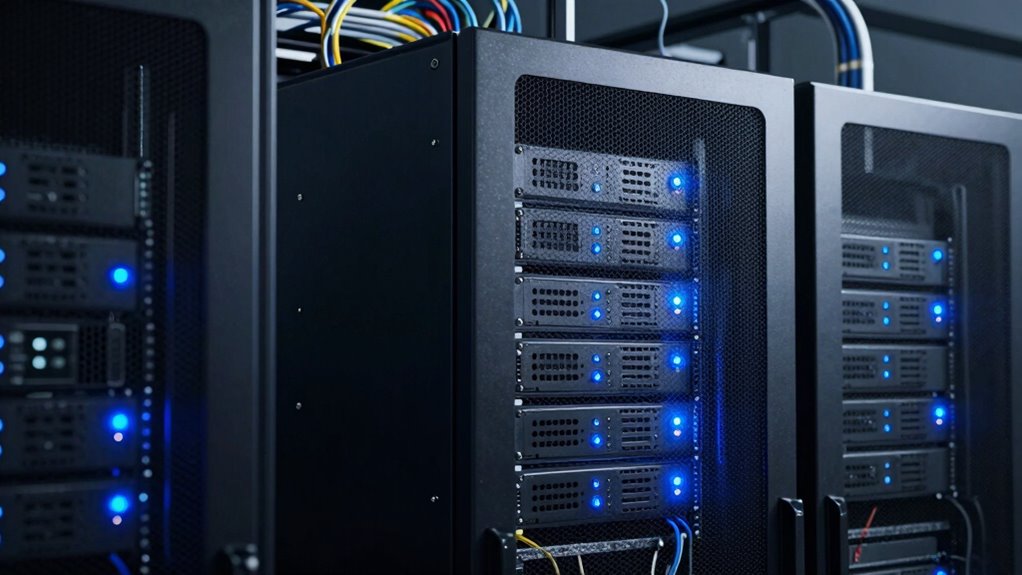
rack-mounted server with high efficiency power supply
As an affiliate, we earn on qualifying purchases.
As an affiliate, we earn on qualifying purchases.
Frequently Asked Questions
How Do I Upgrade a Server Without Downtime?
To upgrade a server without downtime, you should leverage server virtualization to run your existing environment alongside the new setup. This allows you to test hardware compatibility and migrate services gradually. Plan your upgrade during low-traffic hours, guarantee backups are in place, and perform a phased shift. Virtualization minimizes disruption, giving you time to troubleshoot issues, so your upgrade proceeds smoothly without impacting your users.
What Are the Power Consumption Differences Between Form Factors?
You’ll notice that different server form factors vary in power consumption and energy efficiency. Blade servers generally use less server energy because they share power supplies and cooling, making them more power-efficient for dense setups. Tower servers typically consume more power due to individual components. Rack servers strike a balance, offering good power efficiency while supporting higher performance needs. Choosing the right form factor helps optimize power efficiency and reduce overall energy costs.
Which Form Factor Is Best for High-Density Data Centers?
For high-density data centers, rack-mounted servers are your best choice due to their efficiency in space utilization. They allow you to maximize rack space and improve cooling. Blade servers also excel because of their scalability; you can easily add or remove blades as your needs evolve. This combination optimizes rack-mounted efficiency and blade server scalability, making them ideal for high-density environments that require flexibility and high performance.
How Do Form Factors Impact Server Cooling Efficiency?
While some might say cooling isn’t a big deal, in reality, form factors greatly influence thermal management and airflow optimization. Compact designs can restrict airflow, leading to overheating, whereas larger, well-ventilated servers facilitate better heat dissipation. Choosing the right form factor helps guarantee efficient cooling, reduces energy costs, and prolongs hardware lifespan. So, prioritizing airflow and thermal considerations in your server selection boosts overall system reliability and performance.
Are There Specific Form Factors Optimized for Remote Management?
Yes, certain form factors are optimized for remote management. Small IT teams benefit from server form factor standards like 1U or 2U rackmounts, which often include integrated remote management features such as IPMI or iDRAC. These standards make it easier to monitor, troubleshoot, and update servers remotely, saving time and reducing physical access needs. Choosing a form factor with built-in remote management capabilities streamlines your server management tasks.
As an affiliate, we earn on qualifying purchases.
Conclusion
Choosing the right server form factor isn’t just about space; it’s about scalability, efficiency, and future-proofing your IT environment. By understanding your needs, considering your growth, and weighing the advantages of each form factor, you make smarter decisions. You enhance performance, simplify management, and optimize resources. Ultimately, selecting the right server form factor empowers you to build a resilient, adaptable, and efficient infrastructure—one that supports your goals today and prepares you for tomorrow’s challenges.
small business server rack enclosure
As an affiliate, we earn on qualifying purchases.
As an affiliate, we earn on qualifying purchases.
scalable server hardware for growing IT infrastructure
As an affiliate, we earn on qualifying purchases.
As an affiliate, we earn on qualifying purchases.
Fall Picks
fall essentials
As an affiliate, we earn on qualifying purchases.