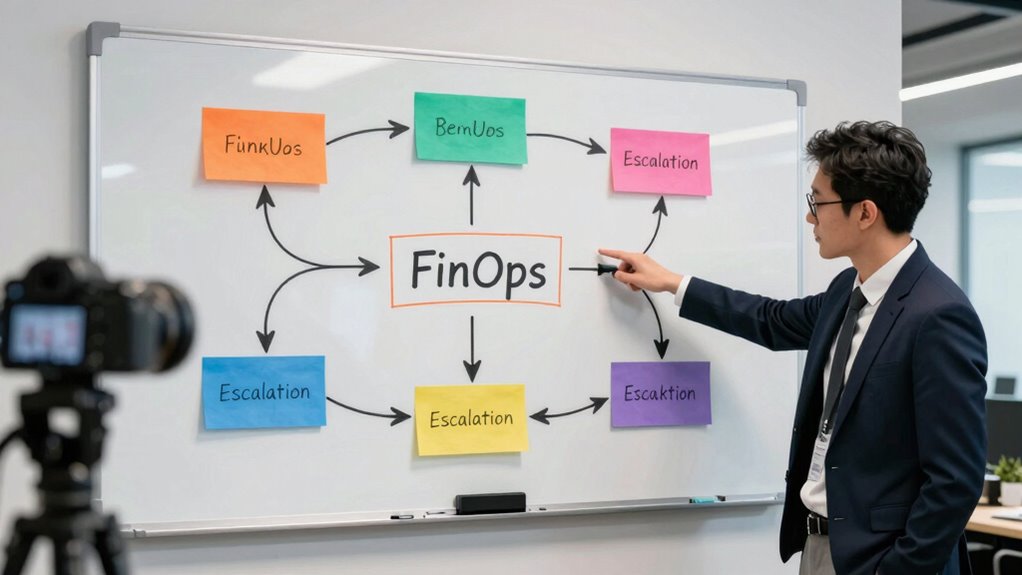

To stop budget confusion, you need a clear FinOps escalation path that tracks cloud costs from operational teams to finance leaders. Start by monitoring daily usage with dashboards, then escalate anomalies as soon as they’re detected. Budget governance reviews these issues, determines necessary adjustments, and communicates changes effectively. Regular check-ins and automated alerts keep the process agile and transparent, fostering accountability. To get the complete picture, there’s more to discover that can help you strengthen your cost controls.

Get business pricing on networking and server gear
- Business-only prices and quantity discounts
- Tax-exempt purchasing
- Multiple users, one account, clear invoices
Key Takeaways
- Establish clear escalation procedures starting from operational monitoring to leadership review.
- Use dashboards and automated alerts to promptly identify and escalate anomalies.
- Involve budget governance to assess financial impact and implement controls.
- Maintain transparent communication and documentation for consistent escalation practices.
- Regularly review and refine the escalation process for continuous improvement and clarity.
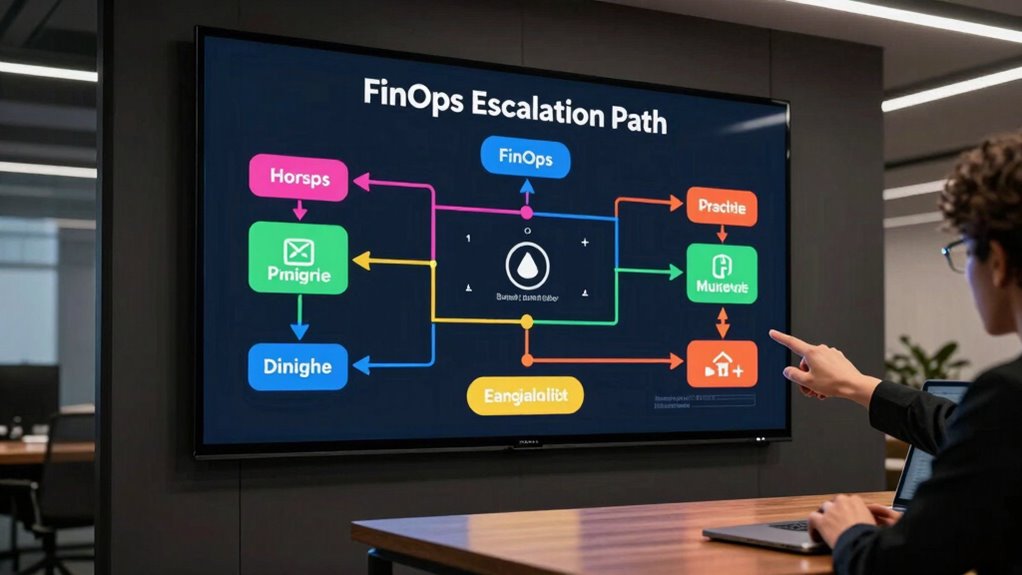
Managing cloud costs effectively requires a clear escalation path within your FinOps practices. Without this, cost optimization efforts can become chaotic, and budget governance may suffer, leading to overspending and misalignment with business goals. When you establish a well-defined escalation process, it becomes easier to identify where issues originate, resolve them quickly, and keep your cloud expenses in check. This structure ensures that everyone knows their responsibilities, and there’s a streamlined flow for addressing budget concerns.
A clear escalation path is essential for effective cloud cost management and aligned FinOps practices.
Your escalation path should start with the operational teams responsible for day-to-day cloud usage. These teams monitor their costs regularly, using dashboards and reporting tools to stay within their allocated budgets. If they notice anomalies or unexpected spikes, they escalate the issue to the next level—finance or FinOps leaders—who can analyze the root causes more thoroughly. This step is vital for cost optimization because it prevents small issues from snowballing into significant overspending.
At the next level, budget governance comes into play. Leaders review the escalated concerns, assess the impact on overall financial health, and determine if adjustments are needed—such as reallocating budgets, implementing cost controls, or modifying resource allocations. Having a clear process in place ensures that these decisions aren’t made reactively or chaotically. Instead, they’re guided by data and aligned with broader organizational goals. This structured approach minimizes confusion about who’s responsible for what, helping to maintain transparency and accountability.
Effective communication channels are fundamental to this escalation path. You need to establish regular check-ins, automated alerts, and clear documentation so that everyone involved understands when and how to escalate. This reduces delays and keeps the process agile. When budget concerns are escalated efficiently, you can quickly implement corrective measures before costs spiral out of control. This proactive stance is essential for maintaining strong cost optimization strategies and ensuring your cloud spending aligns with your business priorities.
Additionally, your escalation path should include periodic reviews of the process itself. As your cloud environment and organization evolve, so should your procedures. Continuous improvement ensures that your FinOps practices stay effective, preventing bottlenecks and confusion. Incorporating cost transparency into your processes helps ensure that all stakeholders understand the financial impact of their decisions and fosters a culture of accountability. Leveraging cloud cost management tools can enhance visibility and streamline escalation procedures, making your FinOps strategy more effective. When everyone understands the escalation process and follows it diligently, your organization gains better control over cloud costs, supports sustainable growth, and upholds sound budget governance—key components of a successful FinOps strategy. Additionally, establishing clear responsibility delineation ensures that each team knows their specific roles within the escalation process, further improving efficiency and accountability.
cloud cost monitoring dashboards
As an affiliate, we earn on qualifying purchases.
As an affiliate, we earn on qualifying purchases.
Frequently Asked Questions
How Do We Measure Finops Success Effectively?
You measure FinOps success by tracking cost transparency and ensuring stakeholder alignment. Regularly review cloud spending reports to identify cost savings and inefficiencies, which show transparency. Engage stakeholders to confirm they understand and support the financial goals. Use key performance indicators like budget adherence, cost reduction, and forecast accuracy. When these metrics improve, you know your FinOps practices are effective, fostering better decision-making and financial accountability across your team.
What Tools Best Support Finops Escalation Processes?
Think of tools as your guiding compass in the fog of cloud costs. For effective finops escalation, leverage platforms like CloudHealth or Cloudability, which excel at cost allocation and cloud governance. These tools help you identify anomalies, allocate expenses accurately, and enforce policies swiftly. With them, you streamline communication, escalate issues seamlessly, and keep your cloud journey on course, preventing budget surprises and ensuring financial clarity at every turn.
How Often Should Escalation Procedures Be Reviewed or Updated?
You should review your escalation procedures at least quarterly to guarantee they support effective budget alignment and resource allocation. Regular updates help address evolving financial goals, tools, and team structures. By actively monitoring and refining these processes, you keep everyone aligned, prevent budget confusion, and ensure issues are escalated efficiently. Frequent reviews also promote transparency and adaptability, allowing your organization to respond quickly to shifting priorities and financial challenges.
Who Should Be Involved in the Escalation Team?
You need a diverse, cross-department collaboration team for your escalation hierarchy. Start with finance, IT, and operational leaders to guarantee thorough insights. Include key stakeholders from procurement and management to tackle budget issues swiftly. As tensions escalate, involve senior executives to make critical decisions. This team’s unity and clear roles prevent confusion, ensuring swift resolution. Keep the team dynamic, ready to adapt as your organization’s needs evolve, maintaining smooth financial operations.
How Do We Handle Urgent Budget Issues Outside Regular Escalation?
When urgent budget issues arise outside the regular escalation hierarchy, you should prioritize urgent communication by alerting the designated finance or FinOps lead immediately. Use a predefined protocol, such as a direct phone call or instant messaging, to guarantee swift attention. Document the issue clearly and escalate promptly to prevent delays. This approach helps you manage urgent matters efficiently, avoiding confusion and ensuring quick resolution within your established escalation framework.
As an affiliate, we earn on qualifying purchases.
Conclusion
As you stand at the threshold of financial clarity, the escalation path beckons with promises of order amidst chaos. With each step you take, the shadows of budget confusion recede, revealing a future where costs are clear and control is within reach. But beware—one misstep could plunge you back into the fog. Will you navigate this path successfully, or will the mystery of your costs deepen? The choice is yours—step forward and find out.
As an affiliate, we earn on qualifying purchases.
As an affiliate, we earn on qualifying purchases.
Columbus Day / Indigenous Peoples' Day Picks
long weekend sales
As an affiliate, we earn on qualifying purchases.